 Back
BackMicrobial Metabolism: Foundations and Pathways CH-5
Study Guide - Smart Notes
 Tailored notes based on your materials, expanded with key definitions, examples, and context.
Microbial Metabolism
Introduction to Metabolism
Metabolism encompasses all controlled biochemical reactions that occur within a microbe. The ultimate function of metabolism is to enable the reproduction of the organism by managing the acquisition and use of energy and nutrients.
Metabolism: The sum of all chemical reactions in a cell.
Metabolic processes are guided by fundamental principles, including nutrient acquisition, energy extraction, and the synthesis of macromolecules.
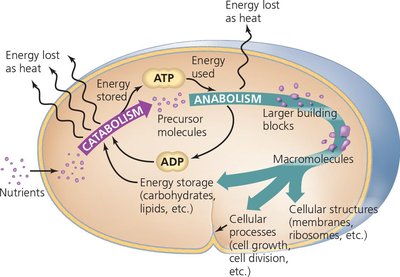
Catabolism and Anabolism
Metabolism is divided into two major classes of reactions: catabolic and anabolic pathways.
Catabolic pathways: Break down larger molecules into smaller products; these reactions are exergonic (release energy).
Anabolic pathways: Synthesize large molecules from the smaller products of catabolism; these reactions are endergonic (require energy input).
Basic Chemical Reactions Underlying Metabolism
Oxidation and Reduction Reactions
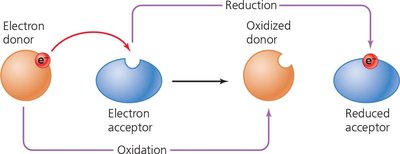
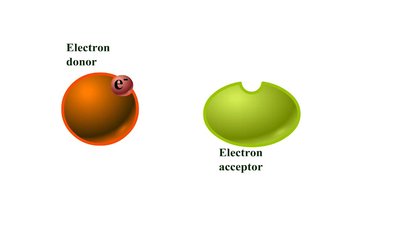
Oxidation-reduction (redox) reactions involve the transfer of electrons from an electron donor to an electron acceptor. These reactions always occur simultaneously and are essential for energy extraction in cells.
Cells use electron carriers such as NAD+, NADP+, and FAD to shuttle electrons.
ATP Production and Energy Storage
Organisms release energy from nutrients, which is stored in high-energy phosphate bonds of ATP. Cells phosphorylate ADP to ATP in three ways:
Substrate-level phosphorylation
Oxidative phosphorylation
Photophosphorylation
Anabolic pathways use the energy of ATP by breaking a phosphate bond.
The Roles of Enzymes in Metabolism
Enzymes are organic catalysts that increase the likelihood of a reaction by lowering the activation energy required.
Enzymes are classified into six categories based on their mode of action: hydrolases, isomerases, ligases/polymerases, lyases, oxidoreductases, and transferases.
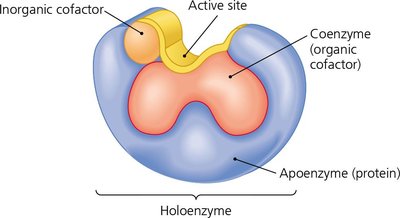
Enzymes may require nonprotein cofactors (inorganic ions or organic coenzymes) to be active. The combination of an apoenzyme and its cofactor forms a holoenzyme.
Enzyme Classification Table
Class | Type of Reaction Catalyzed | Example |
|---|---|---|
Hydrolase | Hydrolysis (catabolic) | Lipase—breaks down lipid molecules |
Isomerase | Rearrangement of atoms within a molecule | Phosphoglucoisomerase—converts glucose 6-phosphate into fructose 6-phosphate |
Ligase/Polymerase | Joining two or more chemicals together (anabolic) | Acetyl-CoA synthetase—forms acetyl-CoA |
Lyase | Splitting a chemical into smaller parts without water (catabolic) | Fructose-1,6-bisphosphate aldolase |
Oxidoreductase | Transfer of electrons or hydrogen atoms | Lactic acid dehydrogenase |
Transferase | Moving a functional group from one molecule to another | Hexokinase—transfers phosphate from ATP to glucose |
Enzyme Activity and Regulation
Enzyme activity is influenced by several factors:
Temperature
pH
Enzyme and substrate concentrations
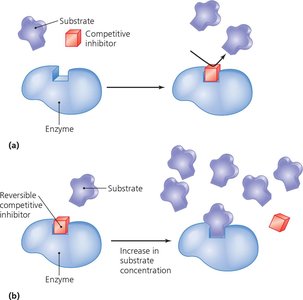
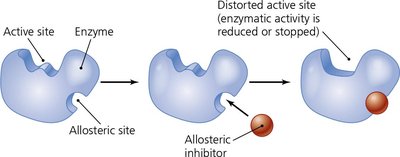
Presence of inhibitors (competitive and noncompetitive)
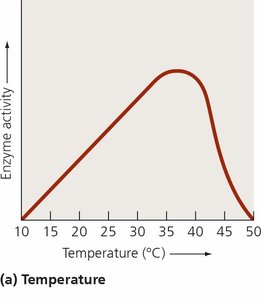
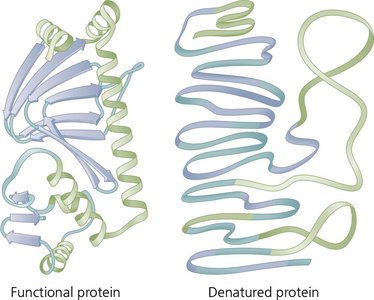
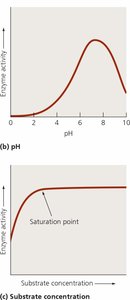
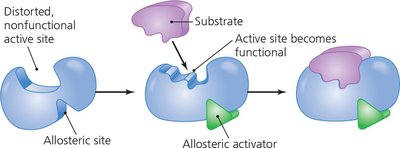
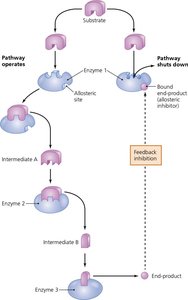
Enzyme activity can be regulated by activators (allosteric activation) or inhibitors (competitive and noncompetitive). Feedback inhibition is a common regulatory mechanism in metabolic pathways.
Carbohydrate Catabolism
Overview of Glucose Catabolism
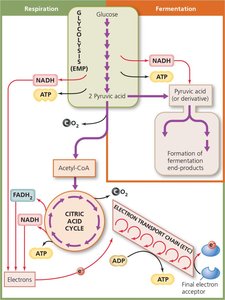
Many organisms oxidize carbohydrates, primarily glucose, as their main energy source. Glucose catabolism occurs via two main processes: cellular respiration and fermentation.
Glycolysis
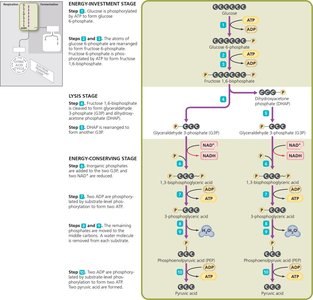
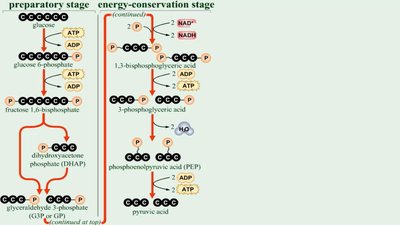
Glycolysis is the metabolic pathway that splits a six-carbon glucose into two three-carbon pyruvic acid molecules. It occurs in the cytoplasm and involves substrate-level phosphorylation.
Net gain: 2 ATP, 2 NADH, and 2 pyruvic acid molecules per glucose.
Divided into three stages: energy-investment, lysis, and energy-conserving.
Cellular Respiration
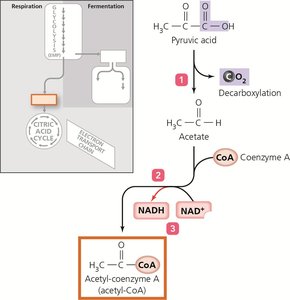
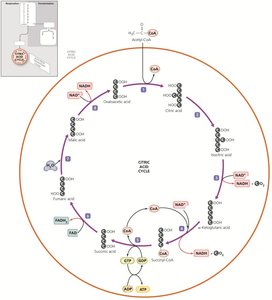
Cellular respiration completely oxidizes pyruvic acid to produce ATP through a series of redox reactions. It consists of three stages:
Synthesis of acetyl-CoA
Krebs cycle (citric acid cycle)
Electron transport chain (ETC)
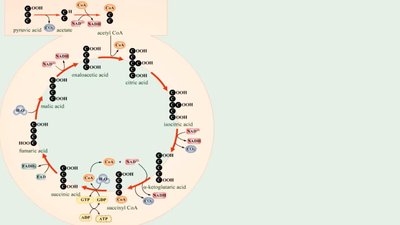
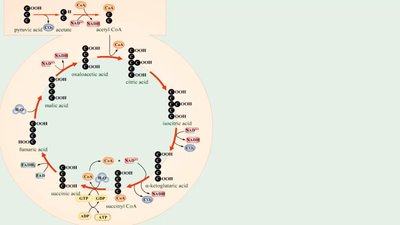
Summary Table: Ideal Prokaryotic Aerobic Respiration of One Glucose
Pathway | ATP Produced | ATP Used | NADH Produced | FADH2 Produced |
|---|---|---|---|---|
Glycolysis | 4 | 2 | 2 | 0 |
Synthesis of acetyl-CoA & Citric acid cycle | 2 | 0 | 8 | 2 |
Electron transport chain | 34 | 0 | 0 | 0 |
Total | 40 | 2 | ||
Net Total | 38 |
Electron Transport Chain (ETC) and Chemiosmosis
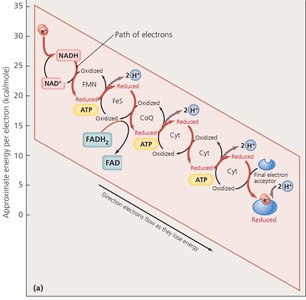
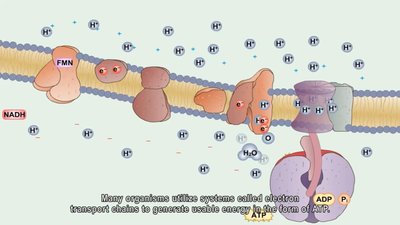
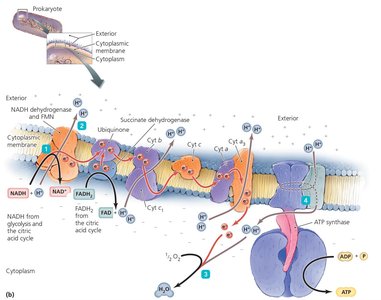
The ETC is a series of carrier molecules that transfer electrons to a final electron acceptor, generating a proton gradient used to produce ATP via chemiosmosis. In aerobic respiration, oxygen is the final electron acceptor; in anaerobic respiration, other molecules serve this role.
Fermentation
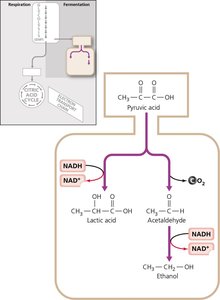
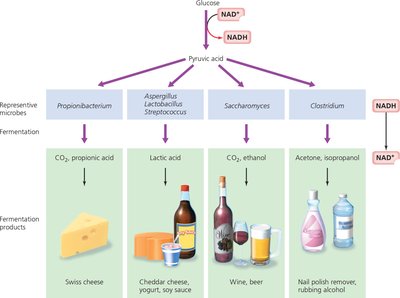
Fermentation provides an alternative source of NAD+ when cells cannot completely oxidize glucose by cellular respiration. It involves the partial oxidation of sugar using an organic molecule as the final electron acceptor.
Comparison Table: Aerobic Respiration, Anaerobic Respiration, and Fermentation
Aerobic Respiration | Anaerobic Respiration | Fermentation | |
|---|---|---|---|
Oxygen Required | Yes | No | No |
Type of Phosphorylation | Substrate-level & oxidative | Substrate-level & oxidative | Substrate-level |
Final Electron Acceptor | Oxygen | NO3-, SO42-, CO32-, or other | Cellular organic molecules |
ATP Yield (per glucose) | 38 (prokaryotes) | 4–36 | 2 |
Other Catabolic Pathways
Lipid and Protein Catabolism
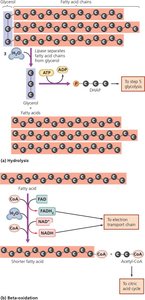
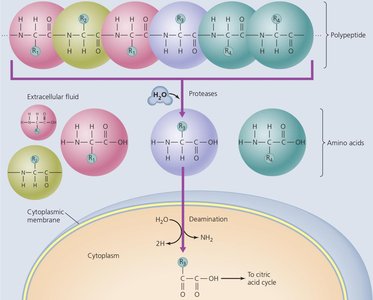
Lipids and proteins can be catabolized to provide energy and precursor metabolites for cellular processes. Lipids are broken down into glycerol and fatty acids, while proteins are degraded into amino acids, which are then deaminated.
Photosynthesis
Overview and Structures
Photosynthesis is the process by which organisms synthesize organic molecules from CO2 and H2O using light energy. Chlorophylls and photosystems are essential components, with light-dependent and light-independent reactions working together to produce carbohydrates.
Other Anabolic Pathways
Anabolic Reactions and Precursor Metabolites
Anabolic reactions synthesize complex molecules from simpler ones, requiring energy and precursor metabolites. Many anabolic pathways are the reverse of catabolic pathways and are termed amphibolic if they can proceed in either direction.
Integration and Regulation of Metabolic Function
Regulation Mechanisms
Cells regulate metabolism by controlling enzyme synthesis and activity, using mechanisms such as feedback inhibition, allosteric regulation, and compartmentalization of metabolic pathways in eukaryotes.
Additional info: This guide covers the foundational concepts of microbial metabolism, including the major catabolic and anabolic pathways, enzyme function and regulation, and the integration of metabolic processes. It is suitable for exam preparation in a college-level microbiology course.
