 Back
Microbial Metabolism: Fundamentals and Pathways
Study Guide - Smart Notes
 Tailored notes based on your materials, expanded with key definitions, examples, and context.
Microbial Metabolism
Introduction to Metabolism
Microbial metabolism encompasses all the chemical reactions that occur within a microorganism, enabling it to grow, reproduce, and respond to its environment. These reactions are divided into two main categories: catabolism (breaking down molecules to release energy) and anabolism (building up molecules using energy).
Catabolism: Degradation of complex molecules into simpler ones, releasing energy.
Anabolism: Synthesis of complex molecules from simpler ones, requiring energy input.
Metabolism: The sum of all catabolic and anabolic reactions in the cell.
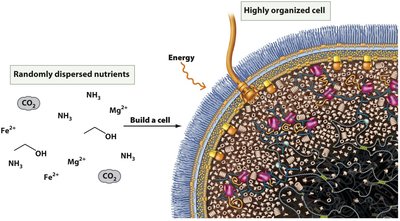
Example: Microbes convert randomly dispersed nutrients (CO2, NH3, Mg2+, Fe2+) into highly organized cellular structures using energy.
Transport of Nutrients
Microbes must import nutrients from their environment to fuel metabolic processes. Transport across the cell membrane can occur via several mechanisms:
Simple transport: Driven by the proton motive force (PMF).
Group translocation: Chemical modification of the transported substance, often using phosphoenolpyruvate.
ABC transporters: Use ATP to transport substances, often involving periplasmic binding proteins.
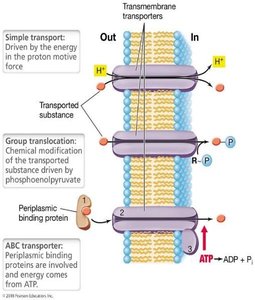
Example: The ABC transporter system uses ATP to move substances into the cell.
Metabolic Pathways: Catabolism and Anabolism
Metabolic pathways are organized sequences of enzymatic reactions. Catabolic pathways yield energy, while anabolic pathways use energy to build cellular components.
Catabolic Pathways: Glycolysis, Krebs cycle, electron transport chain.
Anabolic Pathways: Synthesis of amino acids, nucleotides, fatty acids, and macromolecules.
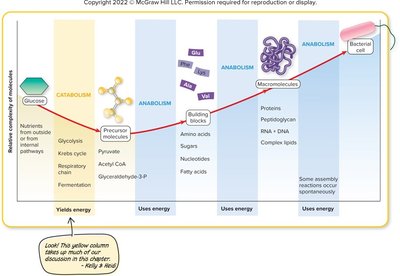
Example: Glucose is catabolized to yield energy, which is then used to build macromolecules such as proteins and nucleic acids.
Activation Energy and Enzymes
Metabolic reactions require activation energy to proceed. Enzymes, which are typically proteins, act as catalysts to lower the activation energy and increase the rate of reactions.
Enzyme Characteristics: Regenerated after reaction, highly specific, function via active site, only small quantities needed.
Nomenclature: Enzymes often end with "-ase" (e.g., sucrase, protease).
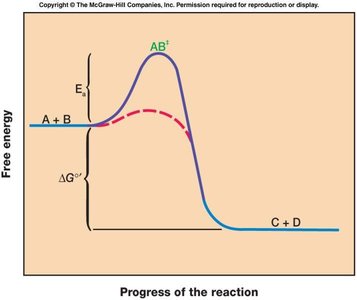
Example: Enzymes lower the activation energy (Ea) required for a reaction, making it proceed faster.
Enzyme-Substrate Complex
Enzymes bind substrates at their active site, forming an enzyme-substrate complex. This facilitates the conversion of substrates into products.
Lock and Key Model: The active site is specific to the substrate.
Enzyme Regeneration: Enzymes are not consumed in the reaction.
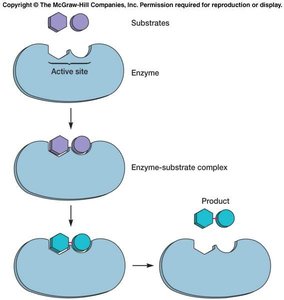
Example: Sucrase binds sucrose and breaks it down into glucose and fructose.
Types of Metabolic Pathways
Metabolic pathways can be linear, cyclic, or branched. Each pathway involves a series of enzyme-catalyzed reactions.
Linear: Example is glycolysis.
Cyclic: Example is the Krebs cycle.
Branched: Divergent and convergent pathways, such as amino acid synthesis.
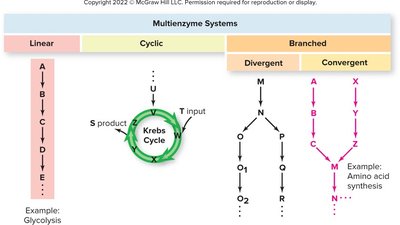
Example: The Krebs cycle is a cyclic pathway, while amino acid synthesis can be convergent.
ATP: The Energy Currency
Adenosine triphosphate (ATP) is the primary energy carrier in cells. Energy is stored in the phosphate bonds and released when ATP is hydrolyzed to ADP and inorganic phosphate.
ATP Structure: Adenine, ribose, three phosphate groups.
ATP Cycle: ATP is regenerated from ADP by phosphorylation.
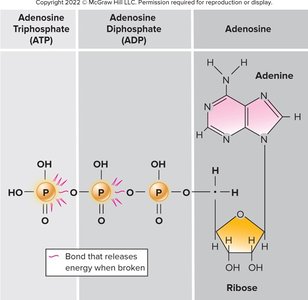
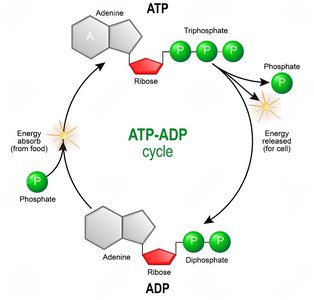
Example: ATP powers cellular processes such as protein synthesis and active transport.
Redox Reactions and Electron Carriers
Redox reactions involve the transfer of electrons between molecules. Electron carriers such as NAD+ and FAD are essential for these reactions.
Oxidation: Loss of electrons.
Reduction: Gain of electrons.
NAD+: Accepts electrons to become NADH.
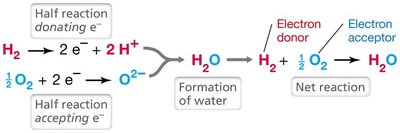
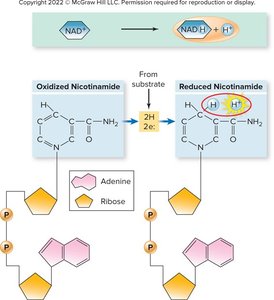
Example: NAD+ is reduced to NADH during glycolysis and the Krebs cycle.
Glycolysis: The EMP Pathway
Glycolysis is the first step in glucose catabolism, occurring in the cytoplasm. It converts glucose into pyruvate, generating ATP and NADH.
Preparatory Phase: 2 ATP are used to phosphorylate intermediates.
Payoff Phase: 4 ATP are produced by substrate-level phosphorylation; 2 NADH are generated.
Net Gain: 2 ATP, 2 NADH, 2 pyruvate per glucose.
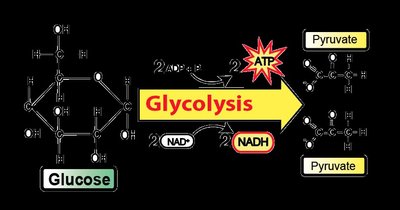
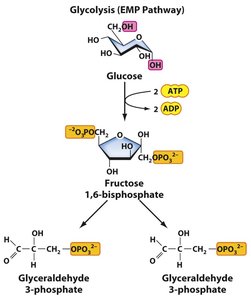
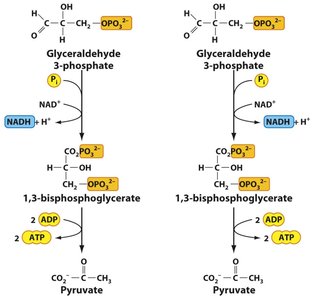
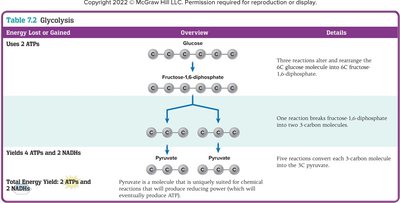
Example: Glycolysis is essential for energy production in both aerobic and anaerobic microbes.
Fate of Pyruvate: Fermentation and Respiration
After glycolysis, pyruvate can be further metabolized by fermentation or cellular respiration, depending on the presence of oxygen.
Fermentation: Anaerobic process; regenerates NAD+ and produces various end products (lactic acid, ethanol, CO2).
Cellular Respiration: Aerobic or anaerobic; includes the Krebs cycle and electron transport chain, yielding more ATP.
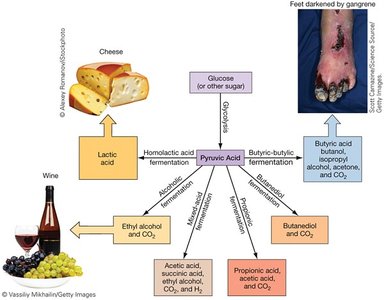
Example: Lactic acid fermentation is used in cheese production; alcoholic fermentation produces wine.
Krebs Cycle (Citric Acid Cycle)
The Krebs cycle is a cyclic pathway that further oxidizes pyruvate to CO2, generating NADH, FADH2, and ATP.
Substrates: Acetyl-CoA, NAD+, FAD, ADP.
Products: CO2, NADH, FADH2, ATP.
Per Glucose: 2 turns of the cycle, yielding 2 ATP, 6 NADH, 2 FADH2.
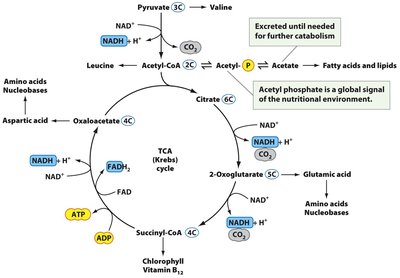
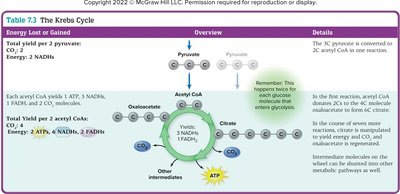
Example: The Krebs cycle is central to aerobic respiration and provides intermediates for biosynthesis.
Electron Transport Chain (ETC) and Chemiosmosis
The ETC is a series of membrane-bound carriers that transfer electrons from NADH and FADH2 to a terminal electron acceptor, generating a proton gradient used to synthesize ATP.
Proton Motive Force (PMF): Drives ATP synthesis via ATP synthase.
Terminal Electron Acceptors: Oxygen (aerobic), other inorganic molecules (anaerobic).
ATP Yield: Aerobic respiration yields up to 38 ATP per glucose.
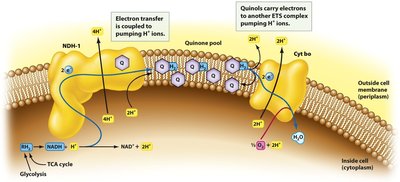
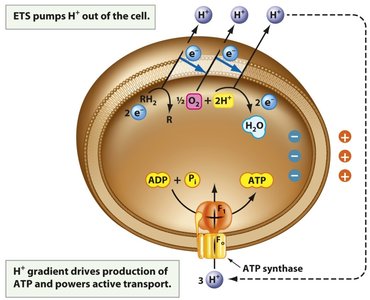
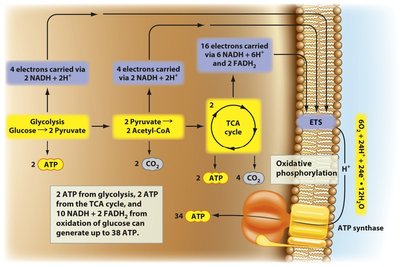
Example: The ETC is essential for energy production in aerobic microbes.
Metabolic Diversity and Biochemical Testing
Microbes exhibit diverse metabolic capabilities, allowing them to utilize various nutrients and electron donors. Biochemical tests are used to identify microbes based on their metabolic profiles.
Lithotrophy: Use of inorganic electron donors (e.g., Fe2+, NH4+).
Photosynthesis: Derives energy from light.
Biochemical Tests: Detect metabolic end products, intermediates, or enzymes (e.g., fermentation tests, oxidase test, catalase test).
Example: The API system is used for rapid identification of bacteria based on their metabolic characteristics.
Summary Table: Anaerobic Terminal Electron Acceptors
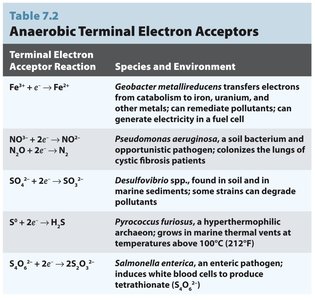
Microbes can use a variety of terminal electron acceptors in anaerobic respiration, which influences their ecological niche and identification.
Terminal Electron Acceptor Reaction | Species and Environment |
|---|---|
Fe3+ + e- → Fe2+ | Geobacter metallireducens: catabolism of iron, uranium, other metals; can remediate pollutants, generate electricity in fuel cells |
NO3- + 2e- → NO2- | Pseudomonas aeruginosa: soil bacterium, opportunistic pathogen, colonizes lungs of cystic fibrosis patients |
SO42- + 2e- → SO32- | Desulfovibrio spp.: found in soil and marine sediments, some strains degrade pollutants |
S4+ + 2e- → H2S | Pyrococcus furiosus: hyperthermophilic archaeon, grows in marine thermal vents at temperatures above 100°C |
S2O32- + 2e- → 2S0 | Salmonella enterica: enteric pathogen, induces white blood cells to produce tetrathionate |
Additional info: The diversity of terminal electron acceptors is a key factor in microbial ecology and identification.
