 Back
BackMicrobial Metabolism, Growth, Control, Genetics, and Disease Principles: Study Notes
Study Guide - Smart Notes
 Tailored notes based on your materials, expanded with key definitions, examples, and context.
Microbial Metabolism
Overview of Metabolism
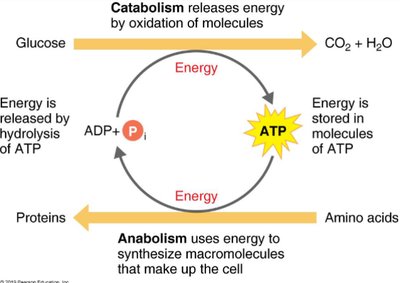
Metabolism encompasses all chemical reactions occurring within an organism, divided into catabolic (breakdown) and anabolic (synthesis) pathways. Catabolism releases energy by oxidizing molecules, while anabolism uses energy to build macromolecules.
Catabolism: Breakdown of complex molecules (e.g., glucose) to release energy, often producing CO2 and H2O.
Anabolism: Synthesis of cellular components (e.g., proteins, amino acids) using energy, typically stored in ATP.
ATP: Adenosine triphosphate is the primary energy carrier; energy is released by hydrolysis to ADP + Pi.
Oxidation-Reduction Reactions
Redox reactions are fundamental to metabolism, involving electron transfer.
Oxidation: Removal of electrons from a molecule.
Reduction: Gain of electrons by a molecule.
Redox Reaction: Paired oxidation and reduction; "Oil Rig" mnemonic: Oxidation Is Loss, Reduction Is Gain (of electrons).
Carbohydrate Catabolism
Carbohydrate breakdown for energy involves three main pathways:
Glycolysis: Glucose + 2 ATP → 2 pyruvate + 4 ATP + 2 NADH
Krebs Cycle (Citric Acid Cycle): Pyruvate enters the cycle, generating more ATP, NADH, and FADH2.
Electron Transport Chain (ETC): Series of carrier molecules undergo oxidation/reduction, creating a proton gradient used for ATP synthesis (chemiosmosis).
Summary of Respiration
Aerobic Respiration: Final electron acceptor is O2; produces water and large amounts of ATP.
Anaerobic Respiration: Final electron acceptor is not O2; yields less energy, resulting in slower growth of anaerobic bacteria.
Fermentation
Fermentation is an anaerobic process that harvests energy from organic molecules without using the Krebs cycle or ETC.
Alcohol Fermentation: Produces ethanol and CO2.
Lactic Acid Fermentation: Produces lactic acid (e.g., yogurt, muscle fatigue).
Final Electron Acceptor: An organic molecule (not O2).
Microbial Growth
Physical and Chemical Requirements
Microorganisms require specific environmental and nutritional conditions for growth.
Temperature: Psychrophiles (cold-loving), mesophiles (moderate), thermophiles (heat-loving).
pH: Fermentation can alter pH; most bacteria prefer neutral pH.
Osmotic Pressure: Hypertonic solutions cause plasmolysis; high sugar/salt preserves food.
Carbon: Essential for cell components.
Nitrogen, Sulfur, Phosphorus: Required for amino acids, nucleic acids, vitamins, ATP.
Trace Elements: Minerals like iron, copper, molybdenum.
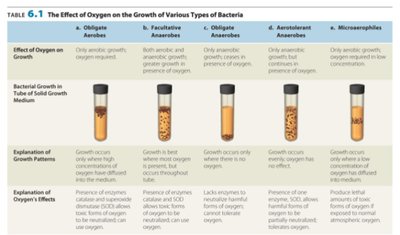
Oxygen: Essential for some, toxic for others; groups include obligate aerobes, obligate anaerobes, facultative anaerobes.
Bacterial Growth Phases
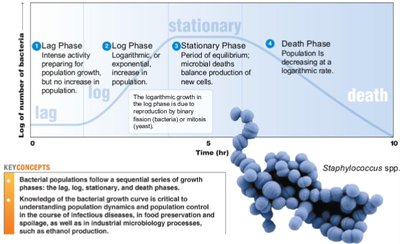
Bacterial populations grow in distinct phases: lag, log, stationary, and death.
Lag Phase: Preparation for growth, no increase in population.
Log Phase: Exponential population increase.
Stationary Phase: Balance between cell division and death.
Death Phase: Population declines at a logarithmic rate.
Bacterial Cultures and Media
Chemically Defined Media: Contains all nutrients needed for bacterial growth; can be simple or complex.
Complex Media: Includes extracts from yeasts, meats, plants.
Selective/Differential Media: Used to isolate or distinguish bacteria.
Aerobic/Anaerobic Media: Supports growth of bacteria with different oxygen requirements.
Controlling Microbial Growth
Definitions and Types of Control
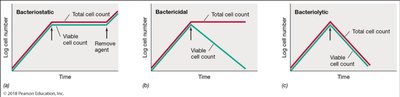
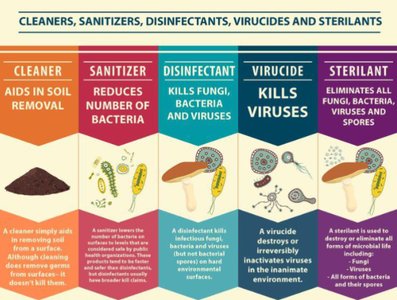
Biocidal/Bactericidal/Germicidal: Kills microorganisms (not endospores).
Bacteriostatic: Inhibits growth/multiplication.
Bacteriolytic: Lysing or breaking down bacterial cells.
Microbial Exponential Death Rate
Bacterial death occurs at a constant rate during treatment; incomplete treatment leaves survivors.
Effectiveness of Treatment
Factors: Number of microbes, environment (organic matter, temperature, biofilms), time of exposure, microbial characteristics (e.g., LPS in Gram-negative bacteria).
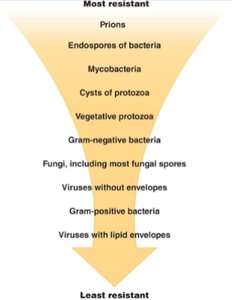
Targets and Actions of Biocides
Membrane Permeability: Altered by biocides.
Protein Denaturation: Disrupts cellular function.
Nucleic Acid Damage: Prevents replication and transcription.
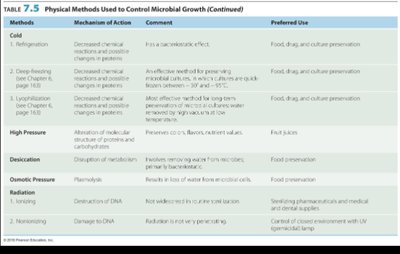
Physical Methods of Control
Heat: Denatures proteins/enzymes; boiling, autoclaving, pasteurization.
Cold: Refrigeration, deep-freezing, lyophilization.
High Pressure: Alters protein structure.
Desiccation: Removes water, inhibits growth.
Osmotic Pressure: Plasmolysis via high salt/sugar.
Radiation: Damages DNA.
Chemical Methods of Control
Alcohols: Ethanol, isopropanol; denature proteins, dissolve lipids.
Phenol/Phenolics: Disrupt plasma membranes.
Halogens: Iodine (protein synthesis, membrane disruption), chlorine (oxidizing agent).
Aldehydes: Cross-link proteins.
Hydrogen Peroxide: Oxidizing agent, best for surfaces.
Microbial Genetics
Chromosomes, Genome, and Genomics
Chromosome: Structure containing DNA and genes.
Genome: All genetic information in a cell; eukaryotes are diploid, prokaryotes are usually haploid.
Genomics: Molecular study of genomes.
Genotype: Genetic makeup.
Phenotype: Expression of genes.
Flow of Genetic Information
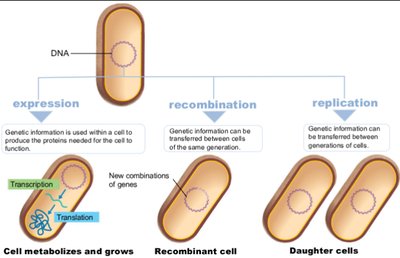
Genetic information flows from DNA to RNA to proteins.
Replication: DNA is copied for cell division.
Transcription: DNA is transcribed to mRNA by RNA polymerase; uracil replaces thymine in RNA.
Translation: mRNA is translated into proteins; codons (three bases) specify amino acids.
Cellular RNAs
rRNA: Ribosomal RNA, forms ribosome structure.
mRNA: Messenger RNA, carries gene sequence.
tRNA: Transfer RNA, matches codons to amino acids.
Principles of Disease
Pathogens and Pathogenesis
Pathogen: Organism capable of causing disease.
Pathology: Damage caused by the organism.
Pathogenesis: Process of disease development.
Disease: Abnormal state of function.
Normal Microbiota and Symbiosis
Normal Microbiota: Symbiotic microbes found on/in the body; can be beneficial.
Symbiosis: Close interaction between organisms; types include mutualism, commensalism, parasitism.
Obligate vs Opportunistic Pathogens
Obligate Pathogens: Cause disease under most circumstances.
Opportunistic Pathogens: Cause disease under unusual conditions or in weakened hosts.
Identifying Disease Causes
Koch’s Postulates: Pathogen must be isolated, grown, and cause disease in a healthy host.
Disease Occurrence and Development
Incidence: Number of new cases in a time period.
Prevalence: Total cases (old and new) at a specific time.
Endemic: Constantly present in a population.
Epidemic: Sudden increase in cases.
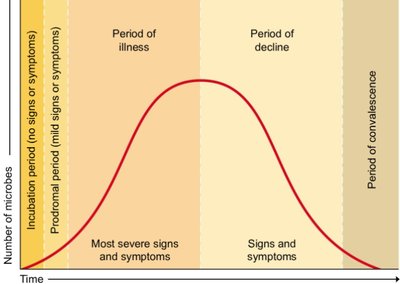
Stages of Disease
Incubation: Time between infection and symptoms.
Prodromal: Early, mild symptoms.
Illness: Severe symptoms.
Decline: Symptoms decrease.
Convalescence: Recovery period.
Disease Reservoirs
Human Reservoirs: Carriers may have minimal or no symptoms.
Animal Reservoirs: Zoonoses; animals may have minimal symptoms, humans are accidental hosts.
Non-living Reservoirs: Soil, water, food; may harbor pathogens naturally or due to pollution.
Additional info:
Microbial metabolism and genetics are foundational for understanding microbial growth, control, and disease.
Tables and images included reinforce key concepts and classifications.
