 Back
BackMicrobial Metabolism: Key Concepts and Pathways
Study Guide - Smart Notes
 Tailored notes based on your materials, expanded with key definitions, examples, and context.
Microbial Metabolism
Overview of Metabolism
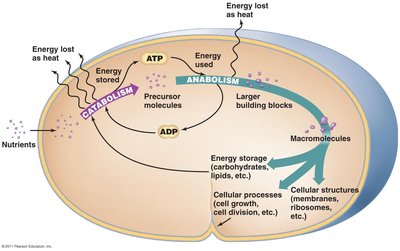
Metabolism encompasses all controlled biochemical reactions occurring within a microbe, ultimately enabling reproduction and growth. It is guided by a series of elementary statements that describe nutrient acquisition, energy utilization, and macromolecule synthesis.
Metabolism: The sum of all chemical reactions in a cell.
Cells acquire nutrients and extract energy from light or catabolism.
Energy is stored in ATP (adenosine triphosphate).
Catabolism produces precursor metabolites, which are used in anabolic reactions.
Cells grow and reproduce by assembling macromolecules.
Catabolism and Anabolism
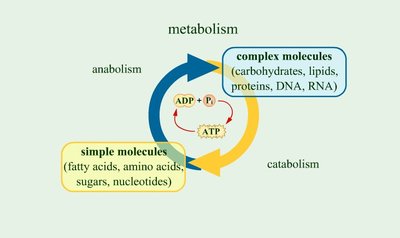
Metabolic reactions are divided into two major classes: catabolic and anabolic pathways. These processes are interconnected and essential for cellular function.
Catabolic pathways: Break down larger molecules into smaller products; exergonic (release energy).
Anabolic pathways: Synthesize large molecules from smaller products; endergonic (require energy).
ATP is central to energy transfer between these pathways.
Oxidation and Reduction Reactions
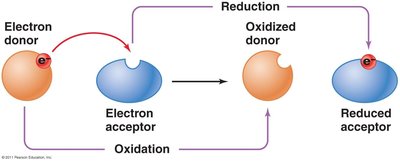
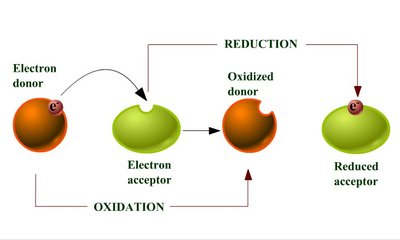
Redox reactions involve the transfer of electrons between molecules, playing a critical role in energy production and metabolic pathways.
Oxidation: Loss of electrons by a molecule.
Reduction: Gain of electrons by a molecule.
Electron carriers (NAD+, NADP+, FAD) shuttle electrons during metabolism.
Redox reactions always occur simultaneously.
ATP Production and Energy Storage
Cells release energy from nutrients and store it in ATP, which is generated through phosphorylation. There are three main mechanisms for ATP synthesis:
Substrate-level phosphorylation: Direct transfer of phosphate between substrates.
Oxidative phosphorylation: Uses energy from electron transport chain.
Photophosphorylation: Utilizes light energy (in photosynthetic organisms).
The Roles of Enzymes in Metabolism
Enzyme Structure and Function
Enzymes are organic catalysts that increase the likelihood of chemical reactions. They are classified based on their mode of action and can be composed of protein or RNA (ribozymes).
Six categories: Hydrolases, Isomerases, Ligases/polymerases, Lyases, Oxidoreductases, Transferases.
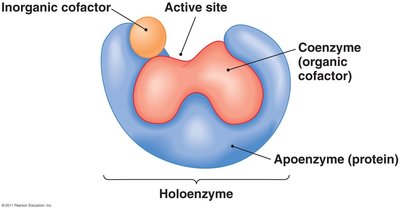
Apoenzyme: Inactive protein portion.
Cofactor: Non-protein component (inorganic or organic).
Holoenzyme: Active enzyme formed by apoenzyme and cofactor.
Enzyme-Substrate Interaction
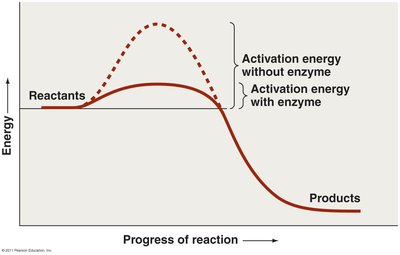
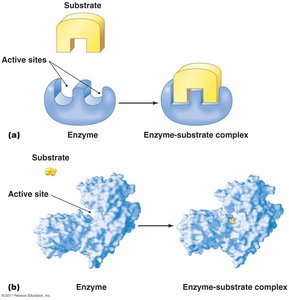
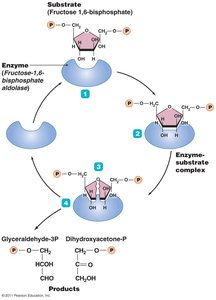
Enzymes bind substrates at their active sites, forming enzyme-substrate complexes and facilitating reactions by lowering activation energy.
Enzymes are highly specific for their substrates.
Activation energy is reduced in the presence of enzymes.
Factors Affecting Enzyme Activity
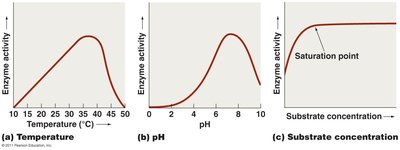
Several factors influence the rate of enzymatic reactions, including temperature, pH, substrate concentration, and the presence of inhibitors.
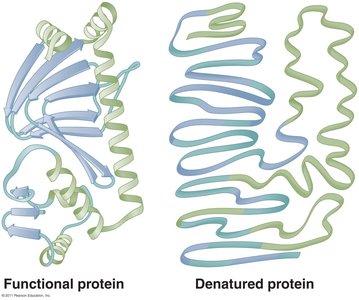
Optimal conditions are required for maximum enzyme activity.
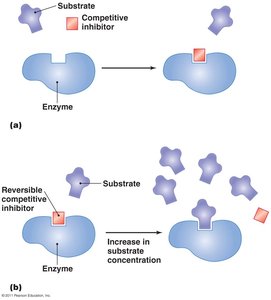
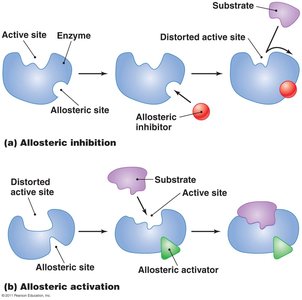
Inhibitors block enzyme activity without denaturing the enzyme.
Types of inhibition: Competitive, noncompetitive, and allosteric.
Carbohydrate Catabolism
Glucose Catabolism
Glucose is the primary energy source for many organisms and is catabolized through cellular respiration and fermentation.
Glycolysis: Splits glucose into two pyruvic acid molecules; net gain of 2 ATP and 2 NADH.
Three stages: Energy-investment, lysis, energy-conserving.
Cellular Respiration
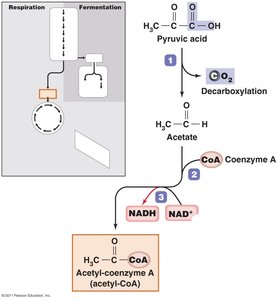
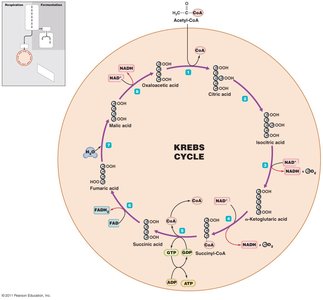
Cellular respiration completely oxidizes pyruvic acid to produce ATP via three stages: synthesis of acetyl-CoA, Krebs cycle, and electron transport chain.
Synthesis of acetyl-CoA: Produces acetyl-CoA, CO2, and NADH.
Krebs cycle: Transfers energy to NAD+ and FAD; produces ATP, FADH2, NADH, and CO2.
Electron transport chain (ETC): Series of carrier molecules; establishes proton gradient for ATP synthesis.
Chemiosmosis: ATP generated as protons flow through ATP synthase.
Fermentation
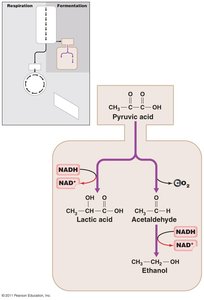
Fermentation provides an alternative pathway for NAD+ regeneration when cellular respiration is not possible, resulting in partial oxidation of sugars and production of organic end products.
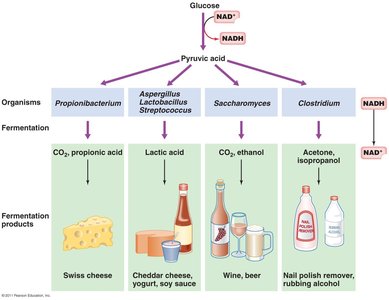
Fermentation products include lactic acid, ethanol, and other organic acids.
Different organisms produce distinct fermentation products.
Other Catabolic Pathways
Lipids and proteins can also be catabolized to provide energy and precursor metabolites for cellular processes.
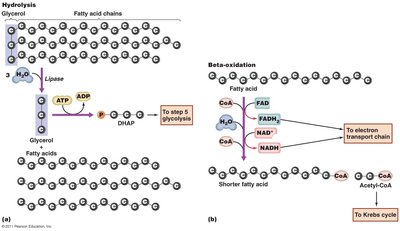
Lipid catabolism: Hydrolysis and beta-oxidation yield glycerol and fatty acids, which enter glycolysis and Krebs cycle.
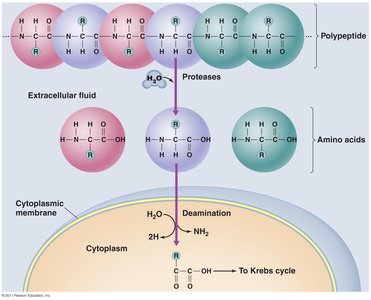
Protein catabolism: Proteases break down polypeptides; deamination allows entry into Krebs cycle.
Photosynthesis
Overview and Structures
Photosynthesis enables organisms to synthesize organic molecules from inorganic carbon dioxide using light energy. Chlorophylls and photosystems are key components.
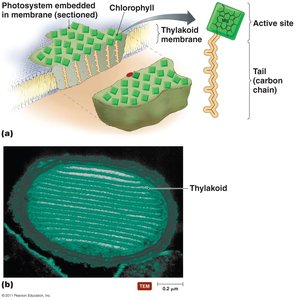
Chlorophylls: Pigments with a hydrocarbon tail and magnesium-centered active site.
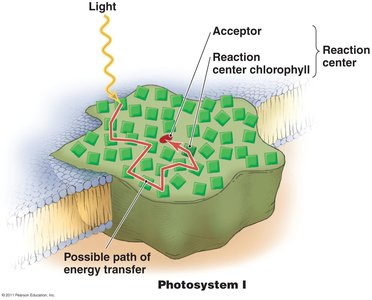
Photosystems: Light-harvesting matrices embedded in thylakoid membranes.
Thylakoids are arranged in stacks called grana; stroma is the surrounding space.
Light-Dependent and Light-Independent Reactions
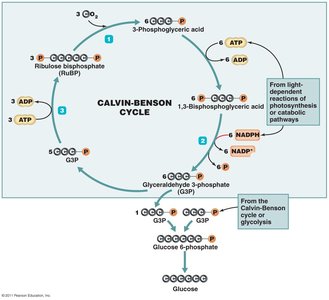
Photosynthesis consists of light-dependent reactions (requiring light) and light-independent reactions (Calvin-Benson cycle).
Light-dependent reactions: Use light energy to generate ATP and NADPH via photophosphorylation.
Light-independent reactions: Use ATP and NADPH to fix carbon dioxide into glucose.
Calvin-Benson cycle is the key pathway for carbon fixation.
Other Anabolic Pathways
Amphibolic Pathways and Biosynthesis
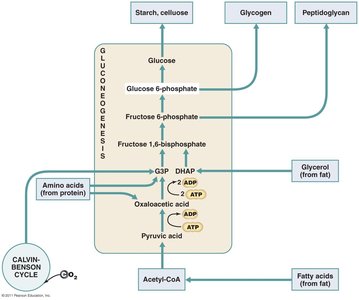
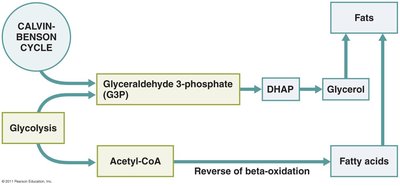
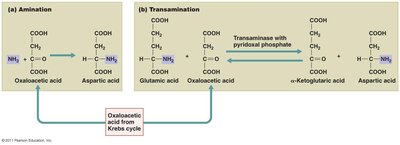
Anabolic reactions synthesize macromolecules using energy and metabolites derived from catabolic pathways. Many pathways are amphibolic, proceeding in both directions.
Gluconeogenesis: Synthesis of glucose from non-carbohydrate precursors.
Biosynthesis of fats: Reverse of beta-oxidation.
Synthesis of amino acids: Amination and transamination reactions.
Biosynthesis of nucleotides: Involves pentose phosphate pathway and other intermediates.
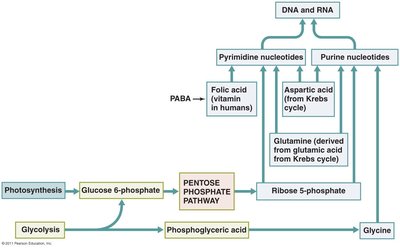
Integration and Regulation of Metabolic Function
Regulation Mechanisms
Cells regulate metabolism by controlling enzyme synthesis and activity, isolating pathways within organelles, and using feedback inhibition.
Enzyme synthesis is regulated by gene expression.
Metabolic activity is regulated by allosteric sites and feedback inhibition.
Cells prioritize energy-efficient substrates and cease synthesis of metabolites when available.
Amphibolic pathways are regulated by requiring different coenzymes for each direction.
Pathway | Key Features |
|---|---|
Catabolism | Breakdown, energy release, precursor metabolites |
Anabolism | Synthesis, energy consumption, macromolecule formation |
Amphibolic | Bidirectional, shared intermediates |
Example: Feedback inhibition in amino acid biosynthesis slows production when the end product accumulates.
