 Back
BackMicrobial Metabolism: Key Concepts and Pathways
Study Guide - Smart Notes
 Tailored notes based on your materials, expanded with key definitions, examples, and context.
Microbial Metabolism
Overview of Metabolism
Metabolism encompasses all controlled biochemical reactions occurring within a microbe, with the ultimate function of reproducing the organism. It is guided by a series of elementary statements that describe nutrient acquisition, energy utilization, and cellular growth.
Metabolism: The sum of all chemical reactions in a cell.
Cells acquire nutrients, extract energy, and use it to build macromolecules and reproduce.
Energy is primarily stored in adenosine triphosphate (ATP).
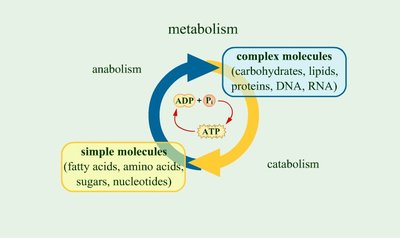
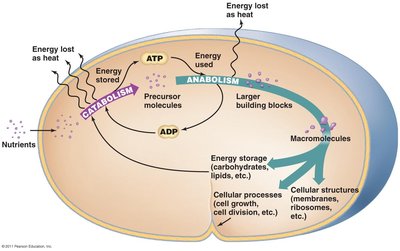
Catabolism and Anabolism
Metabolic reactions are divided into two major classes: catabolic and anabolic pathways. Catabolism breaks down complex molecules, releasing energy, while anabolism builds complex molecules, requiring energy input.
Catabolic pathways: Break larger molecules into smaller products; exergonic (release energy).
Anabolic pathways: Synthesize large molecules from smaller products; endergonic (require energy).
ATP is generated during catabolism and consumed during anabolism.
Oxidation and Reduction Reactions
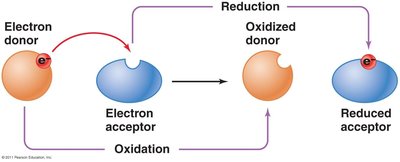
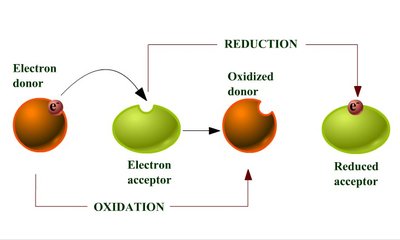
Redox reactions involve the transfer of electrons from an electron donor to an electron acceptor. These reactions are fundamental to energy extraction in cells and always occur simultaneously.
Oxidation: Loss of electrons.
Reduction: Gain of electrons.
Cells use electron carriers such as NAD+, NADP+, and FAD.
ATP Production and Energy Storage
Organisms release energy from nutrients and store it in ATP. ATP is produced by phosphorylation, which can occur via substrate-level, oxidative, or photophosphorylation.
Phosphorylation: Addition of phosphate to a substrate.
Three mechanisms: substrate-level, oxidative, and photophosphorylation.
Anabolic pathways use ATP by breaking a phosphate bond.
The Roles of Enzymes in Metabolism
Enzyme Structure and Function
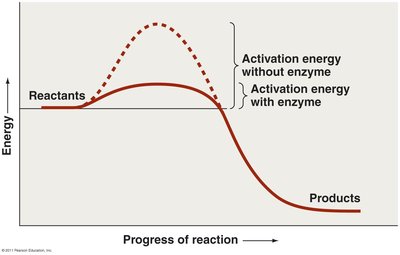
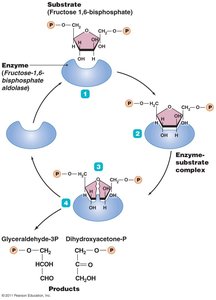
Enzymes are organic catalysts that increase the likelihood of chemical reactions. They are classified based on their mode of action and can be proteins or RNA molecules (ribozymes).
Six categories: hydrolases, isomerases, ligases/polymerases, lyases, oxidoreductases, transferases.
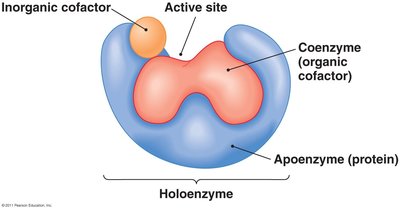
Apoenzyme: Inactive protein portion.
Cofactor: Non-protein component (inorganic or organic).
Holoenzyme: Active enzyme with bound cofactors.
Enzyme Activity and Regulation
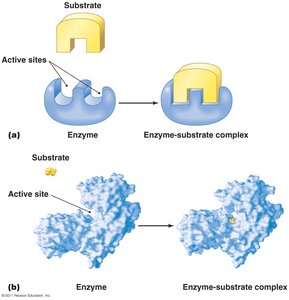
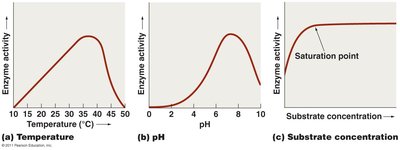
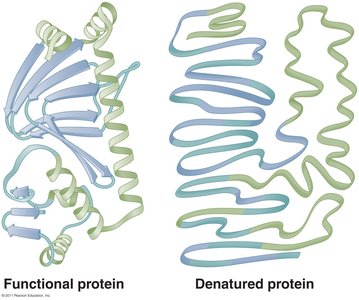
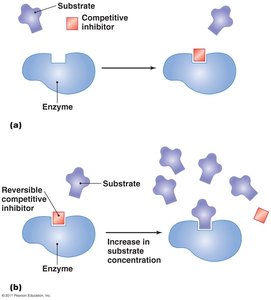
Enzyme activity is influenced by temperature, pH, substrate concentration, and inhibitors. Inhibitors block the active site but do not denature the enzyme.
Optimal conditions maximize enzyme activity.
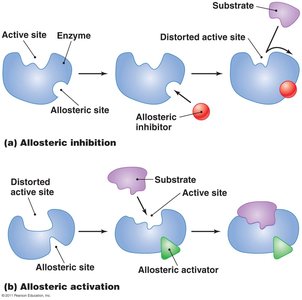
Competitive inhibitors bind to the active site; noncompetitive inhibitors bind elsewhere.
Allosteric regulation involves binding at a site other than the active site, altering enzyme activity.
Carbohydrate Catabolism
Glycolysis
Glycolysis is the primary pathway for glucose catabolism, occurring in the cytoplasm and resulting in pyruvic acid, ATP, and NADH.
Three stages: energy-investment, lysis, energy-conserving.
Net gain: 2 ATP, 2 NADH, 2 pyruvic acid.
Cellular Respiration
Cellular respiration completely oxidizes pyruvic acid to produce ATP via three stages: synthesis of acetyl-CoA, Krebs cycle, and electron transport chain.
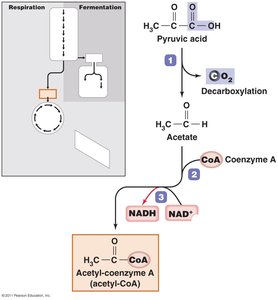
Synthesis of acetyl-CoA: Produces acetyl-CoA, CO2, NADH.
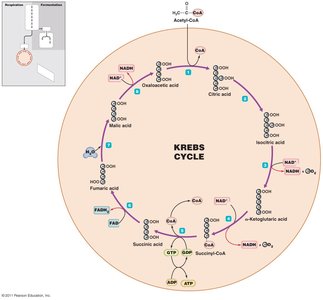
Krebs cycle: Transfers energy to NAD+ and FAD, produces ATP, FADH2, NADH, CO2.
Electron transport chain (ETC): Series of carrier molecules; creates proton gradient for ATP synthesis.
Aerobic respiration uses O2 as final electron acceptor; anaerobic uses other molecules.
Fermentation
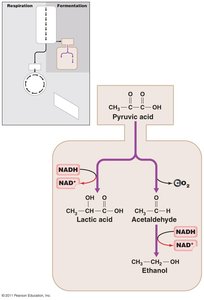
Fermentation provides an alternative pathway for NAD+ regeneration when cellular respiration is not possible. It results in partial oxidation of sugars and produces various organic products.
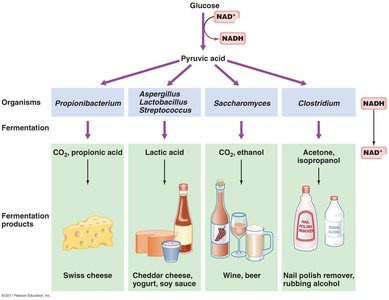
Common products: lactic acid, ethanol, propionic acid, acetone.
Fermentation is essential for many industrial and food processes.
Other Catabolic Pathways
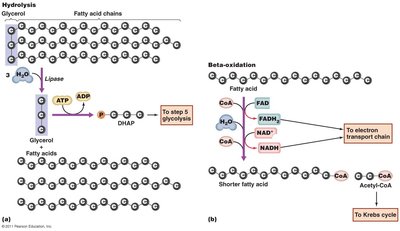
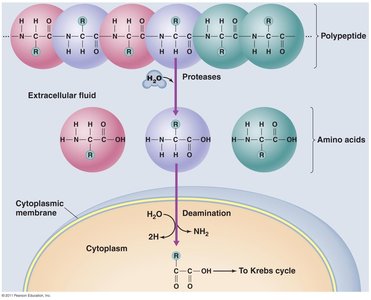
Lipids and proteins can also be catabolized for energy. Lipid catabolism involves hydrolysis and beta-oxidation, while protein catabolism involves deamination.
Lipids: Glycerol enters glycolysis; fatty acids undergo beta-oxidation.
Proteins: Proteases break down polypeptides; amino acids are deaminated and enter the Krebs cycle.
Photosynthesis
Overview and Structures
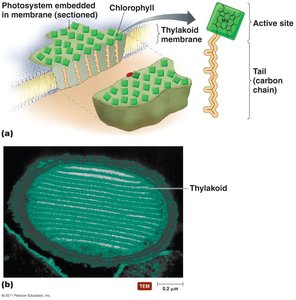
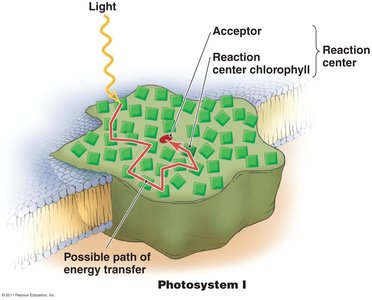
Photosynthesis is the process by which organisms synthesize organic molecules from CO2 and H2O using light energy. Chlorophylls and photosystems are key components.
Chlorophylls: Pigments that capture light energy.
Photosystems: Light-harvesting complexes embedded in thylakoid membranes.
Prokaryotes: Thylakoids are invaginations of the cytoplasmic membrane.
Eukaryotes: Thylakoids are within chloroplasts, arranged in grana.
Light-Dependent and Light-Independent Reactions
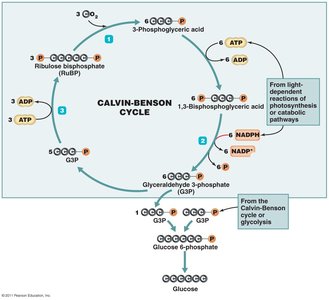
Photosynthesis consists of light-dependent reactions (require light) and light-independent reactions (Calvin-Benson cycle).
Light-dependent: Generate ATP and NADPH via photophosphorylation.
Light-independent: Use ATP and NADPH to fix carbon and synthesize glucose.
Other Anabolic Pathways
Gluconeogenesis, Fat, Amino Acid, and Nucleotide Biosynthesis
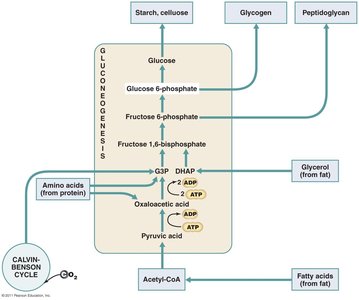
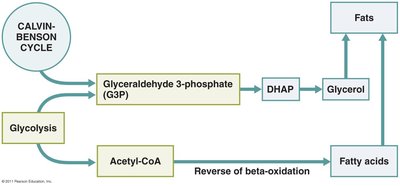
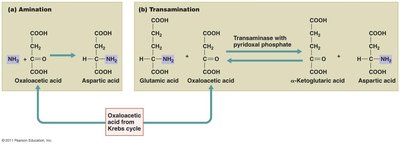
Anabolic reactions synthesize essential biomolecules using energy and precursor metabolites. Many pathways are amphibolic, proceeding in both directions.
Gluconeogenesis: Synthesis of glucose from non-carbohydrate precursors.
Biosynthesis of fat: Formation of fatty acids and glycerol.
Amino acid synthesis: Amination and transamination reactions.
Nucleotide biosynthesis: Formation of DNA and RNA building blocks.
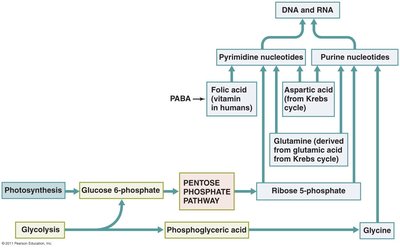
Integration and Regulation of Metabolic Function
Regulation Mechanisms
Cells regulate metabolism by controlling enzyme synthesis and activity, isolating pathways in organelles, and using feedback inhibition.
Gene expression: Controls amount and timing of enzyme production.
Metabolic expression: Controls activity of enzymes once produced.
Feedback inhibition: Stops anabolic pathways when products are abundant.
Amphibolic pathways: Require different coenzymes for regulation.
Summary Table: Types of Metabolic Regulation
Regulation Type | Mechanism | Example |
|---|---|---|
Gene Expression | Control of enzyme synthesis | Inducible operons |
Metabolic Expression | Control of enzyme activity | Allosteric inhibition |
Feedback Inhibition | Product inhibits pathway | End-product inhibition |
Additional info: Amphibolic pathways are those that function in both catabolic and anabolic directions, depending on cellular needs.
