 Back
BackMicrobial Metabolism, Nutrition, Bioenergetics, and Growth
Study Guide - Smart Notes
 Tailored notes based on your materials, expanded with key definitions, examples, and context.
Microbial Metabolism and Nutrition
Metabolism: Catabolism and Anabolism
Metabolism encompasses all life-sustaining chemical transformations within cells. It is divided into two main processes:
Catabolism: Energy-releasing reactions (exergonic) that break down molecules.
Anabolism: Energy-requiring reactions (endergonic) that build cellular components.
Microbes display tremendous metabolic diversity, but all require liquid water, nutrients, free energy, and a source of electrons for biochemical reactions.
Microbial Nutrition: Macronutrients and Micronutrients
Microbial nutrition involves the acquisition of essential compounds for growth:
Macronutrients: Required in large quantities (e.g., C, H, O, N, P, S, K, Mg, Na, Ca, Fe).
Micronutrients: Needed in trace amounts (e.g., Mn, Zn, Co, Cu, Mo, Ni).
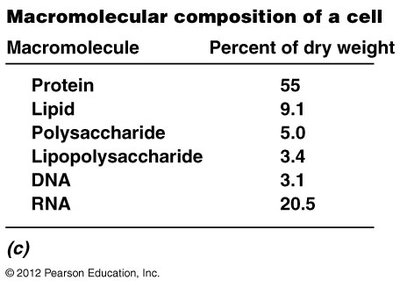
Cells are composed of various macromolecules and elements:
Macromolecule | Percent of dry weight |
|---|---|
Protein | 55 |
Lipid | 9.1 |
Polysaccharide | 5.0 |
Lipopolysaccharide | 3.4 |
DNA | 3.1 |
RNA | 20.5 |
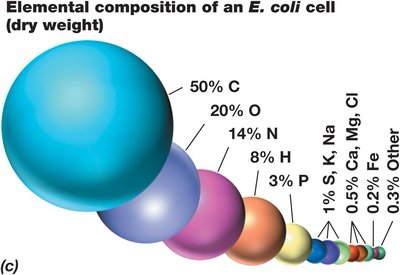
The elemental composition of an E. coli cell (dry weight) is dominated by carbon, oxygen, nitrogen, hydrogen, and phosphorus.
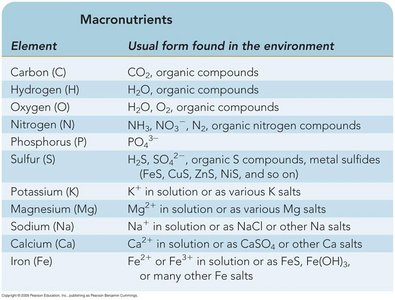
Macronutrients are typically acquired in specific forms from the environment:
Element | Usual form found in the environment |
|---|---|
Carbon (C) | CO2, organic compounds |
Hydrogen (H) | H2O, organic compounds |
Oxygen (O) | H2O, O2, organic compounds |
Nitrogen (N) | NH3, NO3-, N2, organic nitrogen compounds |
Phosphorus (P) | PO43- |
Sulfur (S) | H2S, SO42-, organic S compounds, metal sulfides |
Potassium (K) | K+ in solution or as various K salts |
Magnesium (Mg) | Mg2+ in solution or as Mg salts |
Sodium (Na) | Na+ in solution or as NaCl or other Na salts |
Calcium (Ca) | Ca2+ in solution or as CaSO4 or other Ca salts |
Iron (Fe) | Fe2+ or Fe3+ in solution or as FeS, Fe(OH)3, or other Fe salts |
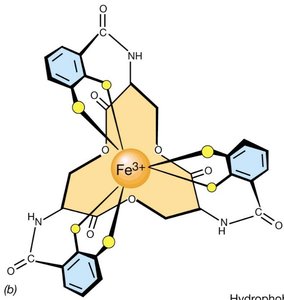
Iron Acquisition by Siderophores
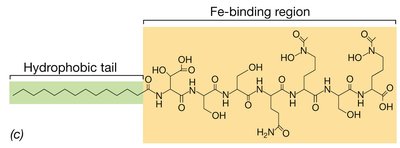
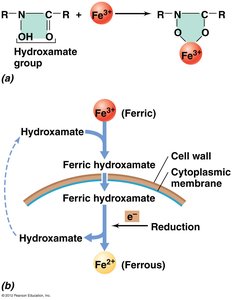
Iron is an essential micronutrient, often limiting in the environment. Microbes produce siderophores, specialized molecules with high affinity for iron, to facilitate its uptake.
Phenolic siderophores: e.g., Enterobactin in E. coli
Peptide siderophores: e.g., Aquachelin in marine microorganisms
Hydroxamate siderophores: Recycled compounds for iron acquisition
Some bacteria use "iron abstinence" and substitute manganese (Mn) instead
Carbon and Energy Acquisition in Microbes
Carbon Acquisition: Heterotrophy vs. Autotrophy
All life requires carbon, which is acquired in two main ways:
Heterotrophy: Carbon from organic compounds
Autotrophy: Carbon from CO2
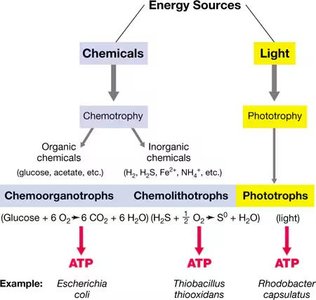
Energy Production: Chemotrophy and Phototrophy
Microbes harness energy from various sources:
Phototrophy: Energy from light
Chemoorganotrophy: Energy from oxidation of organic chemicals
Chemolithotrophy: Energy from oxidation of inorganic chemicals
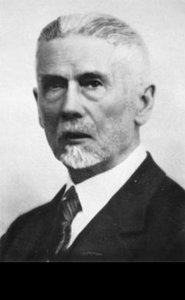
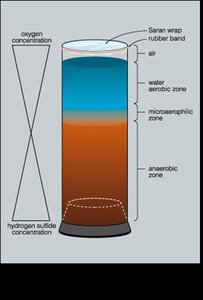
Chemolithotrophy was pioneered by Sergei Winogradsky, who studied bacterial diversity and nutrient cycling.
Bioenergetics: Free Energy and Energy Conservation
Principles of Bioenergetics
Bioenergetics is the study of energy flow and conservation in biological systems. Key concepts include:
Free energy (G): Energy available to do work, measured in kJ
ΔG: Change in Gibbs free energy
Exergonic reactions: ΔG negative, energy released
Endergonic reactions: ΔG positive, energy required
Calculation of ΔG0' (standard conditions):
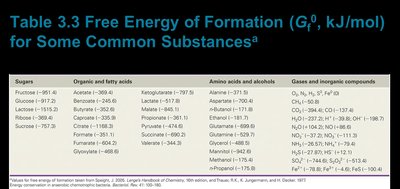
Actual free energy change in nature:
R = gas constant, T = temperature, K = equilibrium constant
Energy Storage and High-Energy Compounds
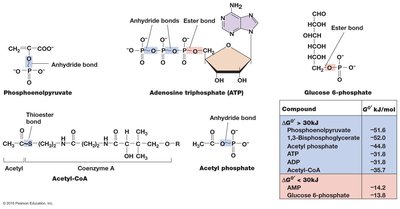
Cells conserve energy in high-energy phosphate bonds:
ATP: Primary energy currency, low concentrations in cells
Phosphoenolpyruvate, Acetyl phosphate, Acetyl CoA: Higher energy than ATP
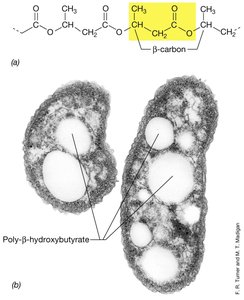
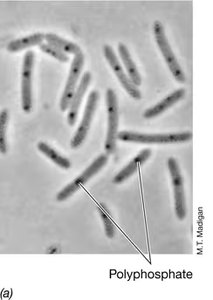
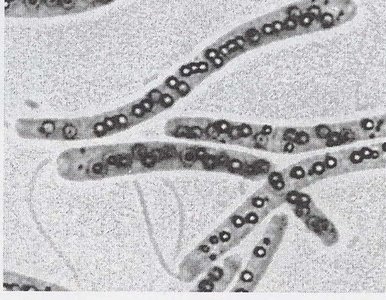
Energy is stored in polymers like glycogen, polyhydroxybutyrate (PHB), and elemental sulfur
Enzymes and Catalysis
Enzyme Function and Structure
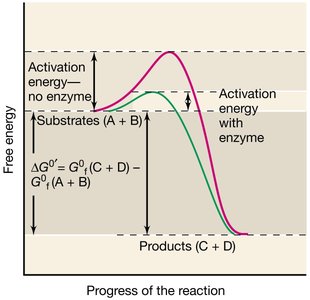
Enzymes are biological catalysts that lower activation energy and increase reaction rates without altering the equilibrium or energetics of a reaction.
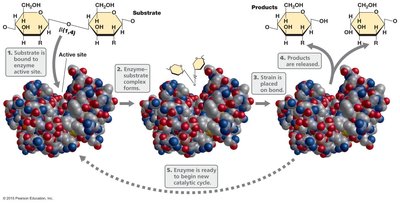
Highly specific due to their 3D structure
Active site: Region where substrate binds and reaction occurs
Enzymes are not consumed in the reaction
Enzyme structure is primarily protein, sometimes aided by small non-protein molecules:
Prosthetic groups: Tightly bound, permanent (e.g., cytochromes, heme)
Coenzymes: Loosely bound, intermediate carriers (e.g., NAD+, NADH)
Protein Folding and Chaperones
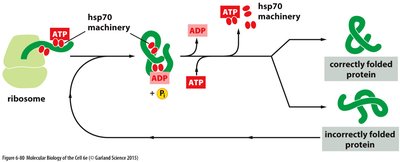
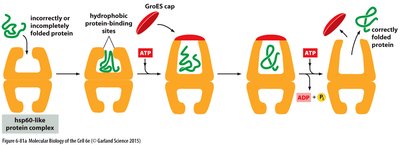
Chaperones assist in proper protein folding, preventing aggregation and misfolding. ATP hydrolysis drives cycles of binding and release.
Redox Reactions and Electron Carriers
Oxidation-Reduction (Redox) Chemistry
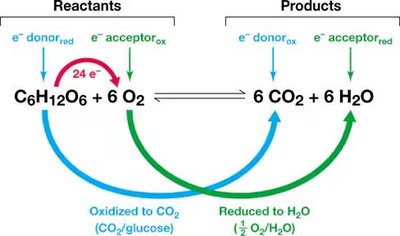
Redox reactions involve electron transfer:
Oxidation: Loss of electrons
Reduction: Gain of electrons
OILRIG: Oxidation Is Loss, Reduction Is Gain
Electron donors are oxidized; electron acceptors are reduced. Redox reactions drive energy generation in catabolism.
Reduction Potential and the Redox Tower
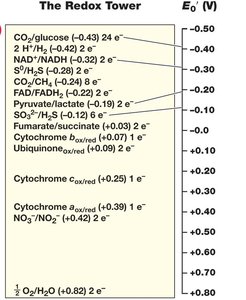
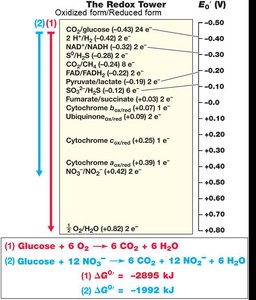
The tendency of a substance to be reduced or oxidized is measured by its reduction potential (E0'), in volts. The redox tower arranges couples by reduction potential:
Most negative at the top: greatest tendency to donate electrons
Most positive at the bottom: greatest tendency to accept electrons
The greater the drop, the greater the energy release
Relationship between reduction potential and free energy:
n = number of electrons transferred, F = Faraday constant (96.5 kJ/V)
Electron Carriers
Electron carriers mediate electron transfer in cells:
Diffusible: NAD(H), NADP(H), FAD(H2)
Fixed: Cytochromes, iron-sulfur proteins, quinones (membrane-associated)
Diffusible carriers transport electrons and protons; fixed carriers are part of electron transport chains and generate proton motive force (PMF).
Fermentation and Respiration
Fermentation vs. Respiration
Fermentation and respiration are two major catabolic pathways:
Fermentation: Redox reactions occur without an exogenous terminal electron acceptor; ATP is generated by substrate-level phosphorylation.
Respiration: Requires an exogenous electron acceptor (e.g., O2 for aerobic, nitrate for anaerobic); ATP is generated by oxidative phosphorylation via PMF.
Glycolysis and Fermentation Pathways
Glycolysis is the central pathway for glucose catabolism, leading to pyruvate. Fermentation pathways convert pyruvate to various products (e.g., lactic acid, ethanol) and recycle NADH.
Fermentative Diversity
Microbes can ferment a variety of sugars and polysaccharides, yielding diverse products such as alcohol, lactic acid, propionic acid, and mixed acids.
Respiration and Electron Transport Chains
Membrane-Associated Electron Carriers
Respiration involves electron transport chains (ETCs) in membranes, generating PMF:
NADH dehydrogenase: Accepts electrons and protons
Flavoproteins (FMN, FAD): Accept electrons and protons, transfer electrons only
Cytochromes: Iron-containing proteins, transport electrons only
Iron-sulfur proteins: Transport electrons only
Quinones: Lipid-soluble, accept electrons and protons, donate electrons only
Proton Motive Force and ATP Synthesis
Electron transport chains create a proton gradient (PMF) across the membrane, which powers ATP synthase to produce ATP by oxidative phosphorylation.
Microbial Growth and Cell Division
Binary Fission and Cell Division Machinery
Microbial growth occurs via binary fission, requiring coordinated cell wall synthesis and division:
Divisome: Protein complex centered on FtsZ, forms contractile ring at mid-cell
MinCDE system: Oscillates to ensure FtsZ ring forms at mid-cell
MreB: Actin-like protein, determines rod shape by recruiting cell wall synthesis proteins
Cell Wall Synthesis
Cell wall synthesis involves:
Autolysins: Enzymes that create openings in the wall
Bactoprenol: Lipid carrier transporting peptidoglycan precursors
Transpeptidation: Crosslinking peptidoglycan layers (targeted by penicillin)
Bacterial Population Growth
Bacterial populations grow exponentially, with generation time depending on species and conditions. Growth phases in batch culture include lag, exponential, stationary, and death.
Measuring Microbial Growth
Microscopic counts: Direct cell counting, cannot distinguish live/dead
Viable plate counts: Colony-forming units (CFUs), requires serial dilution
Turbidity: Optical density measurements using spectrophotometer
Chemostat: Continuous culture system maintaining steady-state growth
Environmental Factors Affecting Microbial Growth
Temperature
Microbes classified as psychrophiles, mesophiles, thermophiles, or hyperthermophiles
pH
Acidophiles, alkaliphiles, neutrophiles
Microbes maintain near-neutral cytoplasmic pH
Water Availability
Measured as water activity (Aw), ranges from 0 to 1
Halophiles (salt-loving), osmophiles (sugar-loving), xerophiles (dry-loving)
Use compatible solutes to maintain osmotic balance
Oxygen Requirements
Obligate aerobes, obligate anaerobes, facultative anaerobes, microaerophiles, aerotolerant anaerobes
Oxygen toxicity managed by enzymes: catalase, peroxidase, superoxide dismutase
Summary Table: Microbial Metabolic Diversity
Metabolic Type | Energy Source | Carbon Source | Example |
|---|---|---|---|
Chemoorganotroph | Organic chemicals | Organic compounds | Escherichia coli |
Chemolithotroph | Inorganic chemicals | CO2 | Thiobacillus thiooxidans |
Phototroph | Light | CO2 or organic compounds | Rhodobacter capsulatus |
Key Equations
Additional info:
Some details were inferred and expanded for completeness, such as the role of compatible solutes, the specifics of cell wall synthesis, and the summary table of metabolic diversity.
