 Back
Microbial Metabolism: Pathways, Energy Production, and Regulation
Study Guide - Smart Notes
 Tailored notes based on your materials, expanded with key definitions, examples, and context.
Microbial Metabolism
Overview of Metabolism
Metabolism is the collection of controlled biochemical reactions that occur within a microbe. The ultimate function of metabolism is to enable the organism to reproduce. Metabolic processes are highly regulated and involve the transformation of energy and matter to support cellular growth and division.
Catabolism: The breakdown of larger molecules into smaller ones, releasing energy (exergonic).
Anabolism: The synthesis of complex molecules from simpler ones, requiring energy input (endergonic).
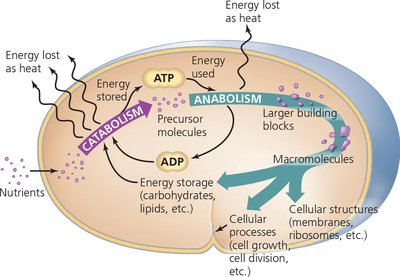
Eight Basic Steps of Metabolic Processes
Acquisition of nutrients by the cell.
Energy acquisition from light or catabolism of nutrients.
Energy storage in the chemical bonds of ATP.
Catabolism of nutrients to form precursor metabolites with the help of enzymes.
Use of precursor metabolites, ATP, and enzymes in anabolic reactions.
Polymerization of macromolecules by enzymes and ATP.
Assembly of macromolecules into cellular structures for growth.
Cell reproduction after doubling in size.
Catabolic and Anabolic Pathways
Catabolic Pathways
Catabolic pathways break down larger molecules into smaller products, releasing energy that is often stored as ATP or lost as heat. These reactions are essential for providing the energy and precursor metabolites required for cellular processes.
Anabolic Pathways
Anabolic pathways use energy (usually from ATP) to synthesize large molecules from the smaller products of catabolism. These reactions are crucial for cell growth, repair, and reproduction.
Carbohydrate Catabolism
Glucose as a Primary Energy Source
Many organisms oxidize carbohydrates, especially glucose, as their main energy source. Glucose catabolism occurs via two main processes:
Cellular Respiration: Complete breakdown of glucose into CO2 and H2O, generating ATP.
Fermentation: Partial oxidation of glucose, resulting in organic waste products and less ATP.
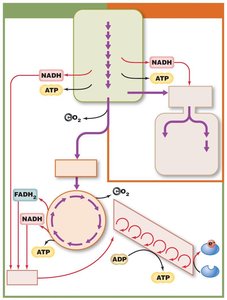
Glycolysis (Embden-Meyerhof Pathway)
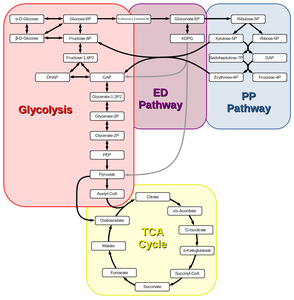
Glycolysis is a universal pathway that occurs in the cytoplasm of most cells. It involves splitting a six-carbon glucose into two three-carbon pyruvic acid molecules. The process yields a net gain of two ATP molecules, two NADH, and two pyruvic acid molecules.
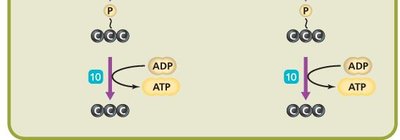
Substrate-level phosphorylation: Direct transfer of phosphate groups to ADP to form ATP.
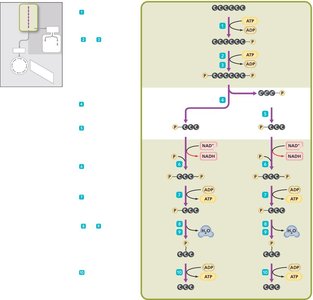
Stages of Glycolysis
Energy-Investment Stage: ATP is used to phosphorylate glucose and its intermediates.
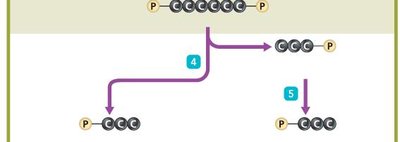
Lysis Stage: The six-carbon sugar is split into two three-carbon molecules.
Energy-Conserving Stage: ATP and NADH are produced.
Cellular Respiration
Cellular respiration is the complete oxidation of pyruvic acid to CO2 and H2O, producing large amounts of ATP via redox reactions. It consists of three main stages:
Synthesis of acetyl-CoA
Krebs cycle (Citric Acid Cycle)
Electron Transport Chain (ETC)
Synthesis of Acetyl-CoA
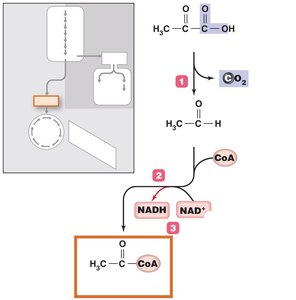
Pyruvic acid is decarboxylated to acetate, which is then attached to coenzyme A, forming acetyl-CoA.
One NADH and one CO2 are produced per pyruvic acid.
Krebs Cycle (Citric Acid Cycle)
The Krebs cycle completes the oxidation of glucose by transferring energy to NAD+ and FAD, forming NADH and FADH2. It occurs in the cytosol of prokaryotes and the mitochondrial matrix of eukaryotes.
Each acetyl-CoA yields two CO2, three NADH, one FADH2, and one ATP (via substrate-level phosphorylation).
Two turns of the cycle are required per glucose molecule.
Electron Transport Chain (ETC) and Chemiosmosis
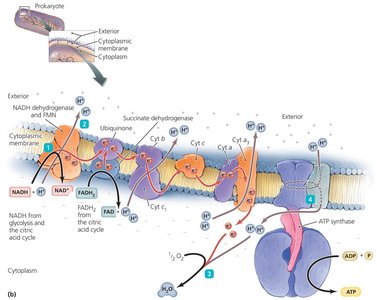
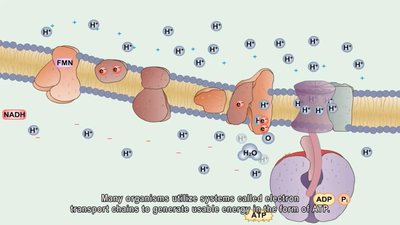
The ETC is a series of carrier molecules that transfer electrons to a final electron acceptor. The energy released is used to pump protons across the membrane, creating a proton gradient that drives ATP synthesis via chemiosmosis.
Aerobic respiration: Oxygen is the final electron acceptor, producing water.
Anaerobic respiration: Other inorganic molecules (e.g., nitrate, sulfate) serve as final electron acceptors.
Alternative Glycolytic Pathways
Entner-Doudoroff (ED) Pathway: Found in some prokaryotes, yields 1 ATP, 1 NADH, and 1 NADPH per glucose.
Pentose Phosphate Pathway (PPP): Produces precursor metabolites, NADPH, and ribose-5-phosphate for nucleotide synthesis; yields 1 ATP per glucose.
Fermentation
Fermentation Pathways
Fermentation occurs when cells cannot completely oxidize glucose by respiration, often due to the absence of a suitable final electron acceptor. It provides an alternative source of NAD+ by partially oxidizing sugar to organic waste products.
Common fermentation products include lactic acid, ethanol, propionic acid, acetone, and isopropanol.
Fermentation yields only 2 ATP per glucose molecule.
Process | Oxygen Required | Type of Phosphorylation | Final Electron Acceptor | ATP Yield (per glucose) |
|---|---|---|---|---|
Aerobic Respiration | Yes | Substrate-level & oxidative | Oxygen | 38 (prokaryotes) |
Anaerobic Respiration | No | Substrate-level & oxidative | Inorganic molecules (NO3-, SO42-, CO32-) | 4–36 |
Fermentation | No | Substrate-level | Organic molecules (lactic acid, ethanol, etc.) | 2 |
Catabolism of Other Organic Molecules
Lipid Catabolism
Lipids are hydrolyzed by lipases into glycerol and fatty acids. Glycerol enters glycolysis as DHAP, while fatty acids undergo beta-oxidation to form acetyl-CoA, NADH, and FADH2.
ATP yield from fatty acid oxidation can be calculated using: , where N = number of carbons.
Protein Catabolism
Proteins are broken down by proteases into amino acids, which are then deaminated. The resulting molecules enter the Krebs cycle, while amino groups are recycled or excreted as waste.
Anabolic Pathways and Amphibolic Reactions
Anabolic Reactions
Anabolic reactions synthesize carbohydrates, lipids, amino acids, and nucleotides using energy from ATP and precursor metabolites. Many anabolic pathways are the reverse of catabolic pathways (amphibolic).
Gluconeogenesis: Synthesis of sugars from non-carbohydrate precursors (e.g., fats, proteins).
Lipid biosynthesis: Formation of fats and phospholipids from acetyl-CoA and glycerol.
Amino acid biosynthesis: Amination and transamination of glycolytic and Krebs cycle intermediates.
Nucleotide biosynthesis: Requires ribose-5-phosphate (PPP), amino acids, and ATP.
Regulation of Metabolic Pathways
Mechanisms of Regulation
Control of gene expression: Regulates the amount and timing of enzyme production.
Control of metabolic expression: Regulates enzyme activity through allosteric sites and feedback inhibition.
Compartmentalization: Eukaryotic cells isolate metabolic pathways within organelles.
Preference for more energy-efficient substrates when multiple sources are available.
