 Back
Microbial Metabolism: Pathways, Enzymes, and Energy Production
Study Guide - Smart Notes
 Tailored notes based on your materials, expanded with key definitions, examples, and context.
Microbial Metabolism
Overview of Metabolism
Microbial metabolism encompasses all chemical reactions occurring within a microbial cell. These reactions provide energy, precursor molecules for biosynthesis, and maintain cellular structures, ultimately supporting growth and reproduction. Metabolic reactions are organized into pathways, where the product of one reaction serves as the substrate for the next.
Catabolism: Breakdown of complex molecules into simpler ones, releasing energy (exergonic).
Anabolism: Synthesis of complex molecules from simpler ones, requiring energy (endergonic).
ATP: The primary energy currency, linking catabolic and anabolic reactions.
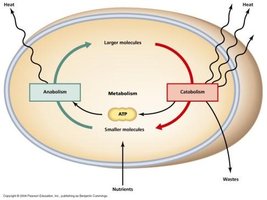
Additional info: Catabolic and anabolic pathways are interdependent, with catabolism providing energy and precursor metabolites for anabolism.
Basic Chemical Reactions in Metabolism
Catabolism and Anabolism
Catabolic reactions break down large molecules, releasing energy stored in ATP and generating precursor metabolites. Anabolic reactions use this energy and these metabolites to build cellular components.
Catabolic Example: Hydrolysis of starch to glucose.
Anabolic Example: Synthesis of proteins from amino acids.
Oxidation and Reduction Reactions
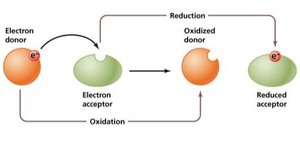
Oxidation-reduction (redox) reactions involve the transfer of electrons between molecules. These reactions are coupled: one molecule is oxidized (loses electrons), and another is reduced (gains electrons).
Oxidation: Loss of electrons or hydrogen, or gain of oxygen.
Reduction: Gain of electrons or hydrogen.
Electron Carriers: NAD+, NADP+, and FAD are key coenzymes that shuttle electrons in metabolic pathways.
ATP Production and Energy Storage
Phosphorylation Mechanisms
ATP is generated by adding a phosphate group to ADP, a process called phosphorylation. There are three main mechanisms:
Substrate-level phosphorylation: Direct transfer of phosphate from an organic substrate to ADP.
Oxidative phosphorylation: Energy from redox reactions in the electron transport chain is used to attach inorganic phosphate to ADP.
Photophosphorylation: Light energy is used to phosphorylate ADP (in photosynthetic organisms).
The Roles of Enzymes in Metabolism
Enzyme Structure and Function
Enzymes are biological catalysts, mostly proteins, that speed up metabolic reactions by lowering activation energy. They are highly specific for their substrates and are not consumed in the reaction.
Apoenzyme: Protein portion of an enzyme.
Cofactor: Non-protein component (inorganic or organic, the latter called coenzymes).
Holoenzyme: Complete, active enzyme with its cofactor.
Enzyme activity is affected by temperature, pH, substrate concentration, and inhibitors.
Enzyme Inhibition
Competitive Inhibition: Inhibitor competes with substrate for the active site.
Noncompetitive (Allosteric) Inhibition: Inhibitor binds to a site other than the active site, changing enzyme shape and function.
Feedback Inhibition: End product of a pathway inhibits an enzyme involved early in the pathway, regulating metabolic flux.
Carbohydrate Catabolism
Glycolysis
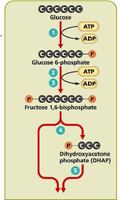
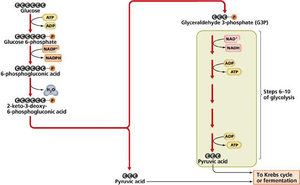
Glycolysis is the central pathway for glucose catabolism, occurring in the cytosol. It consists of 10 steps grouped into three stages: energy-investment, lysis, and energy-conservation. The net result is the conversion of one glucose molecule into two pyruvate molecules, with a net gain of 2 ATP and 2 NADH.
Alternative Pathways
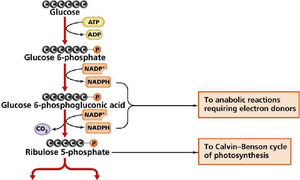
Pentose Phosphate Pathway: Generates NADPH and five-carbon sugars for anabolic reactions.
Entner-Doudoroff Pathway: Alternative to glycolysis, producing NADPH and precursor metabolites.
Cellular Respiration
Synthesis of Acetyl-CoA
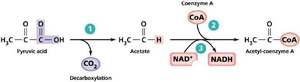
Before entering the Krebs cycle, pyruvate is converted to acetyl-CoA via decarboxylation, producing NADH and CO2.
Krebs Cycle (Citric Acid Cycle)
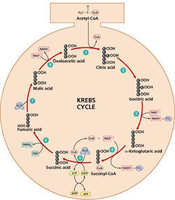
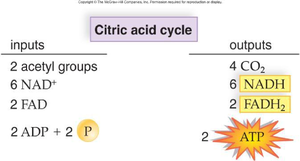
The Krebs cycle completes the oxidation of acetyl-CoA, generating NADH, FADH2, ATP, and CO2. It occurs in the cytosol of prokaryotes and the mitochondrial matrix of eukaryotes.
Electron Transport Chain (ETC) and Chemiosmosis
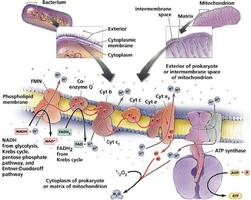
The ETC is a series of membrane-bound carriers that transfer electrons from NADH and FADH2 to a terminal electron acceptor (oxygen in aerobic respiration). The energy released pumps protons across the membrane, creating a proton gradient used by ATP synthase to generate ATP (chemiosmosis).
Fermentation
Fermentation Pathways
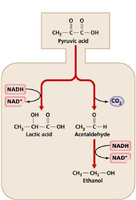
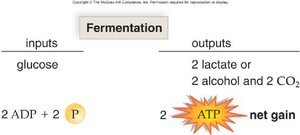
Fermentation allows ATP production in the absence of an inorganic electron acceptor. Pyruvate is reduced to lactic acid or ethanol, regenerating NAD+ for glycolysis. Fermentation yields only 2 ATP per glucose.
Other Catabolic Pathways
Lipid Catabolism
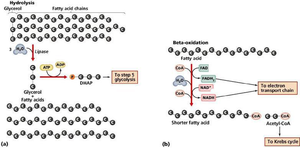
Lipids are hydrolyzed into glycerol and fatty acids. Glycerol enters glycolysis, while fatty acids undergo beta-oxidation to form acetyl-CoA, which enters the Krebs cycle.
Protein Catabolism
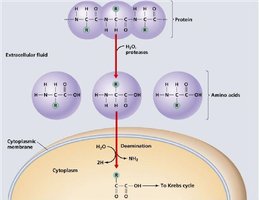
Proteins are broken down into amino acids, which are deaminated before entering the Krebs cycle as intermediates.
Anabolic Pathways
Lipid Biosynthesis
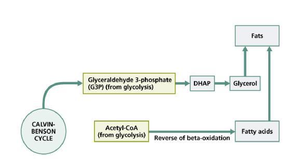
Lipids are synthesized from glycerol (derived from glycolysis and the Calvin cycle) and fatty acids (from acetyl-CoA).
Amino Acid and Nucleotide Biosynthesis
Amino acids are synthesized from Krebs cycle and glycolysis intermediates. Nucleotides are built from pentose sugars (pentose phosphate pathway) and nitrogenous bases (from amino acids).
Integration and Regulation of Metabolic Functions
Cells regulate metabolism by controlling enzyme synthesis and activity, substrate availability, and feedback inhibition. Amphibolic pathways can function in both catabolic and anabolic roles as needed.
Summary Table: Key Pathways and Products
Pathway | Main Products | ATP Yield (per glucose) |
|---|---|---|
Glycolysis | 2 Pyruvate, 2 NADH, 2 ATP (net) | 2 |
Krebs Cycle | 6 NADH, 2 FADH2, 2 ATP, 4 CO2 | 2 |
ETC (Aerobic) | H2O, NAD+, FAD | 34 |
Fermentation | 2 Lactate or 2 Ethanol + 2 CO2 | 2 |
