 Back
Chapter 5: Microbial Metabolism: Pathways, Enzymes, and Energy Production
Study Guide - Smart Notes
 Tailored notes based on your materials, expanded with key definitions, examples, and context.
Microbial Metabolism
Overview of Metabolism
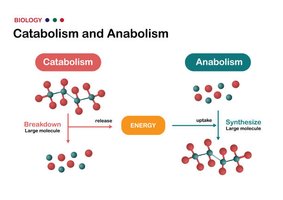
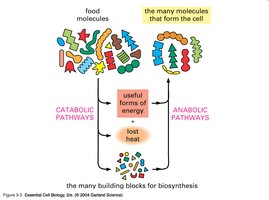
Metabolism is the sum of all chemical reactions occurring within a microorganism. These reactions are divided into two main categories: catabolism and anabolism. Catabolic reactions break down complex molecules into simpler ones, releasing energy, while anabolic reactions build complex molecules from simpler ones, consuming energy.
Catabolism: Breakdown of large molecules into smaller units; typically exergonic (energy-releasing).
Anabolism: Synthesis of large molecules from smaller units; typically endergonic (energy-consuming).
Hydrolysis reactions are common in catabolism, while dehydration synthesis reactions are common in anabolism.
Microbial Energy Source Diversity
Microorganisms display remarkable diversity in their energy sources. They can utilize organic molecules (such as glucose), inorganic molecules (such as ammonia or hydrogen sulfide), or light as energy sources. This diversity allows microbes to inhabit a wide range of environments.
Phototrophs: Use light as an energy source.
Chemotrophs: Use chemicals as an energy source (organic or inorganic).
Autotrophs: Use CO2 as a carbon source.
Heterotrophs: Use organic compounds as a carbon source.
ATP: The Energy Currency of the Cell
Structure and Function of ATP
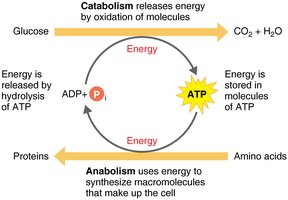
Adenosine triphosphate (ATP) is the primary energy carrier in cells. It stores energy in its high-energy phosphate bonds and releases it upon hydrolysis to ADP and inorganic phosphate (Pi):
ATP is generated during catabolic reactions and consumed during anabolic reactions.
Enzymes and Chemical Reactions
Collision Theory and Activation Energy
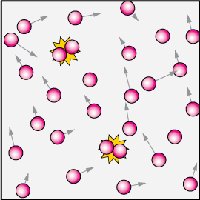
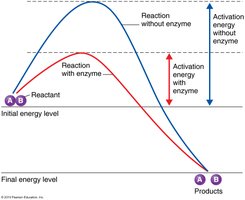
For a chemical reaction to occur, reactant molecules must collide with sufficient energy and proper orientation. The minimum energy required for a reaction is called the activation energy.
Factors affecting reaction rates: velocity, energy, and orientation of colliding particles.
Role of Enzymes
Enzymes are biological catalysts that speed up chemical reactions by lowering the activation energy required. They are highly specific for their substrates and are not consumed in the reaction.
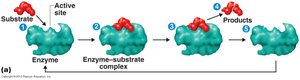
Enzymes bind substrates at their active site to form an enzyme-substrate complex.
After the reaction, the product is released and the enzyme is free to catalyze another reaction.
Enzyme Specificity and Efficiency
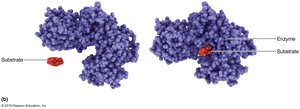
Enzymes are highly specific due to their unique three-dimensional structures, which determine substrate binding. They can increase reaction rates by factors of 108 to 1010 compared to uncatalyzed reactions.
Enzyme Components
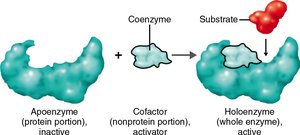
Most enzymes consist of a protein portion (apoenzyme) and a non-protein component (cofactor). If the cofactor is organic, it is called a coenzyme. The active enzyme (holoenzyme) is the combination of apoenzyme and cofactor.
Apoenzyme: Inactive protein portion.
Cofactor: Non-protein component (may be metal ion or organic molecule).
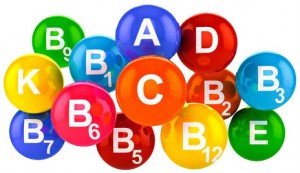
Coenzyme: Organic cofactor, often derived from vitamins.
Holoenzyme: Complete, active enzyme.
Coenzymes
Coenzymes often act as electron carriers or transfer atoms between molecules. Many are derived from vitamins. Examples include:
NAD+: Involved in catabolic reactions.
NADP+: Involved in anabolic reactions.
FAD and Coenzyme A (CoA): Involved in cellular respiration.
Factors Influencing Enzyme Activity
Enzyme activity is affected by several factors:
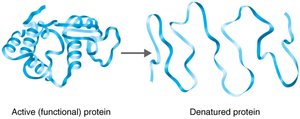
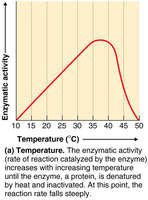
Temperature: Activity increases with temperature up to an optimum, then decreases due to denaturation.
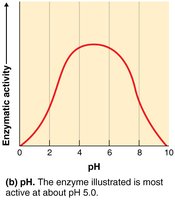
pH: Each enzyme has an optimal pH; extreme pH values cause denaturation.
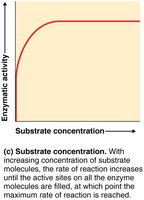
Substrate concentration: Activity increases with substrate concentration until saturation is reached.
Enzyme Inhibition
Enzyme activity can be regulated by inhibitors:
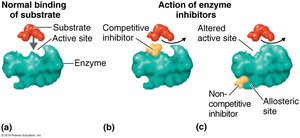
Competitive inhibitors: Compete with substrate for the active site.
Noncompetitive inhibitors: Bind to an allosteric site, changing enzyme shape and function.
Feedback Inhibition
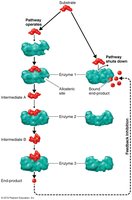
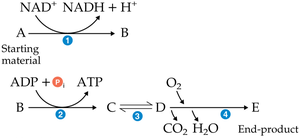
In feedback inhibition, the end-product of a metabolic pathway allosterically inhibits an enzyme involved earlier in the pathway, preventing overproduction of the end-product.
Energy Production in Microbes
Oxidation-Reduction (Redox) Reactions
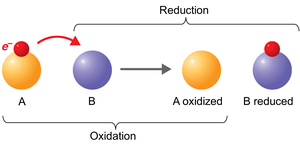
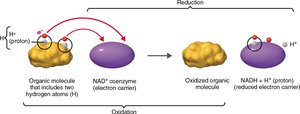
Energy production in cells involves oxidation-reduction reactions (redox reactions), where electrons are transferred from one molecule to another. Oxidation is the loss of electrons, while reduction is the gain of electrons.
ATP Generation Mechanisms
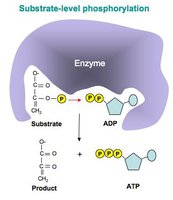
Substrate-level phosphorylation: Direct transfer of phosphate to ADP from a phosphorylated substrate.
Oxidative phosphorylation: Electrons are transferred through an electron transport chain, generating a proton gradient used to synthesize ATP.
Photophosphorylation: Light energy is used to generate ATP (in photosynthetic organisms).
Metabolic Pathways of Energy Production
Metabolic pathways are sequences of enzymatically catalyzed reactions within a cell. The main pathways for energy production are glycolysis, the Krebs cycle, and the electron transport chain.
Carbohydrate Catabolism
Glycolysis
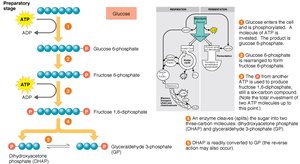
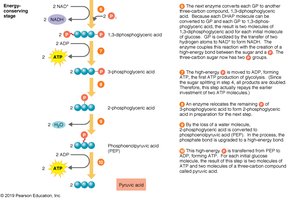
Glycolysis is the oxidation of glucose to pyruvic acid, producing ATP and NADH. It consists of two stages:
Preparatory stage: 2 ATP are used to split glucose into two 3-carbon molecules (G3P).
Energy-conserving stage: 4 ATP and 2 NADH are produced, and two molecules of pyruvic acid are formed.
Cellular Respiration
Cellular respiration further oxidizes pyruvic acid to produce ATP. It involves the Krebs cycle and the electron transport chain. There are two types:
Aerobic respiration: Oxygen is the final electron acceptor.
Anaerobic respiration: An inorganic molecule other than oxygen (e.g., NO3-, SO42-) is the final electron acceptor.
Krebs Cycle
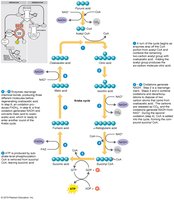
The Krebs cycle is a series of oxidation-reduction reactions that generate NADH, FADH2, ATP, and CO2 from pyruvic acid.
Electron Transport Chain and Chemiosmosis
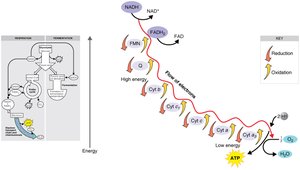
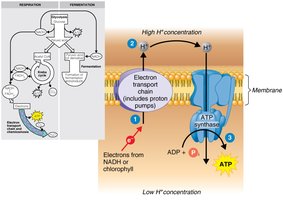
The electron transport chain (ETC) consists of a series of carrier molecules that transfer electrons, releasing energy used to pump protons across a membrane. The resulting proton gradient drives ATP synthesis via chemiosmosis.
ATP Yield from Glucose
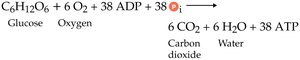
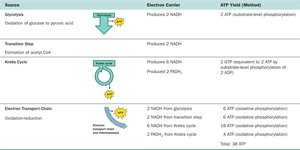
Complete aerobic respiration of one glucose molecule yields up to 38 ATP in prokaryotes.
Anaerobic Respiration
In anaerobic respiration, the final electron acceptor is not oxygen but another inorganic molecule. ATP yield is lower than in aerobic respiration, and only part of the Krebs cycle and ETC function.
Fermentation
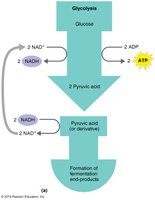
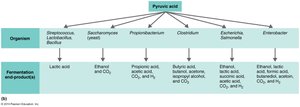
Fermentation is an anaerobic process that releases energy from the oxidation of organic molecules. It does not require oxygen, the Krebs cycle, or the ETC. The final electron acceptor is an organic molecule, and only small amounts of ATP are produced (2 ATP per glucose).
Lipid and Protein Catabolism
Microbes can also catabolize lipids and proteins for energy:
Lipids: Broken down by lipases into fatty acids and glycerol, which enter metabolic pathways.
Proteins: Degraded by proteases and peptidases into amino acids, which are further catabolized by deamination, decarboxylation, and desulfurization.
Biochemical Tests and Bacterial Identification
Enzyme-Based Identification
Different bacterial species produce unique enzymes, which can be detected by biochemical tests. These tests help identify microbes based on their metabolic capabilities, such as the ability to ferment specific sugars or degrade proteins.
Photosynthesis and Metabolic Diversity
Photosynthesis
Photosynthesis is the process by which light energy is converted to chemical energy. In plants, algae, and cyanobacteria, water is used as the electron donor, producing oxygen. Some bacteria use hydrogen sulfide instead, producing sulfur.
Metabolic Diversity Among Organisms
Microorganisms exhibit diverse metabolic strategies, allowing them to thrive in various environments. They can be classified based on their energy and carbon sources, such as photoautotrophs, chemoautotrophs, photoheterotrophs, and chemoheterotrophs.
