 Back
Microbial Metabolism: Pathways, Enzymes, and Energy Production
Study Guide - Smart Notes
 Tailored notes based on your materials, expanded with key definitions, examples, and context.
Microbial Metabolism
Introduction to Metabolism
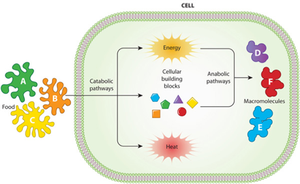
Metabolism is the sum of all controlled biochemical reactions that occur within a microbe. The ultimate function of metabolism is to enable the cell to grow and reproduce by acquiring nutrients, generating energy, and synthesizing macromolecules.
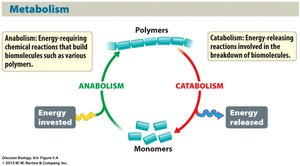
Catabolic pathways break down larger molecules into smaller products, releasing energy (exergonic).
Anabolic pathways synthesize large molecules from smaller products, requiring energy input (endergonic).
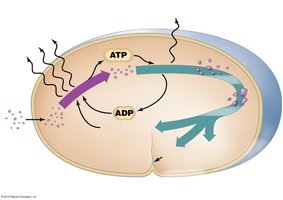
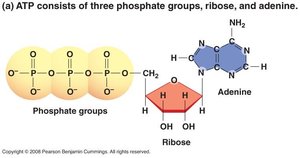
Energy is primarily stored and transferred in the form of adenosine triphosphate (ATP).
Eight Elementary Statements of Metabolism
Every cell acquires nutrients.
Metabolism requires energy from light or catabolism of nutrients.
Energy is stored in ATP.
Cells catabolize nutrients to form precursor metabolites.
Precursor metabolites, ATP, and enzymes are used in anabolic reactions.
Enzymes plus ATP form macromolecules.
Cells grow by assembling macromolecules.
Cells reproduce once they have doubled in size.
Catabolism and Anabolism
Catabolic and Anabolic Pathways
Catabolic and anabolic pathways are interconnected in cellular metabolism. Catabolism provides the energy and building blocks for anabolism, while anabolism uses these resources to build cellular components.
Catabolism: Energy-releasing breakdown of complex molecules into simpler ones.
Anabolism: Energy-consuming synthesis of complex molecules from simpler ones.
Oxidation and Reduction Reactions
Redox Reactions in Metabolism
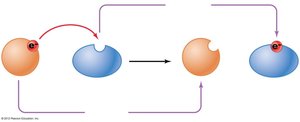
Oxidation and reduction (redox) reactions involve the transfer of electrons from an electron donor to an electron acceptor. These reactions are fundamental to energy production in cells and always occur simultaneously.
Oxidation: Loss of electrons (LEO: Lose Electrons = Oxidation).
Reduction: Gain of electrons (GER: Gain Electrons = Reduction).
Cells use electron carriers such as NAD+, NADP+, and FAD to shuttle electrons.
ATP Production and Energy Storage
ATP: The Energy Currency
ATP stores energy in high-energy phosphate bonds. Organisms release energy from nutrients and store it in ATP through phosphorylation, which is the addition of a phosphate group to ADP.
Three main mechanisms for ATP production:
Substrate-level phosphorylation
Oxidative phosphorylation
Photophosphorylation
The Roles of Enzymes in Metabolism
Enzyme Function and Specificity
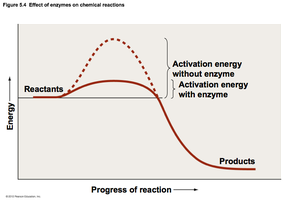
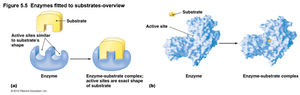
Enzymes are organic catalysts that increase the likelihood of chemical reactions by lowering the activation energy required. They are highly specific, with active sites complementary to the shape of their substrates.
Enzymes do not get consumed in the reaction.
Some enzymes are RNA molecules called ribozymes.
Enzyme-Substrate Interaction
The enzyme-substrate complex forms when the substrate binds to the enzyme's active site, often described by the induced fit model.
Enzyme Components
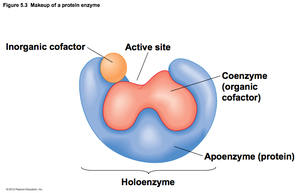
Enzymes may consist of a protein part (apoenzyme) and a non-protein cofactor (inorganic or organic). The complete, active enzyme is called a holoenzyme.
Categories of Enzymes
Hydrolases: Catalyze hydrolysis reactions.
Isomerases: Rearrange atoms within a molecule.
Ligases/Polymerases: Join molecules together.
Lyases: Split molecules without water.
Oxidoreductases: Catalyze redox reactions.
Transferases: Transfer functional groups between molecules.
Factors Influencing Enzyme Activity
Environmental and Chemical Factors
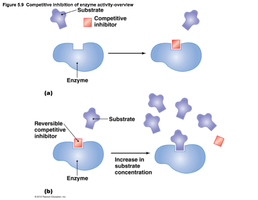
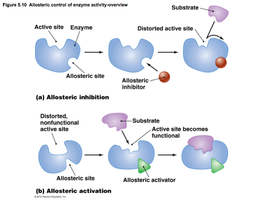
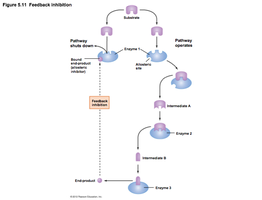
Enzyme activity is influenced by temperature, pH, substrate concentration, and the presence of inhibitors. Inhibitors can be competitive, noncompetitive (allosteric), or involved in feedback inhibition.
Competitive inhibitors bind to the active site, blocking substrate binding.
Allosteric inhibitors bind elsewhere, changing the enzyme's shape and function.
Feedback inhibition occurs when the end product of a pathway inhibits an earlier step.
Carbohydrate Catabolism
Overview of Carbohydrate Catabolism
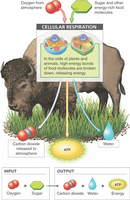
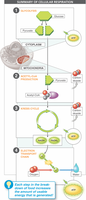
Carbohydrate catabolism is the breakdown of carbohydrates to release energy. Glucose is the most common substrate, and its catabolism can proceed via aerobic respiration, anaerobic respiration, or fermentation.
Glycolysis: Oxidation of glucose to pyruvic acid, producing ATP and NADH.
Acetyl-CoA production: Conversion of pyruvic acid to acetyl-CoA, CO2, and NADH.
Krebs cycle: Complete oxidation of acetyl-CoA, generating ATP, NADH, FADH2, and CO2.
Electron transport chain (ETC): Series of redox reactions producing the majority of ATP via chemiosmosis.
Glycolysis
Glycolysis occurs in the cytoplasm and involves splitting one six-carbon glucose into two three-carbon pyruvic acids. It consists of three stages: energy-investment, lysis, and energy-conserving.
Net gain: 2 ATP, 2 NADH, 2 pyruvic acid molecules.
Substrate-level phosphorylation is the mechanism of ATP generation.
Synthesis of Acetyl-CoA
Pyruvic acid is converted to acetyl-CoA, producing NADH and CO2 in the process. This step links glycolysis to the Krebs cycle.
Products (per glucose): 2 acetyl-CoA, 2 NADH, 2 CO2.
Krebs Cycle (Citric Acid Cycle)
The Krebs cycle completes the oxidation of glucose derivatives, transferring energy to NAD+ and FAD. It occurs in the cytosol of prokaryotes and the mitochondrial matrix of eukaryotes.
Products (per glucose): 2 ATP, 6 NADH, 2 FADH2, 4 CO2.
Types of reactions: anabolism, isomerization, hydration, redox, decarboxylation, substrate-level phosphorylation.
Electron Transport Chain and Chemiosmosis
The ETC is a series of carrier molecules that transfer electrons to a final electron acceptor. The energy released is used to pump protons, creating a gradient that drives ATP synthesis via ATP synthase (chemiosmosis).
Aerobic respiration: Oxygen is the final electron acceptor.
Anaerobic respiration: Other molecules serve as the final electron acceptor.
Up to ~34 ATP are produced from one glucose molecule in aerobic respiration.
Fermentation
Fermentation allows cells to regenerate NAD+ when oxygen or other electron acceptors are not available. It results in the partial oxidation of glucose and the production of various end products (e.g., lactic acid, ethanol).
Fermentation yields less ATP than respiration.
Common products: lactic acid, ethanol, propionic acid, acetone.
Summary Table: ATP Yield from Glucose Catabolism
Pathway Step | ATP Produced | NADH Produced | FADH2 Produced | CO2 Produced |
|---|---|---|---|---|
Glycolysis | 2 (net) | 2 | 0 | 0 |
Acetyl-CoA Formation | 0 | 2 | 0 | 2 |
Krebs Cycle | 2 | 6 | 2 | 4 |
Electron Transport Chain | ~34 | 0 | 0 | 0 |
Additional info: The actual ATP yield may vary depending on the organism and conditions.
