 Back
BackMicrobial Metabolism: Pathways, Enzymes, and Energy Production
Study Guide - Smart Notes
 Tailored notes based on your materials, expanded with key definitions, examples, and context.
Microbial Metabolism
Overview of Metabolism
Microbial metabolism encompasses all the chemical reactions that occur within a microorganism, enabling it to break down nutrients for energy and synthesize new cellular components. These reactions are organized into metabolic pathways that are essential for growth, maintenance, and reproduction.
Catabolic pathways: Break down complex molecules into simpler ones, releasing energy.
Anabolic pathways: Use energy to build complex molecules from simpler ones.
Amphibolic pathways: Function in both catabolism and anabolism, providing flexibility in metabolism.
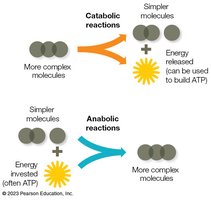
Catabolism and Anabolism
Catabolic and Anabolic Reactions
Catabolic reactions are typically hydrolytic and exergonic, meaning they break bonds and release energy. Anabolic reactions, in contrast, are often dehydration synthesis reactions and are endergonic, requiring energy input to form new bonds.
Catabolic example: Breakdown of glucose into carbon dioxide and water.
Anabolic example: Synthesis of proteins from amino acids.
ATP: The Energy Currency
Structure and Role of ATP
Adenosine triphosphate (ATP) is the primary energy carrier in cells. It is produced during catabolic reactions and supplies energy for anabolic reactions. Cells store energy in macromolecules such as fats, proteins, and polysaccharides, which can be broken down to regenerate ATP.
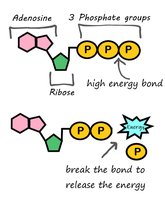
The ATP-ADP Cycle
ATP releases energy when its terminal phosphate group is removed by dephosphorylation, forming ADP. The phosphate group can be reattached to ADP by phosphorylation, regenerating ATP when energy is available.
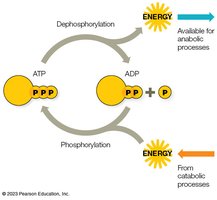
Enzymes in Metabolism
Enzyme Function and Classification
Enzymes are biological catalysts that accelerate chemical reactions without being consumed. Each enzyme is specific to a particular reaction or substrate. Enzyme names typically end in "-ase" and are classified by the type of reaction they catalyze:
Oxidoreductase: Catalyzes oxidation-reduction reactions.
Transferase: Transfers functional groups between molecules.
Hydrolase: Catalyzes hydrolysis reactions.
Lyase: Removes groups of atoms without hydrolysis.
Isomerase: Rearranges atoms within a molecule.
Ligase: Joins two molecules together.
Enzyme-Substrate Interactions
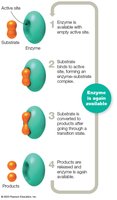
Enzymes bind to their substrates at the active site, forming an enzyme-substrate complex. This interaction lowers the activation energy required for the reaction, stabilizes the transition state, and ensures proper orientation of reactants.
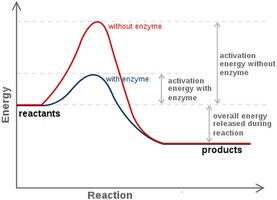
Enzyme Cofactors and Coenzymes
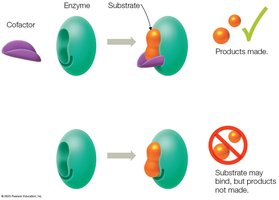
Many enzymes require nonprotein helpers called cofactors (e.g., metal ions like Zn2+, Fe2+, Mg2+, Ca2+). Organic cofactors, known as coenzymes, are often derived from vitamins. An apoenzyme is an inactive enzyme lacking its cofactor, while a holoenzyme is the active form with its cofactor bound.
Special Enzymes: Ribozymes
Ribozymes are RNA molecules with catalytic activity, acting on other RNA molecules. They have potential applications in genetic and antiviral therapies.
Regulation of Enzyme Activity
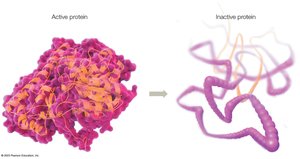
Enzyme activity is sensitive to environmental factors such as temperature, pH, and osmotic pressure. Extreme changes can denature enzymes, altering their structure and function.
Enzyme Saturation
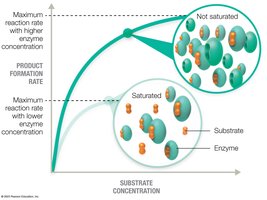
The rate of product formation depends on the concentration of enzymes and substrates. When all active sites are occupied, the enzyme is saturated, and the reaction rate reaches its maximum.
Enzyme Regulation by Phosphorylation
Kinases add phosphate groups to enzymes (phosphorylation), while phosphatases remove them (dephosphorylation), altering enzyme activity. This is a common regulatory mechanism in cells.
Enzyme Inhibition
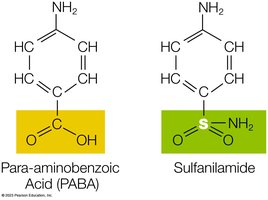
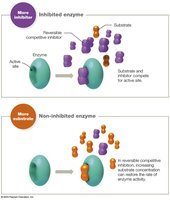
Competitive inhibitors: Compete with the substrate for the active site. Their effect can be overcome by increasing substrate concentration.
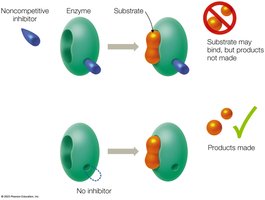
Noncompetitive inhibitors: Bind to a site other than the active site, changing enzyme shape and reducing activity. May be reversible or irreversible.
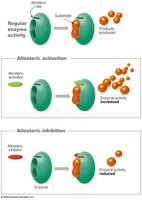
Allosteric regulation: Regulatory molecules bind to allosteric sites, increasing (activation) or decreasing (inhibition) enzyme activity.
Feedback Inhibition
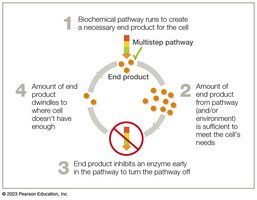
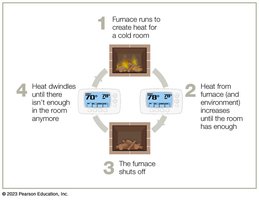
Feedback inhibition occurs when the end product of a pathway inhibits an enzyme involved earlier in the pathway, preventing overproduction. This is a reversible and efficient regulatory mechanism.
Energy and Redox Reactions
Redox Reactions
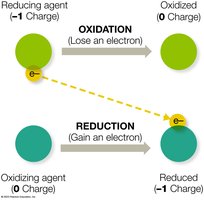
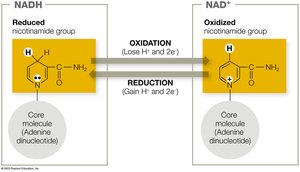
Redox (oxidation-reduction) reactions are central to energy production. Oxidation is the loss of electrons, while reduction is the gain of electrons. These reactions often involve electron carriers such as NAD+ and FAD.
ATP Generation Mechanisms
Substrate-level phosphorylation: Direct transfer of a phosphate group to ADP to form ATP.
Oxidative phosphorylation: Uses energy from electron transport chains to generate ATP.
Photophosphorylation: Light energy drives ATP synthesis (in photosynthetic organisms).
Cellular Respiration
Overview of Cellular Respiration
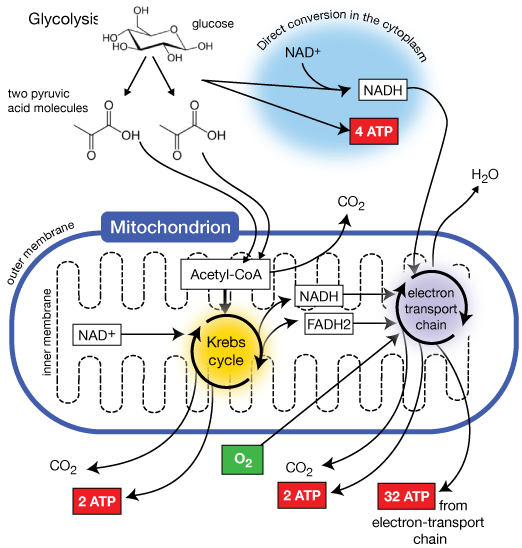
Cellular respiration is a series of redox reactions that extract energy from nutrients and store it in ATP. It consists of glycolysis, the intermediate step, the Krebs cycle, and the electron transport chain.
Glycolysis
Glycolysis is the oxidation of glucose to pyruvic acid, producing ATP and NADH. It occurs in the cytoplasm and does not require oxygen.
Products: 2 pyruvic acid, 2 ATP, 2 NADH, 2 H2O
Intermediate Step
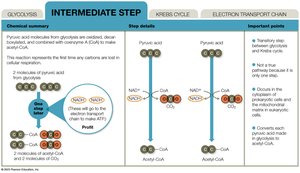
Each pyruvic acid is decarboxylated to form acetyl-CoA, which enters the Krebs cycle. This step also produces NADH and CO2.
Krebs Cycle (Citric Acid Cycle)
The Krebs cycle completes the oxidation of acetyl-CoA, generating ATP, NADH, FADH2, and CO2. In prokaryotes, it occurs in the cytoplasm; in eukaryotes, in the mitochondrial matrix.
Electron Transport Chain (ETC) and ATP Synthase
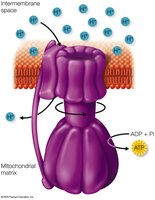
The ETC receives electrons from NADH and FADH2, transferring them through a series of carriers and pumping protons to create a proton motive force. ATP synthase uses this force to generate ATP from ADP and inorganic phosphate.
Anaerobic Respiration
Some microbes use molecules other than oxygen as the final electron acceptor in the ETC, such as nitrate, sulfate, or carbonate, producing nitrogen gas, hydrogen sulfide, or methane, respectively.
Overall Equation for Aerobic Respiration
The overall chemical equation for aerobic respiration is:

Alternative Pathways
Pentose Phosphate and Entner-Doudoroff Pathways
Some bacteria use alternative pathways to glycolysis:
Pentose phosphate pathway: Converts pentoses to trioses and hexoses, generating NADPH for biosynthesis.
Entner-Doudoroff pathway: Catabolizes glucose, producing NADPH and ATP, but is less efficient than glycolysis.
Fermentation
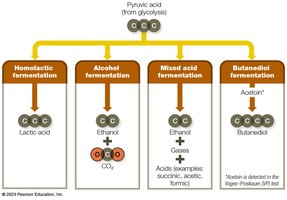
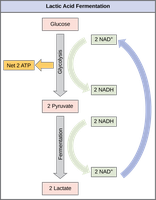
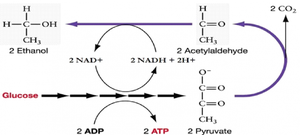
Fermentation allows cells to regenerate NAD+ from NADH when the electron transport chain is unavailable. It sustains ATP production by glycolysis under anaerobic conditions.
Types of Fermentation
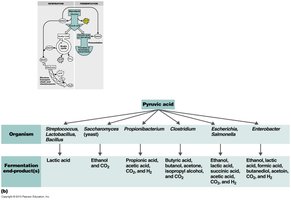
Lactic acid fermentation: Converts pyruvic acid to lactic acid. Homolactic fermentation produces only lactic acid; heterolactic fermentation produces lactic acid, ethanol, and CO2.
Alcohol fermentation: Converts pyruvic acid to ethanol and CO2 (e.g., in yeast).
Other types: Butylene glycol and mixed acid fermentation produce various acids, alcohols, and gases.
Lipid and Protein Catabolism
Lipid Catabolism
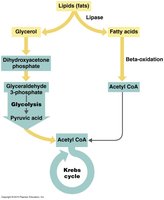
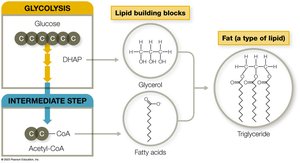
Lipids are hydrolyzed into glycerol and fatty acids. Fatty acids undergo beta-oxidation, producing acetyl-CoA, which enters the Krebs cycle.
Protein Catabolism
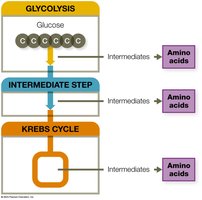
Proteins are broken down into amino acids, which are deaminated and converted into intermediates that enter glycolysis or the Krebs cycle.
Anabolism and Amphibolic Pathways
Anabolic Pathways
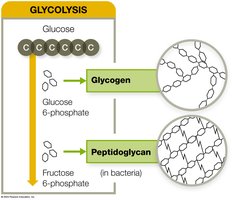
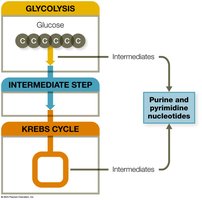
Anabolism refers to the synthesis of complex molecules from simpler ones, using intermediates from catabolic pathways. These intermediates are used to build amino acids, nucleotides, and lipids.
Amphibolic Pathways
Amphibolic pathways, such as the Krebs cycle and pentose phosphate pathway, serve dual roles in both catabolism and anabolism, providing metabolic flexibility and balance.
