 Back
BackMicrobial Metabolism: Pathways, Enzymes, and Energy Production
Study Guide - Smart Notes
 Tailored notes based on your materials, expanded with key definitions, examples, and context.
Microbial Metabolism
Overview of Metabolism
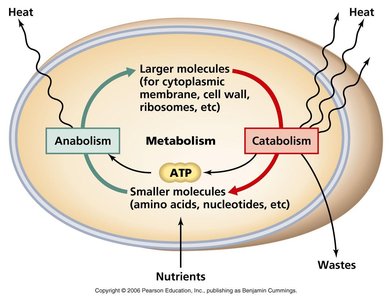
Microbial metabolism encompasses all the chemical reactions that occur within a microorganism, divided into two main processes: catabolism and anabolism. Catabolism breaks down complex molecules to release energy, while anabolism uses this energy to build cellular components.
Catabolism: Energy-releasing processes that break down larger molecules into smaller ones, producing ATP and wastes.
Anabolism: Energy-consuming processes that synthesize larger molecules from smaller ones, using ATP.
Metabolic Pathways: Series of enzyme-controlled reactions that transform substrates into products.
Enzymes and Metabolic Pathways
Enzymes are biological catalysts that regulate metabolic pathways by lowering activation energy and increasing reaction rates. They are highly specific for their substrates and often require cofactors for activity.
Collision Theory: Chemical reactions occur when molecules collide with sufficient energy.
Activation Energy (EA): Minimum energy required to initiate a reaction.
Reaction Rate: Frequency of effective collisions leading to product formation.
Enzyme Structure and Function
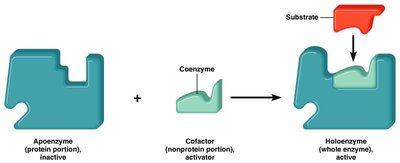
Many enzymes consist of a protein portion (apoenzyme) and a nonprotein cofactor. The combination forms a holoenzyme, which is active and capable of binding substrates.
Apoenzyme: Inactive protein component.
Cofactor: Nonprotein activator, can be a metal ion or organic molecule (coenzyme).
Holoenzyme: Active enzyme formed by apoenzyme and cofactor.
Substrate: Reactant molecule that binds to the enzyme's active site.
Enzyme Mechanism
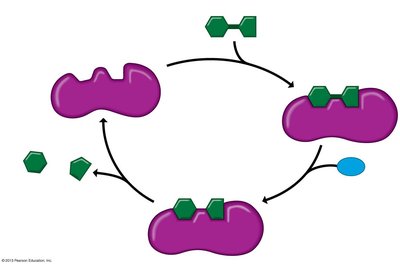
Enzymes facilitate reactions by binding substrates at their active sites, forming enzyme-substrate complexes, and converting substrates into products.
Active Site: Region of the enzyme where substrate binding and catalysis occur.
Enzyme-Substrate Complex: Temporary association during catalysis.
Factors Affecting Enzyme Activity
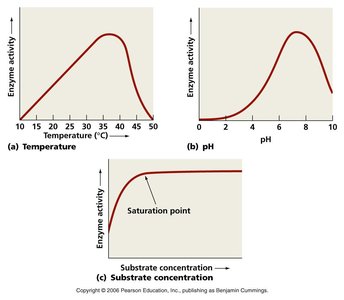
Enzyme activity is influenced by temperature, pH, and substrate concentration. Each enzyme has optimal conditions for maximum activity.
Temperature: Activity increases with temperature up to an optimum, then decreases due to denaturation.
pH: Each enzyme has an optimal pH; extreme pH can denature the enzyme.
Substrate Concentration: Activity increases with substrate concentration until saturation is reached.
Enzyme Inhibition
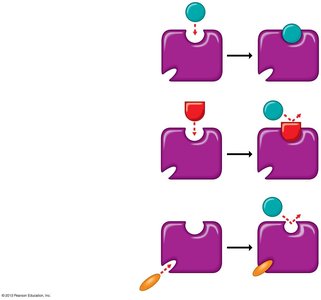
Enzyme inhibitors can prevent metabolic reactions by binding to the enzyme, either at the active site (competitive inhibition) or elsewhere (noncompetitive inhibition).
Competitive Inhibition: Inhibitor resembles substrate and binds to the active site, blocking substrate access.
Noncompetitive Inhibition: Inhibitor binds to a different site, causing a conformational change that reduces enzyme activity.
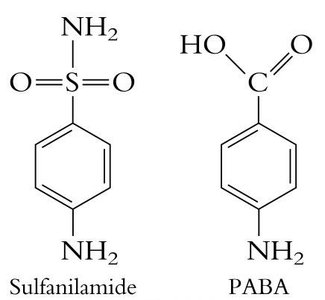
Example of Competitive Inhibition: Sulfanilamide
Sulfanilamide is a drug that inhibits bacterial folic acid synthesis by competing with PABA for the enzyme's active site.
PABA (Para-aminobenzoic acid): Essential for bacterial folic acid synthesis.
Sulfanilamide: Structural analogue of PABA, blocks folic acid formation, leading to bacterial death.
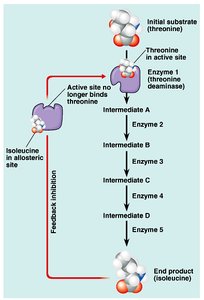
Feedback Inhibition
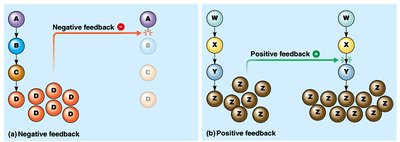
Feedback inhibition is a regulatory mechanism where the end product of a metabolic pathway inhibits an enzyme early in the pathway, preventing overproduction.
Negative Feedback: End product inhibits pathway activity.
Positive Feedback: End product stimulates pathway activity (less common in metabolism).
Catabolic Pathways and ATP Generation
Redox Reactions and Aerobic Respiration
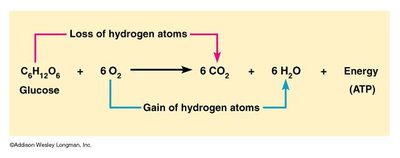
Catabolic pathways relocate electrons from high-energy molecules to lower-energy molecules, releasing free energy used to synthesize ATP. Aerobic respiration is a redox reaction where glucose is oxidized and oxygen is reduced.
Redox Reaction: Transfer of electrons from one molecule to another.
Aerobic Respiration Equation:
ATP Structure and Synthesis
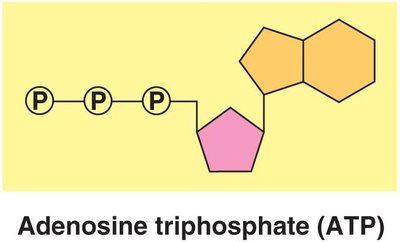
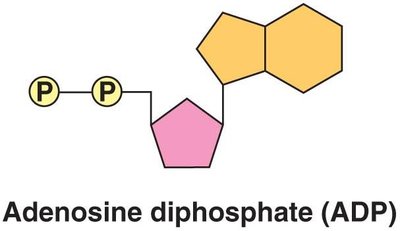
ATP (adenosine triphosphate) is the primary energy carrier in cells. It is generated by phosphorylation of ADP through substrate-level, oxidative, and photophosphorylation.
Substrate-level phosphorylation: Direct transfer of phosphate group to ADP.
Oxidative phosphorylation: Uses energy from electron transport chain.
Photophosphorylation: Uses light energy (in photosynthetic organisms).
Major Pathways of Cellular Respiration
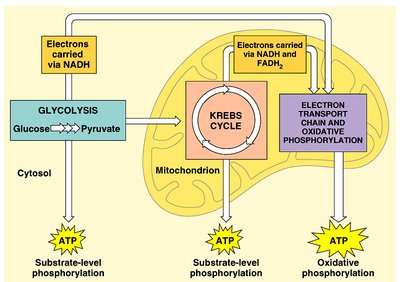
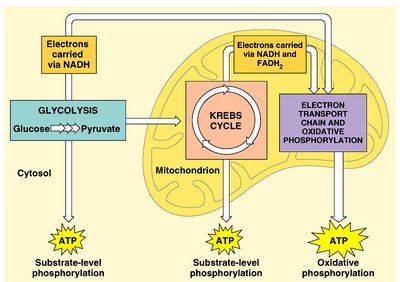
Cellular respiration consists of glycolysis, the Krebs cycle, and the electron transport chain, each contributing to ATP production.
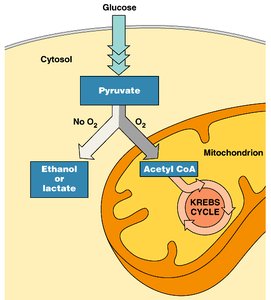
Glycolysis: Occurs in cytoplasm; breaks glucose into pyruvate, generating 2 ATP.
Krebs Cycle: Occurs in mitochondrial matrix; degrades pyruvate to CO2, generating 2 ATP.
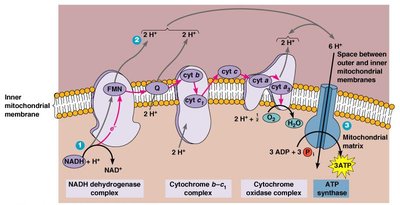
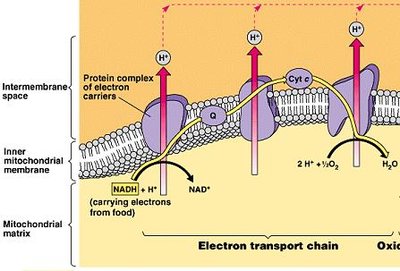
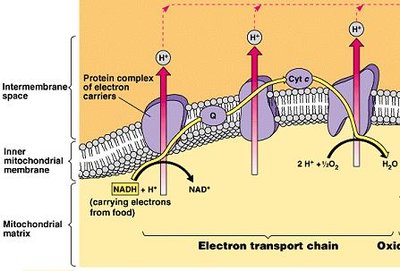
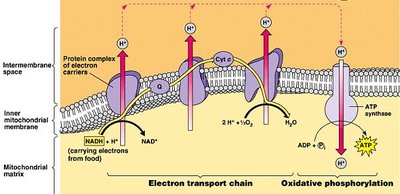
Electron Transport Chain: Located in inner mitochondrial membrane; uses electron carriers to generate up to 34 ATP via oxidative phosphorylation.
Glycolysis
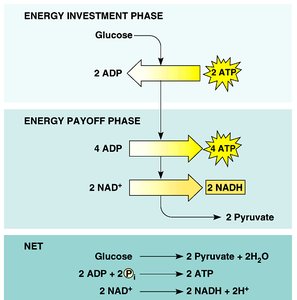
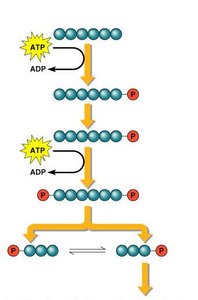
Glycolysis is the process of oxidizing glucose to pyruvate, harvesting energy in the form of ATP and NADH. It consists of an energy investment phase and an energy payoff phase.
Energy Investment Phase: 2 ATP are used to phosphorylate glucose.
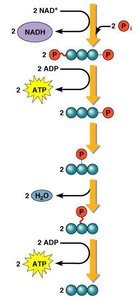
Energy Payoff Phase: ATP is produced by substrate-level phosphorylation; NAD+ is reduced to NADH.
Net Outcome: 2 ATP, 2 NADH, 2 pyruvate per glucose.
Transition Step to Krebs Cycle
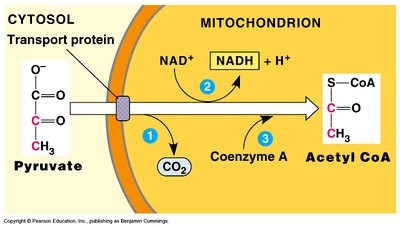
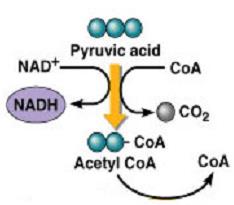
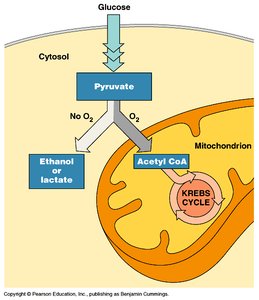
Pyruvate produced in glycolysis is converted to acetyl-CoA before entering the Krebs cycle. This involves decarboxylation, reduction of NAD+, and combination with coenzyme A.
Decarboxylation: Removal of CO2 from pyruvate.
NAD+ Reduction: Electrons transferred to NAD+ to form NADH.
Acetyl-CoA Formation: Acetyl group combines with coenzyme A.
Krebs Cycle
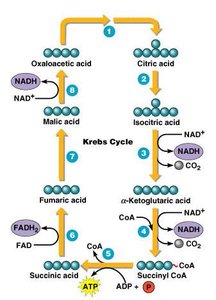
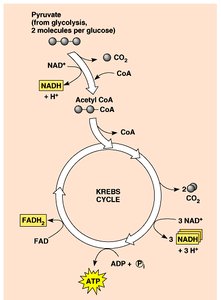
The Krebs cycle is a series of reactions that further oxidize acetyl-CoA, producing NADH, FADH2, ATP, and CO2. It is central to energy production and provides intermediates for biosynthesis.
Key Products: NADH, FADH2, ATP, CO2.
Electron Carriers: NADH and FADH2 transport electrons to the electron transport chain.
Electron Transport Chain and ATP Synthesis
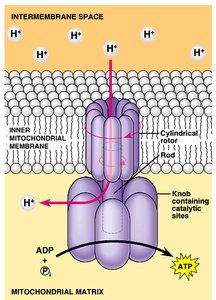
The electron transport chain (ETC) transfers electrons from NADH and FADH2 to oxygen, creating a proton gradient across the membrane. ATP synthase uses this gradient to generate ATP via chemiosmosis.
Electron Carriers: Flavoproteins, cytochromes, ubiquinones.
Terminal Electron Acceptor: Oxygen in aerobic respiration.
Chemiosmosis: Coupling of proton gradient to ATP synthesis.
Eukaryotic vs. Prokaryotic Respiration
Cellular respiration occurs in different cellular locations in eukaryotes and prokaryotes, affecting ATP yield.
Eukaryotes: Glycolysis in cytoplasm, Krebs cycle and ETC in mitochondria.
Prokaryotes: All steps occur in cytoplasm or plasma membrane.
ATP Yield: 38 ATP in prokaryotes, 36 ATP in eukaryotes.
Lipid and Protein Catabolism
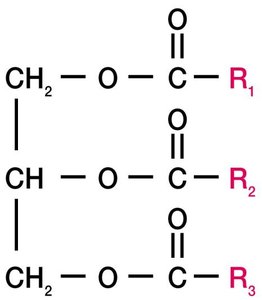
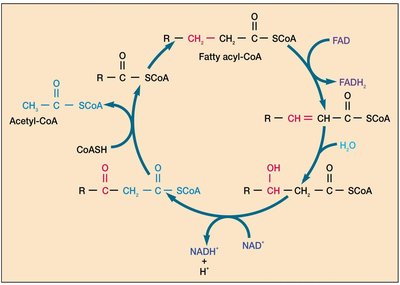
Fats and proteins can be catabolized for energy. Lipids are broken down by lipases and enter glycolysis or Krebs cycle via beta-oxidation. Proteins are hydrolyzed to amino acids, which are deaminated and converted to metabolic intermediates.
Lipid Catabolism: Glycerol enters glycolysis; fatty acids undergo beta-oxidation to acetyl-CoA.
Protein Catabolism: Amino acids are deaminated, decarboxylated, or dehydrogenated to enter glycolysis or Krebs cycle.
Aerobic vs. Anaerobic Respiration
Aerobic respiration uses oxygen as the final electron acceptor, while anaerobic respiration uses other molecules (nitrate, sulfate, carbonate), yielding less energy.
Aerobic Respiration: Final electron acceptor is O2.
Anaerobic Respiration: Final electron acceptor is not O2; less ATP produced.
Fermentation
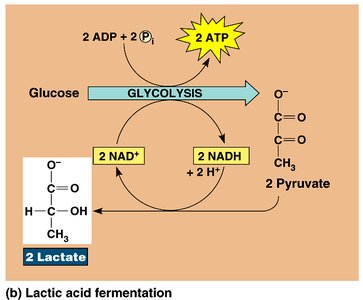
Fermentation is an anaerobic process where NADH is oxidized to NAD+, and pyruvate is reduced to various end products. It allows cells to generate ATP without oxygen.
Lactic Acid Fermentation: Pyruvate reduced to lactate; used by muscle cells and some bacteria.
Alcohol Fermentation: Pyruvate converted to ethanol and CO2; used by yeast.
Other Fermentation Types: Propionic, butyric, formic acid fermentation.
Photosynthesis and Metabolic Diversity
Photosynthesis
Photosynthesis is the process by which light energy is used to convert CO2 and water into glucose and oxygen (oxygenic) or sulfur (anoxygenic). It occurs in bacteria, algae, and plants.
Light Reactions: Use light energy to produce ATP and NADPH.
Calvin Cycle: Uses ATP and NADPH to fix CO2 into organic molecules.
Metabolic Diversity Among Microbes
Microorganisms exhibit diverse metabolic strategies based on their energy and carbon sources.
Phototrophs: Use light as energy source.
Chemotrophs: Use chemicals as energy source.
Autotrophs: Use CO2 as carbon source.
Heterotrophs: Use organic compounds as carbon source.
Nutritional Type | Energy Source | Carbon Source | Example |
|---|---|---|---|
Photoautotroph | Light | CO2 | Cyanobacteria, algae, plants |
Photoheterotroph | Light | Organic compounds | Green, purple nonsulfur bacteria |
Chemoautotroph | Chemical | CO2 | Iron-oxidizing bacteria |
Chemoheterotroph | Chemical | Organic compounds | Animals, fungi, many bacteria |
