Back
BackMicrobial Metabolism: Pathways, Enzymes, and Energy Production
Study Guide - Smart Notes
 Tailored notes based on your materials, expanded with key definitions, examples, and context.
Microbial Metabolism
Introduction to Metabolism
Microbial metabolism encompasses all chemical reactions occurring within a microorganism. These reactions are essential for energy production, biosynthesis, and cellular maintenance. Microbes play a critical role in global nutrient cycles, such as the carbon, nitrogen, and sulfur cycles, and impact human health through their metabolic products and interactions with normal flora and pathogens.
Energy Source: Most energy on Earth originates from the sun, with plants and microbes converting light energy into chemical energy.
Oxygen Production: Oceanic microbes are major contributors to atmospheric oxygen.
Nutrient Cycling: Microbes are essential in recycling elements like carbon, nitrogen, and sulfur.
Catabolism and Anabolism
Definitions and Overview
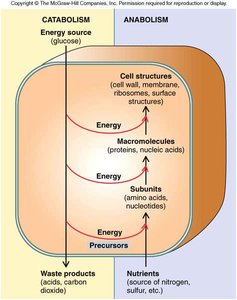
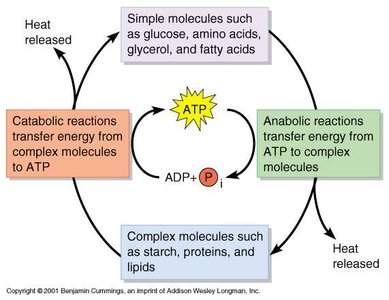
Metabolism is divided into two complementary processes: catabolism and anabolism. These processes are interconnected and essential for cellular function.
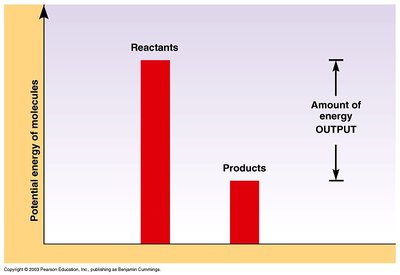
Catabolism: The breakdown of complex molecules into simpler ones, releasing energy (exergonic reactions).
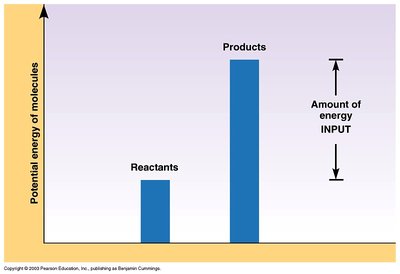
Anabolism (Biosynthesis): The synthesis of complex molecules from simpler ones, consuming energy (endergonic reactions).
Energy Changes in Catabolism and Anabolism
Catabolic Reactions: Release energy as complex molecules are broken down.
Anabolic Reactions: Require energy input to build complex molecules.
ATP: The Energy Currency
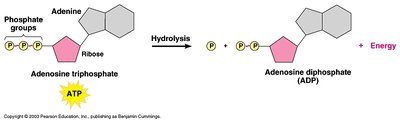
ATP (adenosine triphosphate) couples catabolic and anabolic reactions, storing and transferring energy within the cell.
ATP Formation: Energy from catabolic reactions is used to synthesize ATP from ADP and inorganic phosphate.
ATP Hydrolysis: The breakdown of ATP releases energy for anabolic reactions.
The Generation of ATP in Metabolism
Mechanisms of ATP Synthesis
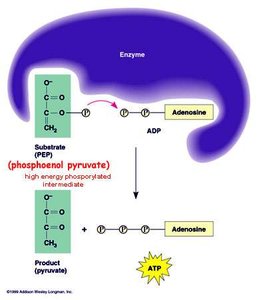
Substrate-Level Phosphorylation: Direct enzymatic transfer of a phosphate group to ADP.
Oxidative Phosphorylation: ATP synthesis driven by electron transport chains and chemiosmosis.
Photophosphorylation: ATP generation using light energy (photosynthesis).
Metabolic Pathways and Enzymes
Organization of Metabolic Pathways
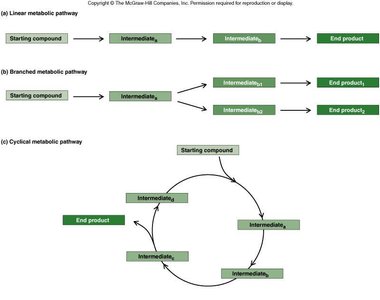
Metabolic pathways are ordered sequences of enzymatically catalyzed reactions. Pathways can be linear, branched, or cyclical.
Enzymes: Biological catalysts that accelerate reactions without being consumed.
Pathway Types: Linear, branched, and cyclical pathways organize metabolic reactions.
Enzyme Characteristics
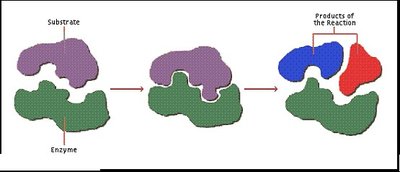
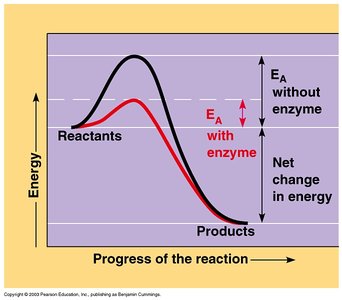
Enzymes are proteins that lower the activation energy of reactions.
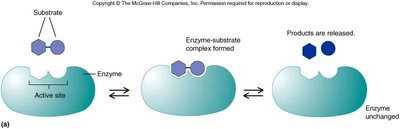
They are specific for their substrates and can be reused.
Activation Energy and Enzyme Function
Enzymes lower the activation energy (EA) required for reactions, increasing reaction rates without raising temperature.
Induced Fit: Enzymes bind substrates and orient them for optimal reaction.
Cofactors and Coenzymes
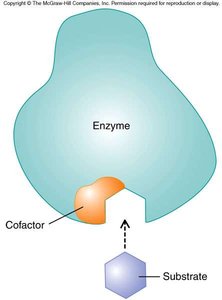
Cofactors: Non-protein components (e.g., metal ions) required for enzyme activity.
Coenzymes: Organic molecules (often vitamin derivatives) that transfer small molecules or electrons.
Factors Influencing Enzyme Activity
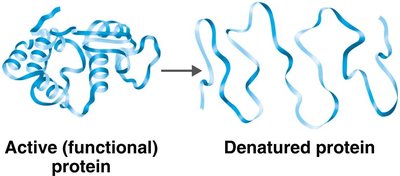
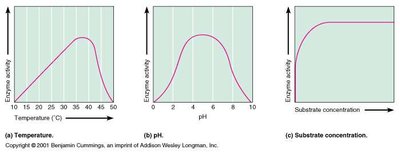
Temperature and pH: Extreme values can denature enzymes, reducing activity.
Substrate Concentration: Enzyme activity increases with substrate concentration until saturation is reached.
Enzyme Inhibition
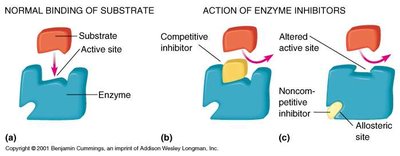
Competitive Inhibition: Inhibitor competes with substrate for the active site; can be overcome by excess substrate.
Noncompetitive Inhibition: Inhibitor binds to an allosteric site, altering enzyme shape and function; not overcome by excess substrate.
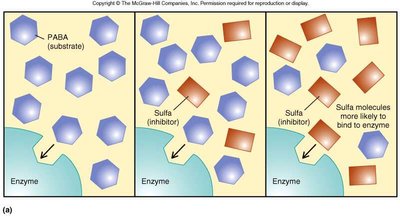
Example: Sulfa Drugs as Competitive Inhibitors
Sulfa drugs inhibit bacterial folic acid synthesis by competing with PABA for the enzyme's active site, without affecting human metabolism.
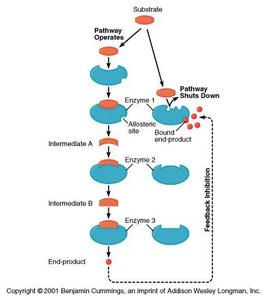
Feedback Inhibition (Allosteric Regulation)
Feedback inhibition is a regulatory mechanism where the end product of a pathway inhibits an earlier enzyme, preventing overproduction of the product.
Important for conserving resources and maintaining metabolic balance.
Aerobic Metabolism
Overview of Aerobic Respiration
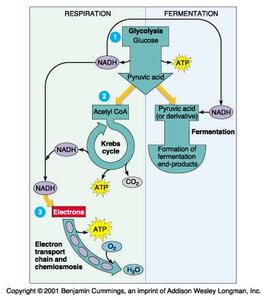
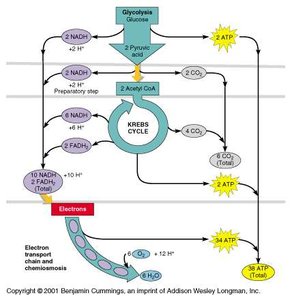
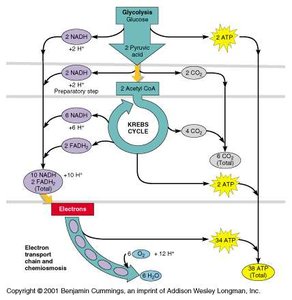
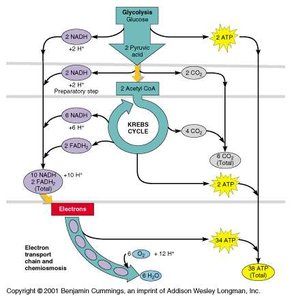
Aerobic respiration is the process by which cells completely oxidize glucose to CO2 and H2O, capturing energy in the form of ATP. It consists of three main stages: glycolysis, the Krebs cycle, and oxidative phosphorylation (electron transport chain and chemiosmosis).
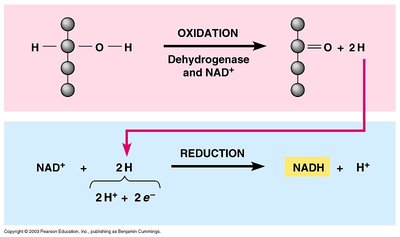
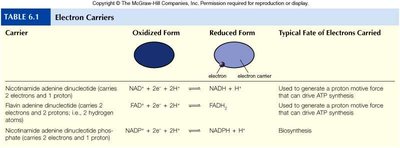
Electron Carriers: NAD+ and FAD are reduced to NADH and FADH2, which carry electrons to the electron transport chain.
ATP Production: Most ATP is generated by oxidative phosphorylation.
Redox Reactions in Metabolism
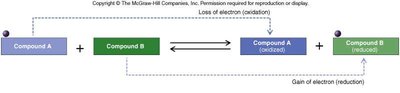
Redox (oxidation-reduction) reactions are central to energy transfer in metabolism. Electrons are transferred from donor molecules (oxidized) to acceptor molecules (reduced), releasing energy.
Oxidation: Loss of electrons.
Reduction: Gain of electrons.
Electron Carriers: NAD+, FAD, and NADP+ shuttle electrons between reactions.
Stages of Aerobic Respiration
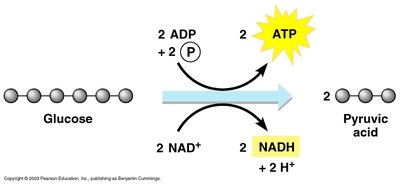
Glycolysis: Glucose is oxidized to pyruvate, producing ATP and NADH.
Transition Step: Pyruvate is converted to acetyl-CoA, generating NADH and CO2.
Krebs Cycle: Acetyl-CoA is oxidized, producing NADH, FADH2, ATP, and CO2.
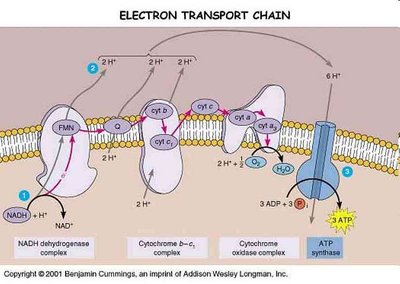
Electron Transport Chain (ETC): Electrons from NADH and FADH2 are transferred through a series of carriers, driving ATP synthesis.
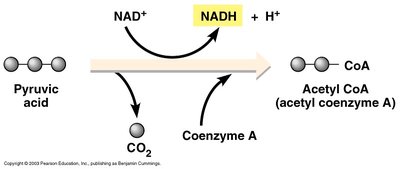
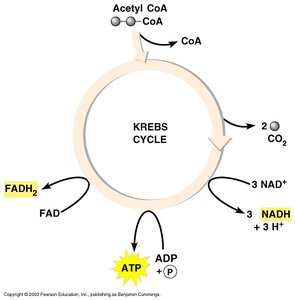
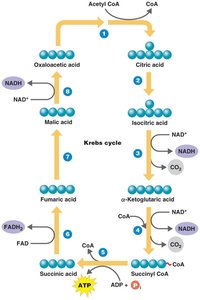
Electron Transport Chain and Chemiosmosis
The electron transport chain (ETC) is a series of membrane-bound carriers that transfer electrons from NADH and FADH2 to oxygen, the terminal electron acceptor. The energy released is used to pump protons across the membrane, creating a proton gradient. ATP synthase uses this gradient to generate ATP (chemiosmosis).
Location: Cytoplasmic membrane in prokaryotes; mitochondrial inner membrane in eukaryotes.
Oxygen: Serves as the terminal electron acceptor in aerobic respiration.
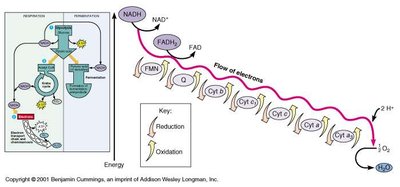
ATP Yield from Aerobic Respiration
The complete oxidation of one glucose molecule by aerobic respiration yields a theoretical maximum of 38 ATP in prokaryotes (slightly less in eukaryotes due to mitochondrial transport costs).
Pathway | ATP by SLP | ATP by Oxidative Phosphorylation (NADH) | ATP by Oxidative Phosphorylation (FADH2) |
|---|---|---|---|
Glycolysis | 2 | 6 | 0 |
Intermediate Step | 0 | 6 | 0 |
Krebs Cycle | 2 | 18 | 4 |
Total | 4 | 30 | 4 |
Anaerobic Respiration and Fermentation
If oxygen is absent or the organism cannot use aerobic respiration, it may use anaerobic respiration (with alternative electron acceptors) or fermentation (organic molecules as electron acceptors). These processes yield less ATP than aerobic respiration.