 Back
BackCh5. Microbial Metabolism: Pathways, Enzymes, and Energy Production
Study Guide - Smart Notes
 Tailored notes based on your materials, expanded with key definitions, examples, and context.
Microbial Metabolism
Overview of Metabolism
Microbial metabolism encompasses all the chemical reactions that occur within a microorganism, including both the breakdown and synthesis of cellular components. These reactions are essential for energy production and the maintenance of life.
Catabolism: The breakdown of complex molecules into simpler ones, releasing energy.
Anabolism: The synthesis of complex molecules from simpler ones, requiring energy input.
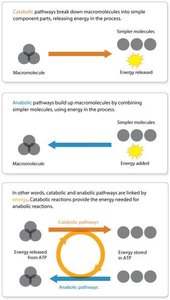
Key Point: Catabolic and anabolic pathways are interconnected, with energy released from catabolism being used to drive anabolic reactions.
Importance of Microbial Metabolism
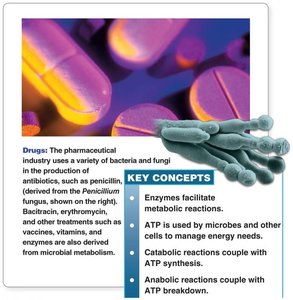
While microbial metabolism can contribute to disease and food spoilage, many metabolic pathways are beneficial, supporting industrial processes such as antibiotic production and fermentation.
Catabolism and Anabolism
Definitions and Differences
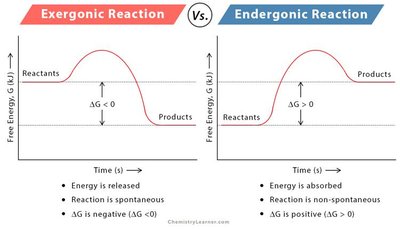
Catabolic reactions: Exergonic processes that break down macromolecules, releasing energy (e.g., glycolysis, cellular respiration).
Anabolic reactions: Endergonic processes that build macromolecules from smaller units, consuming energy (e.g., protein synthesis, DNA replication).
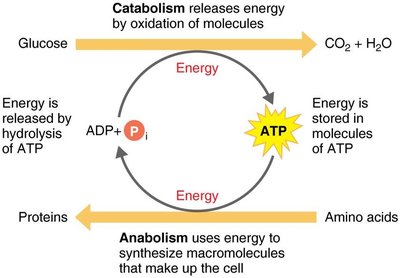
Catabolic and anabolic reactions are coupled through the molecule ATP, which acts as an energy currency in the cell.
The Role of ATP
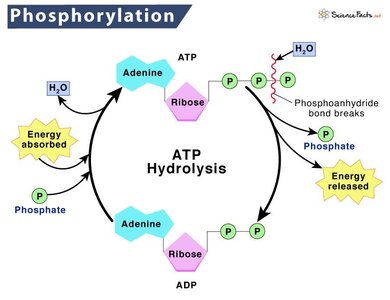
ATP (adenosine triphosphate) is the primary energy carrier in cells. It stores energy released from catabolic reactions and provides energy for anabolic reactions through hydrolysis.
ATP hydrolysis: Releases energy by breaking a high-energy phosphate bond, forming ADP and inorganic phosphate.
Phosphorylation: The transfer of a phosphate group to a molecule, often activating or energizing it for a subsequent reaction.

Metabolic Pathways and Enzymes
Metabolic Pathways
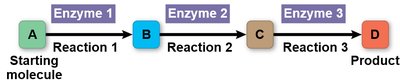
Metabolic pathways are sequences of enzymatically catalyzed reactions. Each step is facilitated by a specific enzyme, and the pathway is determined by the organism's genetic makeup.
Enzymes: Biological Catalysts
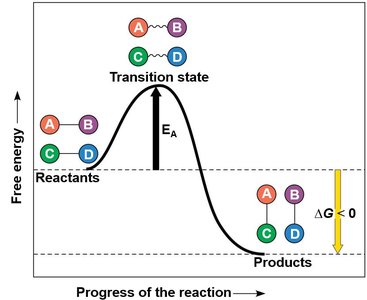
Enzymes are proteins that accelerate chemical reactions by lowering the activation energy required. They are highly specific for their substrates and are not consumed in the reaction.
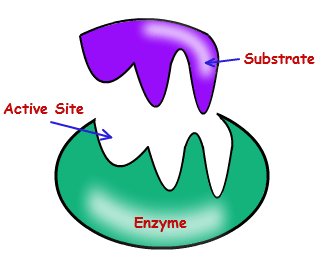
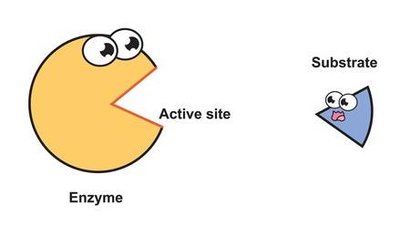
Active site: The region of the enzyme where the substrate binds and the reaction occurs.
Enzyme-substrate complex: Temporary association between enzyme and substrate during the reaction.
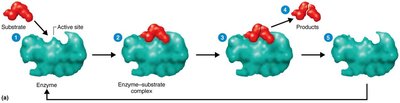
Enzyme Specificity and Efficiency
Enzymes are highly specific, usually catalyzing only one type of reaction or acting on a specific substrate. The turnover number indicates how many substrate molecules an enzyme can convert per second.
Enzyme Components
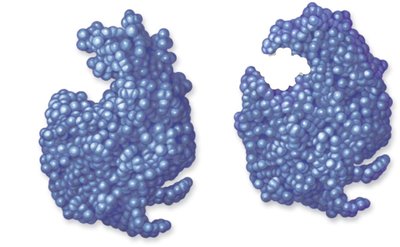
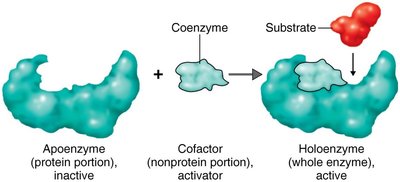
Apoenzyme: The protein portion of an enzyme, inactive without its cofactor.
Cofactor: Non-protein component required for enzyme activity (can be a metal ion or organic molecule).
Coenzyme: Organic cofactor, often derived from vitamins (e.g., NAD+, FAD).
Holoenzyme: The complete, active enzyme with its cofactor.
Factors Influencing Enzyme Activity
Environmental Factors
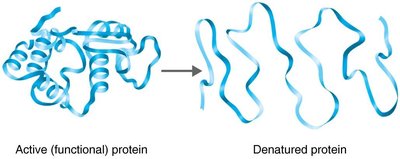
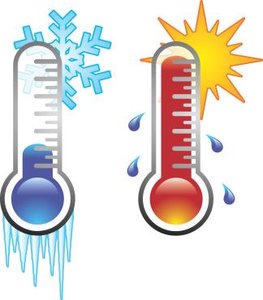
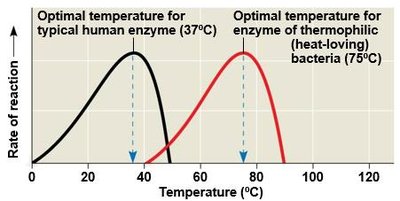
Temperature: Each enzyme has an optimal temperature. High temperatures can denature enzymes, reducing activity.
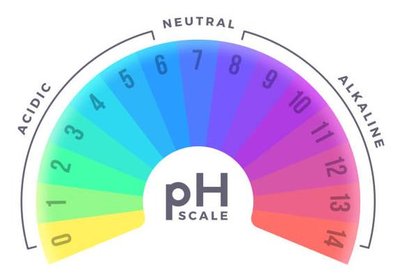
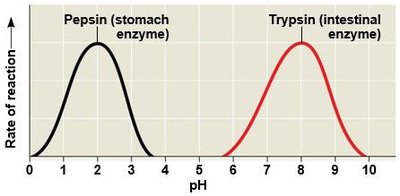
pH: Each enzyme has an optimal pH range. Extreme pH values can denature enzymes.
Substrate concentration: Increasing substrate concentration increases reaction rate until the enzyme is saturated.
Inhibitors: Chemicals that decrease enzyme activity.
Enzyme Inhibition
Competitive inhibition: Inhibitor competes with substrate for the active site.
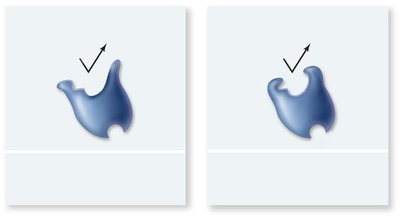
Noncompetitive inhibition: Inhibitor binds to an allosteric site, changing the enzyme's shape and reducing activity.
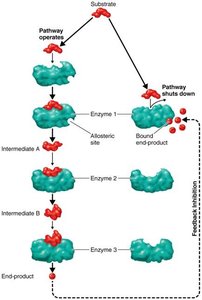
Feedback inhibition: End-product of a pathway inhibits an enzyme involved earlier in the pathway, regulating metabolic flux.


Ribozymes
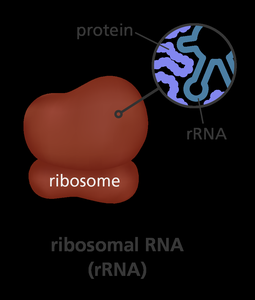
Ribozymes are RNA molecules with catalytic activity, involved in RNA splicing and protein synthesis. Unlike protein enzymes, they are not consumed in the reaction.
Energy Production and Redox Reactions
Oxidation-Reduction (Redox) Reactions
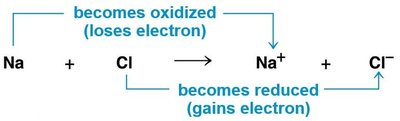
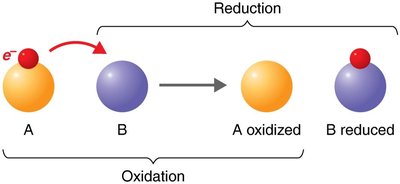
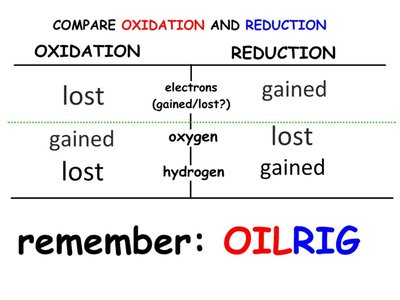
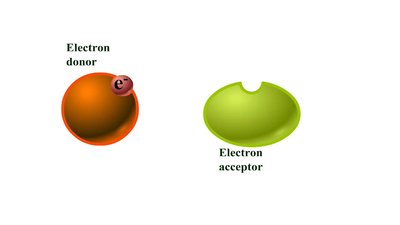
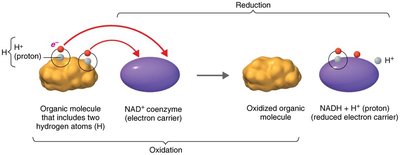
Redox reactions involve the transfer of electrons between molecules, releasing energy used to synthesize ATP. Oxidation is the loss of electrons (and usually hydrogen), while reduction is the gain of electrons.
OIL RIG: Oxidation Is Loss, Reduction Is Gain (of electrons).

ATP Generation Mechanisms
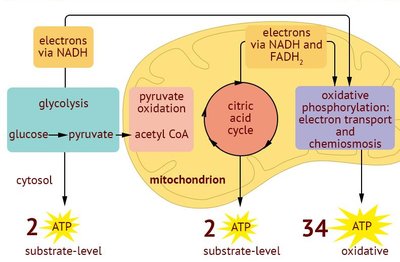
Substrate-level phosphorylation: Direct transfer of a phosphate group to ADP from a phosphorylated intermediate.
Oxidative phosphorylation: ATP is generated as electrons are transferred through the electron transport chain to a final electron acceptor (usually O2), creating a proton gradient used by ATP synthase.
Photophosphorylation: Light energy is used to generate ATP in photosynthetic organisms.
Carbohydrate Catabolism
Major Pathways
Glycolysis: Glucose is broken down into pyruvate, producing ATP and NADH.
Pentose phosphate pathway: Generates NADPH and pentoses for biosynthesis.
Entner-Doudoroff pathway: Alternative to glycolysis, producing NADPH and ATP (found in some bacteria).
The overall glycolysis reaction:
Cellular Respiration
Aerobic respiration: Final electron acceptor is O2; yields the most ATP.
Anaerobic respiration: Final electron acceptor is an inorganic molecule other than O2 (e.g., nitrate, sulfate); yields less ATP.
Stages of aerobic respiration:
Glycolysis
Oxidation of pyruvate to acetyl-CoA
Krebs cycle (Citric Acid Cycle)
Electron transport chain and chemiosmosis
Krebs Cycle (Citric Acid Cycle)
Completes the oxidation of organic molecules, generating ATP, NADH, FADH2, and CO2. NADH and FADH2 donate electrons to the electron transport chain.
Electron Transport Chain and Chemiosmosis
Electrons are transferred through a series of carriers, releasing energy used to pump protons and generate ATP via ATP synthase. This process is called chemiosmosis.
Fermentation
Occurs in the absence of oxygen.
Regenerates NAD+ for glycolysis by reducing organic molecules (e.g., pyruvate).
Produces small amounts of ATP.
Common types: Alcohol fermentation (produces ethanol), lactic acid fermentation (produces lactic acid).
Lipid and Protein Catabolism
Lipids and proteins can also be catabolized for energy. Lipids are broken down into glycerol and fatty acids, while proteins are broken down into amino acids. These intermediates enter the Krebs cycle at various points.
Biochemical Tests and Bacterial Identification
Biochemical tests are used to identify bacteria based on their metabolic capabilities, such as the ability to ferment sugars or produce specific enzymes (e.g., oxidase test, fermentation test).
Photosynthesis
Light-Dependent and Light-Independent Reactions
Light-dependent reactions: Convert light energy into chemical energy (ATP and NADPH).
Light-independent reactions (Calvin-Benson cycle): Use ATP and NADPH to fix CO2 into organic molecules (sugars).
Photosynthesis can be oxygenic (producing O2) or anoxygenic (not producing O2), depending on the organism.
Metabolic Diversity Among Organisms
Phototrophs: Use light as an energy source.
Photoautotrophs: Use light energy and CO2 as a carbon source.
Photoheterotrophs: Use light energy but require organic carbon.
Chemoautotrophs: Obtain energy from inorganic chemicals and use CO2 as a carbon source.
Chemoheterotrophs: Obtain both energy and carbon from organic compounds.
Integration of Metabolism
Amphibolic Pathways
Amphibolic pathways function in both catabolism and anabolism. The Krebs cycle is a prime example, providing intermediates for biosynthesis as well as energy production.
