 Back
BackMicrobial Metabolism: Principles, Pathways, and Diversity
Study Guide - Smart Notes
 Tailored notes based on your materials, expanded with key definitions, examples, and context.
Microbial Metabolism
Defining the Requirements for Life
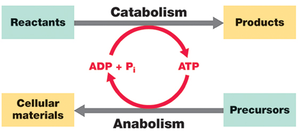
Microbial metabolism encompasses all biochemical reactions necessary for life, including both catabolic and anabolic processes. These reactions rely on the transfer of electrons from electron donors to electron acceptors, enabling cells to conserve energy in a usable form, primarily adenosine triphosphate (ATP).
Metabolism: The sum of all chemical reactions in a cell, divided into catabolism (breakdown of molecules to release energy) and anabolism (synthesis of cellular materials).
Energy Conservation: Cells convert energy into ATP, which powers cellular work.
Law of Conservation of Energy: Energy is neither created nor destroyed, only transformed.
Reducing Power and Redox Reactions
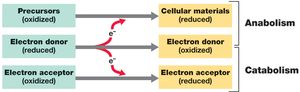
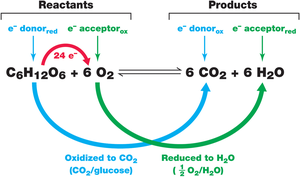
Reducing power refers to the ability of molecules to donate electrons during redox reactions. These reactions consist of two half-reactions: oxidation (electron loss) and reduction (electron gain). Electron donors are oxidized, while electron acceptors are reduced.
Electron Donor: Transfers electrons and becomes oxidized.
Electron Acceptor: Receives electrons and becomes reduced.
Example: Aerobic respiration of glucose: Glucose is oxidized, oxygen is reduced.
Overview of Types of Metabolism
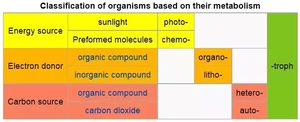
Microorganisms exhibit diverse metabolic lifestyles, classified by their energy source, electron donor, and carbon source. This diversity allows adaptation to various environments.
Energy Source: Sunlight (phototrophs) or preformed molecules (chemotrophs).
Electron Donor: Organic (organotrophs) or inorganic (lithotrophs) compounds.
Carbon Source: Organic (heterotrophs) or carbon dioxide (autotrophs).
Example: Thiobacillus denitrificans oxidizes ammonia for energy and fixes CO2.
Energy source | Electron donor | Carbon source | Classification |
|---|---|---|---|
Sunlight | Organic compound | Organic compound | Photoorganoheterotroph |
Sunlight | Inorganic compound | CO2 | Photolithoautotroph |
Preformed molecules | Organic compound | CO2 | Chemoorganoautotroph |
Preformed molecules | Inorganic compound | Organic compound | Chemolithoheterotroph |
Electron Transfer Reactions and Reduction Potentials
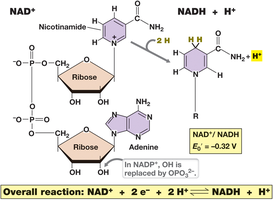
Catabolic reactions depend on electron flow from donors to acceptors. The reduction potential measures a substance's affinity for electrons. Electrons are transferred directly in redox reactions, as they cannot exist freely in solution.
Reduction Potential (E0'): Indicates how readily a molecule accepts electrons.
Electron Carriers: Coenzymes such as NAD+ and NADP+ shuttle electrons between reactions.
Fermentation and Respiration
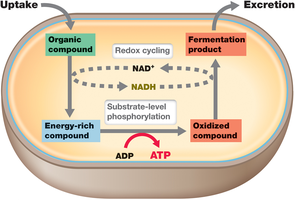
Microbial energy conservation occurs via fermentation or respiration. Both processes generate ATP, but differ in electron acceptors and mechanisms.
Fermentation: Substrate-level phosphorylation; internal electron acceptors (e.g., pyruvate).
Respiration: Oxidative phosphorylation; external electron acceptors (e.g., O2, nitrate).
Energy-Rich Bonds and ATP Generation
Microbes conserve energy in compounds with energy-rich bonds, such as ATP. ATP is generated by substrate-level phosphorylation or oxidative phosphorylation.
Substrate-Level Phosphorylation: Direct transfer of phosphate to ADP from a high-energy substrate.
Oxidative Phosphorylation: ATP synthesis driven by the dissipation of the proton motive force across membranes.
Glycolysis, Fermentation, and Respiration
Glycolysis is a central pathway for glucose catabolism, leading to fermentation or respiration. Fermentation maintains redox balance by reducing pyruvate and excreting waste products, while respiration reoxidizes electron carriers via the electron transport chain.
Fermentation Products: Include ethanol, lactic acid, acetate, and other volatile fatty acids.
Human Applications: Fermentation is used in food production (beer, wine, yogurt, cheese) and impacts microbiome health.
Alternatives to Glycolysis
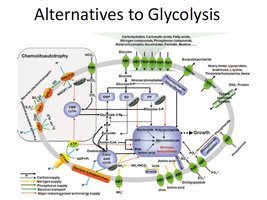
Microorganisms possess alternative pathways to glycolysis, such as the Entner-Doudoroff and pentose phosphate pathways, enabling the catabolism of diverse substrates.
Metabolic Diversity: Sugars, amino acids, fatty acids, purines, pyrimidines, and aromatics can be fermented.
ATP Synthesis: Substrate-level phosphorylation allows additional ATP generation from various substrates.
Principles of Respiration
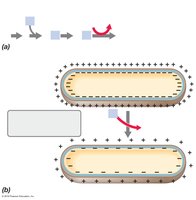
Respiration involves the transfer of electrons from reduced donors to external acceptors, generating an electrochemical gradient (proton motive force) across the cytoplasmic membrane. This gradient drives ATP synthesis via ATP synthase.
Electron Transport Chain: Located in the cytoplasmic membrane; reoxidizes NADH and FADH2.
Proton Motive Force: Electrochemical gradient of protons used for ATP synthesis.
Metabolic Diversity and Oxygen Relationship
Microbial metabolic diversity is closely linked to oxygen availability. Aerobic respiration uses oxygen as the terminal electron acceptor, while anaerobic respiration utilizes alternatives such as nitrate.
Aerobic Respiration: Oxygen is the terminal electron acceptor.
Anaerobic Respiration: Nitrate, sulfate, or other molecules serve as electron acceptors.
Phototrophy
Phototrophic microorganisms use light energy to generate a proton motive force, enabling ATP synthesis by photophosphorylation. Phototrophy can be oxygenic (producing O2) or anoxygenic (not producing O2).
Oxygenic Phototrophs: Cyanobacteria, algae, and plants; produce oxygen as a waste product.
Anoxygenic Phototrophs: Many bacteria; evolved first, exhibit greater metabolic diversity.
Habitat: Anoxygenic phototrophs inhabit anoxic, light-exposed environments.
Additional info: Phototrophs use specialized pigments and photosystems to capture light energy and fix CO2.
