 Back
BackMicrobial Metabolism: Respiration, Fermentation, and Metabolic Diversity
Study Guide - Smart Notes
 Tailored notes based on your materials, expanded with key definitions, examples, and context.
Microbial Metabolism
Overview of Metabolic Pathways
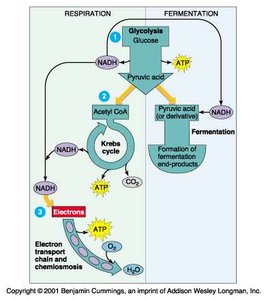
Microorganisms utilize a variety of metabolic pathways to obtain energy and carbon for growth and maintenance. The main processes include aerobic respiration, anaerobic respiration, and fermentation. The choice of pathway depends on the organism's genetic capability and the environmental availability of oxygen and other electron acceptors.
Aerobic respiration produces the most ATP and is used when oxygen is available.
Anaerobic respiration uses electron acceptors other than oxygen and yields less ATP than aerobic respiration.
Fermentation is used when no suitable electron acceptor is available; it yields the least ATP.
Anaerobic Respiration
Definition and Mechanism
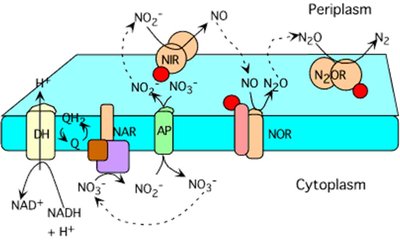
Anaerobic respiration is a form of respiration that uses an electron transport chain, but the terminal electron acceptor is not oxygen. Instead, molecules such as nitrate (NO3-), sulfate (SO42-), or carbon dioxide (CO2) serve as the final electron acceptors. This process generates more ATP than fermentation but less than aerobic respiration.
Key Steps: Glycolysis, preparatory step, Krebs cycle, and electron transport chain (ETC).
Terminal Electron Acceptors: Nitrate, sulfate, or other inorganic molecules.
ATP Yield: Lower than aerobic respiration due to the lower reduction potential of alternative acceptors.
Fermentation
Definition and Characteristics
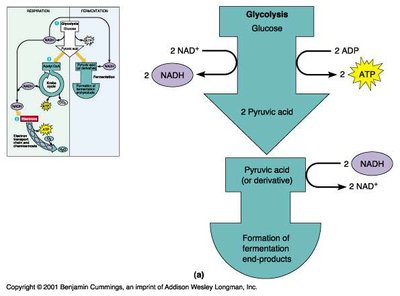
Fermentation is a metabolic process that releases energy from the oxidation of organic molecules without the use of oxygen, the Krebs cycle, or an electron transport chain. An organic molecule acts as the final electron acceptor. Fermentation is essential for regenerating NAD+ from NADH, allowing glycolysis to continue in the absence of respiration.
ATP Production: Only substrate-level phosphorylation during glycolysis; no ATP from the ETC.
End Products: Organic acids, alcohols, gases (e.g., lactic acid, ethanol, CO2).
Industrial Importance: Used in the production of alcoholic beverages, dairy products, and various chemicals.
Lactic Acid and Ethanol Fermentation
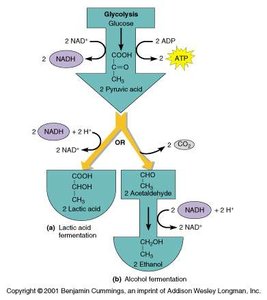
Two common types of fermentation are lactic acid fermentation and alcohol fermentation. Both processes regenerate NAD+ by transferring electrons from NADH to pyruvate or its derivatives.
Lactic Acid Fermentation: Pyruvate is reduced directly to lactic acid.
Alcohol Fermentation: Pyruvate is first decarboxylated to acetaldehyde, which is then reduced to ethanol.
Fermentation End Products and Applications
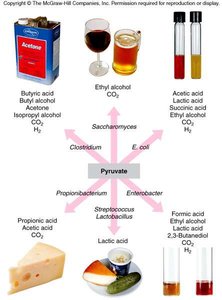
Different microorganisms produce a variety of fermentation end products, which are important in food production and industrial microbiology.
Examples: Lactic acid (cheese, yogurt), ethanol (beer, wine), propionic acid (Swiss cheese), butyric acid (butter), and mixed acids (various bacteria).
Laboratory Identification: Durham Sugar Tube Tests
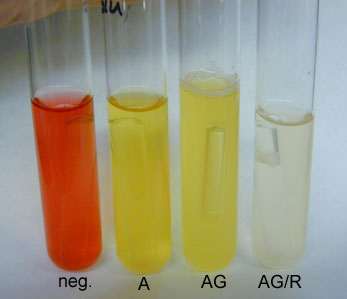
Fermentation can be detected in the laboratory using Durham sugar tube tests. These tests use a pH indicator (phenol red) and an inverted Durham tube to detect acid and gas production from sugar fermentation.
Results: Yellow color indicates acid production; gas in the Durham tube indicates gas production.
Interpretation: Negative (no fermentation), A (acid), AG (acid and gas), AG/R (acid, gas, and dye reduction).
Energy Yield and Electron Acceptors
Energy Potential in Metabolism
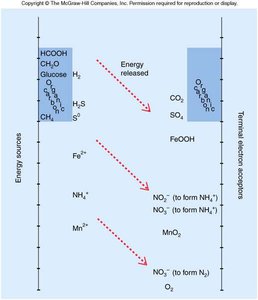
The amount of ATP produced during metabolism depends on the energy difference between the electron donor (energy source) and the terminal electron acceptor. The greater the difference, the more energy is released and the more ATP can be synthesized.
Fermentation: Small energy difference; both donor and acceptor are organic molecules.
Aerobic Respiration: Large energy difference; donor is organic carbon, acceptor is O2.
Anaerobic Respiration: Intermediate energy difference; acceptors include NO3-, SO42-, etc.
Catabolism of Macromolecules
Overview
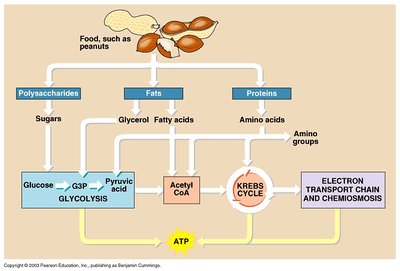
Microorganisms can catabolize a variety of macromolecules, including carbohydrates, proteins, and lipids, to generate energy and metabolic intermediates.
Polysaccharides: Broken down by amylases into monosaccharides, which enter glycolysis.
Lipids: Hydrolyzed by lipases into glycerol and fatty acids; glycerol enters glycolysis, fatty acids undergo β-oxidation to form acetyl-CoA.
Proteins: Hydrolyzed by proteases and peptidases into amino acids; deaminated and carbon skeletons enter central metabolic pathways.
Protein Catabolism
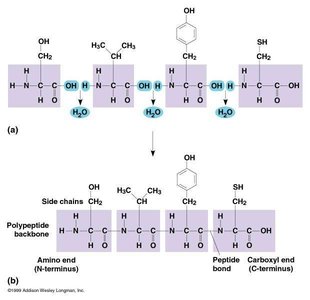
Proteins are too large to cross cell membranes and must be broken down by exoenzymes (peptidases) into amino acids. Inside the cell, deaminases remove amino groups, and the remaining carbon skeletons enter the Krebs cycle or glycolysis.
Lipid Catabolism
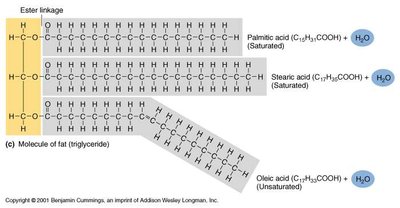
Lipases cleave the ester bonds in triglycerides, releasing glycerol and fatty acids. Glycerol is converted to an intermediate of glycolysis, while fatty acids are degraded by β-oxidation to acetyl-CoA, which enters the Krebs cycle.
Polysaccharide Catabolism
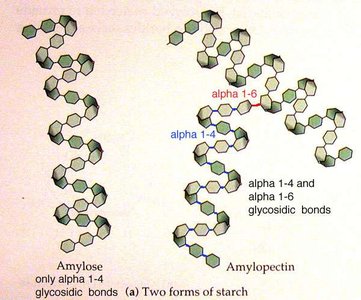
Polysaccharides such as starch are hydrolyzed by amylases into monosaccharides, which are then metabolized via glycolysis.
Exoenzymes
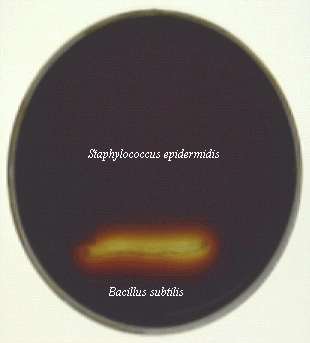
Exoenzymes are enzymes secreted by cells to break down large macromolecules outside the cell, facilitating their uptake and subsequent catabolism.
Examples: Amylase (starch hydrolysis), lipase (lipid hydrolysis).
Anabolism (Biosynthesis)
Amphibolic Pathways
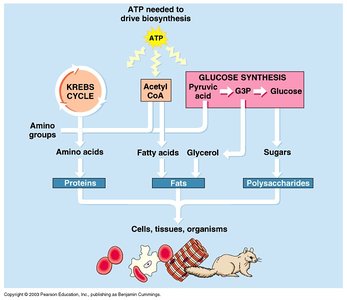
Metabolic pathways are often amphibolic, serving both catabolic and anabolic functions. Intermediates from catabolic pathways are used as precursors for biosynthesis of cellular components such as amino acids, nucleotides, and lipids.
Photosynthesis
Overview and Importance
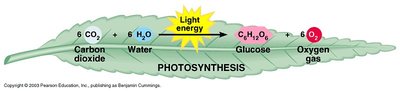
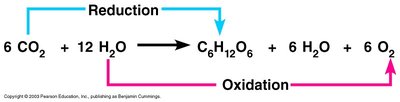
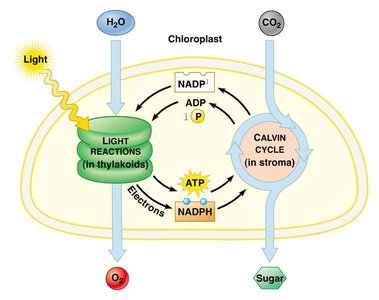
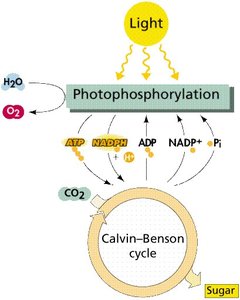
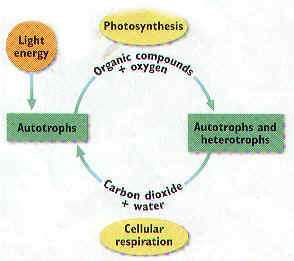
Photosynthesis is the process by which light energy is converted into chemical energy, producing organic molecules from carbon dioxide and water. It occurs in chloroplasts of eukaryotes and in specialized membranes of prokaryotes.
Light Reactions: Capture light energy to produce ATP and NADPH, releasing O2.
Calvin Cycle: Uses ATP and NADPH to fix CO2 into sugars.
Metabolic Diversity Among Organisms
Nutritional Classification
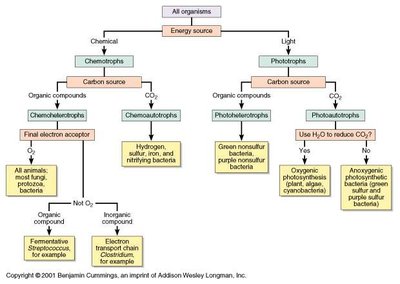
Microorganisms are classified based on their energy and carbon sources. This classification helps in understanding their ecological roles and metabolic capabilities.
Nutritional Type | Energy Source | Carbon Source | Examples |
|---|---|---|---|
Photoautotroph | Light | CO2 | Cyanobacteria, plants |
Photoheterotroph | Light | Organic molecules | Green, purple nonsulfur bacteria |
Chemoautotroph | Inorganic molecules | CO2 | Iron-oxidizing bacteria |
Chemoheterotroph | Organic molecules | Organic molecules | Animals, fungi, many bacteria |
Lithoautotroph | Inorganic molecules | CO2 | Many extremophiles |
Summary
Microbial metabolism encompasses a wide range of biochemical pathways that allow microorganisms to adapt to diverse environments. Understanding these pathways is essential for applications in biotechnology, medicine, and environmental science.
