 Back
BackMicrobial Metabolism: Structure, Function, and Clinical Relevance
Study Guide - Smart Notes
 Tailored notes based on your materials, expanded with key definitions, examples, and context.
Microbial Metabolism
Defining Metabolism
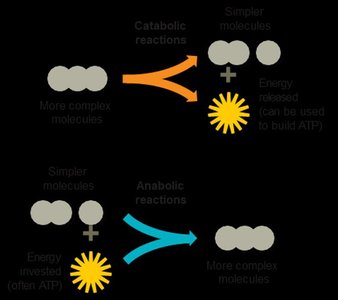
Metabolism encompasses all chemical reactions that occur within an organism, including those that break down substances to release energy (catabolism) and those that use energy to build new substances (anabolism). These reactions are interconnected and essential for cellular function.
Metabolism: The sum of all biochemical reactions in a cell.
Catabolism: Breakdown of complex molecules into simpler ones, releasing energy.
Anabolism: Synthesis of complex molecules from simpler ones, requiring energy input.
Amphibolic pathways: Pathways that function in both catabolism and anabolism.
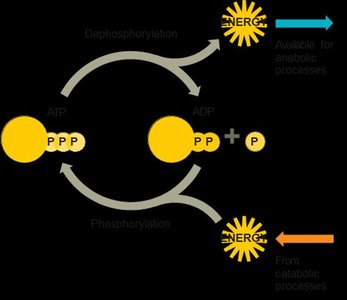
ATP (Adenosine Triphosphate): The primary energy currency of the cell, recharged by ADP/ATP cycling.
ATP Structure and Cycling
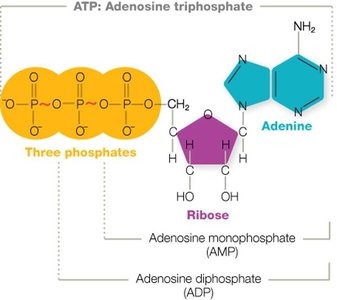
ATP is composed of adenine, ribose, and three phosphate groups. The removal or addition of phosphate groups (dephosphorylation and phosphorylation) cycles ATP and ADP, providing energy for cellular processes.
ATP: Contains high-energy phosphate bonds.
ADP: Formed when ATP loses a phosphate group.
AMP: Formed when ATP loses two phosphate groups.
ATP–ADP cycling: Cells primarily cycle between ATP and ADP, not AMP.
Enzymes and Metabolic Regulation
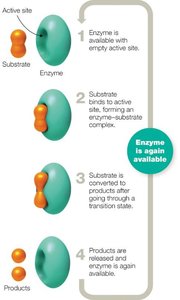
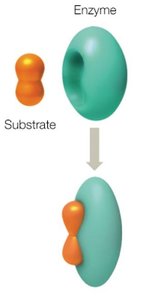
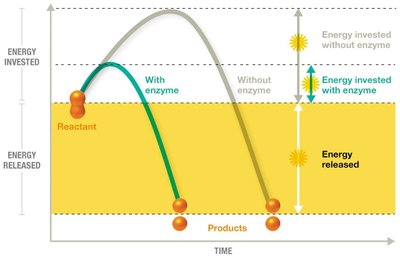
Enzymes are protein catalysts that accelerate biochemical reactions by lowering activation energy. They are essential for metabolism and are highly specific for their substrates.
Enzyme: Protein catalyst, not consumed in reactions.
Active site: Region where substrate binds.
Induced fit model: Enzyme molds to substrate for optimal catalysis.
Enzyme-substrate complex: Temporary association during reaction.
Collision theory: Reactants must collide in proper orientation.
Enzyme Cofactors and Coenzymes
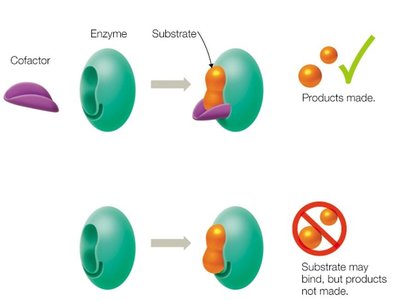
Some enzymes require nonprotein cofactors for activity. Cofactors can be inorganic ions or organic coenzymes, often derived from vitamins. Coenzymes frequently act as electron carriers in metabolic reactions.
Apoenzyme: Inactive enzyme without cofactor.
Holoenzyme: Active enzyme with cofactor.
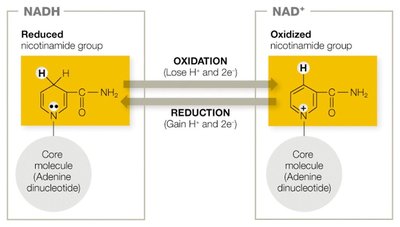
Coenzymes: Organic cofactors, often vitamins (e.g., NAD+, FAD).
Electron carriers: NAD+, NADP+, FAD, FMN, CoA.
Factors Affecting Enzyme Activity
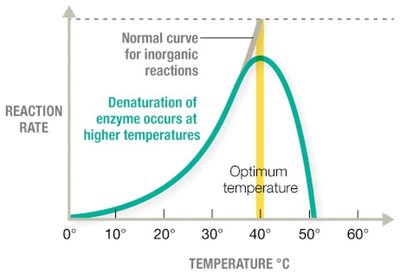
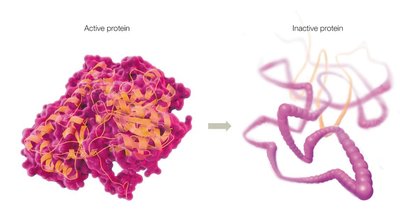
Enzyme activity is influenced by temperature, pH, substrate concentration, phosphorylation state, and inhibitors. Extreme conditions can denature enzymes, rendering them inactive.
Temperature: Optimal range increases activity; high temperatures denature proteins.
pH: Extreme pH disrupts protein structure.
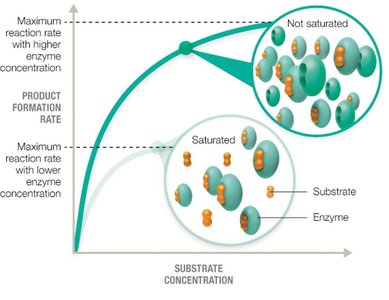
Substrate concentration: Saturation affects reaction rate.
Phosphorylation: Modifies enzyme activity.
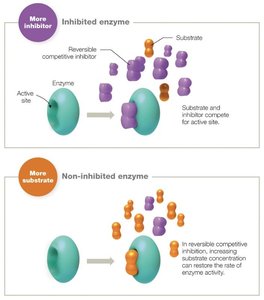
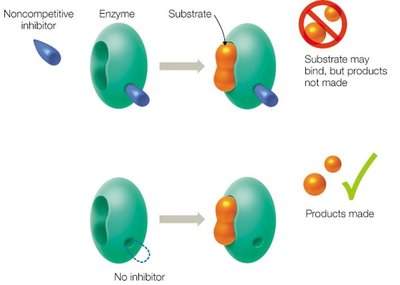
Inhibitors: Competitive and noncompetitive inhibition regulate activity.
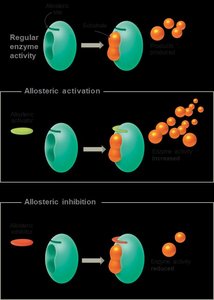
Allosteric regulation: Activators/inhibitors bind to allosteric sites.
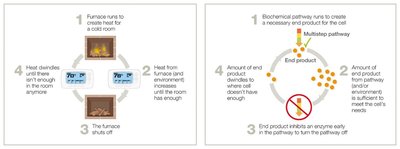
Feedback inhibition: End product inhibits pathway.
Energy Production and Redox Reactions
Oxidation-Reduction (Redox) Reactions
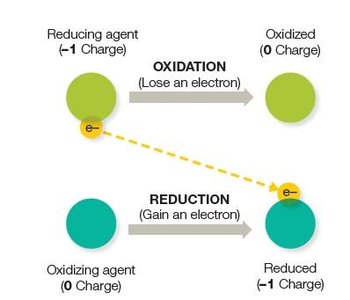
Cells extract energy from nutrients using redox reactions, which are coupled processes where one molecule is oxidized (loses electrons) and another is reduced (gains electrons).
Oxidizing agent: Causes oxidation by accepting electrons.
Reducing agent: Causes reduction by donating electrons.
Phosphorylation Mechanisms
Three main mechanisms recharge ADP to ATP: substrate-level phosphorylation, oxidative phosphorylation, and photophosphorylation.
Mechanism | How ATP is Made | Electron Transport Chain Used? | Used In | Cell Types |
|---|---|---|---|---|
Substrate-Level | Phosphate transferred directly to ADP | No | Glycolysis, Krebs cycle, fermentation | Prokaryotic & Eukaryotic |
Oxidative | Electron transport chain powered by nutrients | Yes | Cellular respiration | Prokaryotic & Eukaryotic |
Photophosphorylation | Electron transport chain powered by light | Yes | Photosynthesis | Photosynthetic cells |
Cellular Respiration and Fermentation
Cellular Respiration Pathways
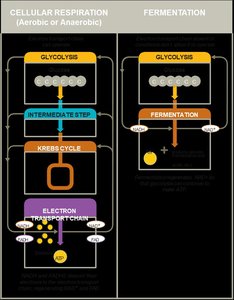
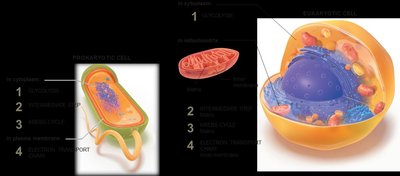
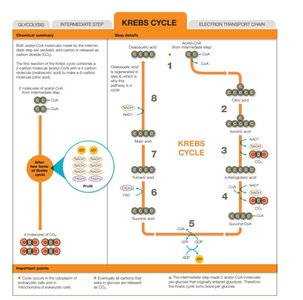
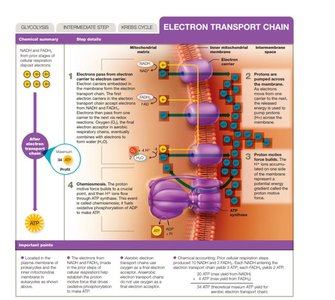
Cellular respiration is a multi-step process for harvesting energy from nutrients, primarily carbohydrates. It includes glycolysis, an intermediate step, the Krebs cycle, and the electron transport chain.
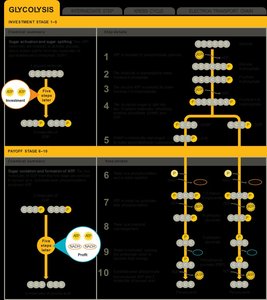
Glycolysis: Splits glucose into pyruvic acid, produces ATP and NADH.
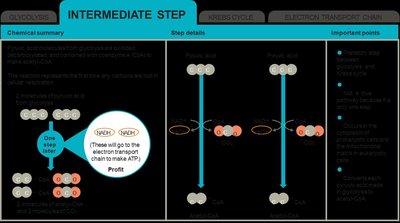
Intermediate Step: Converts pyruvic acid to acetyl-CoA, releases CO2.
Krebs Cycle: Series of redox and decarboxylation reactions, produces ATP, NADH, FADH2, and CO2.
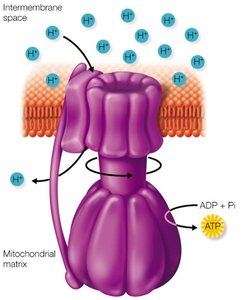
Electron Transport Chain: Transfers electrons, pumps protons, drives ATP synthesis via chemiosmosis.
Aerobic vs. Anaerobic Respiration
Aerobic respiration uses oxygen as the final electron acceptor, while anaerobic respiration uses other inorganic molecules. ATP yield is highest in aerobic respiration.
Pathway | ATP Invested | ATP Made | Net ATP Yield |
|---|---|---|---|
Glycolysis | 2 | 4 | 2 |
Intermediate Step | 0 | 0 | 0 |
Krebs Cycle | 0 | 2 | 2 |
Electron Transport Chain | 0 | 34 | 34 |
Combined Net Totals | 2 | 40 | 38 |
Overall aerobic respiration equation:
Fermentation Pathways
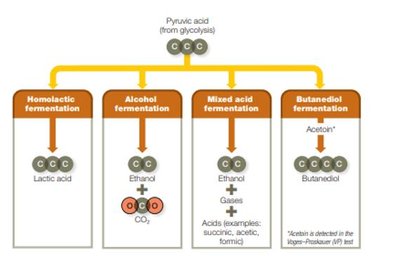
Fermentation allows cells to sustain ATP production via glycolysis when respiratory chains are unavailable. It is less efficient than respiration and produces a variety of end products.
Homolactic fermentation: Produces lactic acid.
Heterolactic fermentation: Produces lactic acid, ethanol, CO2, and other acids.
Alcohol fermentation: Produces ethanol and CO2.
Mixed acid fermentation: Produces multiple acids and gases.
Butanediol fermentation: Produces butanediol and acetoin.
Catabolism of Macromolecules
Lipid, Protein, and Nucleic Acid Catabolism
Cells break down macromolecules using exoenzymes and funnel smaller products into catabolic pathways for energy extraction.
Lipases: Break lipids into glycerol and fatty acids.
Proteases/peptidases: Break proteins into peptides and amino acids.
Nucleases: Break nucleic acids into nucleotides.
Anabolic Reactions: Biosynthesis
Polysaccharide Biosynthesis
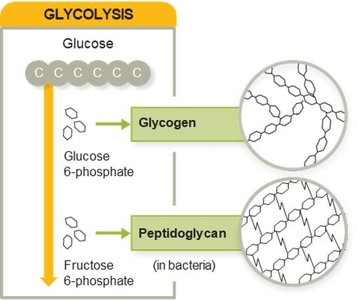
ATP and reducing power (NADPH) fuel biosynthetic pathways. Gluconeogenesis builds glucose from non-sugar precursors, and intermediates from glycolysis are used to make polysaccharides like glycogen and peptidoglycan.
Lipid and Amino Acid Biosynthesis
Lipids are synthesized from carbohydrate catabolism intermediates. Amino acids are made by amination of metabolic intermediates; essential amino acids must be obtained from the environment.
Nucleotide Biosynthesis
Purines and pyrimidines are synthesized de novo or recycled for nucleic acid and energy molecule production.
Amphibolic Pathways and Metabolic Diversity
Amphibolic Pathways
Amphibolic pathways function in both catabolism and anabolism, allowing cells to balance energy production and biosynthesis. Regulation is achieved through cofactors and enzyme activity.
Catabolic Pathways | Anabolic Pathways | All Metabolic Pathways |
|---|---|---|
Breakdown of molecules | Building molecules | Tightly regulated |
Release energy | Consume energy | Necessary for cell survival |
Rely on NAD+ | Rely on NADPH | Require enzymes |
Example: cellular respiration | Example: lipid biosynthesis |
Metabolic Diversity
Organisms are classified by their carbon and energy sources:
Autotrophs: Fix carbon from inorganic sources.
Heterotrophs: Require organic carbon.
Phototrophs: Use light for energy.
Chemotrophs: Use chemical bonds for energy.
Mixotrophs: Switch between metabolic modes.
Biochemical Tests and Clinical Relevance
Biochemical Tests for Bacterial Identification
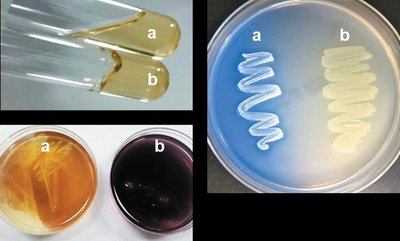
Biochemical tests detect metabolic end products, intermediates, or enzymes to identify microbes. Examples include amino acid catabolism tests, fermentation tests, methyl red/Voges-Proskauer (MRVP) test, oxidase test, and catalase test.
Amino acid catabolism tests: Detect deaminases and decarboxylases.
Fermentation tests: Detect acid and gas production.
MRVP test: Distinguishes mixed acid and butanediol fermentation.
Oxidase test: Detects cytochrome c oxidase.
Catalase test: Detects catalase enzyme.
Rapid identification techniques: API® system for quick metabolic profiling.
Clinical Case Application
Understanding microbial metabolism is crucial for clinical diagnosis and treatment, as illustrated by cases such as diabetic ketoacidosis and wound infections by anaerobic bacteria.
Visual Summary
Microbial metabolism is a complex, interconnected web of catabolic and anabolic pathways, regulated by enzymes, cofactors, and environmental factors. Biochemical tests and metabolic profiling are essential tools in clinical microbiology.
