 Back
BackMicrobial Metabolism: Structure, Function, and Diversity
Study Guide - Smart Notes
 Tailored notes based on your materials, expanded with key definitions, examples, and context.
Microbial Metabolism
Overview of Metabolism
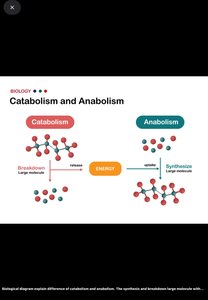
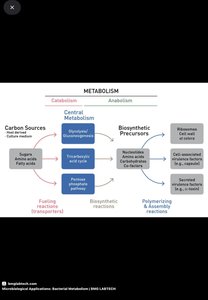
Metabolism encompasses all biochemical reactions necessary for life, divided into two main categories: catabolism and anabolism. Catabolism involves the breakdown of molecules to release energy, while anabolism uses energy to synthesize complex molecules. These processes are fundamental to microbial physiology and ecology.
Catabolism: Energy-releasing breakdown of large molecules into smaller units.
Anabolism: Energy-consuming synthesis of large molecules from smaller precursors.
ATP: The Universal Energy Currency
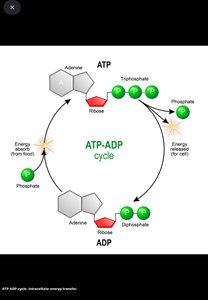
Cells conserve energy by converting it into ATP (adenosine triphosphate), which powers cellular work. The ATP-ADP cycle is central to energy transfer in metabolism.
ATP: Stores energy in phosphate bonds.
ADP: Formed when ATP loses a phosphate, releasing energy for cellular processes.
Energy Conservation: Energy from catabolic reactions is used to regenerate ATP from ADP and phosphate.
Electron Flow & Energy Conservation
Metabolic reactions depend on electron transfer. Electron donors lose electrons, while electron acceptors gain them. The energy released during these transfers is conserved as ATP.
Electron donors: Molecules that lose electrons (e.g., glucose).
Electron acceptors: Molecules that gain electrons (e.g., oxygen, nitrate).
ATP production: Energy from electron transfer is used to synthesize ATP.
Energy Classes of Microorganisms
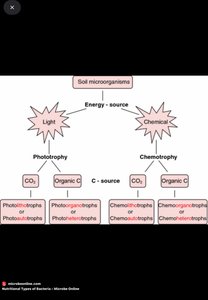
Microbes are classified based on their energy, electron, and carbon sources. This classification reflects their metabolic diversity and ecological roles.
Chemoorganotrophs: Obtain energy from organic chemicals.
Chemolithotrophs: Obtain energy from inorganic chemicals (e.g., H2, H2S, NH4+).
Phototrophs: Obtain energy from light.
Heterotrophs: Use organic compounds as carbon source.
Autotrophs: Use CO2 as carbon source.
Enzymes and Catalysis
Enzymes are biological catalysts, mostly proteins, that lower the activation energy required for reactions. They are highly specific and not consumed in the reaction.
Activation Energy: Minimum energy needed to start a reaction.
Enzyme Structure: Substrate binds at the active site; catalysis depends on correct substrate positioning.
Helpers: Prosthetic groups (tightly bound) and coenzymes (loosely bound, often vitamin derivatives) assist in catalysis.
Energy-Rich Storage Compounds
Microorganisms store energy in various compounds for long-term use.
Prokaryotes: Glycogen, PHB/PHA (lipid polymers), elemental sulfur.
Eukaryotes: Starch, lipids (fats).
Glycolysis, Fermentation, and Respiration
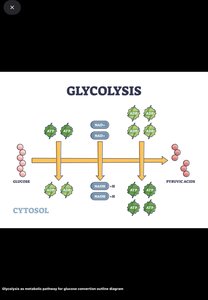
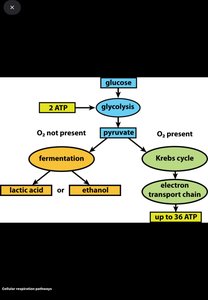
Glycolysis is the central pathway for glucose catabolism, producing ATP and pyruvate. Fermentation and respiration are two major pathways for further energy extraction.
Glycolysis: Glucose is converted to pyruvate, producing 2 ATP via substrate-level phosphorylation.
Fermentation: Anaerobic; organic compound is both electron donor and acceptor; no electron transport chain.
Respiration: Uses electron transport chain; aerobic (O2 as acceptor) or anaerobic (NO3-, SO42-, Fe3+, CO2 as acceptors); produces more ATP than fermentation.
Electron Transport & Carriers
The Electron Transport System (ETS) is located in the cytoplasmic membrane and consists of a series of oxidation-reduction reactions. It conserves energy by building a proton gradient.
Electron Carriers: NADH dehydrogenase, flavoproteins, iron–sulfur proteins, cytochromes, quinones.
Proton Motive Force (PMF)
Electron flow separates protons from electrons, creating a proton gradient across the membrane. This gradient (PMF) drives ATP synthase, producing most cellular ATP.
PMF: Generates both a pH and electrical gradient.
ATP Synthase: Uses PMF to synthesize ATP.

Alternative Energy Strategies
Microbes utilize diverse energy strategies, including anaerobic respiration, chemolithotrophy, and phototrophy.
Anaerobic Respiration: Uses electron acceptors other than O2; less energy than aerobic respiration.
Chemolithotrophy: Uses inorganic electron donors; often aerobic and autotrophic; important in nutrient cycling.
Phototrophy: Light energy is converted to ATP (photophosphorylation); photoautotrophs use CO2 as carbon source; photoheterotrophs use organic carbon.
Sugars & Polysaccharide Biosynthesis
Microbes synthesize sugars and polysaccharides using activated glucose molecules and specialized pathways.
UDPG: Used for cell wall sugar synthesis (NAG, NAM).
ADPG: Used for glycogen synthesis.
Gluconeogenesis: Synthesis of glucose from non-carbohydrate precursors, starting with phosphoenolpyruvate.
Pentose Phosphate Pathway: Produces pentose sugars for nucleic acids and NADPH for biosynthesis.
Amino Acid & Nucleotide Biosynthesis
Carbon skeletons for amino acids and nucleotides are derived from glycolysis or the TCA cycle. Nitrogen is incorporated as ammonia.
Key Enzymes: Glutamine synthetase, glutamate dehydrogenase, transaminases.
Fatty Acid & Lipid Biosynthesis
Fatty acids are synthesized two carbons at a time, using acyl carrier protein (ACP). Adaptations in fatty acid composition occur in response to temperature.
Cold: Shorter, unsaturated fatty acids.
Heat: Longer, saturated fatty acids.
Domain Differences: Bacteria & Eukarya use fatty acids + glycerol; Archaea use phytanyl side chains.
Big Picture Summary
Metabolism: Integrates energy, electron flow, and enzyme activity.
ATP: Universal energy currency.
PMF: Major driver of ATP synthesis.
Metabolic Diversity: Microbes exhibit vast metabolic capabilities.
Ecological Connection: Metabolism links energy flow, biosynthesis, and microbial ecology.
Key Concepts and Definitions
Microbial Nutritional Types
Chemoorganotroph: Energy from organic compounds.
Chemolithotroph: Energy from inorganic compounds.
Chemotroph: Energy from chemicals.
Phototroph: Energy from light.
Troph: Means "to feed" or "to obtain nourishment".
Autotroph vs Heterotroph
Autotroph: Uses CO2 as carbon source.
Heterotroph: Uses organic compounds as carbon source.
Enzyme Structure and Function
Composition: Mostly proteins.
Temperature Sensitivity: High temperatures can denature proteins, causing loss of enzyme function.
Active Site: Substrate binds here.
Activation Energy: Minimum energy needed to start a chemical reaction.
Catabolism vs Anabolism
Catabolism: Breaks molecules down, releases energy.
Anabolism: Builds molecules, requires energy.
Respiration vs Fermentation
Respiration: Uses electron transport chain and external electron acceptor.
Fermentation: No ETC; organic molecule is both donor and acceptor.
Fermentation End Products
Organic acids: e.g., lactic acid.
Alcohols: e.g., ethanol.
Gases: CO2, H2.
Yeast Used in Fermentation
Saccharomyces cerevisiae
Glycolysis
Process: Glucose → pyruvate.
Products: 2 ATP and NADH.
Location: Cytoplasm.
Glucose Transport
Mechanism: Transport proteins in cytoplasmic membrane (facilitated diffusion or active transport).
ATP Production
Location: Electron Transport Chain (ETC).
Comparison: More ATP is made here than in glycolysis or Krebs cycle.
Final Electron Acceptors
Aerobic Respiration: Oxygen (O2), forms water (H2O).
Anaerobic Respiration: Nitrate (NO3-), sulfate (SO42-), carbon dioxide (CO2), ferric iron (Fe3+).
Autotrophs: Carbon and Energy Sources
Carbon source: CO2.
Energy source: Light (photoautotrophs) or inorganic chemicals (chemoautotrophs).
Bacterial Nutrient Acquisition
Sources: Soil, water, hosts, organic matter, inorganic chemicals.
Nitrogen Fixation
Process: Conversion of atmospheric nitrogen (N2) into ammonia (NH3).
Carried out by: Free-living bacteria (e.g., Azotobacter), symbiotic bacteria (e.g., Rhizobium), some cyanobacteria.
Key Equations
ATP Synthesis via Substrate-Level Phosphorylation
Glycolysis Overall Reaction
Fermentation Example (Lactic Acid)
Respiration (Aerobic)
Summary Table: Microbial Nutritional Types
Energy Source | Carbon Source | Example |
|---|---|---|
Chemoorganotroph | Organic compounds | Most bacteria, fungi |
Chemolithotroph | CO2 or organic compounds | Nitrifying bacteria |
Phototroph | CO2 or organic compounds | Cyanobacteria |
Heterotroph | Organic compounds | E. coli |
Autotroph | CO2 | Algae |
Additional info: Academic context was added to clarify metabolic pathways, enzyme function, and microbial diversity, ensuring completeness and self-contained study notes.
