 Back
BackMicrobial Metabolism: Structure, Function, and Regulation
Study Guide - Smart Notes
 Tailored notes based on your materials, expanded with key definitions, examples, and context.
Microbial Metabolism
Definition and Overview
Microbial metabolism encompasses all the chemical reactions occurring within a microbial cell, enabling the buildup and breakdown of nutrients. These reactions are essential for energy production, growth, and cellular maintenance. Two key players in metabolism are enzymes and ATP.
Metabolic Reactions: Catabolism and Anabolism
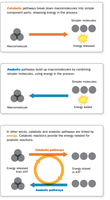
Metabolic reactions are reversible and can proceed in both directions. They are classified into two main types:
Catabolism: The breakdown of complex molecules into simpler ones, releasing energy.
Anabolism: The synthesis of complex molecules from simpler ones, requiring energy input.
Metabolic Pathways
A metabolic pathway begins with specific reactants and ends with a specific final product. Each step is catalyzed by a unique enzyme, ensuring efficiency and regulation.
Enzymes and Their Function
Collision Theory & Energy Requirements
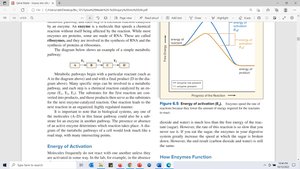
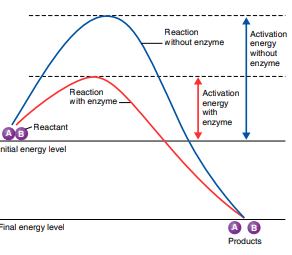
For a chemical reaction to occur, reactant molecules must collide with sufficient energy (activation energy). Enzymes act as catalysts, lowering the activation energy and increasing the rate of metabolic reactions.
Enzyme Structure and Mechanism
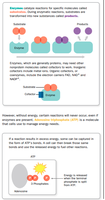
Enzymes are proteins that catalyze specific reactions by binding substrates at their active sites, forming an enzyme-substrate complex. This facilitates the conversion of substrates into products.
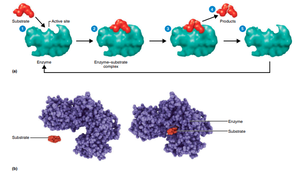
Enzyme Components
Apoenzyme: The protein portion, inactive alone.
Cofactor: Nonprotein component (can be inorganic ions or organic molecules).
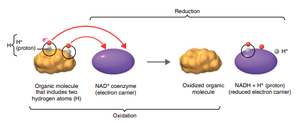
Coenzyme: Organic cofactors, often derived from vitamins (e.g., NAD+, NADP+).
Holoenzyme: The active enzyme formed by the apoenzyme plus its cofactor.
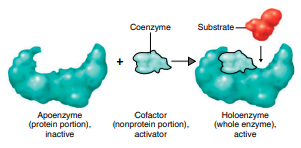
Cofactors, Coenzymes, and Vitamins
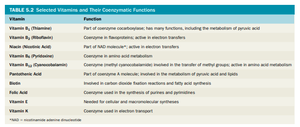
Cofactors are required for enzyme activity. Coenzymes are organic cofactors, often derived from vitamins, which are essential for synthesizing coenzymes.
Vitamin | Function |
|---|---|
Vitamin B1 (Thiamine) | Part of enzyme cofactor; metabolism of pyruvic acid |
Vitamin B2 (Riboflavin) | Coenzyme in flavoproteins; electron transfer |
Niacin (Nicotinic Acid) | Part of NAD coenzyme; electron transfer |
Vitamin B6 (Pyridoxine) | Coenzyme in amino acid metabolism |
Vitamin B12 (Cyanocobalamin) | Coenzyme in nucleic acid metabolism |
Pantothenic Acid | Part of coenzyme A; metabolism of pyruvic acid and lipids |
Biotin | Carbon dioxide fixation reactions and fatty acid synthesis |
Folic Acid | Coenzyme in nucleic acid synthesis |
Vitamin K | Coenzyme in electron transport |
ATP: The Energy Currency
Role of ATP in Metabolism
ATP (adenosine triphosphate) stores and transfers energy within the cell. Energy released from catabolic reactions is trapped in ATP, which is then used to drive anabolic reactions.
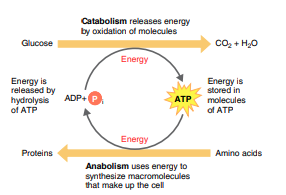
Coupled Reactions
Energy released by exergonic (energy-releasing) reactions is used to drive endergonic (energy-requiring) reactions. This coupling is essential for cellular metabolism.

Regulation of Enzyme Activity
Factors Influencing Enzymatic Activity
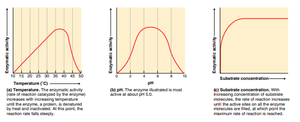
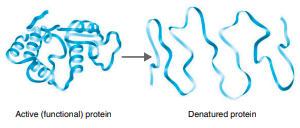
Enzyme activity is affected by temperature, pH, and substrate concentration. Optimal conditions are required for maximum activity; deviations can lead to denaturation and loss of function.
Denaturing, Enzyme Inhibitors, and Feedback Inhibition
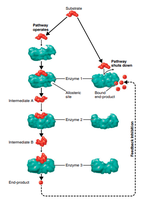
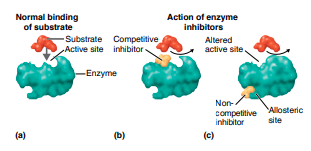
Enzymes can be inhibited by competitive or noncompetitive inhibitors. Feedback inhibition occurs when the end product of a pathway inhibits an earlier enzyme, regulating the pathway.
Oxidation-Reduction (Redox) Reactions
Definition and Examples
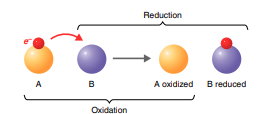
Oxidation is the loss of electrons (and often hydrogen ions), while reduction is the gain of electrons. These reactions are fundamental to energy transfer in cells.
Photosynthesis:
Cellular Respiration:
ATP Generation Mechanisms
Substrate-Level Phosphorylation
ATP is generated by the direct transfer of a phosphate group from a phosphorylated intermediate to ADP. Occurs during glycolysis and the citric acid cycle.
Oxidative Phosphorylation
ATP is produced via the electron transport chain and chemiosmosis, primarily in the inner mitochondrial membrane of eukaryotes.
Photophosphorylation
ATP is generated using light energy in photosynthetic organisms, occurring in chloroplasts or photosynthetic membranes.
Summary of Aerobic Respiration in Prokaryotes
Major Steps
Glycolysis: Breakdown of glucose to pyruvate in the cytoplasm.
Kreb’s Cycle: Further breakdown of pyruvate, generating electron carriers.
Electron Transport Chain (ETC): Electrons from NADH and FADH2 are transferred, producing ATP via oxidative phosphorylation.
Fermentation
Types of Fermentation
Lactic Acid Fermentation: Pyruvate is reduced to lactic acid.
Alcohol Fermentation: Pyruvate is converted to ethanol and CO2.
Organisms and Energy Sources
Classification by Energy and Carbon Source
Photoautotrophs: Use light energy and CO2 to produce organic compounds.
Photoheterotrophs: Use light for energy but require organic compounds for carbon.
Chemoautotrophs: Oxidize inorganic compounds for energy and use CO2 as a carbon source.
Chemoheterotrophs: Use organic compounds for both energy and carbon.
Biosynthesis and Integration of Metabolism
Biosynthesis of Polysaccharides, Lipids, Amino Acids, and Nucleotides
Cells synthesize essential macromolecules through anabolic pathways, using intermediates from catabolic pathways.
Metabolic End Products for Microbial Identification
Biochemical tests can detect specific metabolic end products, aiding in the identification of unknown microbes in the laboratory.
Fermentation tests
Detection of amino acid catabolizing enzymes
Additional info: These notes expand on brief points with academic context, definitions, and examples to ensure completeness and clarity for exam preparation.
