 Back
Microbial Metabolism: Structure, Function, and Regulation of Enzymes
Study Guide - Smart Notes
 Tailored notes based on your materials, expanded with key definitions, examples, and context.
Microbial Metabolism
Overview of Metabolism
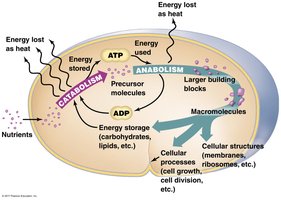
Metabolism encompasses all controlled biochemical reactions that occur within cells, enabling organisms to grow, reproduce, and maintain cellular functions. It is divided into two main processes: catabolism (breaking down molecules to release energy) and anabolism (building larger molecules using energy).
Catabolic reactions: Decompose complex molecules into simpler ones, releasing energy.
Anabolic reactions: Use energy to synthesize complex molecules from simpler precursors.
Ultimate function: To reproduce the organism and sustain life.
Basic Chemical Reactions Underlying Metabolism
Catabolism and Anabolism
Catabolic and anabolic reactions are interconnected. Catabolism provides energy and precursor molecules for anabolism, while anabolism uses this energy to build macromolecules.
Catabolism: Exergonic (energy-releasing) reactions; breakdown of nutrients.
Anabolism: Endergonic (energy-consuming) reactions; synthesis of cellular structures.
Oxidation and Reduction Reactions
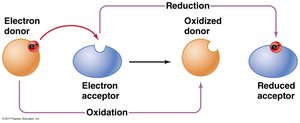
Oxidation-reduction (redox) reactions are fundamental to metabolism. They involve the transfer of electrons from one molecule (electron donor) to another (electron acceptor), and are always coupled.
Oxidation: Loss of electrons from a molecule.
Reduction: Gain of electrons by a molecule.
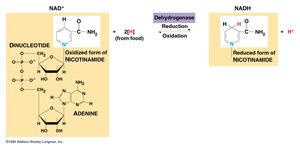
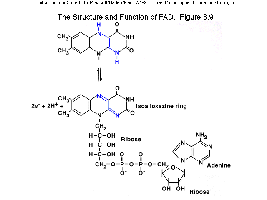
Electron carriers: NAD+, NADP+, and FAD shuttle electrons during metabolic processes.
Electron Carriers in Metabolism
Cells use electron carrier molecules to facilitate redox reactions. These carriers are often reduced by accepting electrons (and hydrogen atoms) and oxidized by donating them.
NAD+ → NADH: Transfers two electrons and a hydrogen ion.
NADP+ → NADPH: Similar to NAD+, but with a phosphate group.
FAD → FADH2: Transfers two hydrogen atoms.
ATP Production and Energy Storage
ATP: The Energy Currency of the Cell
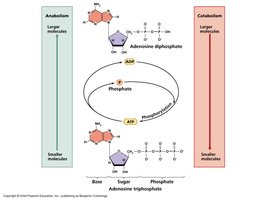
ATP (adenosine triphosphate) stores and transfers energy within cells. Energy released from catabolic reactions is used to phosphorylate ADP (adenosine diphosphate) to ATP, which is then used in anabolic reactions.
Phosphorylation: Addition of an organic phosphate to a substrate.
Three ways cells phosphorylate ADP:
Substrate-level phosphorylation
Oxidative phosphorylation
Photophosphorylation
Anabolic pathways: Use energy from ATP hydrolysis.
The Roles of Enzymes in Metabolism
Enzyme Structure and Function
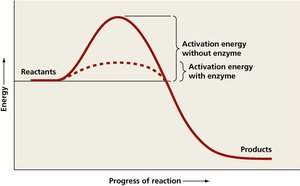
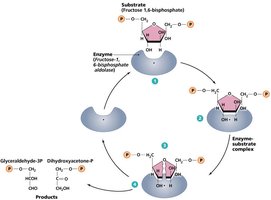
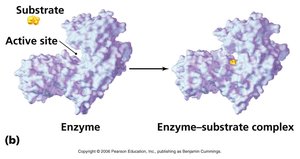
Enzymes are highly specific organic catalysts that accelerate biochemical reactions by lowering activation energy. Their specificity is due to their unique three-dimensional structure, particularly the active site where substrates bind.
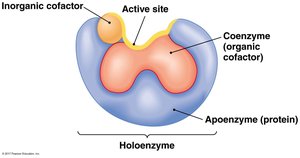
Active site: Region of the enzyme where substrate binds.
Catalytic cycle: Enzymes convert thousands of substrate molecules per second.
Enzyme efficiency: Reaction rates are increased by 106–1012 times compared to uncatalyzed reactions.
Types of Enzymes
Enzymes are classified based on their mode of action:
Hydrolases: Catalyze hydrolysis of polymers.
Isomerases: Rearrange atoms within a molecule.
Ligases/Polymerases: Join molecules together.
Lyases: Split molecules without water addition.
Oxidoreductases: Catalyze oxidation-reduction reactions.
Transferases: Transfer functional groups between molecules.
Enzyme Composition
Enzymes may be composed entirely of protein or may require non-protein cofactors for activity. The combination of an apoenzyme (protein portion) and its cofactors forms a holoenzyme.
Apoenzyme: Inactive protein portion.
Cofactor: Non-protein component (inorganic ion or organic coenzyme).
Holoenzyme: Active enzyme formed by apoenzyme and cofactors.
Ribozymes: RNA molecules with catalytic activity.
Representative Cofactors of Enzymes
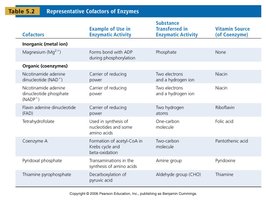
Cofactors are essential for enzyme activity. They may be metal ions or organic molecules (often derived from vitamins).
Cofactor | Example of Use | Substance Transferred | Vitamin Source |
|---|---|---|---|
Magnesium (Mg2+) | Forms bond with ADP | Phosphate | None |
Nicotinamide adenine dinucleotide (NAD) | Carrier of reducing power | Two electrons and a hydrogen ion | Niacin |
Flavin adenine dinucleotide (FAD) | Carrier of reducing power | Two hydrogen atoms | Riboflavin |
Coenzyme A | Carrier of acetyl groups | Acetyl group | Pantothenic acid |
Pyridoxal phosphate | Transfer of amino groups | Amino group | Pyridoxine |
Thiamine pyrophosphate | Transfer of aldehyde groups | Aldehyde group | Thiamine |
Factors Affecting Enzyme Activity
Environmental and Chemical Factors
Enzyme activity is influenced by several factors, each with an optimal range for function:
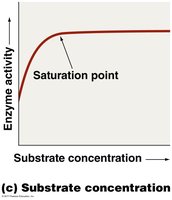
Substrate concentration: Higher concentration increases activity up to a saturation point.
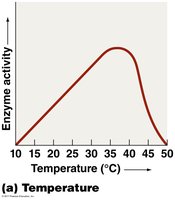
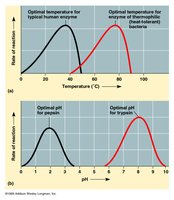
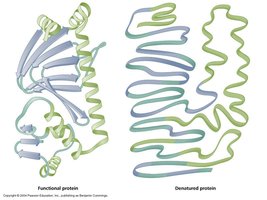
Temperature: Activity increases with temperature until the enzyme denatures.
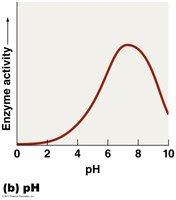
pH: Each enzyme has an optimal pH; extremes can denature the enzyme.
Ionic strength: Optimal ionic conditions are required for activity.
Enzyme Inhibition
Types of Inhibitors
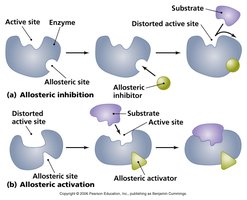
Enzyme inhibitors are substances that block enzyme activity without denaturing the enzyme. There are three main types:
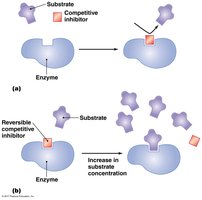
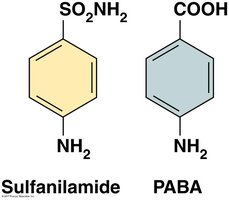
Competitive inhibitors: Bind to the active site, preventing substrate binding.
Noncompetitive inhibitors: Bind to an allosteric site, changing enzyme shape and function.
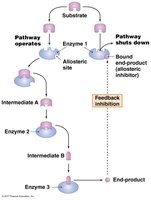
Feedback (negative) inhibitors: End-product of a pathway inhibits an earlier enzyme.

Applied Enzyme Activity: Catalase Test
Catalase in Microbiology
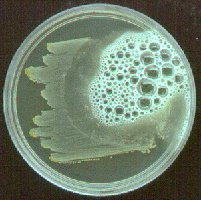
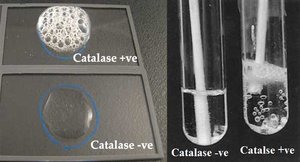
The catalase test is used in microbiology labs to identify bacteria that produce the enzyme catalase, which breaks down hydrogen peroxide into water and oxygen, resulting in bubble formation.
Procedure: Drop 3% H2O2 onto a bacterial colony and observe for bubbles.
Interpretation: Bubble formation indicates catalase-positive bacteria.
Catalase: Structure and Function
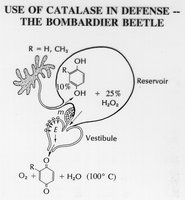
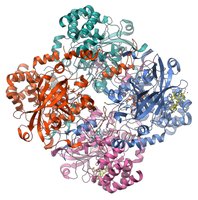
Catalase is a very fast enzyme, crucial for protecting cells from oxidative damage by rapidly decomposing hydrogen peroxide.
Summary Table: Key Concepts in Microbial Metabolism
Concept | Definition | Example/Application |
|---|---|---|
Catabolism | Breakdown of molecules to release energy | Glycolysis |
Anabolism | Synthesis of complex molecules using energy | Protein synthesis |
ATP | Energy currency of the cell | Muscle contraction |
Enzyme | Organic catalyst for biochemical reactions | Catalase, DNA polymerase |
Competitive inhibitor | Blocks active site of enzyme | Sulfanilamide inhibiting DHPS |
Feedback inhibition | End-product inhibits pathway | Regulation of amino acid synthesis |
Additional info: These notes expand on the original content by providing definitions, examples, and context for each concept, ensuring a comprehensive and self-contained study guide for exam preparation in Microbiology.
