Back
BackMicrobial Metabolism: Structured Study Notes for Microbiology Students
Study Guide - Smart Notes
 Tailored notes based on your materials, expanded with key definitions, examples, and context.
Microbial Metabolism
Overview of Metabolism
Metabolism encompasses all the chemical reactions that occur within a cell, involving both the breakdown and synthesis of nutrients. These reactions provide energy and generate substances essential for sustaining life. While microbial metabolism can contribute to disease and food spoilage, many metabolic pathways are beneficial and support various biological and industrial processes.
Catabolic and Anabolic Reactions
Metabolic reactions are classified as either catabolic or anabolic:
Catabolism: The breakdown of complex molecules into simpler ones, releasing energy and providing building blocks for anabolic reactions. Catabolic reactions are exergonic (energy-releasing).
Anabolism: The synthesis of complex molecules from simpler ones, requiring energy input. Anabolic reactions are endergonic (energy-consuming).
Metabolic pathways: Sequences of enzymatically catalyzed reactions, determined by specific enzymes encoded by genes.
Collision Theory and Enzyme Function
The collision theory states that chemical reactions occur when atoms, ions, or molecules collide with sufficient energy (activation energy). The reaction rate can be increased by enzymes, temperature, pressure, or concentration.
Catalysts: Substances that speed up reactions without being consumed.
Enzymes: Biological catalysts that lower activation energy and act on specific substrates.
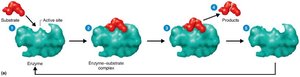
Enzyme Specificity, Efficiency, and Naming
Enzymes exhibit high specificity for their substrates and are highly efficient, with turnover numbers ranging from 1 to 500,000 substrate molecules per second. Enzyme names typically end in -ase and are grouped by the type of reaction they catalyze:
Oxidoreductase: Oxidation-reduction reactions
Transferase: Transfer of functional groups
Hydrolase: Hydrolysis reactions
Lyase: Removal of atoms without hydrolysis
Isomerase: Rearrangement of atoms
Ligase: Joining of molecules, often using ATP
Enzyme Components
Enzymes may require additional components for activity:
Apoenzyme: Protein portion, inactive alone
Cofactor: Nonprotein component (can be inorganic or organic)
Coenzyme: Organic cofactor
Holoenzyme: Apoenzyme plus cofactor, forming the active enzyme
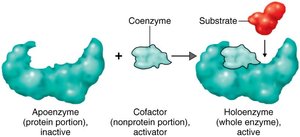
Common coenzymes include NAD+, NADP+, FAD, and Coenzyme A, which often act as electron carriers.
Factors Influencing Enzyme Activity
Several factors affect enzyme activity:
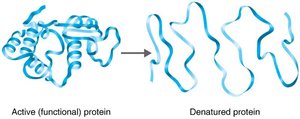
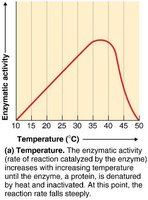
Temperature: Enzyme activity increases with temperature up to an optimum, after which denaturation occurs.
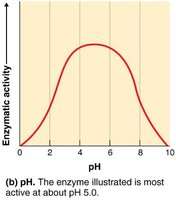
pH: Each enzyme has an optimal pH; extreme pH can denature proteins.
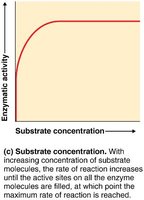
Substrate concentration: Higher substrate concentrations increase reaction rate until saturation is reached.
Inhibitors: Substances that decrease enzyme activity.
Enzyme Inhibition
Enzyme inhibitors can be classified as:
Competitive inhibitors: Compete with the substrate for the active site.
Noncompetitive inhibitors: Bind to an allosteric site, altering the enzyme's shape and function.
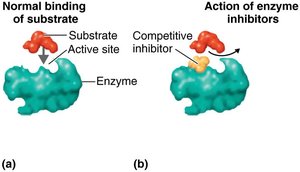
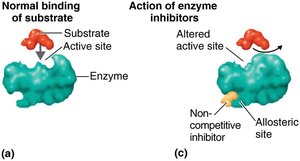
Feedback Inhibition
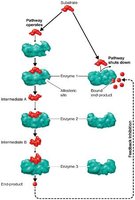
Feedback inhibition occurs when the end-product of a metabolic pathway allosterically inhibits an enzyme early in the pathway, regulating the pathway's activity.
Ribozymes
Ribozymes are RNA molecules that act as catalysts, binding to substrates and facilitating reactions such as RNA splicing and protein synthesis. Unlike enzymes, ribozymes are not consumed in the reaction.
Oxidation-Reduction (Redox) Reactions
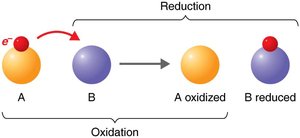
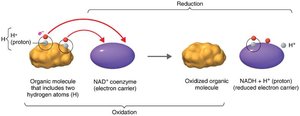
Redox reactions involve the transfer of electrons:
Oxidation: Removal of electrons
Reduction: Gain of electrons
Redox reaction: Paired oxidation and reduction
In biological systems, electrons and protons are often removed together (dehydrogenation).
The Generation of ATP
ATP is generated by the phosphorylation of ADP, using energy from catabolic reactions. There are three main mechanisms:
Substrate-level phosphorylation: Direct transfer of a high-energy phosphate group to ADP.
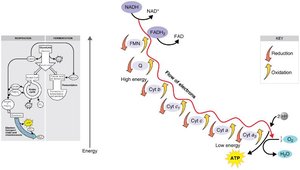
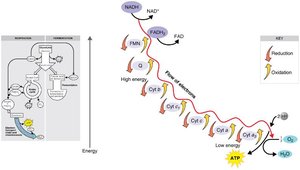
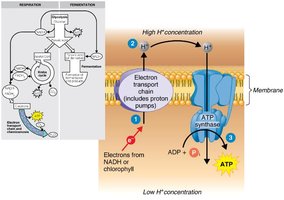
Oxidative phosphorylation: Electrons are transferred through an electron transport chain, releasing energy for ATP synthesis via chemiosmosis.
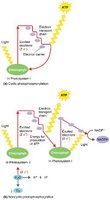
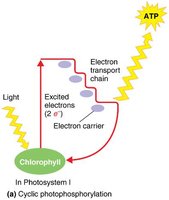
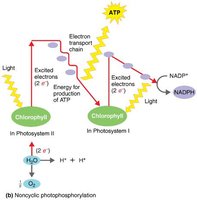
Photophosphorylation: Light energy is used to generate ATP in photosynthetic cells.
Metabolic Pathways of Energy Production
Microbial cells extract energy from organic compounds through a series of enzymatically catalyzed reactions, storing energy in ATP.
Carbohydrate Catabolism
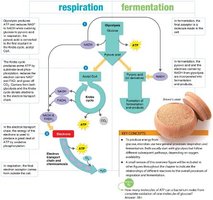
The breakdown of carbohydrates to release energy typically occurs in three principal stages:
Glycolysis
Krebs cycle
Electron transport chain
Glycolysis
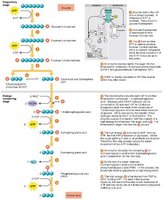
Glycolysis is the oxidation of glucose to pyruvic acid, producing ATP and NADH. It consists of:
Preparatory stage: 2 ATP are used; glucose is split into two molecules (GP and DHAP).
Energy-conserving stage: GP is oxidized to pyruvic acid, producing 4 ATP and 2 NADH.
Additional Pathways
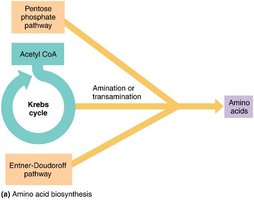
Pentose phosphate pathway: Breaks down pentose sugars, produces NADPH, and provides intermediates for biosynthesis.
Entner-Doudoroff pathway: Produces NADPH and ATP independently of glycolysis; found in certain bacteria.
Cellular Respiration
Cellular respiration involves the oxidation of molecules, liberating electrons to operate an electron transport chain. The final electron acceptor is inorganic:
Aerobic respiration: Uses oxygen as the final electron acceptor.
Anaerobic respiration: Uses a molecule other than oxygen.
Krebs Cycle
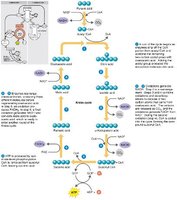
Pyruvic acid from glycolysis is oxidized and decarboxylated, forming acetyl CoA and NADH. Acetyl CoA enters the Krebs cycle, producing NADH, FADH2, ATP, and CO2.
Electron Transport Chain and Chemiosmosis
The electron transport chain consists of carrier molecules that are oxidized and reduced as electrons are passed down the chain. Energy released is used to produce ATP by chemiosmosis, where protons are pumped across a membrane, creating a gradient that drives ATP synthesis.
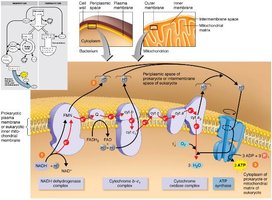
ATP Yield
Each NADH can produce 3 ATP, and each FADH2 can produce 2 ATP in the electron transport chain.
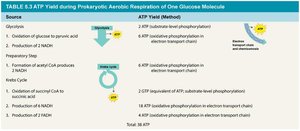
Anaerobic Respiration
In anaerobic respiration, the final electron acceptor is not O2, resulting in less energy yield compared to aerobic respiration.
Fermentation
Fermentation releases energy from the oxidation of organic molecules without using oxygen, the Krebs cycle, or the electron transport chain. It uses an organic molecule as the final electron acceptor and produces small amounts of ATP.
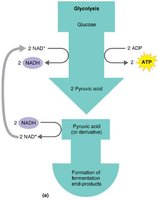
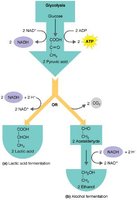
Types of Fermentation
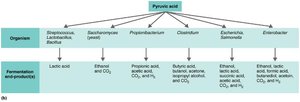
Lactic acid fermentation: Produces lactic acid; can be homolactic (only lactic acid) or heterolactic (lactic acid and other compounds).
Alcohol fermentation: Produces ethanol and CO2.
Industrial Uses of Fermentation
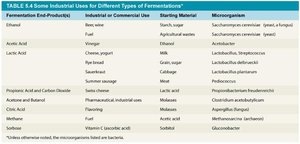
Fermentation End-Product(s) | Industrial or Commercial Use | Starting Material | Microorganism |
|---|---|---|---|
Ethanol | Beer, wine | Starch/sugar | Saccharomyces cerevisiae (yeast) |
Acetic Acid | Vinegar | Alcohol | Acetobacter |
Lactic Acid | Cheese, yogurt | Milk | Lactobacillus, Streptococcus |
Propionic Acid and CO2 | Swiss cheese | Lactic acid | Propionibacterium freudenreichii |
Butyric Acid, Butanol, Acetone, CO2, H2 | Pharmaceutical industrial uses | Molasses | Clostridium |
Methane | Fuel | Acetic acid | Archaea (fungi) |
Sorbose | Vitamin C (ascorbic acid) | Glucose | Gluconobacter |
Lipid and Protein Catabolism
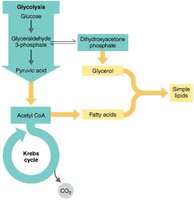
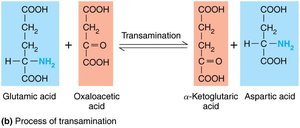
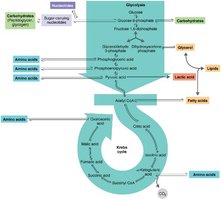
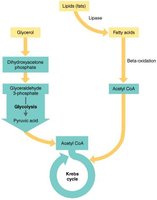
Lipids are broken down by lipases into glycerol and fatty acids, which enter glycolysis and the Krebs cycle. Proteins are degraded by proteases and peptidases into amino acids, which are deaminated, decarboxylated, or desulfurized to enter the Krebs cycle.
Biochemical Tests and Bacterial Identification
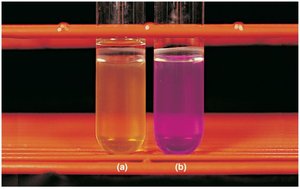
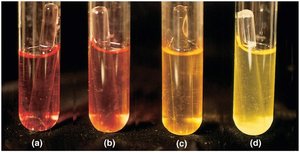
Biochemical tests identify bacteria by detecting specific enzymes involved in metabolic reactions. Fermentation tests detect acid production (color change in pH indicator) and gas production (Durham tube). The oxidase test identifies bacteria with cytochrome c oxidase.
Photosynthesis
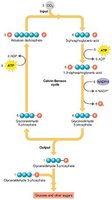
Photosynthesis consists of light-dependent reactions (conversion of light energy to ATP and NADPH) and light-independent reactions (Calvin-Benson cycle, where ATP and NADPH reduce CO2 to sugar).
Oxygenic photosynthesis: Produces O2 (plants, algae, cyanobacteria)
Anoxygenic photosynthesis: Does not produce O2 (purple/green sulfur bacteria)
Metabolic Diversity among Organisms
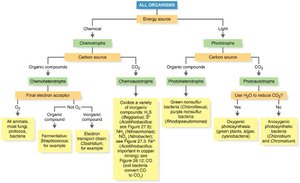
Microorganisms are classified based on their energy and carbon sources:
Phototrophs: Use light energy
Photoautotrophs: Use light energy and CO2 as carbon source
Photoheterotrophs: Use light energy and organic compounds as carbon source
Chemoautotrophs: Use inorganic chemicals and CO2 as carbon source
Chemoheterotrophs: Use organic chemicals for both energy and carbon
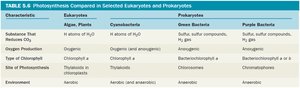
Characteristic | Eukaryotes (Algae, Plants) | Cyanobacteria | Green Bacteria | Purple Bacteria |
|---|---|---|---|---|
Substance that Reduces CO2 | H2O | H2O | Sulfur, sulfur compounds, H2 | Sulfur, sulfur compounds, H2 |
Type of Chlorophyll | Chlorophyll a | Chlorophyll a | Bacteriochlorophyll a, c, d, e | Bacteriochlorophyll a, b |
Site of Photosynthesis | Thylakoids | Thylakoids | Chlorosomes | Chromatophores |
Environment | Aerobic | Aerobic (and anaerobic) | Anaerobic | Anaerobic |
Biosynthesis and Integration of Metabolism
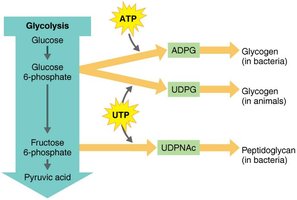
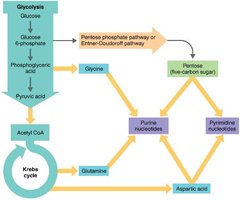
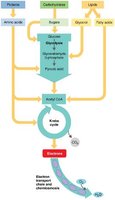
Cells synthesize polysaccharides, lipids, amino acids, and nucleotides from metabolic intermediates. Amphibolic pathways function in both anabolism and catabolism, allowing simultaneous operation and sharing of intermediates.