 Back
BackMicrobial Metabolism: Structured Study Notes for Microbiology Students
Study Guide - Smart Notes
 Tailored notes based on your materials, expanded with key definitions, examples, and context.
Microbial Metabolism
Overview of Metabolism
Metabolism encompasses all chemical reactions occurring within a living organism, divided into two main categories: catabolism and anabolism. These processes are essential for cellular function, growth, and energy management.
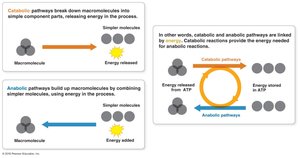
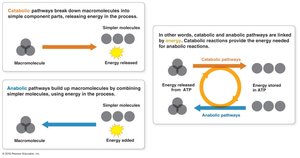
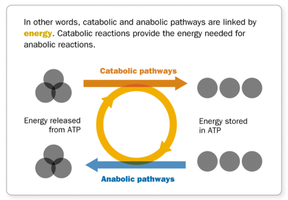
Catabolism: The breakdown of complex organic molecules into simpler ones, typically via hydrolysis. Catabolic reactions release energy, which is used to fuel anabolic processes.
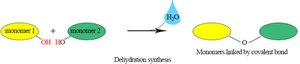
Anabolism: The synthesis of complex molecules from simpler ones, usually via dehydration synthesis. Anabolic reactions require energy, often supplied by ATP.
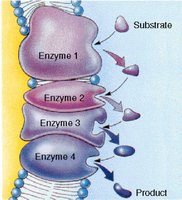
Metabolic Pathways: Sequences of enzymatically catalyzed reactions, where the product of one reaction serves as the substrate for the next.

ATP: The Energy Currency
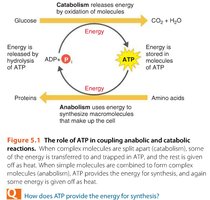
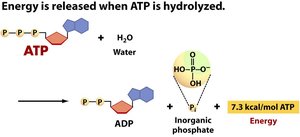
ATP (adenosine triphosphate) is the primary molecule for energy transfer in cells. It couples catabolic and anabolic reactions, storing energy released from catabolism and providing energy for anabolism.
ATP Hydrolysis: The hydrolysis of ATP's terminal phosphate group releases energy for cellular work.
Role in Metabolism: Catabolic reactions generate ATP, which is then used in anabolic reactions.
Enzymes and Metabolic Pathways
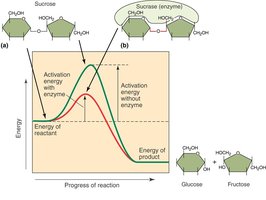
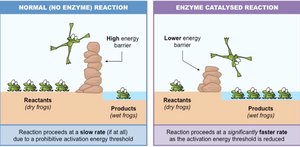
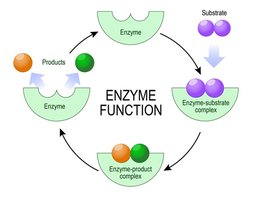
Enzymes are biological catalysts that speed up chemical reactions without being consumed. They are highly specific, acting on particular substrates, and are encoded by genes.
Enzyme Structure: Enzymes consist of an apoenzyme (protein portion) and may require a cofactor (inorganic ion) or coenzyme (organic molecule, e.g., NAD+, FAD).
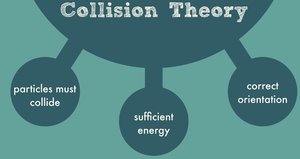
Enzyme Function: Enzymes lower the activation energy required for reactions, increasing reaction rates.
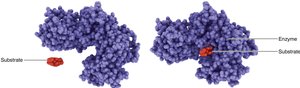
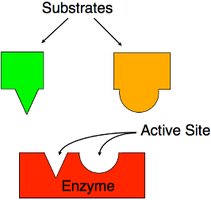
Enzyme Specificity: Each enzyme acts on a specific substrate due to the unique shape of its active site.
Enzyme Classification and Naming
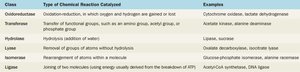
Enzymes are classified based on the type of reaction they catalyze. Their names typically end in "-ase."
Oxidoreductases: Catalyze oxidation-reduction reactions (e.g., lactate dehydrogenase).
Ligases: Join two molecules using energy (e.g., DNA ligase).
Hydrolases: Catalyze hydrolysis reactions (e.g., sucrase).
Factors Influencing Enzyme Activity
Enzyme activity is affected by temperature, pH, substrate concentration, and inhibitors.
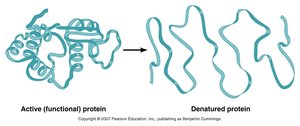
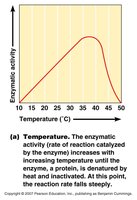
Temperature: Enzymes have an optimal temperature; activity decreases below or above this point due to denaturation.
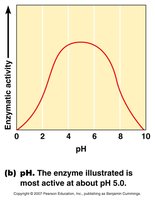
pH: Each enzyme has an optimal pH; extreme pH values can denature the enzyme.
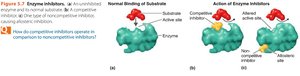
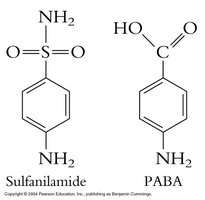
Inhibitors: Competitive inhibitors bind to the active site, while noncompetitive inhibitors bind elsewhere, altering the enzyme's shape.
Enzyme Inhibition and Regulation
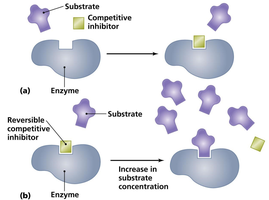
Competitive Inhibition: Inhibitor competes with substrate for the active site.
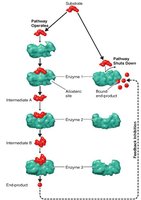
Noncompetitive (Allosteric) Inhibition: Inhibitor binds to a regulatory site, changing the enzyme's shape and function.
Feedback Inhibition: End-product of a pathway inhibits an earlier enzyme, regulating the pathway's output.
Oxidation-Reduction (Redox) Reactions
Redox reactions are fundamental to energy production in cells.
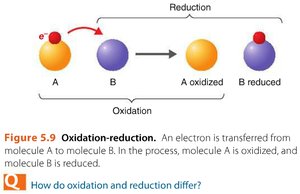
Oxidation: Loss of electrons or hydrogen atoms.
Reduction: Gain of electrons or hydrogen atoms.
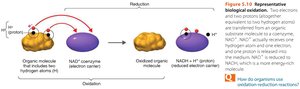
Redox Pair: One molecule is oxidized while another is reduced.

Electron Carriers
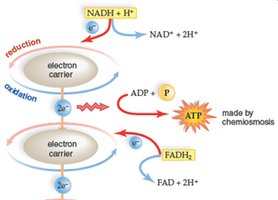
NAD+ and FAD: Coenzymes that shuttle electrons during metabolic reactions, especially in cellular respiration.
Carbohydrate Catabolism: Pathways and Energy Production
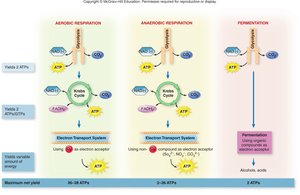
Cells catabolize carbohydrates via three main pathways: aerobic respiration, anaerobic respiration, and fermentation.
Aerobic Respiration: Requires oxygen; yields the most ATP per glucose molecule.
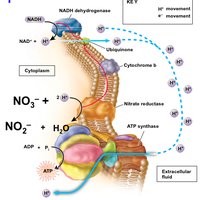
Anaerobic Respiration: Uses inorganic molecules (e.g., nitrate, sulfate) as final electron acceptors; yields less ATP.
Fermentation: Uses organic molecules as final electron acceptors; yields the least ATP and produces diverse end products (e.g., lactic acid, ethanol).
Steps of Aerobic Respiration
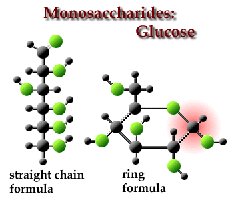
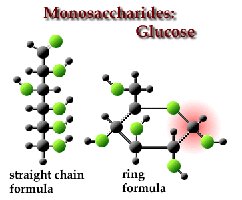
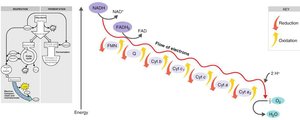
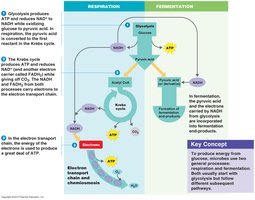
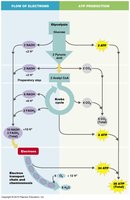
Glycolysis: Oxidation of glucose to pyruvic acid; produces ATP and NADH.
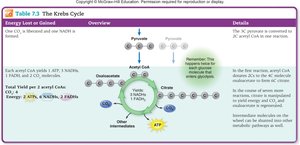
Krebs Cycle: Oxidation of acetyl CoA; produces CO2, ATP, NADH, and FADH2.
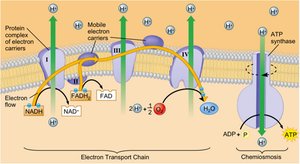
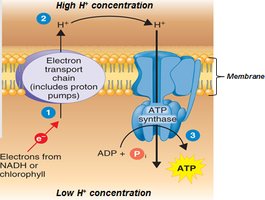
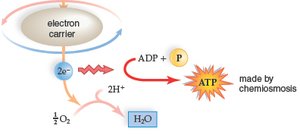
Oxidative Phosphorylation: Electron transport chain (ETC) and chemiosmosis; generates most ATP.



Aerobic vs. Anaerobic Respiration
Aerobic: Oxygen is the final electron acceptor; yields 36-38 ATP per glucose.
Anaerobic: Inorganic molecules (e.g., nitrate, sulfate) are final electron acceptors; yields 1-2 ATP per glucose.
Growth Rate: Anaerobes typically grow slower than aerobes due to lower energy yield.
Fermentation
Fermentation is an anaerobic process that does not use the Krebs cycle or ETC. It yields low ATP and produces various end products, such as lactic acid and ethanol.
Final Electron Acceptor: Organic molecule.
Energy Yield: 2 ATP per glucose.
Examples: Lactic acid fermentation (muscle cells, bacteria), alcoholic fermentation (yeast).
Summary Table: Metabolic Pathways
Pathway | Final Electron Acceptor | ATP Yield | Key Products |
|---|---|---|---|
Aerobic Respiration | O2 | 36-38 | CO2, H2O, ATP |
Anaerobic Respiration | Inorganic (NO3-, SO42-) | 1-2 | ATP, variable products |
Fermentation | Organic molecule | 2 | Lactic acid, ethanol, CO2 |
Key Terms and Concepts
Metabolism: Sum of all chemical reactions in a cell.
Catabolism: Breakdown of molecules; releases energy.
Anabolism: Synthesis of molecules; requires energy.
Enzyme: Protein catalyst; specific for substrate.
ATP: Energy currency of the cell.
Redox Reaction: Paired oxidation and reduction.
Electron Carrier: Molecule (e.g., NAD+, FAD) that transfers electrons.
Fermentation: Anaerobic process yielding diverse products.
Equations and Formulas
ATP Hydrolysis:
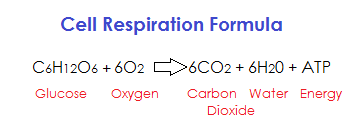
Cellular Respiration:
Example: Sulfa Drugs as Competitive Inhibitors
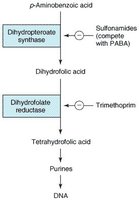
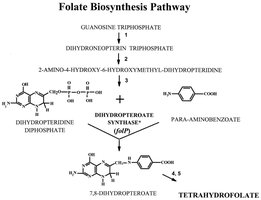
Sulfa drugs inhibit bacterial folate synthesis by competing with PABA for the active site of DHPS, an enzyme not present in humans. This selective inhibition is a key mechanism in antimicrobial therapy.
Example: Lactic Acid and Ethanol Fermentation
Lactic Acid Fermentation: Pyruvic acid is reduced to lactic acid; occurs in muscle cells and certain bacteria.
Alcoholic Fermentation: Pyruvic acid is converted to ethanol and CO2; occurs in yeast.
Additional info:
Metabolic regulation is crucial for cellular efficiency and survival.
Enzyme activity can be modulated by genetic and environmental factors.
Fermentation is important in food production and biotechnology.
