 Back
Microbial Nutrition and Growth: A Comprehensive Study Guide
Study Guide - Smart Notes
 Tailored notes based on your materials, expanded with key definitions, examples, and context.
Microbial Nutrition
Essential Nutrients and Their Roles
Microorganisms require a variety of nutrients from their environment to support cellular activities, growth, and metabolism. These nutrients are classified based on the quantity required and their chemical nature.
Essential Nutrient: A substance that must be provided to an organism for survival.
Macronutrients: Required in large amounts; include carbon (C), hydrogen (H), oxygen (O), nitrogen (N), phosphorus (P), sulfur (S), potassium (K), calcium (Ca), magnesium (Mg), sodium (Na), chlorine (Cl), and iron (Fe). They play principal roles in cell structure and metabolism.
Micronutrients (Trace Elements): Required in much smaller amounts; include molybdenum (Mo), cobalt (Co), manganese (Mn), copper (Cu), zinc (Zn), and nickel (Ni). They are involved in enzyme function and maintenance of protein structure.
Types of Nutrients
Inorganic Nutrients: Simple molecules or atoms that do not contain both carbon and hydrogen (e.g., water, salts, oxygen gas).
Organic Nutrients: Contain both carbon and hydrogen, usually products of living things (e.g., carbohydrates, lipids, proteins, nucleic acids).
Chemical Composition of a Bacterial Cell
Bacterial cells are composed primarily of water (about 70%), with proteins being the next most prevalent chemical. The dry weight is mainly organic compounds, with the majority being C, H, O, N, P, and S.
Compound | % Total Weight | % Dry Weight |
|---|---|---|
Proteins | 15 | 50 |
RNA | 6 | 20 |
DNA | 1 | 3 |
Carbohydrates | 3 | 10 |
Lipids | 2 | 10 |
Miscellaneous | 2 | 4 |
Water | 70 | — |
Microbial Nutritional Types
Carbon and Energy Sources
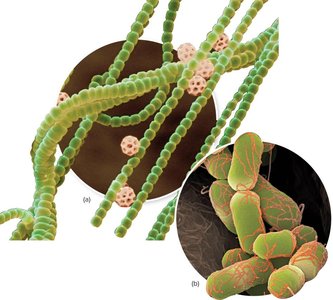
Heterotrophs: Obtain carbon from organic compounds; dependent on other life forms.
Autotrophs: Use inorganic CO2 as their carbon source; can convert CO2 into organic compounds.
Phototrophs: Gain energy from sunlight via photosynthesis.
Chemotrophs: Gain energy from chemical compounds.
Specialized Nutritional Types
Photoautotrophs: Use light energy and CO2 to produce organic molecules; primary producers in food webs.
Chemoautotrophs: Use inorganic compounds for energy and CO2 for carbon. Includes chemoorganic autotrophs (use organic energy, inorganic carbon) and chemolithoautotrophs (use inorganic energy and carbon sources).
Methanogens: Archaea that produce methane from hydrogen and CO2 in anaerobic environments.
Chemoheterotrophs: Derive both carbon and energy from organic compounds; includes saprobes and parasites.
Summary Table: Nutritional Categories of Microbes
Category | Carbon Source | Energy Source | Example |
|---|---|---|---|
Photoautotroph | CO2 | Sunlight | Algae, plants, cyanobacteria |
Chemoautotroph | CO2 | Inorganic compounds | Thiobacillus |
Photoheterotroph | Organic | Sunlight | Purple and green bacteria |
Chemoheterotroph | Organic | Organic compounds | Fungi, protozoa, many bacteria |
Saprobic and Parasitic Microorganisms
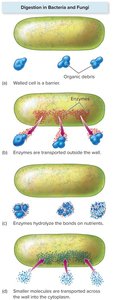
Saprobes: Decompose dead organic matter; important in nutrient recycling. Most have rigid cell walls and secrete enzymes to digest food externally.
Parasites: Live on or in a host, causing harm; includes pathogens. Obligate parasites cannot survive outside a host.
Transport Mechanisms in Microbial Cells
Passive Transport
Passive transport does not require energy and moves substances down their concentration gradient.
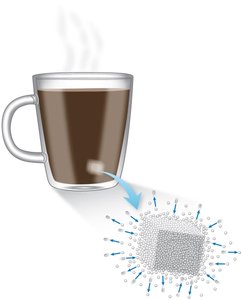
Simple Diffusion: Movement of molecules from high to low concentration.
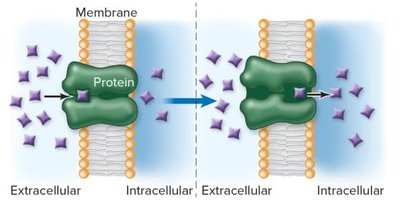
Facilitated Diffusion: Movement of molecules via specific membrane proteins; limited by the number of binding sites.
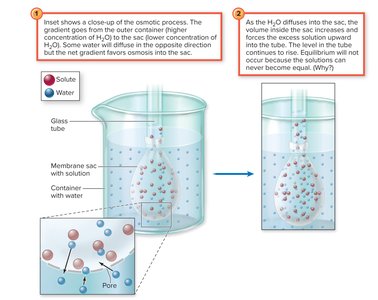
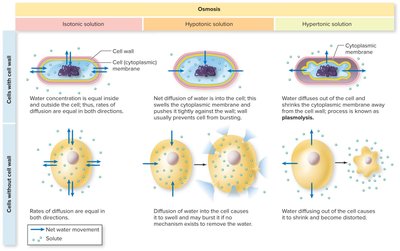
Osmosis: Movement of water across a selectively permeable membrane from low to high solute concentration.
Osmotic Conditions and Cell Responses
Isotonic: Equal solute concentration inside and outside the cell; no net water movement.
Hypotonic: Lower solute concentration outside; water enters the cell, which may swell or burst.
Hypertonic: Higher solute concentration outside; water leaves the cell, causing shrinkage.
Active Transport
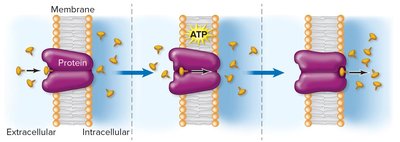
Active transport requires energy (usually ATP) and moves substances against their concentration gradient.
Carrier-mediated Active Transport: Uses membrane proteins and ATP to move ions or molecules.
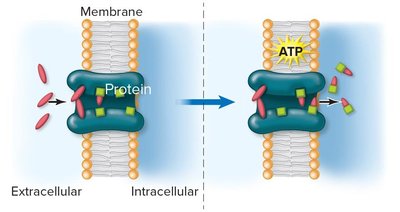
Group Translocation: Substance is chemically modified as it is transported into the cell.
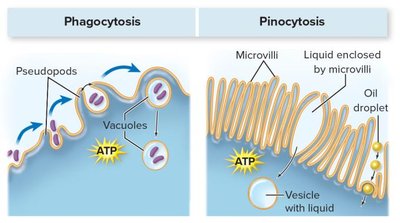
Endocytosis: Bulk transport of large particles or liquids via vesicle formation; includes phagocytosis (solids) and pinocytosis (liquids).
Environmental Factors Influencing Microbial Growth
Temperature
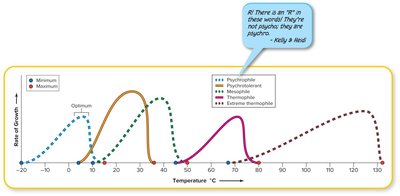
Microbes have specific temperature ranges for growth, known as cardinal temperatures:
Minimum Temperature: Lowest temperature for growth.
Maximum Temperature: Highest temperature for growth; above this, enzymes denature.
Optimum Temperature: Promotes the fastest growth and metabolism.
Ecological Groups by Temperature
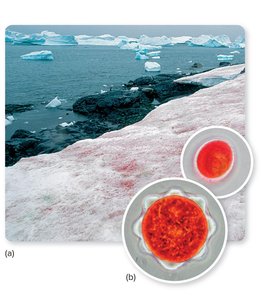
Psychrophiles: Optimum below 15°C; found in cold environments.
Mesophiles: Optimum 20–40°C; includes most human pathogens.
Thermophiles: Optimum above 45°C; found in hot environments.
Oxygen Requirements
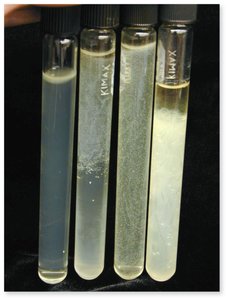
Aerobes: Require oxygen and possess enzymes to detoxify oxygen by-products.
Obligate Aerobes: Cannot grow without oxygen.
Facultative Anaerobes: Can grow with or without oxygen.
Microaerophiles: Require small amounts of oxygen.
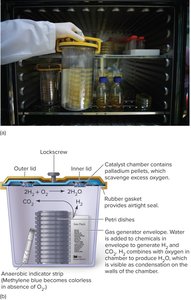
Anaerobes: Cannot use oxygen; obligate anaerobes are killed by oxygen.
Aerotolerant Anaerobes: Do not use oxygen but can tolerate its presence.
Other Environmental Factors
pH: Most microbes grow between pH 6 and 8. Acidophiles prefer acidic environments; alkalinophiles prefer basic conditions.
Osmotic Pressure: Halophiles thrive in high salt; osmophiles in high solute concentrations.
Radiation: Some microbes can withstand UV and ionizing radiation; others are damaged.
Hydrostatic Pressure: Barophiles live under extreme pressure (deep sea).
Moisture: Required for nutrient diffusion; only spores/cysts tolerate extreme dryness.
Microbial Associations and Biofilms
Types of Associations
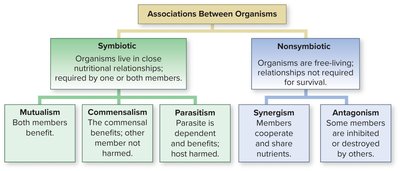
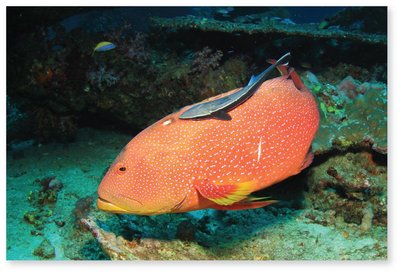
Symbiosis: Close partnership between organisms; includes mutualism (both benefit), commensalism (one benefits, other unaffected), and parasitism (one benefits, one harmed).
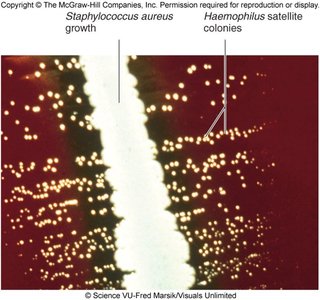
Nonsymbiotic: Synergism (cooperation, not required), antagonism (competition, inhibition).
Biofilms
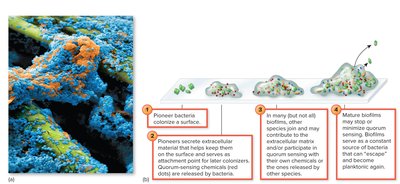
Biofilms are complex communities of microbes attached to surfaces, encased in a self-produced matrix. They exhibit quorum sensing and are more resistant to antibiotics and environmental stress than free-living cells.
Microbial Growth and Reproduction
Binary Fission
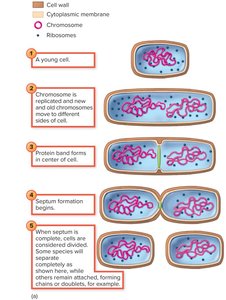
Bacteria reproduce primarily by binary fission, a process where a parent cell divides into two identical daughter cells.

Population Growth and Generation Time
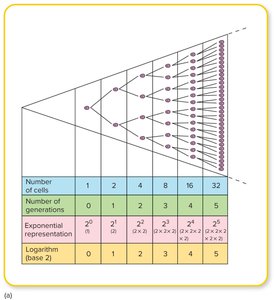
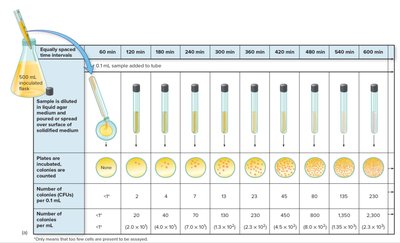
Generation Time (Doubling Time): Time required for a population to double in number.
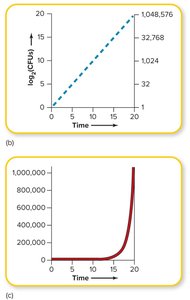
Exponential Growth: Each fission cycle doubles the population, leading to rapid increases in cell numbers.
Bacterial Growth Curve
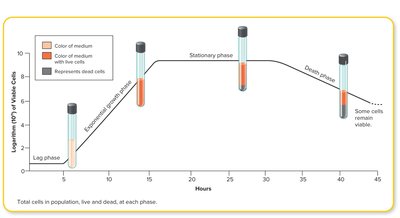
In batch culture, bacterial populations follow a predictable growth curve with four phases:
Lag Phase: Adjustment, no significant increase in cell number.
Log (Exponential) Phase: Rapid cell division and population growth.
Stationary Phase: Growth rate slows; nutrient depletion and waste accumulation.
Death Phase: Cells die at an exponential rate.
Measuring Microbial Growth
Viable Plate Count: Counts living cells capable of forming colonies.
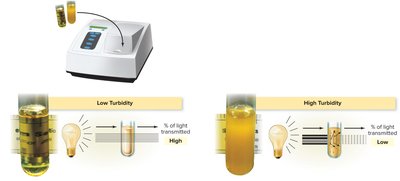
Turbidometry: Measures cloudiness of a culture; higher turbidity indicates more cells.
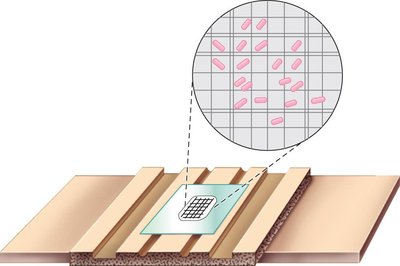
Direct Microscopic Count: Uses a cytometer to count cells directly under a microscope.
Coulter Counter/Flow Cytometer: Electronic devices that count and analyze cells as they pass through a detector.
Additional info: Modern methods such as PCR and ATP quantification allow for rapid, culture-independent assessment of microbial populations in environmental and clinical samples.
