 Back
BackMicrobial Nutrition and Growth: Core Concepts and Laboratory Applications
Study Guide - Smart Notes
 Tailored notes based on your materials, expanded with key definitions, examples, and context.
Microbial Nutrition and Growth
Introduction to Microbial Growth
Microbial growth refers to an increase in the number of cells, not the size of individual cells. Understanding the requirements for microbial growth is essential for culturing microbes and controlling their proliferation, especially those responsible for food spoilage and disease.
Microbial growth is defined as an increase in cell number.
Growth requires synthesis of cell components: nucleic acids, proteins, lipid membranes, and cell walls.
Microbes require sources of carbon, energy, and electrons for biosynthesis.
Major Nutritional Types of Microbes
Microbes are classified based on their sources of carbon and energy. The four basic groups are:
Type | Energy Source | Carbon Source |
|---|---|---|
Photoautotroph | Sunlight | CO2 |
Photoheterotroph | Sunlight | Organic compounds |
Chemoautotroph | Inorganic chemicals (e.g., H2, NH3, NO2-, Fe2+, H2S) | CO2 |
Chemoorganoheterotroph | Organic compounds (e.g., sugars, amino acids) | Organic compounds |
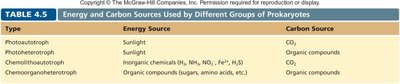
Additional info: Most clinically relevant bacteria are chemoorganoheterotrophs.
Chemical Requirements for Growth
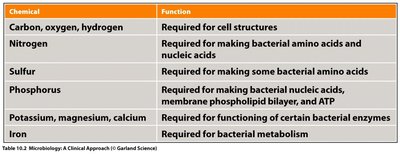
Microbes require several core chemicals (macronutrients) to synthesize cellular components. These include:
Chemical | Function |
|---|---|
Carbon, oxygen, hydrogen | Required for cell structures |
Nitrogen | Required for making bacterial amino acids and nucleic acids |
Sulfur | Required for making some bacterial amino acids |
Phosphorus | Required for making bacterial nucleic acids, membrane phospholipid bilayer, and ATP |
Potassium, magnesium, calcium | Required for functioning of certain bacterial enzymes |
Iron | Required for bacterial metabolism |
Trace Elements and Growth Factors
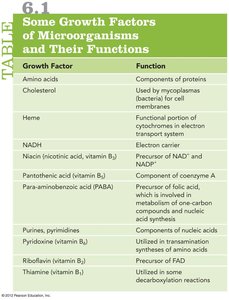
Trace elements (micronutrients) are minerals essential for the function of certain enzymes. Growth factors are organic compounds required in small amounts for microbial growth.
Growth Factor | Function |
|---|---|
Amino acids | Components of proteins |
Cholesterol | Used by mycoplasmas for cell membranes |
Heme | Electron transport system component |
NADH | Electron carrier |
Vitamins (e.g., niacin, riboflavin, thiamine) | Coenzyme precursors |
Oxygen Requirements
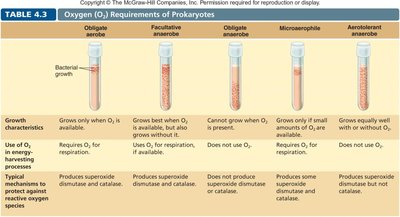
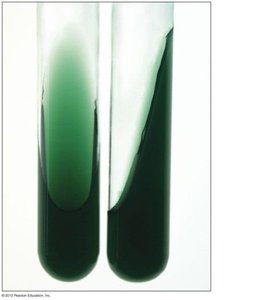
Microbes vary in their oxygen requirements, which affects their growth and metabolism. Oxygen can be toxic due to the formation of reactive oxygen species (ROS), which are neutralized by enzymes such as superoxide dismutase (SOD) and catalase.
Obligate aerobes: Require O2 for growth.
Facultative anaerobes: Grow with or without O2, but better with O2.
Obligate anaerobes: Cannot grow in the presence of O2.
Microaerophiles: Require low O2 concentrations.
Aerotolerant anaerobes: Do not use O2 but tolerate it.
Type | Growth Characteristics | Use of O2 | Protective Enzymes |
|---|---|---|---|
Obligate aerobe | Grows only when O2 is available | Yes | SOD, catalase |
Facultative anaerobe | Grows best with O2, but also without | Yes | SOD, catalase |
Obligate anaerobe | Cannot grow when O2 is present | No | None |
Microaerophile | Grows only in small amounts of O2 | Yes | SOD, catalase (low levels) |
Aerotolerant anaerobe | Grows equally well with or without O2 | No | SOD only |
The Catalase Test
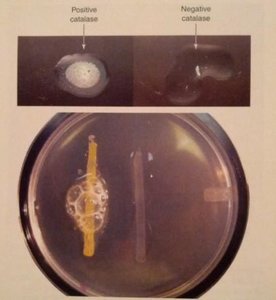
The catalase test differentiates bacterial species based on their ability to produce catalase, an enzyme that breaks down hydrogen peroxide into water and oxygen.
Catalase positive: Bubbles form (e.g., Staphylococcus).
Catalase negative: No bubbles (e.g., Streptococcus).
Physical Requirements for Growth
Temperature
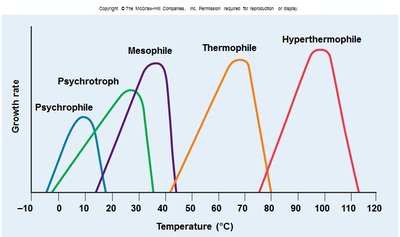
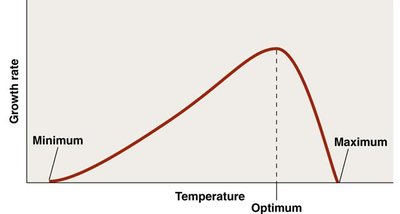
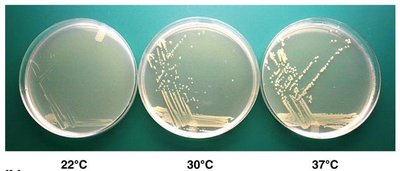
Microbes are classified by their preferred temperature ranges:
Psychrophiles: Grow at low temperatures (−10°C to 20°C).
Psychrotrophs: Grow at 0–30°C; include some pathogens.
Mesophiles: Grow best at moderate temperatures (20–45°C); most human pathogens.
Thermophiles: Grow at high temperatures (45–80°C).
Hyperthermophiles: Grow at very high temperatures (above 80°C).
pH
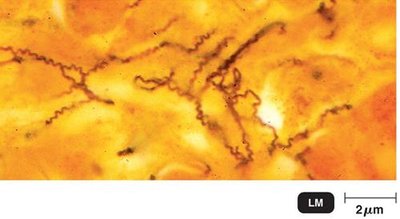
Microbes also differ in their pH preferences:
Neutrophiles: Optimum pH near neutral (6.5–7.5); most pathogens.
Acidophiles: Grow best in acidic habitats.
Alkalinophiles: Grow best in alkaline environments.
Some pathogens, such as Helicobacter pylori, are acid-tolerant but not true acidophiles.
Osmotic Pressure
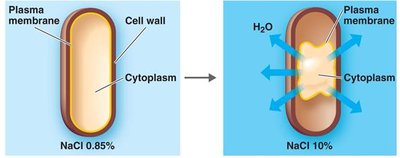
Osmotic pressure affects microbial cells by influencing water movement:
Isotonic: No net water movement.
Hypertonic: Water leaves the cell, causing plasmolysis.
Obligate halophiles: Require high salt concentrations.
Facultative halophiles: Tolerate high salt but do not require it.
Culturing Microbes in the Laboratory
Biofilms and Microbial Communities
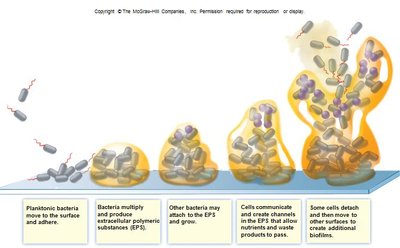
In nature, microbes often exist in complex communities called biofilms, which have clinical and environmental significance. In the laboratory, microbes are usually cultured as pure cultures for study.
Culture Media and Techniques
Microbes are cultivated using various types of media and techniques:
Broth: Liquid medium for growing large numbers of cells.
Agar plates: Solid medium for isolating colonies.
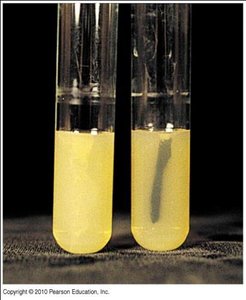
Slants and deeps: Used for storage and specific growth conditions.
Colony Morphology
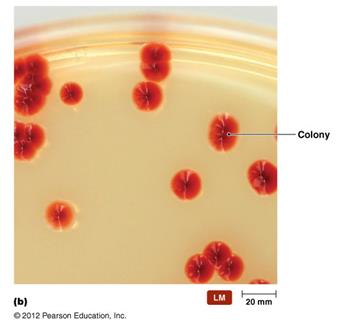
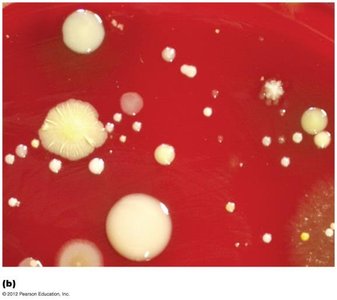
Colony characteristics such as shape, margin, elevation, size, texture, and color help identify bacterial species.
Collection and Handling of Clinical Specimens
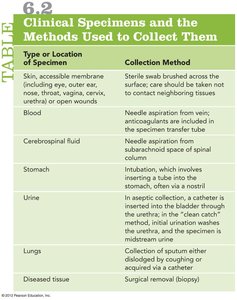
Proper collection, labeling, and transport of clinical specimens are essential for accurate diagnosis. Specimens must be isolated from normal microbiota using selective techniques.
Type or Location of Specimen | Collection Method |
|---|---|
Skin, accessible membrane | Sterile swab |
Blood | Needle aspiration |
Cerebrospinal fluid | Needle aspiration |
Stomach | Intubation |
Urine | Catheterization or clean catch |
Lungs | Sputum collection |
Diseased tissue | Biopsy |
Isolation Techniques
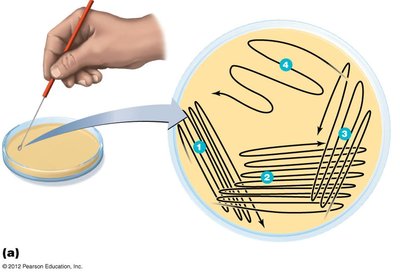
Quadrant streaking: Qualitative method to separate species or detect colonies of pathogens.
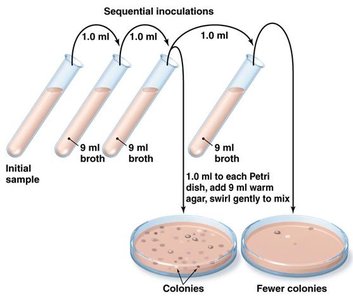
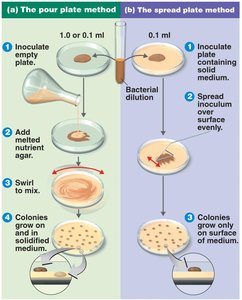
Serial dilution and plating: Quantitative method to count cells (CFUs) using pour-plate or spread-plate techniques.
Types of Culture Media
Synthetic (defined) media: Exact chemical composition is known.
Complex media: Contains extracts and digests of yeasts, meat, or plants; composition varies.
Selective media: Inhibits growth of some organisms while encouraging others.
Differential media: Distinguishes between different microbes based on their biological characteristics.
Enriched media: Contains additional nutrients for fastidious organisms.
Special Culture Conditions
Anaerobic cultures: Use reducing media, anaerobic jars, or chambers to exclude oxygen.
Preservation: Refrigeration, deep-freezing, and lyophilization are used for short- and long-term storage of cultures.
Bacterial Growth and Measurement
Binary Fission and Generation Time
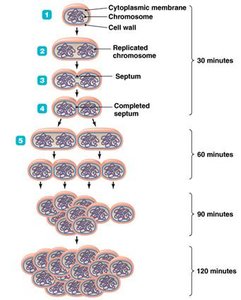
Bacteria reproduce by binary fission, resulting in exponential population growth. Generation time is the time required for a cell to divide or for a population to double.
Equation:
= number of cells at time t
= initial number of cells
= number of generations
Microbial Growth Curve
In batch culture, bacterial growth follows four phases:
Lag phase: Adaptation, no division.
Log (exponential) phase: Rapid cell division, constant generation time.
Stationary phase: Nutrient depletion, waste accumulation, growth rate slows.
Death phase: Cells die faster than they divide.
Generation time is calculated during the log phase.
Measuring Microbial Growth
Direct methods: Microscopic count, viable plate count, membrane filtration.
Indirect methods: Turbidity (spectrophotometry), metabolic activity, dry weight.
Viable plate counts and membrane filtration are commonly used for clinical specimens.
