Back
BackMicrobial Nutrition and Growth: Essential Requirements and Environmental Factors
Study Guide - Smart Notes
 Tailored notes based on your materials, expanded with key definitions, examples, and context.
Microbial Nutrition and Growth
Introduction to Microbial Nutrition
Microbial nutrition refers to the chemical and physical requirements that microorganisms need for growth and metabolism. Understanding these requirements is essential for cultivating microbes in the laboratory and controlling their growth in clinical and environmental settings.
Essential elements: Carbon, Hydrogen, Oxygen, Nitrogen, Phosphorus, Sulfur (CHONPS)
Three fundamental needs for all cells:
A carbon source
An energy source
A source of electrons (often hydrogen atoms) for redox reactions
Sources of nutrients: Can be inorganic (e.g., CO2, H2S, NH3) or organic (e.g., amino acids, carbohydrates)
Major Nutritional Types of Microorganisms
Microorganisms are classified based on their sources of carbon, energy, and electrons. This classification helps in understanding their ecological roles and laboratory cultivation.
Phototrophs: Use sunlight as an energy source
Chemotrophs: Obtain energy from chemical compounds (organic or inorganic)
Autotrophs: Use CO2 as a carbon source (make their own food)
Heterotrophs: Use organic molecules as a carbon source (catabolize molecules from other organisms)
Lithotrophs: Use inorganic molecules as electron donors
Organotrophs: Use organic molecules as electron donors
Nutritional Type | Energy Source | Electron Donor | Carbon Source | Examples |
|---|---|---|---|---|
Photolithoautotroph | Sunlight | Inorganic | CO2 | Algae, cyanobacteria |
Photoorganoheterotroph | Sunlight | Organic | Organic | Purple/green nonsulfur bacteria |
Chemolithoautotroph | Inorganic | Inorganic | CO2 | Sulfur-oxidizing bacteria |
Chemoorganoheterotroph | Organic | Organic | Organic | Fungi, most bacteria, pathogens |
Special Case: Chemosynthesis
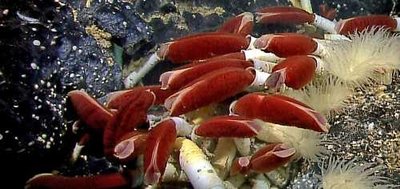
Some microorganisms, such as those living near deep-sea hydrothermal vents, use chemosynthesis instead of photosynthesis. They derive energy from inorganic molecules (e.g., H2S) to fix CO2 and produce organic compounds, supporting unique ecosystems.
Oxygen Requirements and Toxicity
Classification Based on Oxygen Needs
Microorganisms vary in their oxygen requirements, which reflect their metabolic capabilities and the presence of protective enzymes against reactive oxygen species (ROS).
Obligate aerobes: Require oxygen for growth (e.g., Mycobacterium tuberculosis)
Facultative anaerobes: Grow with or without oxygen, but better with it (e.g., Escherichia coli)
Aerotolerant anaerobes: Indifferent to oxygen; fermentative metabolism (e.g., Streptococcus)
Microaerophiles: Require low levels of oxygen (1–10%) (e.g., Campylobacter jejuni)
Obligate anaerobes: Killed by oxygen (e.g., Clostridium species)

Oxygen and Its Deadly Reactive Forms
Oxygen metabolism can generate reactive oxygen intermediates (ROIs) or reactive oxygen species (ROS), which are highly toxic due to their strong oxidizing properties. Organisms must possess protective enzymes to survive in oxygenated environments.
Types of ROS:
Singlet oxygen (O2*)
Superoxide radical (O2•−)
Hydrogen peroxide (H2O2)
Hydroxyl radical (OH−)
Protective enzymes: Superoxide dismutase (SOD), catalase, peroxidase

Nitrogen, Phosphorus, Sulfur, and Other Chemical Requirements
Nitrogen Requirements and the Nitrogen Cycle
Nitrogen is essential for the synthesis of amino acids and nucleic acids. Microorganisms play a critical role in the nitrogen cycle, converting nitrogen into forms usable by living organisms.
Nitrogen fixation: Conversion of atmospheric N2 to ammonia (NH3) by certain bacteria (e.g., Rhizobium, cyanobacteria)
Nitrification: Conversion of NH4+ to NO2− and then to NO3−
Denitrification: Conversion of NO3− back to N2
Process | Description | Key Microbes |
|---|---|---|
Nitrogen fixation | N2 → NH3 | Rhizobium, cyanobacteria |
Ammonification | Organic N → NH3 | Decomposers |
Nitrification | NH4+ → NO2− → NO3− | Nitrosomonas, Nitrobacter |
Denitrification | NO3− → N2 | Pseudomonas, Clostridium |
Other Chemical Requirements
Phosphorus: Component of nucleic acids, ATP, and membranes
Sulfur: Found in amino acids and vitamins
Trace elements: Required in small amounts (e.g., Fe, Zn, Cu, Se)
Growth factors: Organic compounds such as vitamins, amino acids, and nucleotide bases that some microbes cannot synthesize
Physical Growth Requirements
Temperature
Temperature affects microbial growth by influencing enzyme activity and membrane fluidity. Microbes are classified based on their preferred temperature ranges.
Psychrophiles: Grow best at 0–20°C
Mesophiles: Grow best at 20–45°C (includes most human pathogens)
Thermophiles: Grow best at 45–80°C
Hyperthermophiles: Grow above 80°C

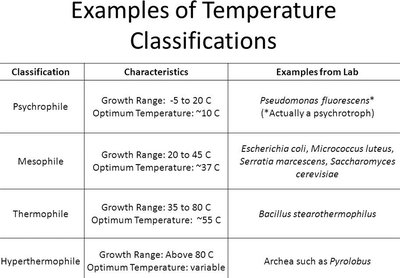
Classification | Growth Range (°C) | Optimum Temp (°C) | Examples |
|---|---|---|---|
Psychrophile | -5 to 20 | ~10 | Pseudomonas fluorescens |
Mesophile | 20 to 45 | ~37 | E. coli, Micrococcus luteus |
Thermophile | 35 to 80 | ~55 | Bacillus stearothermophilus |
Hyperthermophile | Above 80 | Variable | Archaea (e.g., Pyrolobus) |
pH
Microorganisms have specific pH ranges for optimal growth.
Neutrophiles: Grow best at neutral pH (6.5–7.5)
Acidophiles: Thrive in acidic environments (pH < 6.5)
Alkalinophiles: Thrive in alkaline environments (pH > 7.5)

Water, Osmotic Pressure, and Hydrostatic Pressure
Water is essential for microbial metabolism. Osmotic and hydrostatic pressures influence microbial survival and distribution.
Obligate halophiles: Require high salt concentrations (up to 30%)
Facultative halophiles: Tolerate high salt but do not require it (e.g., Staphylococcus aureus)
Barophiles: Require high hydrostatic pressure (deep-sea microbes)
Microbial Associations and Biofilms
Types of Microbial Associations
Antagonistic: One organism harms another (e.g., viruses kill host cells)
Synergistic: Cooperative interactions benefit all participants
Symbiotic: Close, interdependent relationships
Biofilms
Biofilms are complex communities of microorganisms attached to surfaces and embedded in a self-produced extracellular matrix. They are the predominant mode of microbial life in nature and are medically significant due to their resistance to antimicrobial agents.
Formation: Involves reversible attachment, irreversible attachment, growth, EPS production, and maturation
Quorum sensing: Cell-to-cell communication that regulates gene expression in response to population density
Medical relevance: Biofilms cause up to 70% of bacterial infections, including dental plaque, chronic wounds, and device-associated infections