 Back
BackMicrobial Nutrition and Growth: Study Guide
Study Guide - Smart Notes
 Tailored notes based on your materials, expanded with key definitions, examples, and context.
Microbial Nutrition and Growth
Overview of Microbial Growth
Microbial growth refers to the increase in the population of microbes, primarily through reproduction. Growth can result in discrete colonies (aggregations of cells from a single parent) or biofilms (complex communities on surfaces).
Colony: A visible mass of microbial cells arising from a single cell.
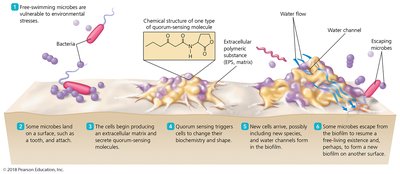
Biofilm: A structured community of microorganisms encapsulated within a self-produced matrix, often attached to surfaces.
Physical and Chemical Requirements for Growth
Microbes require specific physical and chemical conditions for optimal growth. These include temperature, pH, osmotic pressure, and essential nutrients.
Physical requirements: Temperature, pH, osmotic pressure.
Chemical requirements: Carbon, nitrogen, sulfur, phosphorus, trace elements, oxygen, and organic growth factors.
Sources of Carbon, Energy, and Electrons
Classification of Microbes by Nutritional Type
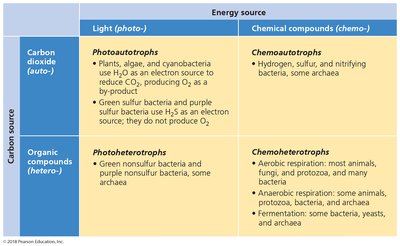
Microorganisms are classified based on their sources of carbon and energy. This classification is fundamental to understanding microbial metabolism and ecology.
Autotrophs: Use carbon dioxide as a carbon source.
Heterotrophs: Use organic compounds as a carbon source.
Chemotrophs: Obtain energy from chemical compounds.
Phototrophs: Obtain energy from light.
Carbon Source | Energy Source | Examples |
|---|---|---|
CO2 (auto-) | Light (photo-) | Photoautotrophs: Plants, algae, cyanobacteria |
CO2 (auto-) | Chemicals (chemo-) | Chemoautotrophs: Hydrogen, sulfur, nitrifying bacteria |
Organic compounds (hetero-) | Light (photo-) | Photoheterotrophs: Green/purple nonsulfur bacteria |
Organic compounds (hetero-) | Chemicals (chemo-) | Chemoheterotrophs: Most animals, fungi, protozoa, many bacteria |
Oxygen Requirements and Toxicity
Oxygen and Microbial Growth
Oxygen is essential for some microbes but toxic for others. The toxicity is due to reactive oxygen species (ROS) that can damage cellular components.
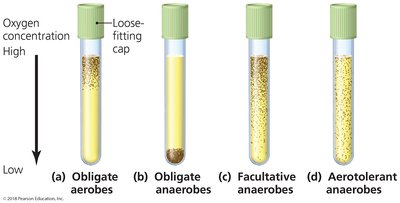
Obligate aerobes: Require oxygen for growth.
Obligate anaerobes: Cannot tolerate oxygen.
Facultative anaerobes: Can grow with or without oxygen.
Aerotolerant anaerobes: Tolerate oxygen but do not use it.
Microaerophiles: Require low oxygen concentrations.
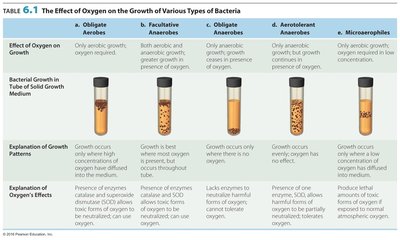
Type | Effect of Oxygen | Growth Pattern | Explanation |
|---|---|---|---|
Obligate Aerobes | Only aerobic growth | Growth at top | Require oxygen |
Facultative Anaerobes | Aerobic and anaerobic | Growth throughout, more at top | Use oxygen when present |
Obligate Anaerobes | Only anaerobic growth | Growth at bottom | Cannot tolerate oxygen |
Aerotolerant Anaerobes | Only anaerobic, but tolerates oxygen | Growth evenly | Tolerates oxygen |
Microaerophiles | Only aerobic, low oxygen | Growth in middle | Requires low oxygen |
Toxic Forms of Oxygen
Reactive oxygen species include singlet oxygen, superoxide radicals, peroxide anion, and hydroxyl radical. Microbes possess enzymes to neutralize these toxic forms.
Superoxide dismutase: Converts superoxide radicals to hydrogen peroxide.
Catalase: Converts hydrogen peroxide to water and oxygen.
Peroxidase: Converts hydrogen peroxide to water.
Key reactions:



Chemical Requirements: Nitrogen, Sulfur, Phosphorus, and Trace Elements
Nitrogen
Nitrogen is a component of proteins, DNA, and ATP. Most bacteria obtain nitrogen by decomposing protein material, using ammonium or nitrate, or fixing atmospheric nitrogen.
Nitrogen fixation: Conversion of atmospheric nitrogen (N2) to ammonia (NH3).
Sulfur and Phosphorus
Sulfur is used in amino acids and vitamins; phosphorus is essential for nucleic acids, ATP, and membranes.
Sulfur sources: Protein decomposition, sulfate, hydrogen sulfide.
Phosphorus sources: Phosphate ions.
Trace Elements and Growth Factors
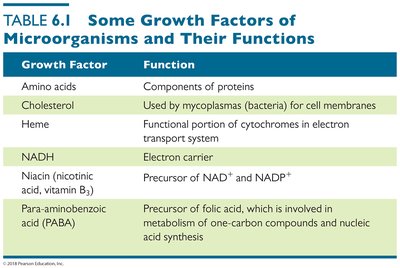
Trace elements are required in small amounts, often as enzyme cofactors. Growth factors are organic compounds that some microbes cannot synthesize and must obtain from the environment.
Growth Factor | Function |
|---|---|
Amino acids | Protein components |
Cholesterol | Cell membrane component (mycoplasmas) |
Heme | Cytochrome function in electron transport |
NADH | Electron carrier |
Niacin (vitamin B3) | Precursor of NAD+ and NADP+ |
PABA | Precursor of folic acid |
Physical Requirements: Temperature, pH, and Water
Temperature
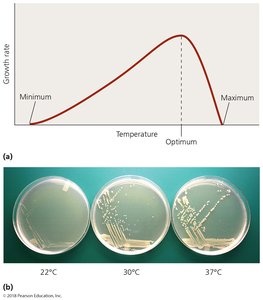
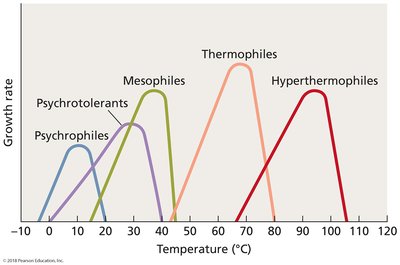
Temperature affects protein structure and membrane fluidity. Microbes are classified by their preferred temperature ranges.
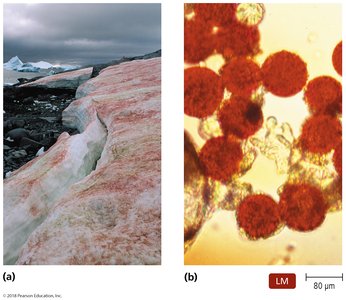
Psychrophiles: Cold-loving, optimum below 15°C.
Psychrotolerants: Grow at 0°C, optimum 20–40°C.
Mesophiles: Moderate temperature, optimum 25–40°C.
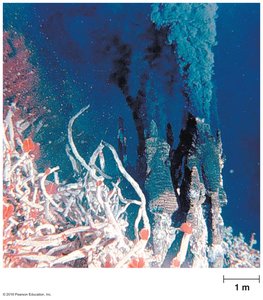
Thermophiles: Heat-loving, optimum 50–60°C.
Hyperthermophiles: Optimum above 80°C.
pH
Most bacteria grow best at neutral pH (6.5–7.5). Molds and yeasts prefer slightly acidic conditions. Acidophiles and alkalinophiles thrive in extreme pH environments.
Neutrophiles: Grow best at neutral pH.
Acidophiles: Grow best in acidic habitats.
Alkalinophiles: Grow best in alkaline environments.
Water, Osmotic Pressure, and Hydrostatic Pressure
Water is essential for microbial metabolism. Osmotic pressure affects cell integrity; hypertonic environments cause plasmolysis, restricting growth to certain environments.
Obligate halophiles: Require high salt concentrations.
Facultative halophiles: Tolerate high salt concentrations.
Barophiles: Require high hydrostatic pressure.
Microbial Associations and Biofilms
Types of Relationships
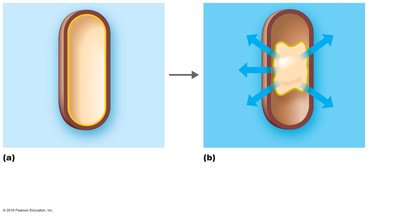
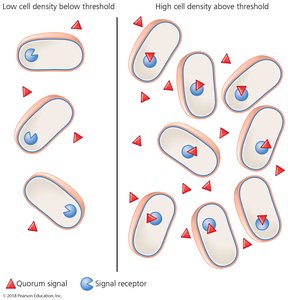
Microbes interact in antagonistic, synergistic, or symbiotic relationships. Biofilms are complex communities formed through quorum sensing, providing protection and enhanced survival.
Biofilms: Increase resistance to microbicides and are involved in many infections.
Quorum sensing: Cell-to-cell communication regulating biofilm formation.
Culturing Microorganisms
Culture Media
Culture media provide nutrients for microbial growth. Media can be chemically defined or complex, and may be selective, differential, or enrichment types.
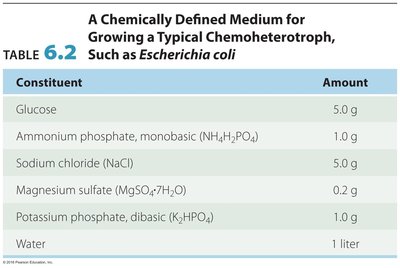
Chemically defined media: Exact composition known.
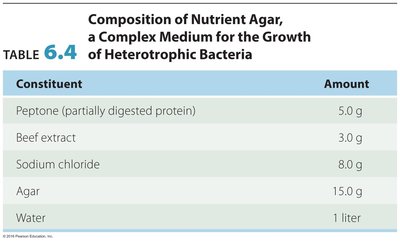
Complex media: Contains extracts, composition varies.
Selective media: Suppress unwanted microbes, encourage desired ones.
Differential media: Distinguish colonies of different microbes.
Enrichment media: Encourage growth of desired microbes.
Constituent | Amount |
|---|---|
Glucose | 5.0 g |
Ammonium phosphate | 1.0 g |
Sodium chloride | 5.0 g |
Magnesium sulfate | 0.2 g |
Potassium phosphate | 1.0 g |
Water | 1 liter |
Constituent | Amount |
|---|---|
Peptone | 5.0 g |
Beef extract | 3.0 g |
Sodium chloride | 8.0 g |
Agar | 15.0 g |
Water | 1 liter |
Anaerobic Techniques and Biosafety Levels
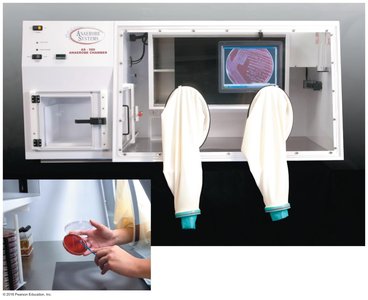
Anaerobic media and chambers are used to cultivate anaerobic bacteria. Biosafety levels (BSL) indicate laboratory safety requirements.
BSL-1: Basic labs, no special precautions.
BSL-2: Lab coat, gloves, eye protection.
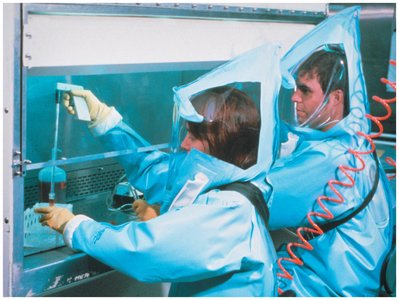
BSL-3: Biosafety cabinets for airborne pathogens.
BSL-4: Sealed, negative pressure labs for dangerous pathogens.

Selective and Differential Media Examples
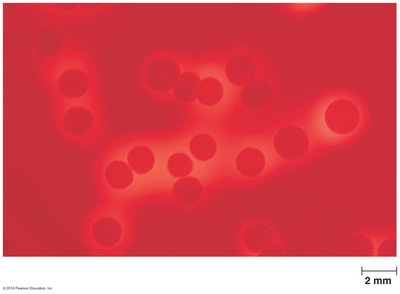
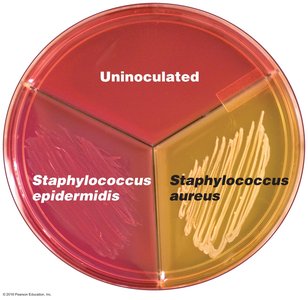
Blood agar and Mannitol Salt Agar (MSA) are examples of media used to distinguish microbial species based on growth and metabolic activity.
Obtaining and Preserving Pure Cultures
Pure Cultures and Aseptic Technique
Pure cultures are obtained from single progenitor cells (colony-forming units). Aseptic technique prevents contamination.
Preservation Methods
Refrigeration: Short-term storage.
Deep-freezing: Long-term storage.
Lyophilization: Decades-long storage.
Growth of Microbial Populations
Binary Fission and Generation Time
Most bacteria reproduce by binary fission, doubling the population each generation. Generation time varies from 20 minutes to 24 hours.
Bacterial Growth Curve
Bacterial populations follow a growth curve with four phases: lag, log (exponential), stationary, and death.
Measuring Microbial Growth
Direct Methods
Microscopic counts: Counting cells under a microscope.
Electronic counters: Coulter counter and flow cytometry.
Serial dilution and viable plate counts: Estimating population size.
Membrane filtration: Concentrating cells for counting.
Most probable number: Statistical estimation.
Indirect Methods
Turbidity: Measuring cloudiness of a culture.
Metabolic activity: Measuring biochemical activity.
Dry weight: Weighing cell mass.
Molecular methods: DNA-based detection.
Clinical and Applied Context
Listeria monocytogenes
Listeria monocytogenes is a pathogen capable of surviving in diverse environments and causing CNS infections in immunocompromised individuals. It is identified using selective and differential media, and treated with antibiotics targeting bacterial enzymes.
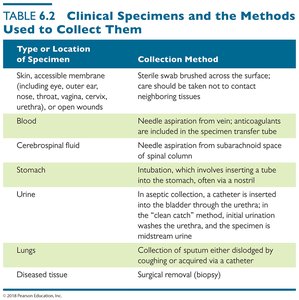
Summary Table: Clinical Specimens Collection
Type/Location | Collection Method |
|---|---|
Skin, mucous membrane | Sterile swab |
Blood | Needle aspiration |
Cerebrospinal fluid | Needle aspiration |
Stomach | Intubation |
Urine | Catheter |
Lungs | Sputum collection |
Diseased tissue | Biopsy |
Additional info: This guide expands on lecture slides with definitions, examples, and tables for clarity. All images included are directly relevant to the adjacent content, reinforcing key concepts in microbial nutrition and growth.
