 Back
BackMicrobial Nutrition and Growth: Study Guide for Chapter 6
Study Guide - Smart Notes
 Tailored notes based on your materials, expanded with key definitions, examples, and context.
Microbial Nutrition and Growth
Overview
Microbial nutrition and growth are fundamental concepts in microbiology, focusing on how microorganisms obtain nutrients, grow, and reproduce. Understanding these processes is essential for laboratory work, environmental studies, and medical applications.
Microbial growth refers to an increase in population size, not individual cell size.
Growth occurs in discrete colonies on solid media, each arising from a single parent cell.
Key Vocabulary
Chemoheterotroph: Organism that obtains energy and carbon from organic compounds.
Photoautotroph: Organism that uses light energy and CO2 as a carbon source.
Mesophile: Microbe that grows best at moderate temperatures (20–45°C).
Psychrophile: Microbe that grows best at low temperatures (<20°C).
Thermophile: Microbe that grows best at high temperatures (45–80°C).
Hyperthermophile: Microbe that grows best at extremely high temperatures (>80°C).
Growth curve: Graph showing the change in number of organisms over time.
Lag phase: Period of adjustment before active growth.
Logarithmic phase: Period of rapid, exponential growth.
Stationary phase: Period where growth rate equals death rate.
Biofilm: Complex aggregation of microorganisms on a surface.
Anaerobe: Organism that does not require oxygen for growth.
Aerobe: Organism that requires oxygen for growth.
Facultative anaerobe: Organism that can grow with or without oxygen.
Catalase: Enzyme that breaks down hydrogen peroxide.
Growth Requirements
Chemical and Energy Requirements
Microbes require various elements and compounds for growth, including carbon, hydrogen, oxygen, nitrogen, trace elements, and growth factors.
Carbon: Essential for all organic molecules; autotrophs use CO2, heterotrophs use organic carbon.
Energy: Chemotrophs obtain energy from chemicals; phototrophs from light.
Electrons: Needed for metabolic reactions; sources vary by organism.
Nitrogen: Acquired from organic and inorganic sources; essential for amino acids, nucleic acids.
Nitrogen fixation: Reduction of N2 gas to NH4+ by certain bacteria, crucial for ecosystem nitrogen cycling.
Phosphorus: Required for membranes, DNA, RNA, ATP.
Sulfur: Component of amino acids, vitamins.
Trace elements: Needed in small amounts (e.g., iron, zinc).
Growth factors: Organic chemicals (e.g., vitamins) that some organisms cannot synthesize.
Oxygen Requirements
Microbes differ in their need for oxygen:
Aerobes: Require oxygen for aerobic respiration.
Anaerobes: Oxygen is toxic; use anaerobic respiration or fermentation.
Facultative anaerobes: Can use oxygen but also grow without it.
Physical Requirements for Growth
Temperature
Temperature affects protein structure and membrane fluidity. Microbes are classified by their optimal temperature ranges:
Psychrophiles: Grow at low temperatures.
Mesophiles: Grow at moderate temperatures.
Thermophiles: Grow at high temperatures.
Hyperthermophiles: Grow at extremely high temperatures.
pH
Microbes are sensitive to pH, which affects protein structure and DNA stability.
Neutrophiles: Grow best at neutral pH.
Acidophiles: Grow best in acidic environments.
Alkaliphiles: Grow best in alkaline environments.
Water and Osmotic Pressure
Water is essential for dissolving nutrients and metabolic reactions. Osmotic pressure affects cell integrity:
Hypotonic solutions: Cells swell; cell wall limits swelling in bacteria.
Hypertonic solutions: Cells shrink; growth inhibited or cell death occurs.
Obligate halophiles: Require high salt concentrations.
Endospores
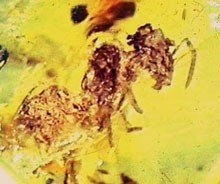
Some bacteria form endospores, allowing survival in dry or harsh environments for millions of years.
Example: Endospores isolated from ancient amber, closely related to Bacillus sphaericus.
Microbial Growth Curve
Phases of Growth
A typical microbial growth curve consists of four phases:
Lag phase: Cells adjust to new environment; little cell division.
Logarithmic (exponential) phase: Rapid cell division; population increases exponentially.
Stationary phase: Nutrients deplete, wastes accumulate; cell division rate equals cell death rate.
Death phase: Cell death rate exceeds division; population declines.
Generation Time and Population Calculation
Generation time: Time required for a cell to divide.
Formula:
Example: If 10 Staphylococcus aureus cells (generation time 20 min) are left for 4 hours, calculate final population.
Measuring Microbial Reproduction
Methods
Serial dilution and plate count: Estimate population size by counting colonies.
Turbidity (spectrophotometric method): Measure cloudiness of culture to estimate cell density.
Microbial Associations and Biofilms
Types of Associations
Microbes rarely exist in pure culture; they form various associations:
Antagonistic: One organism harms another.
Synergistic: Cooperative interaction benefits both.
Symbiotic: Close, long-term interaction.
Biofilms
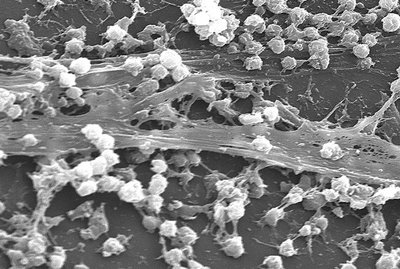
Biofilms are complex communities of microorganisms attached to surfaces, embedded in a self-produced matrix.
Form via quorum sensing, where microbes communicate and coordinate behavior.
Matrix adheres cells, attaches to surfaces, sequesters nutrients, and provides protection.
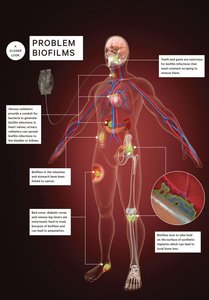
Biofilms are found on medical devices, mucous membranes, environmental surfaces, and more.
Biofilm Examples and Importance
Biofilms can be both harmful and beneficial:
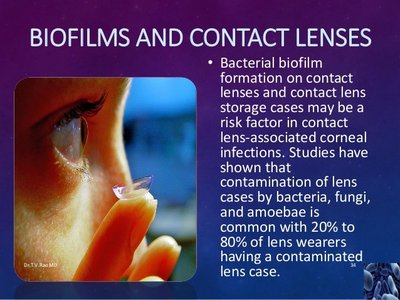
Harmful: Persistent infections, colonization of medical devices, contamination of contact lenses.
Beneficial: Sewage treatment, septic tanks.
Biofilm-associated infections are difficult to treat due to increased resistance to antibiotics.

Biofilm Prevention
Scientists are developing quorum sensing inhibitors and chemicals to prevent biofilm formation.
Summary Table: Microbial Growth Requirements
Requirement | Role in Growth | Example |
|---|---|---|
Carbon | Building block for organic molecules | CO2 for autotrophs, glucose for heterotrophs |
Energy | Drives metabolic reactions | Light for phototrophs, chemicals for chemotrophs |
Nitrogen | Component of proteins, nucleic acids | Nitrogen fixation by bacteria |
Phosphorus | Membranes, DNA, RNA, ATP | Phosphate ions |
Sulfur | Amino acids, vitamins | Sulfate ions |
Trace elements | Enzyme cofactors | Iron, zinc |
Growth factors | Essential organic molecules | Vitamins, amino acids |
Additional info:
Biofilms are a major concern in medical and industrial settings due to their resistance to treatment and role in persistent infections.
Understanding microbial growth curves is essential for optimizing laboratory cultures and controlling microbial populations in various environments.
