 Back
BackMicrobial Nutrition and Growth: Study Guide for Chapter 6
Study Guide - Smart Notes
 Tailored notes based on your materials, expanded with key definitions, examples, and context.
Microbial Nutrition and Growth
Overview
This chapter explores the essential requirements and processes involved in microbial nutrition and growth. Understanding these concepts is fundamental for microbiology students, as they underpin laboratory techniques and the study of microbial populations in various environments.
Vocabulary and Key Terms
Chemoheterotroph: Organisms that obtain energy by oxidizing organic compounds and use organic carbon as their carbon source.
Photoautotroph: Organisms that use light energy to convert inorganic carbon (CO2) into organic compounds.
Mesophile: Microbes that grow best at moderate temperatures (20–45°C).
Psychrophile: Microbes that thrive at low temperatures (below 15°C).
Thermophile: Microbes that grow optimally at high temperatures (45–80°C).
Hyperthermophile: Microbes that grow at extremely high temperatures (above 80°C).
Growth curve: A graphical representation of microbial population growth over time.
Lag phase: Period of adjustment before active growth begins.
Logarithmic phase: Period of rapid, exponential growth.
Stationary phase: Period where growth rate equals death rate; population stabilizes.
Biofilm: Complex aggregation of microorganisms growing on a surface.
Anaerobe: Organisms that do not require oxygen for growth.
Aerobe: Organisms that require oxygen for growth.
Facultative anaerobe: Organisms that can grow with or without oxygen.
Catalase: Enzyme that breaks down hydrogen peroxide into water and oxygen.
Chemical and Energy Requirements for Microbial Growth
Essential Elements
Microbes require various elements for growth, including carbon, hydrogen, oxygen, nitrogen, phosphorus, sulfur, trace elements, and growth factors.
Carbon: Fundamental for all organic molecules; source varies by organism type.
Hydrogen & Oxygen: Components of water and organic molecules; involved in energy production.
Nitrogen: Needed for amino acids, nucleic acids; acquired from organic/inorganic sources.
Phosphorus: Required for phospholipids, DNA, RNA, ATP.
Sulfur: Component of certain amino acids and vitamins.
Trace elements: Required in small amounts (e.g., iron, zinc).
Growth factors: Organic compounds that some microbes cannot synthesize (e.g., vitamins).
Carbon and Energy Sources
Autotrophs: Use CO2 as carbon source.
Heterotrophs: Use organic carbon sources.
Chemotrophs: Obtain energy from chemical compounds.
Phototrophs: Obtain energy from light.
Example: In laboratory settings, chemoheterotrophs are commonly used, as they require organic carbon and chemical energy.
Oxygen Requirements
Types of Microbes Based on Oxygen Use
Aerobes: Require oxygen for aerobic respiration.
Anaerobes: Grow without oxygen; may use fermentation or anaerobic respiration.
Facultative anaerobes: Can switch between aerobic and anaerobic metabolism.
Oxygen is essential for obligate aerobes but toxic for obligate anaerobes due to reactive oxygen species.
Nitrogen Fixation
Importance of Nitrogen Fixation
Nitrogen fixation is the process by which certain bacteria convert atmospheric nitrogen (N2) into ammonia (NH4+), making nitrogen available for biological use. This is crucial for the biosynthesis of amino acids and nucleotides.
Physical Requirements for Growth
Temperature
Temperature affects protein structure and membrane fluidity. Microbes are classified by their optimal temperature ranges:
Psychrophiles: Grow at low temperatures.
Mesophiles: Grow at moderate temperatures.
Thermophiles: Grow at high temperatures.
Hyperthermophiles: Grow at extremely high temperatures.
Bacterial Growth Rate Calculation
Bacteria reproduce rapidly under optimal conditions. The size of a bacterial population can be calculated using:
Where Ntotal is the total number of cells, Ninitial is the starting number of cells, and n is the number of generations.
pH
Microbes are sensitive to pH changes, which affect protein structure and DNA stability.
Neutrophiles: Grow best at neutral pH.
Acidophiles: Grow in acidic environments.
Alkaliphiles: Grow in alkaline environments.
Water and Osmotic Pressure
Water is essential for dissolving nutrients and metabolic reactions. Osmotic pressure affects cell integrity:
Hypotonic solutions: Cause cells to swell.
Hypertonic solutions: Cause cells to shrink and may inhibit growth.
Obligate halophiles: Require high salt concentrations.
Bacterial Endospores
Survival in Extreme Conditions
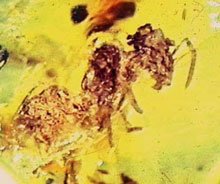
Bacterial endospores are highly resistant structures that allow survival in harsh environments for millions of years. They can be revived from ancient sources, such as amber.
Microbial Growth Curve
Phases of Growth
A typical microbial growth curve consists of four phases:
Lag phase: Cells adjust to new environment; little growth.
Logarithmic (exponential) phase: Rapid cell division; population increases exponentially.
Stationary phase: Nutrient depletion and waste accumulation; growth rate equals death rate.
Death phase: Cell death exceeds division; population declines.
During the logarithmic phase, cells are most susceptible to antibiotics and best suited for Gram staining.
Measuring Microbial Reproduction
Methods
Serial dilution and standard plate count: Used to estimate population size.
Turbidity (spectrophotometric method): Measures cell density in a liquid culture.
Microbial Associations and Biofilms
Biofilm Formation and Importance
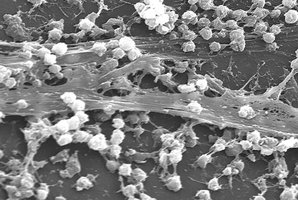
Biofilms are complex communities of microorganisms attached to surfaces, formed via quorum sensing and secretion of an extracellular matrix. Biofilms provide protection, sequester nutrients, and allow attachment to surfaces.
Locations and Impact of Biofilms
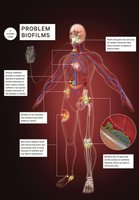
Biofilms form on living tissues, environmental surfaces, medical devices, and mucous membranes. They can be both beneficial (e.g., sewage treatment) and harmful (e.g., persistent infections).
Biofilm-Associated Infections
Biofilm-associated infections are difficult to treat due to increased resistance to antibiotics and immune responses. Scientists are developing strategies to prevent biofilm formation, such as quorum sensing inhibitors and surface-bonded inhibitory chemicals.
Examples of Biofilm Locations
Implanted medical devices
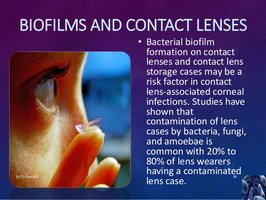
Contact lenses
Sewage treatment systems
Household drains and pipes


Summary Table: Microbial Growth Requirements
Requirement | Role in Growth | Example |
|---|---|---|
Carbon | Building block for organic molecules | Glucose for chemoheterotrophs |
Nitrogen | Amino acids, nucleic acids | Nitrogen fixation by bacteria |
Phosphorus | Membranes, DNA, RNA, ATP | Phosphate ions |
Sulfur | Proteins, vitamins | Sulfate ions |
Trace elements | Enzyme cofactors | Iron, zinc |
Growth factors | Essential organic compounds | Vitamins, amino acids |
Temperature | Protein structure, membrane fluidity | Mesophiles (human pathogens) |
pH | Protein and DNA stability | Neutrophiles (neutral pH) |
Water | Solvent, metabolic reactions | Osmotic pressure, halophiles |
Additional info: Academic context was added to clarify definitions, expand explanations, and provide examples for each topic. Images were included only when directly relevant to the explanation of biofilms, endospores, and microbial associations.
