 Back
BackMicrobial Nutrition and Growth: Study Notes for Microbiology Students
Study Guide - Smart Notes
 Tailored notes based on your materials, expanded with key definitions, examples, and context.
Microbial Nutrition and Growth
Growth Requirements
Sources of Nutrients
Microorganisms require specific sources of carbon, energy, and electrons to grow and reproduce. These requirements are used to classify microbes based on their nutritional strategies.
Autotrophs: Utilize inorganic carbon (CO2) as their carbon source and can synthesize organic compounds from it. Lithotrophs use inorganic molecules as electron sources.
Heterotrophs: Require organic compounds from other organisms for both carbon and electrons. Organotrophs use organic molecules as electron sources.
Phototrophs: Use light as their energy source.
Chemotrophs: Obtain energy from redox reactions involving chemical compounds.
Example: Escherichia coli is a chemoheterotroph, using organic compounds for both energy and carbon. 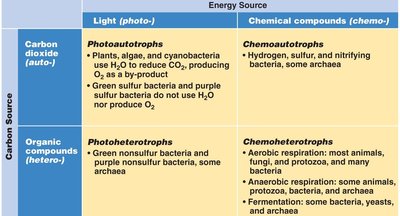
Substance Factors: Essential Elements
Microbes require various elements for growth, including oxygen, nitrogen, and trace elements. The availability and form of these elements affect microbial metabolism and survival.
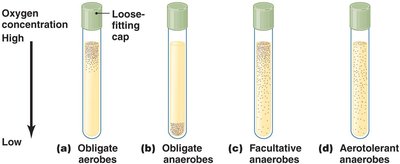
Oxygen: Acts as a terminal electron acceptor (TEA) in aerobic respiration. Microbes are classified based on their oxygen requirements: obligate aerobes, obligate anaerobes, facultative anaerobes, aerotolerant anaerobes, and microaerophiles.
Nitrogen: Essential for proteins and nucleic acids. Only certain microbes (nitrogen fixers) can convert atmospheric N2 into usable forms (NH3).
Other Elements: HONC (hydrogen, oxygen, nitrogen, carbon) make up most of cell mass; S, P, Ca, Mg, Mn, Cu, Fe are required in smaller amounts; trace elements are needed in minute quantities.
Physical Factors Affecting Growth
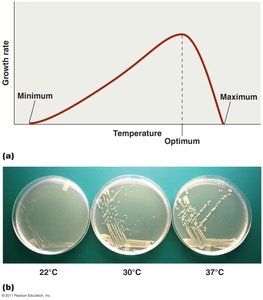
Environmental conditions such as temperature, pH, osmolarity, and pressure influence microbial growth and survival.
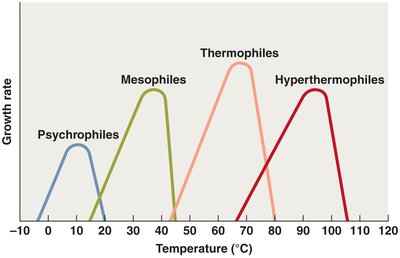
Temperature: Microbes are classified by their optimal temperature ranges: psychrophiles (cold), mesophiles (moderate), thermophiles (hot), and hyperthermophiles (very hot).
pH: Microbes may be neutrophiles (neutral pH), acidophiles (acidic), or alkalinophiles (alkaline).
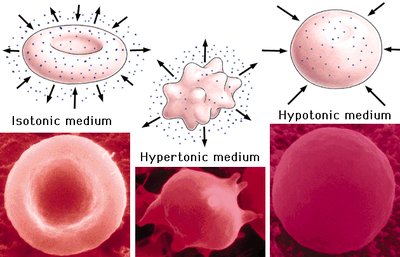
Osmolarity: Water availability and solute concentration affect cell integrity. Obligate halophiles require high salt concentrations.
Pressure: Barophiles (piezophiles) thrive under high hydrostatic pressure.
Microbial Associations
Biofilms and Interdependence
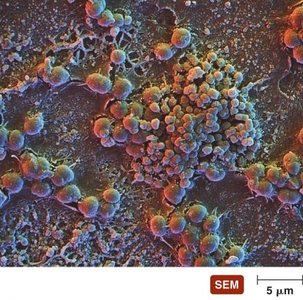
Microbes often exist in complex communities called biofilms, where they interact through chemical signaling (quorum sensing) and form protective systems. These associations can be synergistic, antagonistic, or symbiotic.
Biofilms: Structured communities of multiple organisms embedded in a self-produced matrix.
Quorum Sensing: Chemical communication that regulates gene expression based on population density.
Laboratory Culturing of Microorganisms
Basics of Culturing
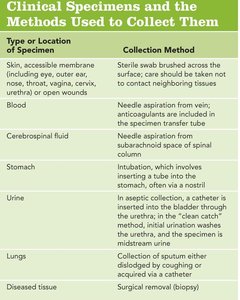
Microbial cultures are grown in laboratory settings using various media and techniques. Cultures can be environmental, clinical, or derived from normal flora.
Inoculum: Sample introduced into media to initiate growth.
Media: Solid (plates), liquid (broth), slants, and deeps/talls.
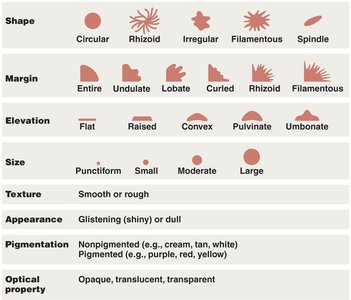
Pure Culture: Derived from a single progenitor (colony forming unit, CFU) using aseptic techniques.
Lab Techniques
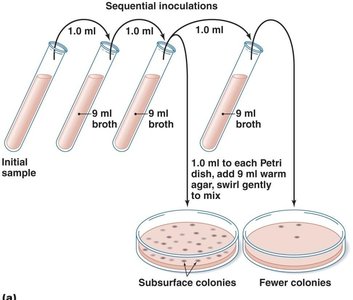
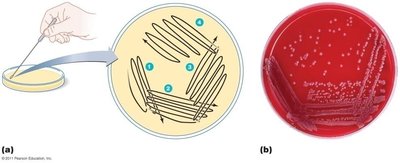
Microbes are cultured using streaking, pouring, and serial dilution methods to isolate and quantify colonies.
Streaking: Used to obtain single colonies on solid media.
Pouring: Serial dilutions to achieve desired colony numbers.
Broth Cultures: Used for motile organisms and protozoa.
Media Types
Different media are used to support microbial growth, tailored to the nutritional and environmental needs of specific organisms.
Synthetic (Defined) Media: Exact chemical composition is known; nutrients are tailored for specific microbes.
Complex Media: Contains digests of yeast, beef, soy, or milk; supports a wide variety of bacteria.
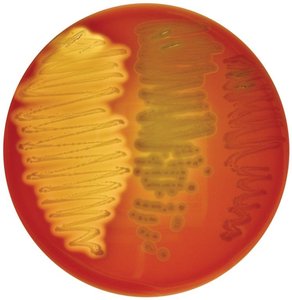
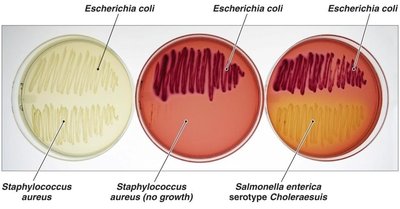
Selective Media: Favors growth of certain organisms or inhibits others.
Differential Media: Allows comparison of organisms based on their metabolic properties.
Anaerobic (Reducing) Media: Creates O2-free environments for anaerobes.
Transport Media: Maintains viability of specimens during transport.
Microbial Growth Patterns and Measurement
Binary Fission and Growth Patterns
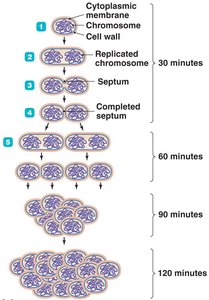
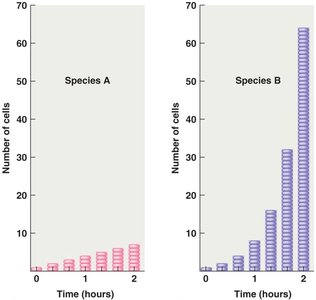
Bacteria reproduce primarily by binary fission, resulting in exponential (logarithmic) growth. The time required for one cycle is called the generation time.
Binary Fission: DNA replication, cell elongation, septum formation, and separation.
Growth Patterns: Exponential growth (doubling every cycle), arithmetic growth (straightforward addition).
Growth Phases
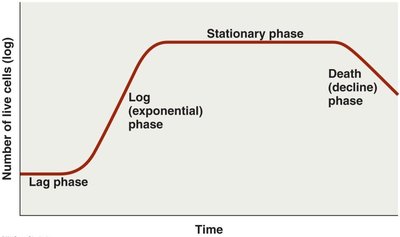
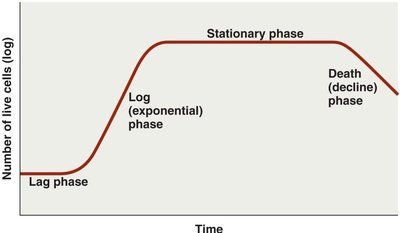
Microbial populations undergo distinct phases: lag, log (exponential), stationary, and death (decline). These phases are visualized in a growth curve.
Lag Phase: Adjustment and preparation for growth.
Log Phase: Rapid DNA replication and cell division.
Stationary Phase: Nutrient depletion; cell death equals cell renewal.
Death Phase: Limiting factors cause decline in cell numbers.
Measuring Microbial Growth
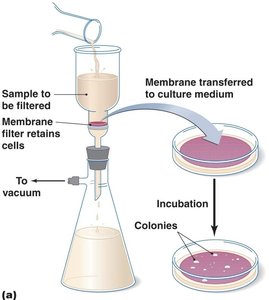
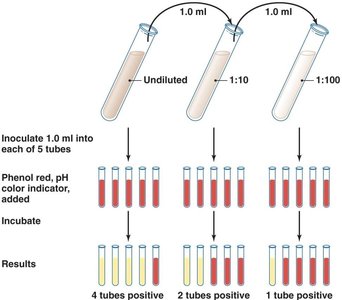
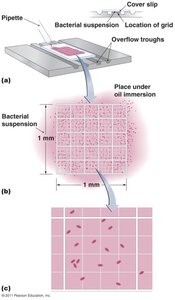
Microbial reproduction is measured using direct and indirect methods, with or without incubation.
Direct Methods with Incubation: Plate counting, membrane filtration, most probable number (MPN).
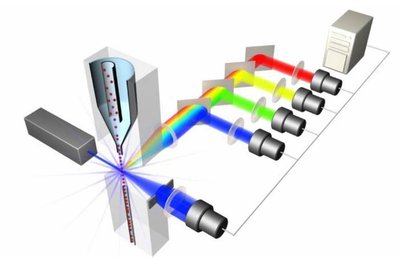
Direct Methods without Incubation: Microscopic counts, electronic counts (Coulter counter, flow cytometer).
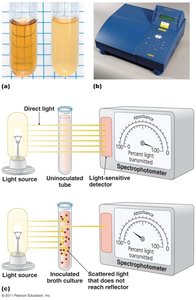
Indirect Methods: Metabolic activity, dry weight, turbidity (spectrophotometry), genetic methods (PCR).
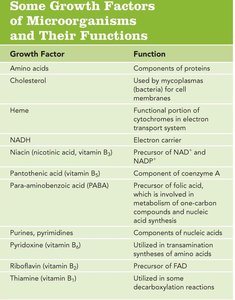
Summary Table: Microbial Growth Factors
Growth Factor | Function |
|---|---|
Amino acids | Components of proteins |
Cholesterol | Used by mycoplasmas (bacteria) for cell membranes |
Heme | Functional portion of cytochromes in electron transport system |
NADH | Electron carrier |
Niacin (vitamin B3) | Precursor of NAD+ and NADP+ |
Pantothenic acid (vitamin B5) | Component of coenzyme A |
Para-aminobenzoic acid (PABA) | Precursor of folic acid, involved in metabolism of one-carbon compounds and nucleic acid synthesis |
Purines, pyrimidines | Components of nucleic acids |
Pyridoxine (vitamin B6) | Used in transamination synthesis of amino acids |
Riboflavin (vitamin B2) | Precursor of FAD |
Thiamine (vitamin B1) | Utilized in some decarboxylation reactions |
Additional info: The notes above expand on the original content by providing definitions, examples, and context for each major topic, ensuring completeness and academic quality for microbiology exam preparation.
