 Back
BackMicrobial Nutrition and Growth: Study Notes CH-6
Study Guide - Smart Notes
 Tailored notes based on your materials, expanded with key definitions, examples, and context.
Microbial Nutrition and Growth
Introduction
Microbial nutrition and growth are fundamental concepts in microbiology, focusing on the requirements for microbial survival, reproduction, and population expansion. Understanding these requirements is essential for culturing microorganisms, controlling their growth, and applying microbiological principles in clinical and industrial settings.
Growth Requirements
Chemical and Energy Requirements
Microbial growth refers to an increase in the population of microbes, primarily through the reproduction of individual cells.
Microbial growth can result in the formation of discrete colonies or complex communities called biofilms.
Microorganisms require various nutrients for energy and to build cellular structures. The most common elements are carbon, oxygen, nitrogen, and hydrogen.
Sources of Carbon, Energy, and Electrons
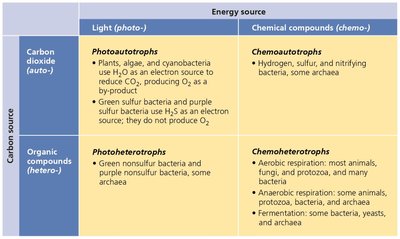
Organisms are classified based on their sources of carbon, energy, and electrons:
Autotrophs: Use carbon dioxide as a carbon source.
Heterotrophs: Use organic compounds as a carbon source.
Phototrophs: Obtain energy from light.
Chemotrophs: Obtain energy from chemical compounds.
Organotrophs: Obtain electrons from organic molecules.
Lithotrophs: Obtain electrons from inorganic molecules.
Oxygen Requirements
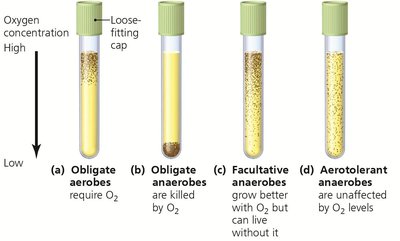
Oxygen is essential for obligate aerobes but toxic to obligate anaerobes due to the formation of reactive oxygen species (ROS).
Four toxic forms of oxygen: singlet oxygen, superoxide radicals, peroxide anion, and hydroxyl radical.
Microorganisms are classified by their oxygen requirements:
Aerobes: Require oxygen.
Anaerobes: Cannot tolerate oxygen.
Facultative anaerobes: Grow better with oxygen but can survive without it.
Aerotolerant anaerobes: Unaffected by oxygen levels.
Microaerophiles: Require low oxygen concentrations.
Nitrogen, Phosphorus, Sulfur, and Other Requirements
Nitrogen is essential for amino acids and nucleotides; some bacteria fix atmospheric nitrogen.
Phosphorus and sulfur are required for nucleic acids, ATP, and some amino acids.
Trace elements are needed in small amounts.
Growth factors are organic chemicals that some organisms cannot synthesize and must obtain from the environment (e.g., vitamins, amino acids).
Physical Requirements
Temperature
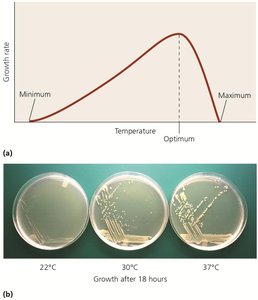
Temperature affects protein structure and membrane fluidity.
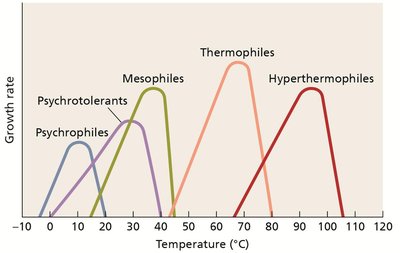
Microbes are classified by their temperature preferences:
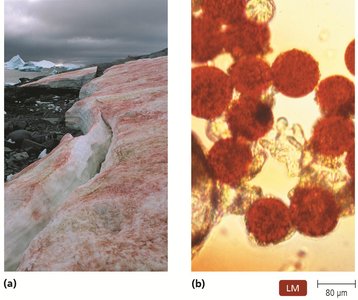
Psychrophiles: Grow best at low temperatures (below 20°C).
Mesophiles: Grow best at moderate temperatures (20–40°C).
Thermophiles: Grow best at high temperatures (above 45°C).
Hyperthermophiles: Grow at extremely high temperatures (above 80°C).
pH
pH affects hydrogen bonding and enzyme activity.
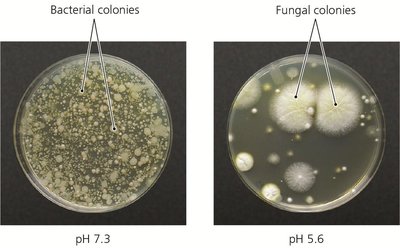
Neutrophiles grow best at neutral pH (6.5–7.5).
Acidophiles thrive in acidic environments.
Alkalinophiles live in alkaline conditions.
Water, Osmotic Pressure, and Hydrostatic Pressure
Water is essential for dissolving nutrients and metabolic reactions.
Osmotic pressure influences cell shape and survival:
Hypotonic solutions cause cells to swell.
Hypertonic solutions cause cells to shrivel.
Halophiles tolerate or require high salt concentrations.
Hydrostatic pressure is important for barophiles that live under extreme pressure (e.g., deep ocean).
Associations and Biofilms
Microbes interact in various relationships: antagonistic, synergistic, and symbiotic.
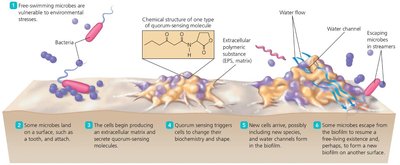
Biofilms are complex communities of microorganisms attached to surfaces, often more resistant to antimicrobials.
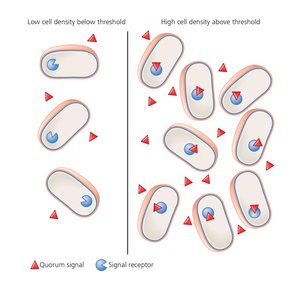
Biofilm formation involves quorum sensing, where microbes communicate via chemical signals to coordinate activity.
Culturing Microorganisms
Culture and Inoculation
A culture is the act of cultivating microorganisms or the microorganisms themselves.
Inoculum refers to the sample introduced into a nutrient medium.
Sources include environmental, clinical, and stored specimens.
Obtaining Pure Cultures
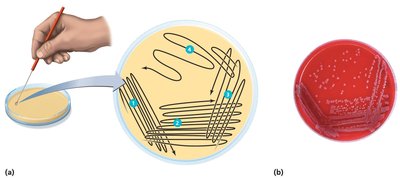
Pure cultures arise from a single progenitor cell (colony-forming unit, CFU).
Aseptic technique prevents contamination.
Common isolation methods:
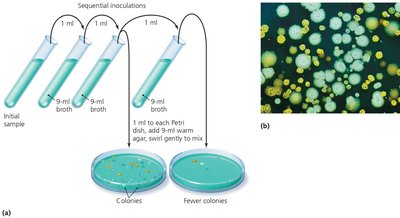
Streak plate method
Pour plate method
Culture Media
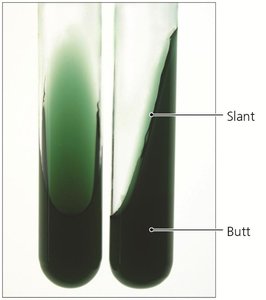
Media can be liquid (broth) or solid (agar-based).
Types of media:
Defined (synthetic) media: Exact chemical composition known.
Complex media: Contains extracts; composition varies.
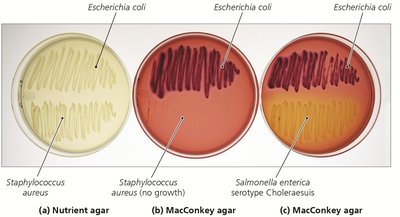
Selective media: Favors or inhibits specific microbes.
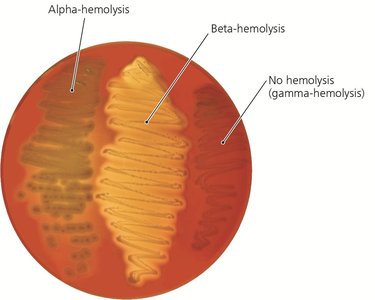
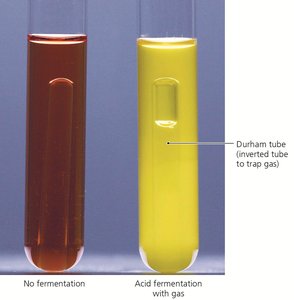
Differential media: Distinguishes microbes by visible changes.
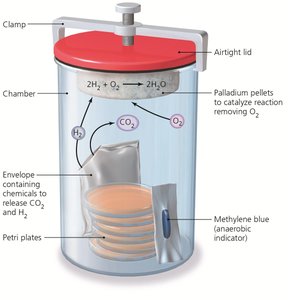
Anaerobic media: Supports growth of anaerobes.
Transport media: Maintains and preserves specimens during transport.
Growth of Microbial Populations
Binary Fission and Generation Time
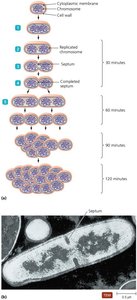
Most bacteria reproduce by binary fission, producing two daughter cells from one parent cell.
Generation time is the time required for a cell to divide; it depends on environmental conditions.
Population Growth Patterns
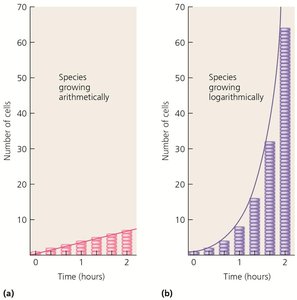
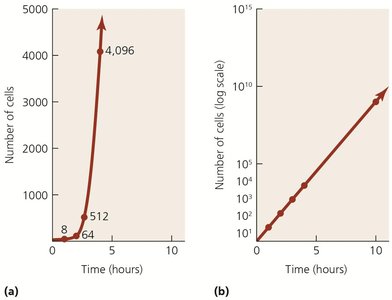
Bacterial populations grow logarithmically (exponentially) under optimal conditions.
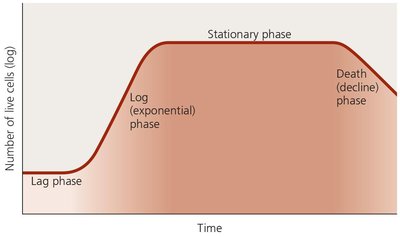
Growth curve phases:
Lag phase: Adaptation, little division.
Log (exponential) phase: Rapid cell division.
Stationary phase: Nutrient depletion slows growth; cell death equals cell division.
Death (decline) phase: Cells die faster than they divide.

Continuous Culture
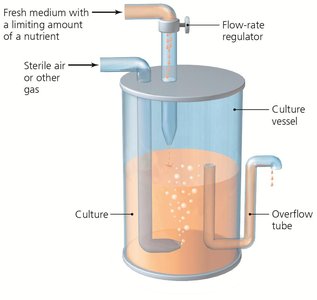
A chemostat maintains a microbial population in a particular phase by continuously adding fresh medium and removing old medium.
Used in industrial microbiology for consistent product yield.
Measuring Microbial Growth
Direct methods (no incubation):
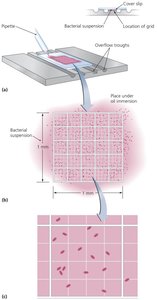
Microscopic counts
Electronic counters (Coulter counter, flow cytometry)
Direct methods (with incubation):
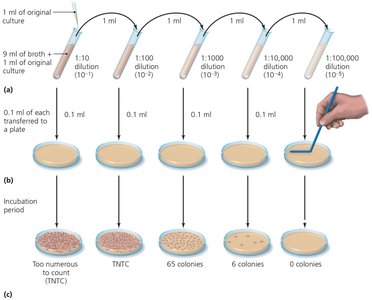
Serial dilution and viable plate counts
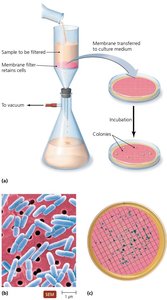
Membrane filtration
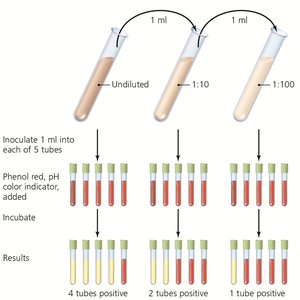
Most probable number (MPN)
Indirect methods:
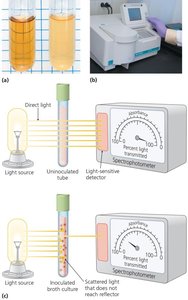
Turbidity (measured by spectrophotometry)
Metabolic activity
Dry weight
Molecular methods (e.g., DNA quantification)
Summary Table: Types of Microbial Nutrition
Energy Source | Carbon Source | Type | Examples |
|---|---|---|---|
Light | CO2 | Photoautotroph | Plants, algae, cyanobacteria |
Chemicals | CO2 | Chemoautotroph | Hydrogen, sulfur, nitrifying bacteria |
Light | Organic compounds | Photoheterotroph | Green and purple nonsulfur bacteria |
Chemicals | Organic compounds | Chemoheterotroph | Most animals, fungi, protozoa, many bacteria |
Key Equations
Bacterial population after n generations:
Generation time (g): where t = total time, n = number of generations
Clinical and Applied Context
Biofilms are significant in medical settings due to their resistance to antibiotics and role in chronic infections.
Selective and differential media are crucial for identifying pathogens in clinical specimens.
Measuring microbial growth is essential for infection control, water quality assessment, and industrial microbiology.
