 Back
BackMicrobial Nutrition and Growth: Chapter 6 Notes
Study Guide - Smart Notes
 Tailored notes based on your materials, expanded with key definitions, examples, and context.
Microbial Nutrition and Growth
Growth Requirements
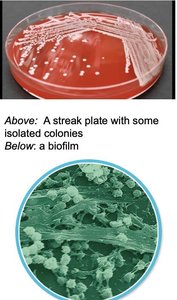
Microbial growth refers to the increase in the population of microbes, primarily due to the reproduction of individual cells. This growth can result in the formation of discrete colonies or complex communities known as biofilms.
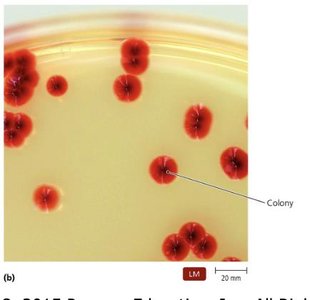
Colony: An aggregation of cells arising from a single parent cell.
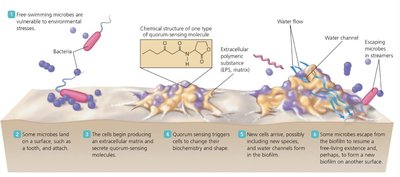
Biofilm: A collection of microbes living on a surface in a complex community.
Nutritional Requirements
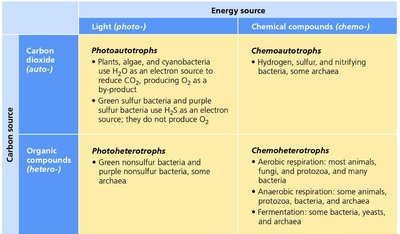
Microorganisms require various nutrients for energy and to build cellular structures. The most common elements needed are carbon, oxygen, nitrogen, and hydrogen. Microbes are classified based on their sources of carbon and energy:
Autotrophs: Use carbon dioxide as a carbon source (make their own food).
Heterotrophs: Use organic compounds as a carbon source (consume food).
Phototrophs: Obtain energy from light.
Chemotrophs: Obtain energy from chemical compounds.
Carbon Source | Energy Source | Examples |
|---|---|---|
CO2 (auto-) | Light (photo-) | Photoautotrophs: Plants, algae, cyanobacteria |
CO2 (auto-) | Chemical compounds (chemo-) | Chemoautotrophs: Hydrogen, sulfur, nitrifying bacteria |
Organic compounds (hetero-) | Light (photo-) | Photoheterotrophs: Green and purple nonsulfur bacteria |
Organic compounds (hetero-) | Chemical compounds (chemo-) | Chemoheterotrophs: Most animals, fungi, protozoa, many bacteria |
Oxygen Requirements
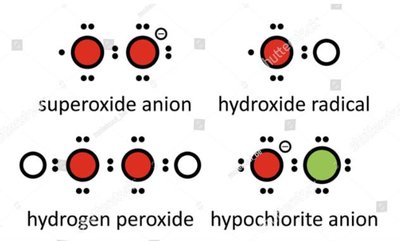
Oxygen is essential for some organisms but toxic to others due to the formation of reactive oxygen species (ROS):
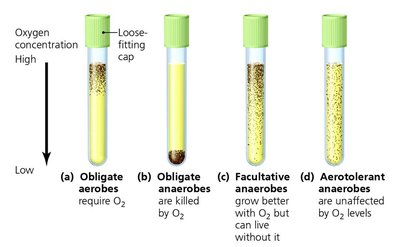
Obligate aerobes: Require oxygen for growth.
Obligate anaerobes: Oxygen is toxic; they cannot survive in its presence.
Facultative anaerobes: Grow better with oxygen but can survive without it (e.g., E. coli).
Aerotolerant anaerobes: Do not use oxygen but can tolerate it.
Microaerophiles: Require low levels of oxygen (2–10%).
Nitrogen, Phosphorus, Sulfur, and Growth Factors
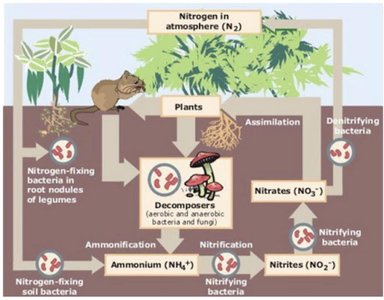
Nitrogen is essential for the synthesis of amino acids and nucleotides. Some bacteria can fix atmospheric nitrogen, making it available for other organisms. Other elements such as phosphorus and sulfur are also required, along with trace elements and growth factors (organic molecules that some microbes cannot synthesize).
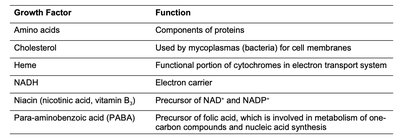
Growth Factor | Function |
|---|---|
Amino acids | Components of proteins |
Cholesterol | Used by mycoplasmas for cell membranes |
Heme | Functional portion of cytochromes in electron transport |
NADH | Electron carrier |
Niacin (vitamin B3) | Precursor of NAD+ and NADP+ |
PABA | Precursor of folic acid |
Physical Requirements for Growth
Temperature
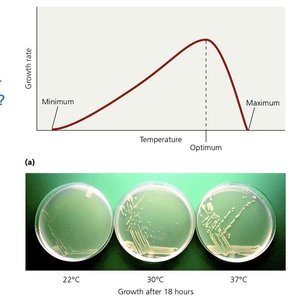
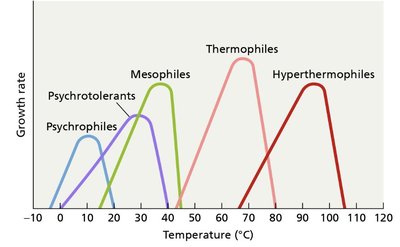
Temperature affects the structure of proteins and the fluidity of membranes. Microbes are classified based on their preferred temperature ranges:
Psychrophiles: Grow best at low temperatures (below 20°C).
Mesophiles: Grow best at moderate temperatures (20–45°C); most human pathogens are mesophiles.
Thermophiles: Grow best at high temperatures (above 45°C).
Hyperthermophiles: Grow best at extremely high temperatures (above 80°C).
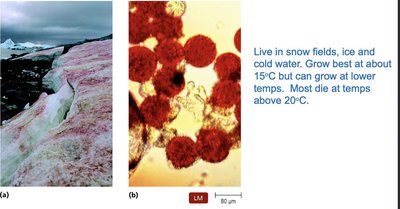
pH
Microorganisms are sensitive to changes in acidity, which can affect hydrogen bonding in proteins and nucleic acids.
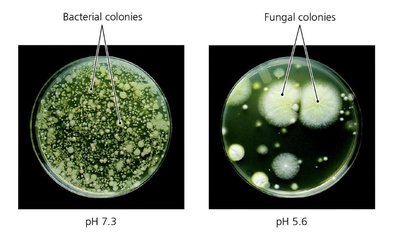
Neutrophiles: Grow best at neutral pH (6.5–7.5); most pathogens are neutrophiles.
Acidophiles: Grow best in acidic environments.
Alkalinophiles: Grow best in alkaline environments.
Water, Osmotic Pressure, and Hydrostatic Pressure
Water is essential for microbial metabolism. Osmotic pressure and hydrostatic pressure influence microbial survival:
Halophiles: Require or tolerate high salt concentrations.
Barophiles: Live under high hydrostatic pressure, such as in deep ocean environments.
Culturing Microorganisms
Culture and Inoculation
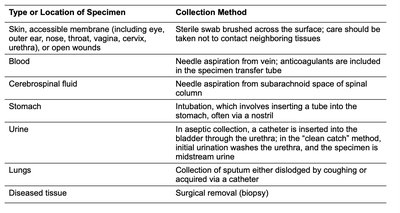
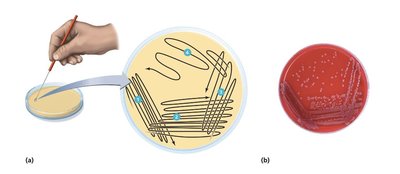
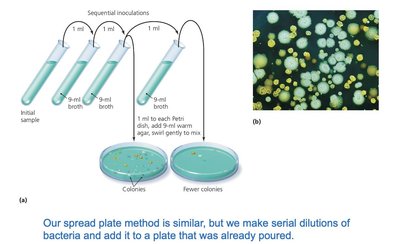
Microorganisms are cultivated in nutrient-rich media. Inocula can be obtained from environmental, clinical, or stored specimens. Pure cultures are obtained using aseptic techniques and isolation methods such as streak plates and pour plates.
Colony Characteristics
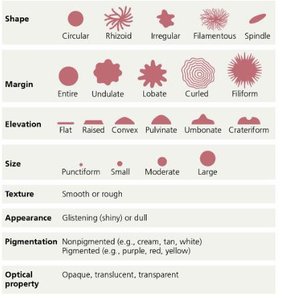
Bacterial colonies can be described by their shape, margin, elevation, size, texture, appearance, pigmentation, and optical properties.
Biofilms and Microbial Associations
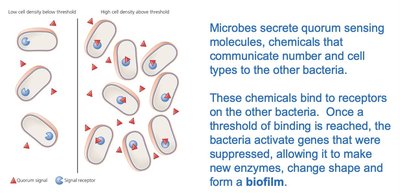
Microbes often live in complex associations, including antagonistic, synergistic, and symbiotic relationships. Biofilms are structured communities formed through quorum sensing, making microbes more resistant to environmental stresses and antimicrobial agents.
Culture Media Types
Various types of media are used to culture microorganisms:
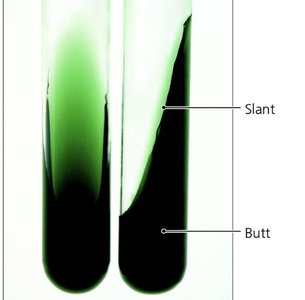
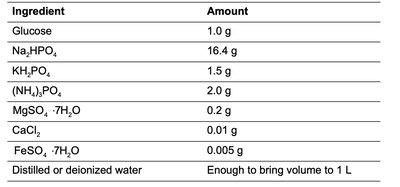
Defined (synthetic) media: Exact chemical composition is known.
Complex media: Contains nutrients from partially digested organic sources; composition is not precisely known.
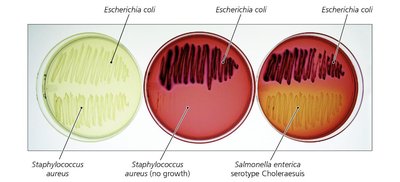
Selective media: Favors or inhibits the growth of certain microbes.
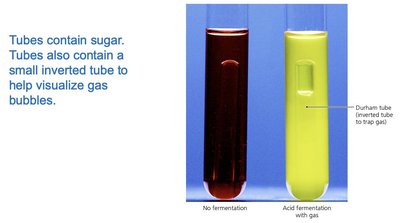
Differential media: Distinguishes microbes based on their biological characteristics.
Anaerobic media: Supports the growth of anaerobes.
Transport media: Used to preserve and transport clinical specimens.
Examples of Selective and Differential Media
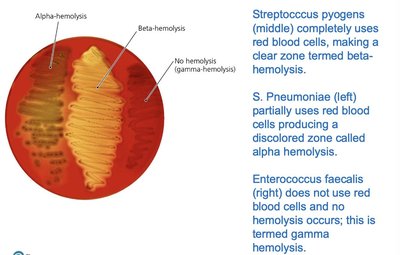
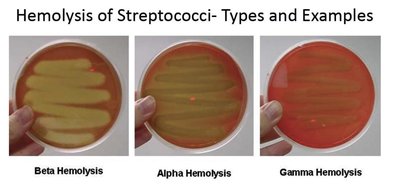
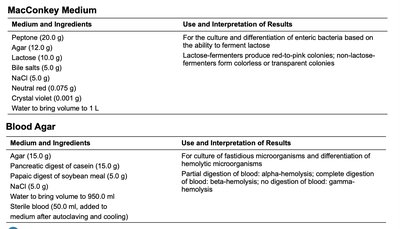
Blood agar: Differentiates bacteria based on hemolysis patterns (alpha, beta, gamma).
MacConkey agar: Selects for Gram-negative bacteria and differentiates lactose fermenters.
Anaerobic Culture Systems
Anaerobic jars and chambers are used to cultivate anaerobic bacteria by removing oxygen from the environment.
Preserving Cultures
Refrigeration: Short-term storage.
Deep-freezing: Long-term storage in glycerol solution.
Lyophilization: Freeze-drying for decades-long preservation.
Growth of Microbial Populations
Binary Fission
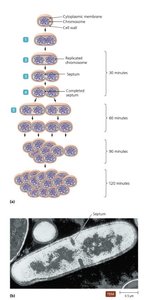
Most bacteria reproduce by binary fission, a process in which one cell divides into two identical daughter cells. This process involves DNA replication, septum formation, and cell division.
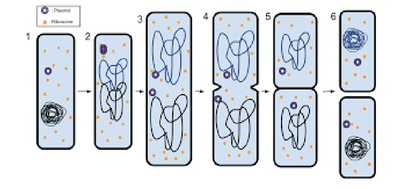
Generation Time and Growth Curves
Generation time is the period required for a bacterial cell to divide. Microbial populations grow exponentially (logarithmically) under optimal conditions.
Arithmetic growth: Linear increase in cell number.
Logarithmic growth: Exponential increase in cell number.
Continuous Culture
A chemostat is used to maintain microbial populations in a particular phase of growth by continuously adding fresh medium and removing old medium. This is important in industrial microbiology.
Measuring Microbial Reproduction
Estimating microbial numbers is essential for clinical, environmental, and industrial applications. Methods include:
Direct methods: Microscopic counts, electronic counters (Coulter counter, flow cytometry), serial dilution and viable plate counts, membrane filtration, most probable number (MPN).
Indirect methods: Turbidity measurement using spectrophotometry.
Case Study: Listeria monocytogenes
Listeria monocytogenes is a bacterium that can survive in diverse environmental conditions and cause serious infections, especially in immunocompromised individuals. It can be identified using selective and differential media, and some antibiotics used to treat listeriosis inhibit bacterial enzymes.
