 Back
BackMicrobial Nutrition and Growth: Study Notes for Microbiology Majors
Study Guide - Smart Notes
 Tailored notes based on your materials, expanded with key definitions, examples, and context.
Microbial Nutrition and Growth
Growth Requirements
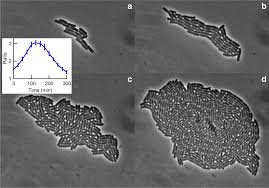
Microbial growth refers to an increase in the population of microbes, not the size of individual cells. Growth depends on the metabolism of essential nutrients such as carbon, oxygen, nitrogen, and hydrogen. Microbes may form discrete colonies (aggregations from a single parent cell) or biofilms (communities living on surfaces).
Colony: Aggregation of cells from a single parent cell.
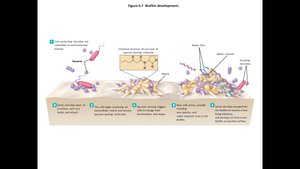
Biofilm: Collection of microbes living together on a surface, often with enhanced virulence and resistance.
Nutrients: Chemical and Energy Requirements
Microorganisms require a carbon source, energy source, and a source of electrons or hydrogen atoms. They are classified based on their sources:
Autotrophs: Use CO2 as a carbon source.
Heterotrophs: Catabolize organic molecules from other organisms.
Chemotrophs: Obtain energy from chemicals.
Phototrophs: Obtain energy from light.
Organotrophs: Acquire electrons from organic sources.
Lithotrophs: Acquire electrons from inorganic sources.

Limiting nutrients can halt metabolism and growth if absent.
Oxygen Requirements
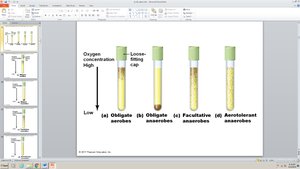
Microbes differ in their oxygen requirements, which relate to their metabolic pathways and tolerance to toxic oxygen forms:
Obligate aerobes: Require oxygen as the final electron acceptor.
Obligate anaerobes: Cannot tolerate oxygen; use other electron acceptors.
Facultative anaerobes: Can use fermentation or anaerobic respiration.
Aerotolerant anaerobes: Do not use aerobic metabolism but can detoxify oxygen.
Microaerophiles: Require low oxygen levels (2–10%).
Toxic Forms of Oxygen
Singlet oxygen (O2): Highly reactive; removed by carotenoids.
Superoxide radicals (O2–): Detoxified by superoxide dismutases.
Peroxide anion (O22–): Catalyzed by superoxide dismutase and catalase.
Hydroxyl radicals (OH–): Most reactive; formed by ionizing radiation.
Catalase Test
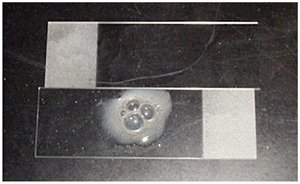
Catalase is an enzyme found in organisms exposed to oxygen. It catalyzes the breakdown of hydrogen peroxide:
Reaction:

Nitrogen Requirements
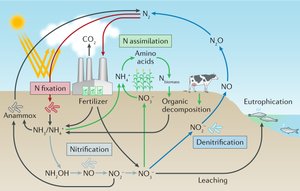
Nitrogen is a growth-limiting nutrient, essential for amino acids and nucleotides. Most cells recycle nitrogen, but only certain bacteria can fix atmospheric nitrogen (N2), making it available for life on Earth.
Nitrogen fixation: Conversion of atmospheric nitrogen to usable forms by bacteria.
Other Chemical Requirements
Microbes require additional elements and growth factors:
Phosphorus, Sulfur, Calcium, Manganese, Magnesium, Copper, Iron: Essential for various cellular functions.
Trace elements: Required in small amounts (e.g., selenium, zinc).
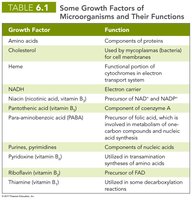
Growth factors: Organic molecules not synthesized by certain organisms (e.g., vitamins).
Growth Factor | Function |
|---|---|
Amino acids | Components of proteins |
Cholesterol | Used by mycoplasmas for cell membranes |
Heme | Functional portion of cytochromes in electron transport |
NADH | Electron carrier |
Vitamins | Various metabolic functions |
Physical Requirements
Temperature
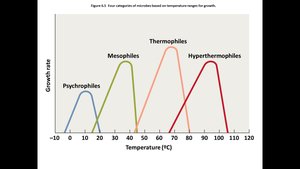
Temperature affects protein structure and membrane fluidity. Microbes are classified by their temperature preferences:
Psychrophiles: Grow at low temperatures.
Mesophiles: Grow at moderate temperatures.
Thermophiles: Grow at high temperatures.
Hyperthermophiles: Grow at extremely high temperatures.

pH
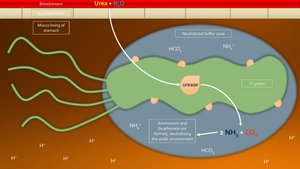
Microorganisms are sensitive to acidity:
Neutrophiles: Grow near neutral pH (6.5–7.5).
Acidophiles: Grow in acidic habitats (pH 0–5).
Alkalinophiles: Grow in alkaline environments (pH 9–12).
Physical Effects of Water
Water is essential for dissolving nutrients and enzymes. Two key effects:
Osmotic pressure: Pressure exerted by water on a membrane; obligate halophiles require high osmotic pressure.
Hydrostatic pressure: Pressure exerted by water depth; barophiles require high pressure for membrane and enzyme function.
Associations and Biofilms
Microbes often live in associations with other species:
Antagonistic: One organism harms another.
Synergistic: Cooperative association.
Symbiotic: Close nutritional or physical contact, often interdependent.
Biofilms are complex associations of microorganisms, often more virulent and resistant. Quorum sensing molecules allow bacteria to respond to population density and attach to surfaces.
Culturing Microorganisms
Clinical Sampling
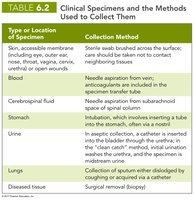
Microbiologists transfer an inoculum from a specimen into a medium. Samples must be properly labeled and transported to avoid pathogen death.
Type/Location of Specimen | Collection Method |
|---|---|
Blood | Needle aspiration from vein |
Urine | In aseptic collection, catheter inserted into bladder |
Lungs | Collection of sputum |
Obtaining Pure Cultures
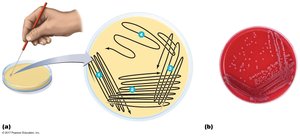
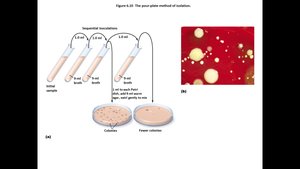
Suspected pathogens must be isolated from normal microbiota. Pure cultures are obtained from a single colony-forming unit (CFU) using sterile techniques.
Streak-plate method: Inoculum spread across surface to isolate colonies.
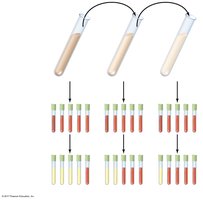
Pour-plate technique: CFUs separated by serial dilution.
Culture Media
Microorganisms vary in nutritional requirements. Media types include:
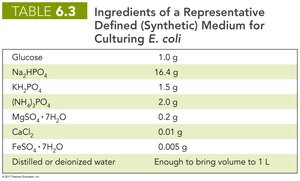
Defined (synthetic) medium: Precise chemical composition.
Complex media: Contains partially digested materials and special growth factors.
Enriched media: Addition of specific growth factors.
Selective media: Favors growth of particular microorganisms.
Differential media: Visible changes in medium or colonies.
Anaerobic (reducing) media: Removes free oxygen.
Transport media: Moves specimens safely.
Special Culture Techniques
Animal and Cell Culture: Used for viruses and fastidious organisms.
Low-Oxygen Culture: Carbon dioxide incubators and candle jars.
Preserving Cultures
Refrigeration (4°C): Short-term storage.
Deep-freezing (-80°C): Long-term storage.
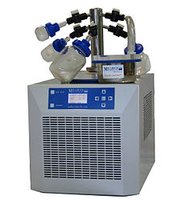
Lyophilization: Freeze-drying for decades-long preservation.


Growth of Microbial Populations
Binary Fission and Generation Time
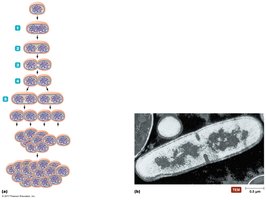
Most bacteria reproduce by binary fission, where a cell grows and divides into two daughter cells. Generation time is the period required for a population to double.
Binary fission: Cell grows, replicates DNA, forms septum, and divides.
Generation time: Typically 1–3 hours; optimum conditions can be as short as 20 minutes.
Mathematical Considerations in Population Growth
Microbial populations grow exponentially. The number of cells after n generations is calculated as:
Formula:
Logarithmic growth: Rapid increase in cell numbers.

Phases of Microbial Population Growth
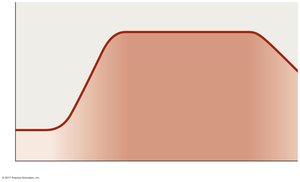
A typical microbial growth curve has four phases:
Lag phase: Adjustment, no growth.
Log (exponential) phase: Active growth.
Stationary phase: Rate of cell production equals rate of cell death.
Death (decline) phase: Cells die faster than they are replaced.
Continuous Culture in a Chemostat
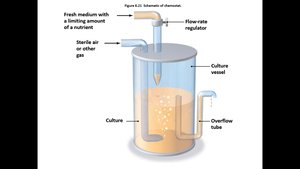
A chemostat is an open system device that maintains cultures in a single phase by supplying fresh medium and removing spent medium, allowing for constant production of microbial products.
Measuring Microbial Reproduction
Microbiologists estimate population size using direct and indirect methods:
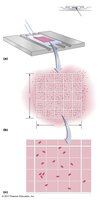
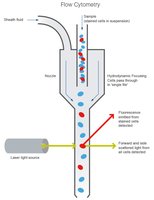
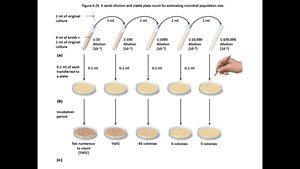
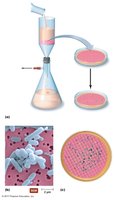
Direct methods: Cell counters (Petroff-Hausser chamber), electronic counters (Coulter counter), flow cytometry, serial dilution and viable plate counts, membrane filtration, most probable number.
Indirect methods: Turbidity (cloudiness), spectrophotometry, metabolic activity, dry weight, genetic methods.

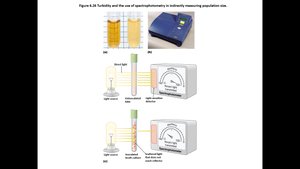
Example: Turbidity increases as bacterial numbers rise in broth, which can be measured using a spectrophotometer.
Summary Table: Microbial Growth Phases
Phase | Description |
|---|---|
Lag | Adjustment, no growth |
Log | Active, exponential growth |
Stationary | Growth rate equals death rate |
Death | Death rate exceeds growth rate |
Additional info: These notes expand brief points into full academic explanations, including definitions, examples, and relevant equations for microbiology students.
