 Back
BackMicrobial Nutrition and Metabolism: Essential Elements, Pathways, and Growth Factors
Study Guide - Smart Notes
 Tailored notes based on your materials, expanded with key definitions, examples, and context.
Metabolism and Nutrient Requirements in Microorganisms
Introduction to Microbial Metabolism and Nutrients
Microorganisms require a variety of chemical elements and compounds to sustain life, grow, and reproduce. These nutrients are involved in metabolic pathways that enable the synthesis of cellular components and energy generation. Understanding the types and roles of these nutrients is fundamental to microbiology.
Essential Elements for Microbial Life
Microbial Periodic Table of Elements
Microorganisms utilize a range of elements, some of which are essential for all, while others are required only by specific groups. The periodic table can be categorized based on microbial requirements:
Essential for all microorganisms: C, H, O, N, P, S, K, Mg, Ca, Fe, etc.
Essential cations/anions for most microorganisms: Na, Cl, etc.
Trace metals: Mn, Zn, Co, Cu, Mo, Ni, etc.
Used for special functions: Se, W, etc.
Unessential, but metabolized: Some elements are metabolized but not required for growth.
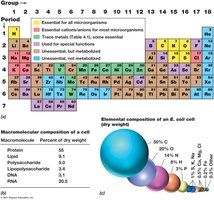
Elemental and Macromolecular Composition of a Bacterial Cell
The elemental composition of a typical bacterial cell (e.g., Escherichia coli) is dominated by a few key elements, with macromolecules making up the majority of cellular dry weight:
Major elements: C, O, N, H, P, S, K, Mg, Ca, Na
Macromolecules: Protein (~55%), Lipid (~9.1%), Polysaccharide (~5.0%), Lipopolysaccharide (~3.4%), DNA (~3.1%), RNA (~20.5%)
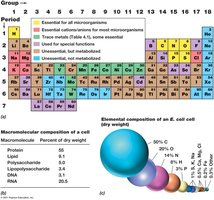
Macronutrients: Major Elements Required in Large Amounts
Carbon
Carbon is a fundamental building block for all organic molecules in cells, including amino acids, fatty acids, sugars, and nucleic acids. Microorganisms acquire carbon through two main strategies:
Autotrophs: Use CO2 as their sole or principal carbon source, fixing it into organic molecules via pathways such as the Calvin-Benson cycle, reverse citric acid cycle, hydroxypropionate pathway, and acetyl-CoA pathway.
Heterotrophs: Obtain carbon from preformed organic compounds, utilizing similar metabolic pathways but with different entry points.
Autotrophs: Carbon Fixation Pathways
Calvin-Benson Cycle: The primary pathway for CO2 fixation in photoautotrophic eukaryotes (chloroplasts) and many autotrophic bacteria (carboxysomes). Produces hexose sugars or storage polymers like glycogen or starch.
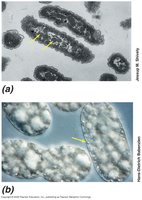
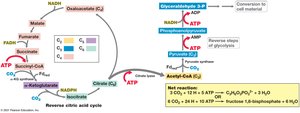
Reverse Citric Acid Cycle: Used by photosynthetic green sulfur bacteria (e.g., Chlorobium) and some chemolithotrophic Bacteria and Archaea.
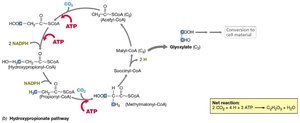
Hydroxypropionate Pathway: Utilized by green nonsulfur bacteria (e.g., Chloroflexus) and some Archaea (Thaumarchaeota).
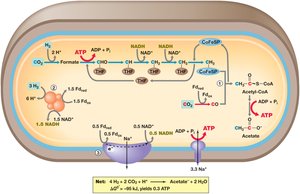
Acetyl-CoA Pathway: Used by acetogenic bacteria (e.g., Acetobacterium woodii) for the production of acetate from CO2 and H2.
Heterotrophs
Heterotrophs use organic compounds as their carbon source. Many chemoorganotrophs, and some phototrophs and chemolithotrophs (mixotrophs), fall into this category. They often share metabolic pathways with autotrophs but differ in the entry points of carbon substrates.
Oxygen Requirements and Relationships
Oxygen in Microbial Environments
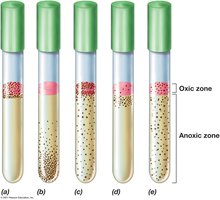
Microorganisms are classified based on their oxygen requirements:
Aerobes: Require oxygen for growth.
Anaerobes: Grow in the absence of oxygen; some are killed by oxygen.
Facultative aerobes: Can grow with or without oxygen.
Microaerophiles: Require low levels of oxygen.
Aerotolerant anaerobes: Do not use oxygen but tolerate its presence.
Testing Oxygen Requirements: Thioglycolate Broth
Thioglycolate broth contains a reducing agent that removes oxygen, creating an oxygen gradient. The position of microbial growth in the tube indicates oxygen requirements.
Laboratory Cultivation of Aerobes and Anaerobes
Aerobes: Require oxygenated media, achieved by shaking or bubbling sterile air.
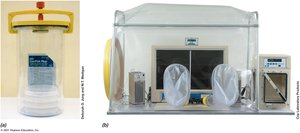
Anaerobes: Require exclusion of oxygen, using sealed containers, reducing agents, anoxic jars, or glove boxes.
Toxic Forms of Oxygen and Detoxification
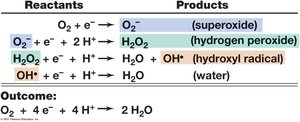
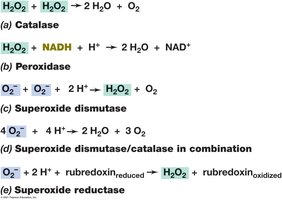
Oxygen metabolism can produce toxic derivatives such as singlet oxygen, superoxide, hydrogen peroxide, and hydroxyl radicals. Microorganisms possess enzymes to neutralize these species:
Catalase
Peroxidase
Superoxide dismutase
Superoxide reductase
Nitrogen, Phosphorus, Sulfur, Potassium, Magnesium, Calcium, and Sodium
Nitrogen
Nitrogen is essential for the synthesis of amino acids and nucleic acids. Microorganisms acquire nitrogen through various mechanisms:
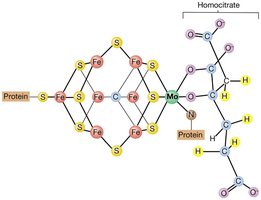
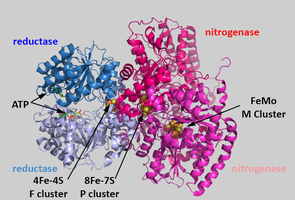
Nitrogen fixation: Conversion of atmospheric N2 to ammonia (NH3) by nitrogenase enzyme, found in certain bacteria and archaea.
Nitrification: Non-nitrogen fixers (nitrifiers) use ammonia and nitrite as sources.
Oxygen Sensitivity of Nitrogenase
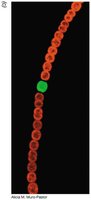
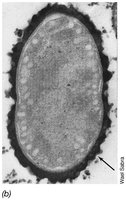
Nitrogenase is inhibited by oxygen. Some microorganisms, such as cyanobacteria, form specialized cells called heterocysts to protect nitrogenase from oxygen. Capsules can also slow oxygen diffusion.
Phosphorus, Sulfur, Potassium, and Magnesium
These elements are required for nucleic acids, ATP, coenzymes, and enzyme function. Sulfur is found in amino acids (cysteine, methionine), while potassium and magnesium are important for enzyme activity and ribosome stability.
Calcium and Sodium
Calcium: Stabilizes cell walls and is a component of endospores (calcium-dipicolinic acid complex).
Sodium: Important for marine microorganisms, stabilizes cell walls, and is used by Na+-powered ATP synthase.
Micronutrients and Growth Factors
Micronutrients (Trace Elements)
Microorganisms require trace amounts of certain metals (e.g., Fe, Mn, Zn, Co, Cu, Mo, Ni) for enzyme function. Iron is especially important for electron transport proteins.
Iron Acquisition: Siderophores
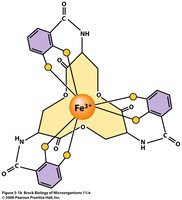
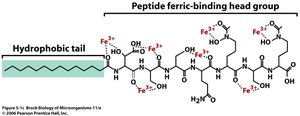
Siderophores are molecules that bind and transport iron into the cell. Examples include enterobactins (produced by Escherichia coli and Salmonella typhimurium) and aquachelins (produced by marine bacteria).
Growth Factors
Growth factors are organic compounds required in small amounts, such as vitamins, amino acids, purines, and pyrimidines. Not all microorganisms require the same growth factors, as many can synthesize them internally.
Summary Table: Macronutrients and Their Functions
Element | Major Function | Example Source |
|---|---|---|
Carbon (C) | Structural backbone of organic molecules | CO2, organic compounds |
Nitrogen (N) | Amino acids, nucleic acids | N2, NH3, NO3- |
Oxygen (O) | Component of water, organic molecules | O2, H2O |
Phosphorus (P) | Nucleic acids, ATP | PO43- |
Sulfur (S) | Amino acids, coenzymes | SO42-, organic S |
Potassium (K) | Enzyme activation | K+ |
Magnesium (Mg) | Stabilizes ribosomes, membranes | Mg2+ |
Calcium (Ca) | Cell wall stability, endospores | Ca2+ |
Sodium (Na) | Cell wall stability, ATP synthesis | Na+ |
