Back
BackMicrobial Nutrition, Growth, and Biofilms: Study Notes
Study Guide - Smart Notes
 Tailored notes based on your materials, expanded with key definitions, examples, and context.
Microbial Nutrition and Growth
Microbial Growth Patterns
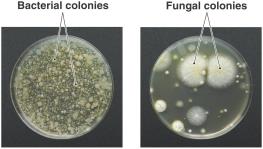
Microbial growth refers to an increase in the number of cells, not the size of individual cells. Microbes can grow in various patterns depending on their environment:
Discrete colonies: Aggregations of cells visible on the surface of solid media.
Dispersed cells: Single cells suspended in liquid media.
Complex biofilms: Communities of one or more species of bacteria attached to surfaces.
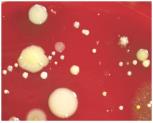
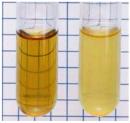
Biofilms are especially important in nature and medicine due to their resistance to antimicrobials and their role in chronic infections.
Growth of Microbial Populations
Bacterial populations can increase rapidly due to logarithmic (exponential) growth, where each cell divides to form two new cells. This leads to a rapid increase in cell numbers over time.
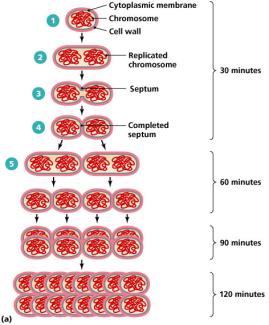
In contrast, arithmetic growth is much slower and not typical for microbial populations.
Clinical Sampling
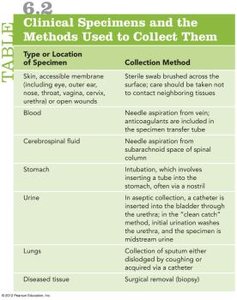
Clinical specimens are human materials examined for the presence of microbes. Proper collection, technique, and timely delivery are essential for accurate diagnosis. The physician is primarily responsible for ensuring proper specimen collection and delivery.
Culture Media
Most microorganisms have never been grown in any culture medium. There are several types of media used for culturing and diagnosing microbes:
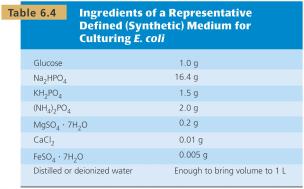
Defined (synthetic) media: Exact chemical composition is known.
Complex media: Contains nutrients from extracts and digests of yeasts, meat, or plants.
Selective media: Suppresses unwanted microbes and encourages desired microbes.
Differential media: Distinguishes between different types of microbes based on their biological characteristics.
Anaerobic media: Supports the growth of anaerobes.
Transport media: Used to transport specimens to the laboratory.
Phases of Microbial Growth
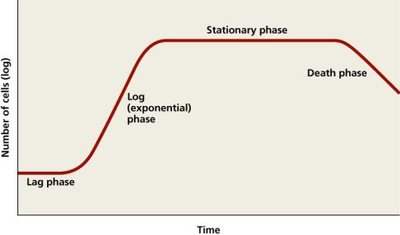
Microbial populations in batch culture typically exhibit four distinct growth phases:
Lag phase: Cells adjust to their environment; little to no cell division.
Log (exponential) phase: Rapid cell division; cells are most sensitive to antimicrobials.
Stationary phase: Growth rate slows as nutrients are depleted and waste accumulates.
Death phase: Cells die faster than new cells are produced.
Nutritional and Physical Requirements for Growth
Microbes are classified based on their nutritional and physical requirements:
Nutritional requirements: Energy and carbon sources, essential elements (e.g., nitrogen, phosphorus, sulfur), and growth factors.
Physical requirements: Temperature, pH, osmotic pressure, and presence of other microbes.
Energy and Carbon Sources
Phototrophs: Obtain energy from light.
Chemotrophs: Obtain energy from chemicals.
Autotrophs: Use CO2 as a carbon source (e.g., via Calvin-Benson cycle).
Heterotrophs: Use organic molecules (e.g., glucose, proteins, fats) as carbon sources.
Oxygen Requirements
Aerobes: Require oxygen for growth.
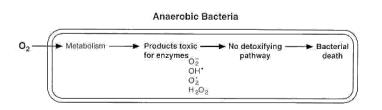
Anaerobes: Cannot tolerate oxygen.
Aerotolerant anaerobes: Can grow with or without oxygen.
Facultative anaerobes: Prefer oxygen but can grow without it.
Microaerophiles: Require low levels of oxygen (2-10%).
Toxic Forms of Oxygen
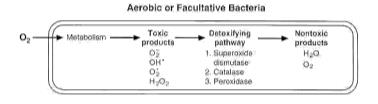
Oxygen can be toxic due to the formation of reactive oxygen species (ROS) such as singlet oxygen, superoxide radicals, peroxide anion, and hydroxyl radicals. These can damage proteins, lipids, and nucleic acids.
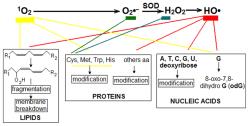
Microbes possess detoxifying enzymes such as superoxide dismutase (SOD), catalase, and peroxidase to neutralize these toxic forms.
Nitrogen, Phosphorus, Sulfur, and Other Requirements
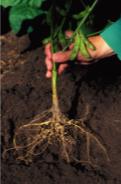
Nitrogen: Essential for protein and nucleotide synthesis. Some bacteria fix atmospheric nitrogen (e.g., Azospirillum, Rhizobium).
Phosphorus: Needed for nucleic acids, ATP, and membranes.
Sulfur: Found in amino acids and vitamins.
Trace elements: Inorganic ions required in small amounts.
Growth factors: Organic compounds that some organisms cannot synthesize (e.g., vitamins, amino acids).
Physical Factors Affecting Growth
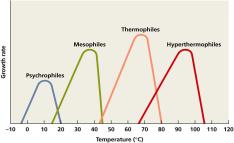
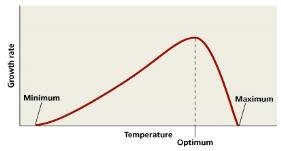
Temperature: Microbes have optimal temperature ranges for growth:
Psychrophiles: -5 to 20°C
Mesophiles: 15 to 45°C
Thermophiles: 40 to 80°C
Extreme thermophiles: 80 to 121°C
pH: Most bacteria grow best near neutral pH (neutrophiles), but some prefer acidic (acidophiles) or basic (alkalinophiles) environments.
Water: Essential for microbial metabolism. Some microbes tolerate or require high salt (halophiles) or high pressure (barophiles).
Biofilms
Nature and Importance of Biofilms
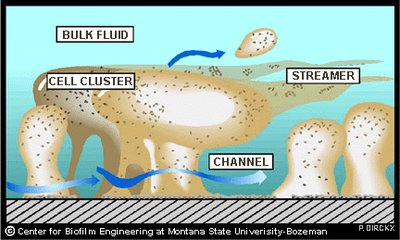
Biofilms are complex communities of microorganisms attached to surfaces and embedded in a self-produced extracellular matrix. They are common in nature and have significant medical and industrial implications.
Biofilms can form on abiotic surfaces (e.g., rocks, pipes) and biotic surfaces (e.g., tissues, teeth).
They provide protection to microbes, enhance resistance to antibiotics, and facilitate survival in harsh environments.
Biofilm-associated bacteria may require 1000x higher doses of antimicrobials for eradication compared to planktonic cells.
Examples and Clinical Relevance
Dental plaque, river slime, and biofilms in water pipes are common examples.
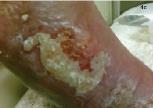
Biofilms are implicated in 80% of all bacterial infections, including those associated with pacemakers, catheters, and implants.
Biofilm Structure and Heterogeneity
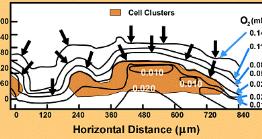
Biofilms are heterogeneous, with gradients of oxygen, pH, and nutrients. This leads to different metabolic activities within the biofilm.
Development of Biofilms
Biofilm formation involves several steps:
Initial interaction with a surface
Stable adhesion
Microcolony formation
Exopolysaccharide synthesis
Maturation into a complex structure
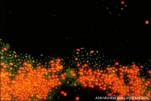
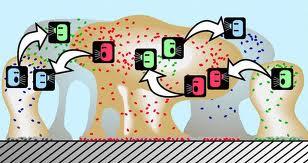
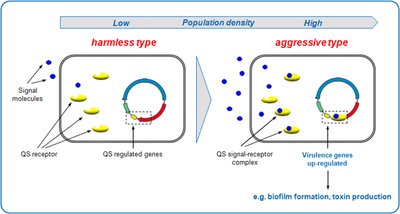
Gene regulation in biofilms is controlled by quorum sensing, a cell-to-cell signaling mechanism that allows bacteria to coordinate gene expression based on population density.
Quorum Sensing
Quorum sensing involves the production and detection of signaling molecules called autoinducers. When a threshold concentration is reached, specific genes are activated, leading to changes such as increased capsule production or biofilm formation.
Biofilm Prevention
Some strategies to prevent biofilm formation include blocking quorum sensing signals. For example, furanones produced by red algae can inhibit homoserine lactone signaling molecules, disrupting biofilm development.