 Back
Microbial Nutrition, Growth, and Biofilms: Study Notes for MIC 205
Study Guide - Smart Notes
 Tailored notes based on your materials, expanded with key definitions, examples, and context.
Microbial Nutrition and Growth
Microbial Growth Patterns
Microbial growth refers to an increase in cell number, not cell size. Microbes can grow in various patterns depending on their environment and lifestyle.
Discrete colony: Aggregation of cells visible on the surface of solid media.
Dispersed cells: Single cells suspended in liquid media.
Complex biofilm: A community of one or more species of bacteria attached to a surface.
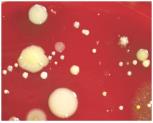
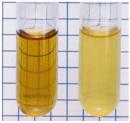
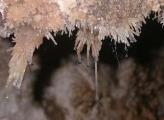
Example: Biofilms are commonly found on teeth (dental plaque), river stones, and medical devices.
Growth of Microbial Populations
Microbial populations grow rapidly, often following a logarithmic (exponential) pattern. This allows populations to reach millions of cells in a few hours.
Arithmetic growth: Linear increase in cell number.
Logarithmic growth: Exponential increase, doubling at regular intervals.
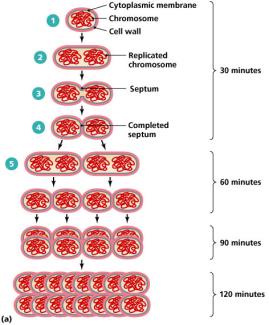
Equation: Where is the number of cells at time t, is the initial number of cells, and is the number of generations.
Clinical Sampling
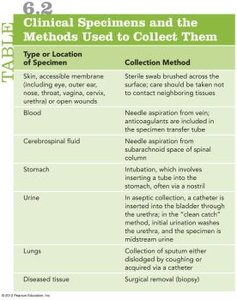
Clinical specimens are human materials examined for the presence of microbes. Proper collection, technique, and timely delivery are essential for accurate diagnosis.
Proper specimen: Correct type and site.
Technique: Sterile methods to avoid contamination.
Timely delivery: Prevents degradation or overgrowth.
Culture methods: Appropriate media and conditions.
Type or Location of Specimen | Collection Method |
|---|---|
Skin, accessible membrane | Sterile swab brushed across surface |
Blood | Needle aspiration from vein |
Cerebrospinal fluid | Needle aspiration from spinal column |
Stomach | Intubation, washing |
Urine | Catheterization or clean catch |
Lungs | Collection via coughing or catheter |
Disease tissue | Surgical removal (biopsy) |
Culture Media
Most microorganisms have never been grown in culture media. Various types of media are used for cultivation and diagnosis.
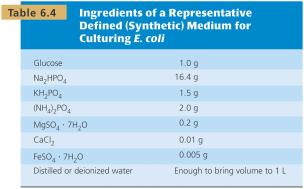
Defined (synthetic) media: Exact chemical composition is known.
Complex media: Contains nutrients from natural sources; composition is not fully known.
Selective media: Favors growth of specific microbes by inhibiting others.
Differential media: Distinguishes between organisms based on biochemical reactions.
Anaerobic media: Supports growth of anaerobes.
Transport media: Maintains viability during transport.
Ingredient | Amount (g/L) |
|---|---|
Glucose | 1.0 |
Na2HPO4 | 16.4 |
KH2PO4 | 1.5 |
(NH4)2SO4 | 2.0 |
MgSO4·7H2O | 0.2 |
CaCl2 | 0.01 |
FeSO4·7H2O | 0.005 |
Water | To 1 L |
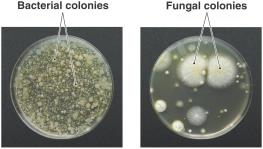
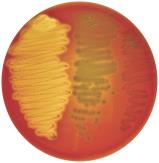
Example: Selective media with acidic pH selects for fungi by inhibiting bacterial growth. Differential media like blood agar distinguishes hemolytic activity.
Phases of Microbial Growth
Microbial populations undergo distinct growth phases in batch culture.
Lag phase: Cells adjust to environment; little growth.
Log (exponential) phase: Rapid cell division; cells most sensitive to antimicrobials.
Stationary phase: Growth rate slows; nutrients deplete, waste accumulates.
Death phase: Cell death exceeds cell division.
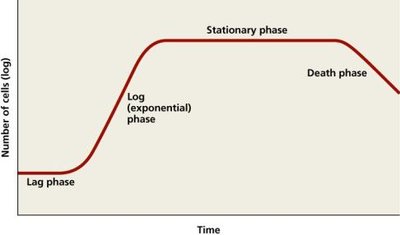
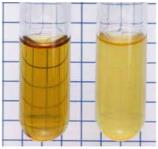
Example: Antibiotics are most effective during the log phase.
Microbial Classification by Nutritional and Physical Requirements
Microbes are classified based on their nutritional and physical requirements for growth.
Nutritional requirements: Energy and carbon sources, essential elements.
Physical requirements: Environmental factors such as temperature, pH, osmotic pressure.
Energy and Carbon Requirements
Microbes obtain energy and carbon from different sources.
Phototrophs: Use light as energy source.
Chemotrophs: Use chemicals as energy source.
Autotrophs: Use CO2 as carbon source (e.g., Calvin-Benson cycle).
Heterotrophs: Use organic molecules (glucose, proteins, fats) as carbon source.
Example: Cyanobacteria are photoautotrophs; Escherichia coli is a chemoheterotroph.
Oxygen Requirements
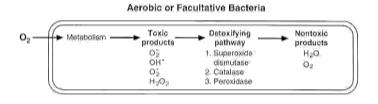
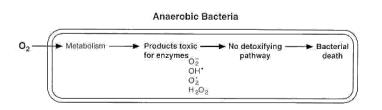
Microbes vary in their need for oxygen and their ability to detoxify its toxic forms.
Aerobes: Require oxygen for growth.
Anaerobes: Cannot tolerate oxygen.
Aerotolerant anaerobes: Grow with or without oxygen.
Facultative anaerobes: Prefer oxygen but can grow without it.
Microaerophiles: Require low levels of oxygen (2-10%).
Question: Why is oxygen essential for obligate aerobes but deadly for obligate anaerobes?
Answer: Toxic forms of oxygen (e.g., superoxide radicals, peroxide anion, hydroxyl radical) cause damage to proteins and lipids. Aerobes possess detoxifying enzymes; anaerobes do not.
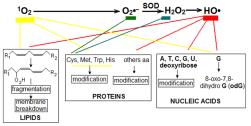
Detoxifying Enzymes
Enzymes protect cells from toxic oxygen species.
Superoxide dismutase (SOD): Converts superoxide radicals to hydrogen peroxide.
Catalase: Converts hydrogen peroxide to water and oxygen.
Peroxidase: Also detoxifies hydrogen peroxide.
Oxygen Classifications
Microbes are classified based on their oxygen requirements and ability to detoxify toxic forms.
Aerobes: Use oxygen as final electron acceptor; detoxify toxic forms.
Anaerobes: Use fermentation or other electron acceptors; cannot detoxify toxic forms.
Facultative anaerobes: Can use aerobic or anaerobic metabolism; detoxify toxic forms.
Aerotolerant anaerobes: Use fermentation; possess some detoxifying enzymes.
Microaerophiles: Require low oxygen; limited detoxification ability.
Nitrogen Requirements
Nitrogen is essential for protein and nucleotide synthesis. Anabolism may cease if nitrogen is insufficient.
Sources: Organic, inorganic, recycled amino acids and nucleotides.
Nitrogen fixation: Conversion of atmospheric N2 to ammonia (NH3) by certain bacteria (e.g., Azospirillum, Rhizobium).
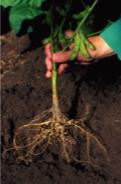
Example: Nitrogen-fixing bacteria are crucial for agriculture and ecosystem health.
Other Chemical Requirements
Microbes require additional elements and growth factors.
Phosphorus: Needed for membranes, DNA, RNA, ATP.
Sulfur: Component of amino acids and vitamins.
Trace elements: Minerals and inorganic ions, usually present in tap water.
Growth factors: Organic chemicals that some organisms cannot synthesize (e.g., vitamins, amino acids, nucleotides).
Effects of Temperature on Growth
Microbes exhibit maximal growth at specific optimum temperatures. Thermal energy affects protein and membrane structure.
Psychrophiles: Grow at 5–20°C.
Mesophiles: Grow at 15–45°C.
Thermophiles: Grow at 40–80°C.
Extreme thermophiles: Grow at 80–121°C.
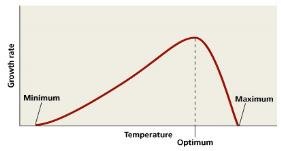
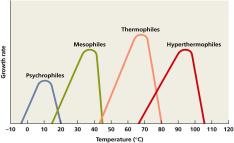
Equation: No organism can grow over the entire temperature range.
Hydrogen Ion Concentration (pH)
Most organisms are sensitive to acidity due to interference with hydrogen bonds in proteins and nucleic acids.
Neutrophiles: Grow best at pH 6.5–7.5.
Acidophiles: Grow best in acidic habitats.
Alkalinophiles: Grow in alkaline environments up to pH 11.5.
Physical Effects of Water
Water is essential for dissolving enzymes and nutrients. Most cells die without water, but some can survive in dormant phases (e.g., endospores, cysts).
Obligate halophiles: Grow in up to 30% salt.
Facultative halophiles: Tolerate high salt concentrations.
Barophiles: Live under extreme pressure.
Biofilms: Structure, Development, and Clinical Relevance
Biofilm Basics and Misconceptions
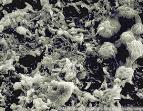
Biofilms are microbial communities attached to surfaces, often absent in pure cultures but prevalent in nature. Microbes can be sessile (attached) or planktonic (free-living).

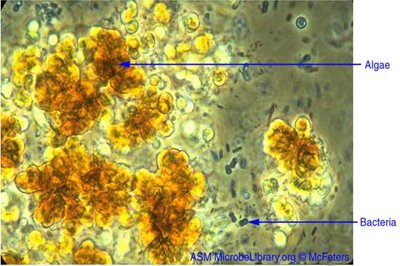
Example: Pure cultures are rare in nature; most microbes exist in biofilms.
Characteristics of Biofilms
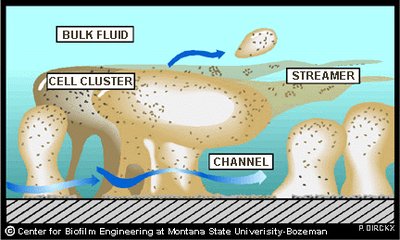
Biofilms are complex, multi-species communities with protective structures. They are highly resistant to antibiotics and disinfectants.
Attachment: On abiotic surfaces, host tissues, or liquid-air interfaces.
Protection: Structure shields cells from environmental threats.
Resistance: Up to 1000x more resistant to antibiotics; reduced drug activity.
Low metabolism: Cells within biofilms often have reduced metabolic rates.
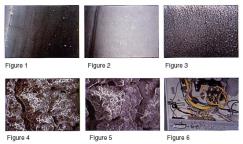
Example: Biofilms form on teeth, river stones, medical devices, and water pipes.
Biofilms and Infection
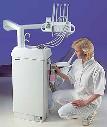
Biofilms are implicated in a wide range of infections, especially those associated with medical devices.
Pacemakers: Staphylococcus aureus
Cystic fibrosis pneumonia & burn patients: Pseudomonas aeruginosa
Urinary catheters: Escherichia coli
Orthopedic devices/breast implants: Staphylococcus epidermidis
Contact lens: Many gram-positive bacteria
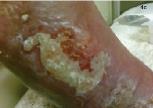

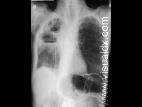

Statistic: 80% of all bacterial infections are in the form of a biofilm.
Biofilm Heterogeneity
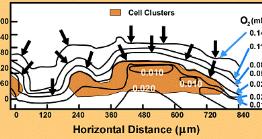
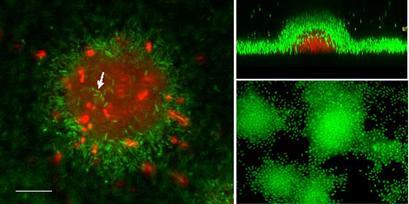
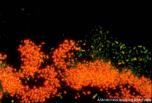
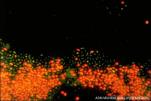
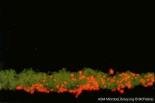
Biofilms contain microhabitats with gradients of oxygen, pH, and growth factors, leading to varied metabolic activity.
Model of Biofilm Development
Biofilm formation involves several steps, regulated by gene expression and quorum sensing.
Initial interaction: Cells attach to surface.
Stable adhesion: Cells firmly adhere.
Microcolony formation: Cells divide and form clusters.
Exopolysaccharide synthesis: Production of protective matrix.
Mature biofilm: Complex structure develops.
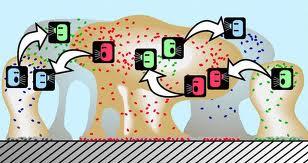
Gene regulation: Attached cells change gene expression, increase capsule production, and alter energy metabolism. Controlled by quorum sensing.
Quorum Sensing
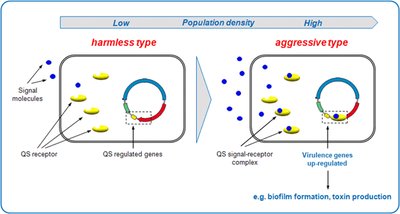
Quorum sensing is cell-to-cell signaling that allows bacteria to monitor population density and regulate gene expression.
Autoinducers: Signaling molecules produced by bacteria.
Gene regulation: Switches between flagella and capsule genes for biofilm development.
Species specificity: Each species synthesizes unique signaling molecules.
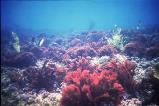
Example: Homoserine lactone signaling molecules can be blocked by furanones from red algae, preventing biofilm formation.
Additional info: Academic context was added to clarify definitions, examples, and mechanisms for each topic, ensuring completeness and self-contained study notes.
