 Back
BackMicrobial Nutrition, Growth, and Development
Study Guide - Smart Notes
 Tailored notes based on your materials, expanded with key definitions, examples, and context.
Microbial Nutrition and Growth
Introduction to Microbial Nutrition
Microbes, including bacteria and fungi, are highly adaptable organisms capable of thriving in diverse environments due to their versatile strategies for acquiring nutrients and energy. They utilize both organic and inorganic sources for their nutritional needs and employ various biochemical pathways to generate ATP, the universal energy currency of the cell.
Carbon and Nitrogen Sources in Microbes
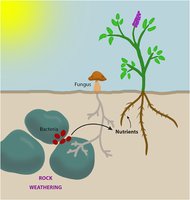
Microbes are classified based on their sources of carbon and nitrogen, which are essential for cellular structure and metabolism.
Carbon Acquisition
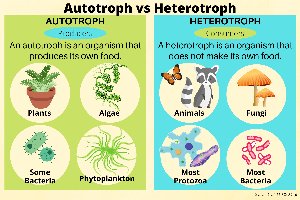
Autotrophs: These organisms synthesize their own organic molecules from inorganic carbon dioxide (CO2) through processes such as photosynthesis or chemosynthesis. Examples include plants, algae, some bacteria, and phytoplankton.
Heterotrophs: These organisms obtain carbon by consuming organic molecules produced by other organisms. This group includes animals, fungi, most protozoa, and most bacteria.
Nitrogen Acquisition
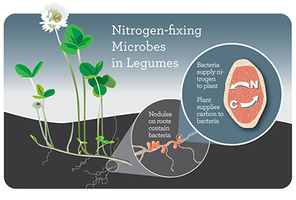
Nitrogen Fixation: Certain bacteria convert atmospheric nitrogen gas (N2) into ammonia (NH3), a form usable by living organisms. This process is crucial for the biosynthesis of proteins, DNA, and RNA.
Some nitrogen-fixing bacteria form symbiotic relationships with legumes, exchanging fixed nitrogen for plant-derived sugars, while others are free-living in soil or water.
Nitrogen Assimilation
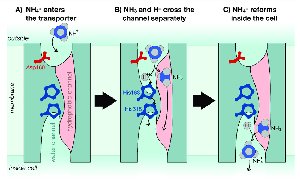
Microbes assimilate inorganic nitrogen (NH4+ or NO3-) from the environment, incorporating it into cellular components such as amino acids and nucleic acids. Specialized transport proteins facilitate the uptake of nitrogen compounds across the cell membrane.
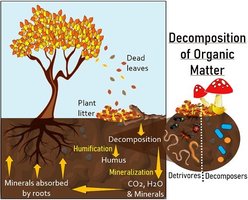
Mineralization (Ammonification)
When microbes utilize organic nitrogen, they decompose complex molecules, releasing ammonium (NH4+) into the environment. This process recycles nitrogen from dead organisms and waste, maintaining ecosystem nutrient balance.
Nutrient Uptake Mechanisms in Microbes
Passive Transport
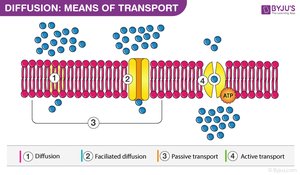
Passive transport involves the movement of substances across the cell membrane without energy expenditure, driven by concentration gradients.
Simple Diffusion: Small, non-polar molecules (e.g., O2, CO2) move directly through the lipid bilayer.
Facilitated Diffusion: Larger or charged molecules (e.g., sugars, ions) cross the membrane via specific channel or carrier proteins.
Osmosis: The diffusion of water across a semi-permeable membrane, crucial for maintaining cellular osmotic balance.
Active Transport
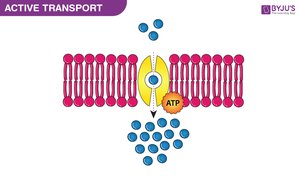
Active transport requires energy (usually from ATP) to move substances against their concentration gradients. This is essential for microbes living in nutrient-poor environments.
Primary Active Transport: Direct use of ATP by transport proteins (e.g., ABC transporters) to import nutrients.
Secondary Active Transport: Utilizes proton gradients established by primary transport to drive the movement of other molecules.
Microbial Cultivation and Growth
The Five I's of Microbial Cultivation
Laboratory cultivation of microbes involves five key steps: Inoculation, Incubation, Isolation, Inspection, and Identification. These steps ensure the growth and study of pure microbial cultures under controlled conditions.
Enumeration of Microbes
Microbial populations are quantified using serial dilution and plating techniques. The number of viable cells is expressed as colony-forming units per milliliter (CFU/mL), with reliable counts obtained from plates containing 30–300 colonies.
Microbial Growth Curve
The microbial growth curve describes the changes in a population over time in a closed system, consisting of four phases:
Lag Phase: Cells adapt to new conditions; no division occurs.
Log (Exponential) Phase: Rapid cell division and population doubling.
Stationary Phase: Growth rate equals death rate due to nutrient depletion and waste accumulation.
Death (Decline) Phase: Cell death exceeds division; some cells may enter a viable but non-culturable state.
Summary Table: Microbial Nutrient Acquisition Strategies
Strategy | Source | Key Example | Importance |
|---|---|---|---|
Autotrophy | CO2 (inorganic carbon) | Cyanobacteria | Primary producers in ecosystems |
Heterotrophy | Organic molecules | Most bacteria, fungi | Decomposition and recycling |
Nitrogen Fixation | N2 gas | Rhizobium in legumes | Soil fertility, plant growth |
Mineralization | Organic nitrogen | Decomposer bacteria | Nutrient cycling |
