Back
BackMicrobial Nutrition, Growth, and Environmental Influences: Study Notes for Microbiology Students
Study Guide - Smart Notes
 Tailored notes based on your materials, expanded with key definitions, examples, and context.
Nutrition and Growth of Bacteria
Introduction: The Soil Bacterium Streptomyces
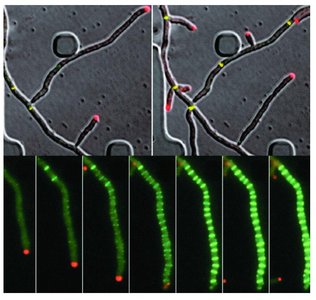
Streptomyces is a genus of soil-dwelling bacteria known for its complex life cycle and production of important secondary metabolites. These bacteria are notable for their role in natural environments and biotechnology.
Vegetative growth: Filamentous cells grow by tip elongation without cell division.
Aerial hyphae and sporulation: Under nutrient limitation, sporulation occurs via multiple fission, forming many spores from a single filamentous cell. This process is facilitated by dynamin-like proteins.
Secondary metabolites: Includes geosmin (gives soil its characteristic odor) and streptomycin (first cure for tuberculosis).
Microbial Growth and Its Control
Learning Objectives
Understand how microbes are cultured and how their growth is measured.
Gain an overview of the dynamic nature of microbial growth.
Appreciate the influence of the environment on microbial growth.
Identify major techniques for the control and prevention of microbial growth.
Culturing Microbes and Measuring Their Growth
4.1 Feeding the Microbe: Cell Nutrition
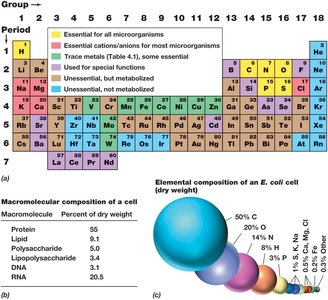
Microbial cells require a variety of nutrients for growth, which can be classified as macronutrients and micronutrients. The chemical composition of a typical bacterial cell, such as Escherichia coli, reflects the essential elements and macromolecules needed for life.
Macronutrients: Required in large amounts (C, O, N, H, P, S, K, Na, Ca, Mg, Cl, Fe).
Micronutrients: Required in minute amounts (trace metals and growth factors).
Major macromolecules: Proteins, lipids, polysaccharides, nucleic acids (mainly RNA).
Key Nutrient Sources
Carbon: Heterotrophs use organic carbon; autotrophs fix CO2.
Nitrogen: Obtained from ammonia, nitrate, nitrogen gas, or organic compounds.
Phosphorus: Usually as inorganic phosphate; essential for nucleic acids and phospholipids.
Sulfur: From sulfate, sulfide, or organic compounds; needed for amino acids and vitamins.
Potassium, Magnesium, Calcium, Sodium: Required for enzyme function, membrane stability, and osmotic balance.
Micronutrients: Trace Metals and Growth Factors
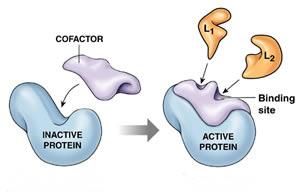
Many enzymes require metal ions or small organic molecules (cofactors) for catalysis. Iron is especially important for cellular respiration and redox reactions.
Element | Function |
|---|---|
Boron (B) | Quorum sensing, antibiotics |
Cobalt (Co) | Vitamin B12, transcarboxylase |
Copper (Cu) | Respiration, photosynthesis |
Iron (Fe) | Cytochromes, catalases, peroxidases |
Manganese (Mn) | Enzyme activator, photosystem II |
Molybdenum (Mo) | Nitrogenases, reductases |
Nickel (Ni) | Hydrogenases, urease |
Selenium (Se) | Formate dehydrogenase |
Tungsten (W) | Formate dehydrogenases |
Vanadium (V) | Nitrogenase |
Zinc (Zn) | Polymerases, DNA-binding proteins |
Growth Factors
Organic micronutrients, often vitamins, required as enzyme cofactors.
Some microbes synthesize all their growth factors; others require supplementation from the environment.
Growth Media and Laboratory Culture
Types of Culture Media
Defined media: Exact chemical composition is known.
Complex media: Contains digests of organic material; composition is not precisely known.
Selective media: Inhibits growth of some microbes while allowing others to grow.
Differential media: Contains indicators to distinguish between different metabolic types.

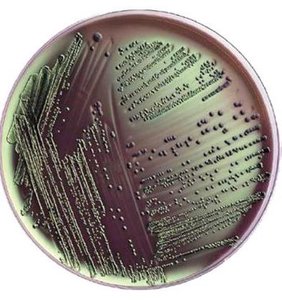
Example: EMB Agar
Contains eosin and methylene blue dyes; selective for Gram-negative bacteria.
Differentiates lactose fermenters (dark purple/green sheen) from non-fermenters (colorless/light colonies).
Laboratory Culture Techniques
Solid media use agar as a gelling agent; colonies can be observed for morphology.
Aseptic technique is essential to avoid contamination.
Streak plate method is used to obtain pure cultures.

Measuring Microbial Growth
Microscopic Counts
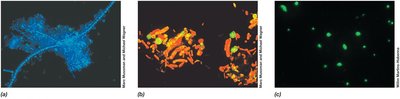
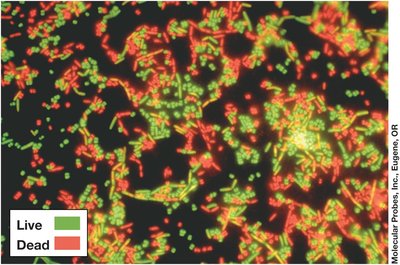
Direct microscopic counts involve counting cells using a counting chamber. This method is quick but cannot distinguish live from dead cells without special stains.
Fluorescent Staining
Stains such as DAPI, acridine orange, and SYBR Green are used to visualize DNA and distinguish live/dead cells.
Phylogenetic stains (FISH) can identify specific groups of microbes in environmental samples.
Viable Counting (Plate Counts)
Viable counts estimate the number of living cells by spreading diluted samples on agar plates and counting colonies (colony-forming units, CFU). Serial dilutions are used to obtain countable plates (30–300 colonies).
Applications
Widely used in food, water, and clinical microbiology for detecting contaminants and pathogens.
Selective and differential media can target specific organisms.
Turbidimetric Measures
Cell suspensions scatter light, and turbidity (optical density, OD) can be measured with a spectrophotometer. OD is proportional to cell number within certain limits, and a standard curve is needed for quantification.
Dynamics of Microbial Growth
Binary Fission and the Microbial Growth Cycle
Bacteria typically reproduce by binary fission, resulting in exponential population growth. The microbial growth curve in batch culture includes lag, exponential, stationary, and death phases.
Lag phase: Adjustment period before growth begins.
Exponential phase: Cells divide at a constant rate; population doubles at regular intervals.
Stationary phase: Growth rate equals death rate due to nutrient depletion or waste accumulation.
Death phase: Cell death exceeds growth.
Quantitative Aspects of Microbial Growth
Exponential growth can be described mathematically. The generation time (g) is the time required for the population to double.
Number of cells after n generations:
Number of generations:
Generation time:
Specific growth rate:
Continuous Culture
Continuous culture systems, such as the chemostat, allow for the constant addition of nutrients and removal of waste, maintaining cells in exponential growth phase. This enables precise control of growth rate and cell density.
Batch culture: Closed system; nutrients deplete and waste accumulates.
Continuous culture: Open system; steady-state conditions maintained.
Biofilm Growth
Biofilms are structured communities of microbes attached to surfaces and embedded in a self-produced matrix. Biofilms are important in natural, industrial, and clinical settings due to their resistance to environmental stresses and antibiotics.
Stages: Attachment, colonization, development, dispersal.
Biofilms can cause persistent infections and industrial fouling.
Alternatives to Binary Fission
Budding: Unequal cell division, forming daughter cells from a parent cell.
Hyphal growth: Filamentous bacteria (e.g., Streptomyces) grow by extending hyphae and forming spores via multiple fission.
Environmental Effects on Microbial Growth
Temperature
Cardinal temperatures: Minimum, optimum, and maximum temperatures for growth.
Temperature classes: Psychrophiles (cold), mesophiles (moderate), thermophiles (hot), hyperthermophiles (very hot).
pH
Neutrophiles: Grow best at neutral pH (5.5–7.9).
Acidophiles: Grow best at low pH (<5.5).
Alkaliphiles: Grow best at high pH (≥8).
Microbes maintain internal pH near neutrality; media often contain buffers.
Osmolarity (Water Availability)
Water activity (aw): Measure of water availability; pure water = 1.0.
Halophiles: Require high salt concentrations.
Halotolerant: Tolerate some salt but grow best without it.
Osmophiles: Thrive in high-sugar environments.
Xerophiles: Grow in very dry environments.
Microbes use compatible solutes (e.g., glycine betaine, proline, KCl) to maintain water balance.
Oxygen
Obligate aerobes: Require oxygen for growth.
Facultative anaerobes: Can grow with or without oxygen.
Microaerophiles: Require reduced oxygen levels.
Aerotolerant anaerobes: Tolerate oxygen but do not use it.
Obligate anaerobes: Killed or inhibited by oxygen.
Oxygen can be toxic due to reactive oxygen species (ROS); microbes possess enzymes (catalase, peroxidase, superoxide dismutase) to detoxify ROS.
Summary Table: Oxygen Relationships of Microorganisms
Group | O2 Requirement | Type of Metabolism | Example | Habitat |
|---|---|---|---|---|
Obligate aerobe | Required | Aerobic respiration | Micrococcus luteus | Skin, dust |
Facultative anaerobe | Not required, better with O2 | Aerobic/anaerobic respiration, fermentation | Escherichia coli | Large intestine |
Microaerophile | Required at low levels | Aerobic respiration | Spirillum volutans | Lake water |
Aerotolerant anaerobe | Not required, no benefit | Fermentation | Streptococcus mutans | Oral cavity |
Obligate anaerobe | Harmful/lethal | Fermentation/anaerobic respiration | Methanobacterium formicicum | Sewage sludge |
Further Reading
See Brock Biology of Microorganisms, 16th Edition, for more details.