Back
BackMicrobial Nutrition, Growth, and Environmental Influences: Study Notes
Study Guide - Smart Notes
 Tailored notes based on your materials, expanded with key definitions, examples, and context.
Nutrition and Growth of Bacteria
Introduction: The Soil Bacterium Streptomyces
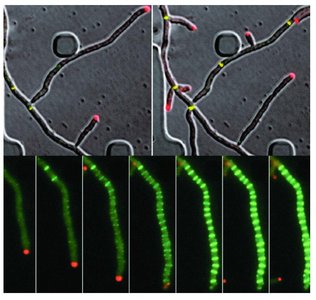
Bacteria exhibit diverse growth strategies and play crucial roles in natural environments. Streptomyces is a notable soil bacterium known for producing secondary metabolites, including antibiotics and compounds responsible for the characteristic smell of soil.
Vegetative growth: Filamentous cells grow by tip elongation without cell division.
Aerial hyphae and sporulation: Under nutrient limitation, sporulation occurs via multiple fission, forming many spores from a single filamentous cell.
Secondary metabolites: Examples include geosmin (soil odor) and streptomycin (antibiotic).
Binary fission: The primary mode of bacterial cell division, where one cell splits into two.
Microbial Growth and Its Control
Learning Objectives
Understand how microbes are cultured and how their growth is measured.
Gain an overview of the dynamic nature of microbial growth.
Appreciate the influence of the environment on microbial growth.
Identify major techniques for the control and prevention of microbial growth.
Culturing Microbes and Measuring Their Growth
Feeding the Microbe: Cell Nutrition
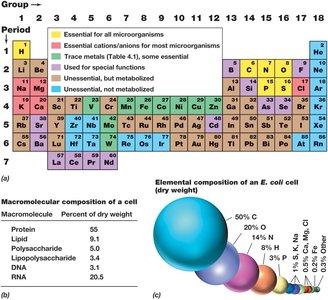
Microbial cells require a variety of nutrients for growth, which can be classified as macronutrients and micronutrients. The chemical composition of a typical bacterial cell, such as Escherichia coli, is dominated by a handful of elements and macromolecules.
Macronutrients: Required in large amounts (C, O, N, H, P, S, K, Na, Ca, Mg, Cl, Fe).
Micronutrients: Required in minute amounts (trace metals and growth factors).
Major macromolecules: Proteins, lipids, polysaccharides, nucleic acids.
Carbon and Nitrogen Sources
Heterotrophs: Obtain carbon from organic compounds.
Autotrophs: Synthesize organic compounds from CO2.
Nitrogen: Sourced from ammonia (NH3), nitrate (NO3-), nitrogen gas (N2), or organic compounds.
Other Macronutrients
Phosphorus (P): Essential for nucleic acids and phospholipids.
Sulfur (S): Found in certain amino acids and vitamins.
Potassium (K), Magnesium (Mg), Calcium (Ca), Sodium (Na): Required for enzyme function and cellular stability.
Micronutrients: Trace Metals and Growth Factors
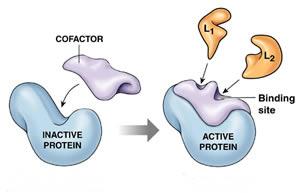
Many enzymes require metal ions or small organic molecules as cofactors for catalysis. Iron is especially important for cellular respiration and redox reactions.
Element | Function |
|---|---|
Boron (B) | Quorum sensing, antibiotics |
Cobalt (Co) | Vitamin B12, transcarboxylase |
Copper (Cu) | Respiration, photosynthesis |
Iron (Fe) | Cytochromes, catalases, peroxidases |
Manganese (Mn) | Enzyme activator, photosystem II |
Molybdenum (Mo) | Nitrogenases, reductases |
Nickel (Ni) | Hydrogenases, urease |
Selenium (Se) | Formate dehydrogenase, selenocysteine |
Tungsten (W) | Formate dehydrogenases |
Vanadium (V) | Nitrogenase |
Zinc (Zn) | Polymerases, DNA-binding proteins |
Growth Factors
Organic micronutrients, often vitamins, required for enzyme function as coenzymes.
Some microbes synthesize all their growth factors; others require supplementation from the environment.
Growth Media and Laboratory Culture
Types of Culture Media
Culture media are nutrient solutions used to grow microbes in the laboratory. They can be solid or liquid, and their composition can be defined or complex.
Defined media: Exact chemical composition is known.
Complex media: Contains digests of organic materials; composition is not precisely known.
Selective media: Inhibits growth of some microbes while allowing others to grow.
Differential media: Contains indicators to distinguish between different metabolic reactions.

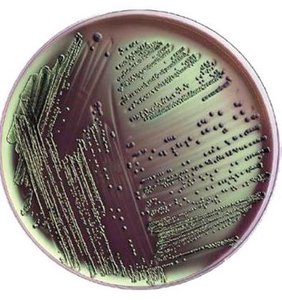
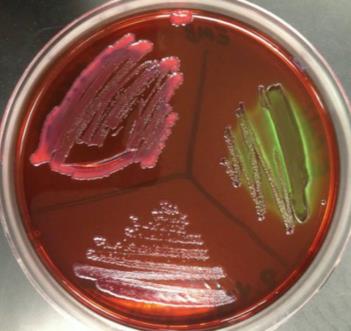
Example: EMB Agar
Contains eosin and methylene blue dyes, toxic to Gram-positive bacteria.
Differentiates lactose fermenters (dark purple/green sheen colonies) from non-fermenters (colorless/light colonies).
Colony Morphology
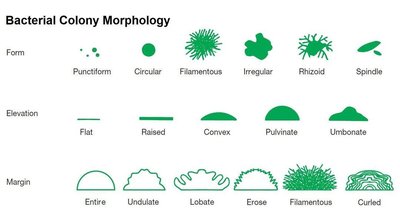
Colony morphology refers to the visible characteristics of microbial colonies on solid media, which can aid in identification.
Aseptic Technique
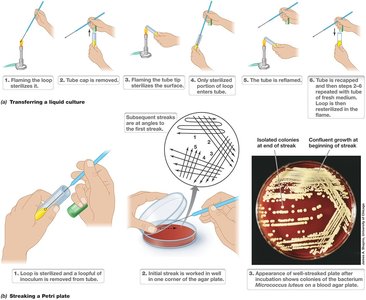
Aseptic technique is essential for transferring microbes without contamination. The streak plate method is commonly used to obtain pure cultures.
Measuring Microbial Growth
Microscopic Counts
Direct microscopic counts involve counting cells using a counting chamber. This method is quick but cannot distinguish live from dead cells without special stains.
Fluorescent Staining
Fluorescent stains can differentiate live and dead cells, and can be used to identify phylogenetic groups in environmental samples.
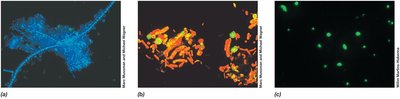
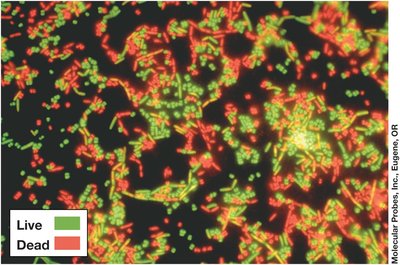
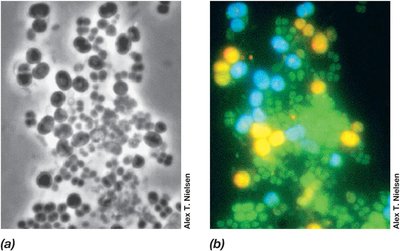
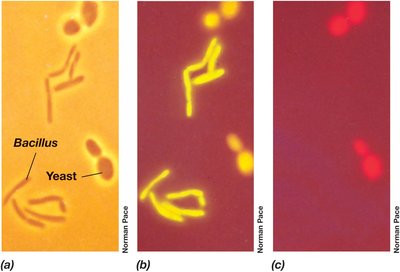
Viable Counting (Plate Counts)
Viable counts measure the number of living cells capable of forming colonies. The spread-plate and pour-plate methods are commonly used, with results expressed as colony-forming units (CFU).
Turbidimetric Measures
Turbidity (cloudiness) of a cell suspension is measured using a spectrophotometer. Optical density (OD) is proportional to cell number within certain limits.
Dynamics of Microbial Growth
Binary Fission and the Microbial Growth Cycle
Bacteria typically reproduce by binary fission, resulting in exponential population growth. The microbial growth curve in batch culture includes lag, exponential, stationary, and death phases.
Quantitative Aspects of Microbial Growth
Exponential growth can be described mathematically. The generation time (g) is the time required for the population to double.
Number of cells after n generations: $N = N_0 \times 2^n$
Generation time: $g = t / n$
Specific growth rate: $k = 0.693 / g$
Continuous Culture
Continuous culture systems, such as the chemostat, allow for the constant growth of microbial populations under steady-state conditions. Both growth rate and cell density can be independently controlled.
Biofilm Growth
Biofilms are structured communities of microbes attached to surfaces and embedded in a self-produced matrix. Biofilms are important in natural, medical, and industrial contexts.
Alternatives to Binary Fission
Some bacteria reproduce by budding or hyphal growth, forming mycelia and arthrospores. These alternative modes of division are common in certain groups such as actinomycetes.
Environmental Effects on Microbial Growth
Temperature
Microorganisms are classified by their temperature optima:
Psychrophiles: Cold-loving, optimum ≤ 15°C
Mesophiles: Moderate temperatures, optimum 20–45°C
Thermophiles: Heat-loving, optimum 45–80°C
Hyperthermophiles: Extreme heat, optimum >80°C
pH
Microbes are also classified by their pH optima:
Neutrophiles: pH 5.5–7.9
Acidophiles: pH < 5.5
Alkaliphiles: pH ≥ 8
Osmolarity
Water availability (aw) is critical for microbial growth. Halophiles require high salt concentrations, while osmophiles and xerophiles tolerate high sugar or dry environments, respectively.
Oxygen
Microbes are classified by their oxygen requirements:
Obligate aerobes: Require oxygen.
Facultative anaerobes: Can grow with or without oxygen.
Microaerophiles: Require reduced oxygen levels.
Aerotolerant anaerobes: Tolerate oxygen but do not use it.
Obligate anaerobes: Killed by oxygen.
Summary Table: Oxygen Relationships of Microorganisms
Group | O2 Relationship | Type of Metabolism | Example | Habitat |
|---|---|---|---|---|
Obligate aerobe | Required | Aerobic respiration | Micrococcus luteus | Skin, dust |
Facultative anaerobe | Not required, better with O2 | Aerobic/anaerobic respiration, fermentation | Escherichia coli | Large intestine |
Microaerophile | Required at low levels | Aerobic respiration | Spirillum volutans | Lake water |
Aerotolerant anaerobe | Not required, unaffected by O2 | Fermentation | Streptococcus mutans | Oral cavity |
Obligate anaerobe | Harmful/lethal | Fermentation/anaerobic respiration | Methanobacterium formicicum | Sewage sludge |
Control of Microbial Growth
Microbial growth can be controlled by physical methods (heat, radiation, filtration) and chemical agents. Details of these methods are covered in subsequent topics.
Further Reading
For more details, refer to the recommended textbook: Brock Biology of Microorganisms.