 Back
BackLectures 14, 15
Study Guide - Smart Notes
 Tailored notes based on your materials, expanded with key definitions, examples, and context.
Microbial Nutrition
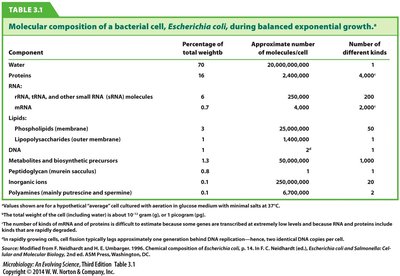
Molecular Composition of Microbial Cells
The molecular composition of a bacterial cell, such as Escherichia coli, reflects the essential nutrients required for growth and metabolism. Understanding these components is fundamental to microbiology.
Water: Major constituent, accounting for ~70% of cell weight.
Proteins: Structural and functional molecules, ~15% of cell weight.
RNA: Includes rRNA, tRNA, and mRNA, essential for protein synthesis.
Lipids: Membrane structure and energy storage.
DNA: Genetic material, small percentage but critical for heredity.
Metabolites and biosynthetic precursors: Intermediates in metabolic pathways.
Peptidoglycan: Cell wall structure in bacteria.
Polyamines: Stabilize DNA and RNA.
Essential Elements for Microbial Life
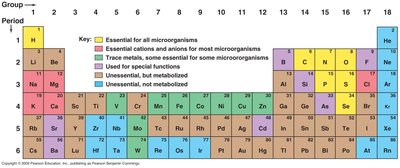
Microorganisms require a variety of elements for growth, which can be classified as macronutrients, micronutrients, and trace elements. The periodic table highlights their importance.
Macronutrients: Carbon, nitrogen, oxygen, hydrogen, phosphorus, sulfur, potassium, magnesium, calcium, iron.
Micronutrients: Cobalt, zinc, molybdenum, copper, manganese, nickel.
Trace elements: Required in minute amounts for enzyme function.
Growth Factors and Vitamins
Microbes often require specific organic compounds, known as growth factors, which include vitamins and their coenzyme forms. These are essential for various biosynthetic and metabolic reactions.
Folic acid (B9): Required for synthesis of nucleic acids and amino acids.
Biotin (B7): Involved in carboxylation reactions.
Pantothenate (B5): Component of coenzyme A, essential for metabolism.
Nicotinic acid (B3): Forms NAD and NADP, electron carriers.
Riboflavin (B2): Forms FMN and FAD, electron carriers.
Thiamine (B1): Thiamine pyrophosphate, C2 unit carrier.
Cobalamin (B12): Transfer of methyl groups.
Nutritional Classification of Microorganisms
Microbes are classified based on their energy, carbon, and electron sources.
Photolithoautotrophs: Use light for energy, CO2 for carbon, and inorganic compounds for electrons (e.g., cyanobacteria).
Photoheterotrophs: Use light for energy, organic compounds for carbon and electrons.
Chemolithoautotrophs: Use inorganic chemicals for energy and electrons, CO2 for carbon.
Chemoheterotrophs: Use organic compounds for energy, carbon, and electrons (most bacteria).
Culture Media and Growth Requirements
Types of Culture Media
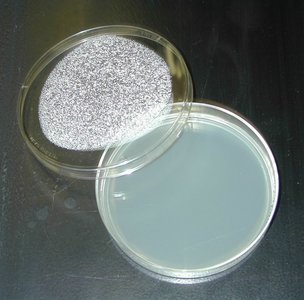
Microbial growth requires appropriate culture media, which can be defined or complex, minimal or rich, selective or differential.
Defined medium: All components are known.
Complex medium: Contains extracts (e.g., yeast extract), composition varies.
Minimal medium: Chemically defined, minimal requirements for growth.
Rich medium: Contains a large assortment of nutrients, supports many microbes.
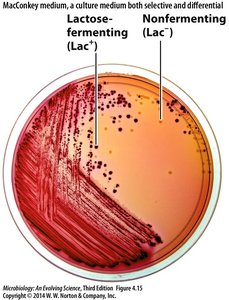
Selective medium: Favors growth of specific organisms, inhibits others (e.g., MacConkey agar).
Differential medium: Distinguishes microbes based on physiological traits (e.g., fermentation broths).
Selective Agents in Media
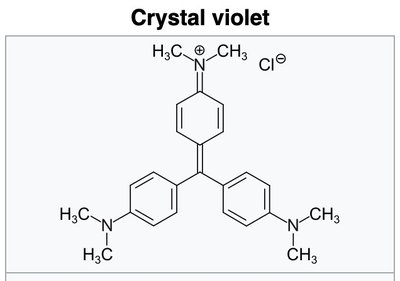
Selective media often contain agents such as bile salts and crystal violet to inhibit unwanted microbes.
Bile salts: Inhibit non-enteric bacteria.
Crystal violet: Inhibits Gram-positive bacteria.
Differential Media and Indicators
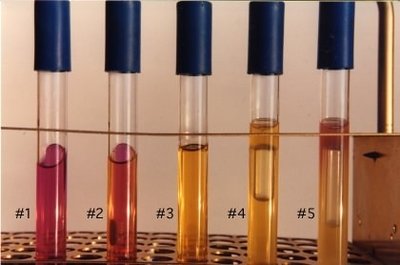
Differential media use indicators to reveal metabolic differences, such as acid or gas production during fermentation.
Bromocresol purple: Changes color based on pH.
Fermentation tubes: Show acid and gas production.
Microbial Growth and Cell Division
Binary Fission
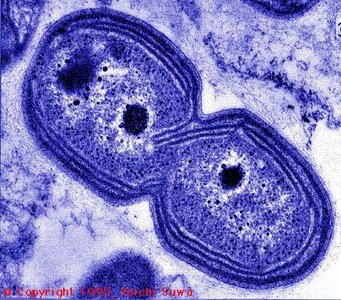
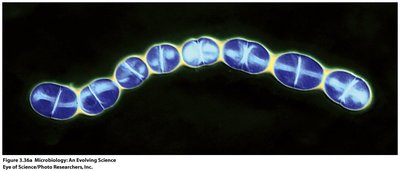
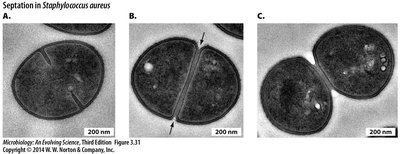
Most bacteria reproduce by binary fission, a process involving cell growth, DNA replication, and division.
Fts proteins: Essential for septum formation.
MreB: Cytoskeletal protein guiding cell shape.
Peptidoglycan synthesis: Required for cell wall formation.
Cell Cycle of Caulobacter
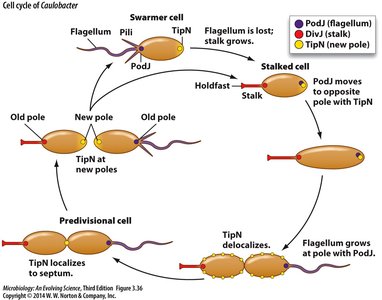
Some bacteria, such as Caulobacter, have a complex cell cycle involving differentiation into swarmer and stalked cells.
Swarmer cell: Motile, loses flagellum to become stalked cell.
Stalked cell: Attaches to surfaces, divides to produce new swarmer cells.
Regulation of Cell Division
Cell division is regulated by proteins such as FtsZ and Min proteins, which ensure proper septum placement and chromosome segregation.
FtsZ: Forms a ring at the division site.
MinC, MinD, MinE: Prevent division at incorrect sites.
FtsK: Mediates chromosome separation.
Quantifying Microbial Growth
Methods for Measuring Growth
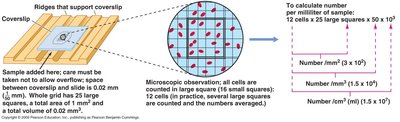
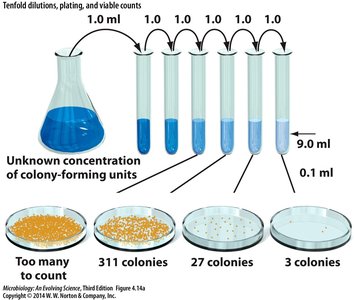
Microbial growth can be quantified by counting cells, measuring turbidity, or assessing biomass.
Microscopic counts: Direct observation and counting of cells.
Viable plate counts: Counting colony-forming units (cfu).
Spectrophotometry: Measuring optical density (OD) to estimate cell concentration.
Biomass measurements: DNA, RNA, protein, dry weight.
Growth Parameters and Equations
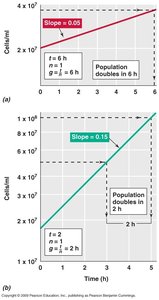
Microbial populations grow exponentially under optimal conditions. Key parameters include generation time, doubling time, and growth rate constant.
Generation time (g): Time required for cell population to double.
Doubling time: Same as generation time.
Growth rate constant (k): Number of generations per unit time.
Growth equations:
Number of cells after n generations:
Number of generations:
Growth rate constant:
Generation time:
Environmental Effects on Microbial Growth
Temperature
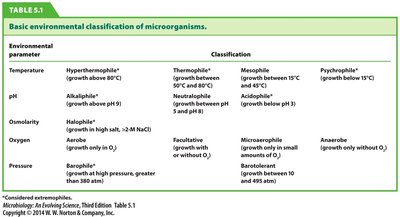
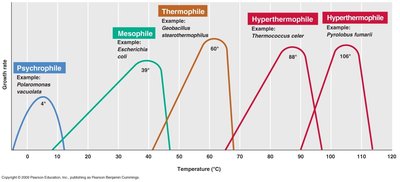
Microbes are classified by their optimal growth temperature. Temperature affects membrane fluidity, enzyme activity, and survival.
Psychrophiles: Grow below 15°C.
Mesophiles: Grow between 15°C and 45°C (e.g., E. coli).
Thermophiles: Grow above 45°C.
Hyperthermophiles: Grow above 80°C.
Oxygen Requirements
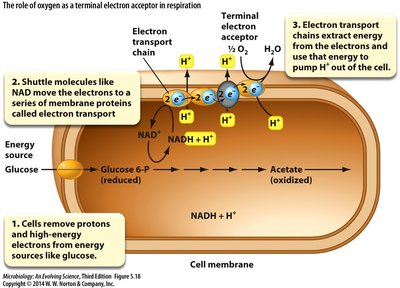
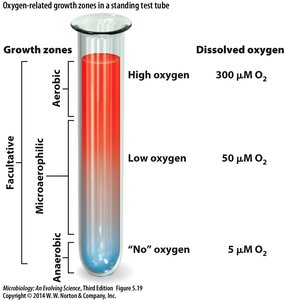
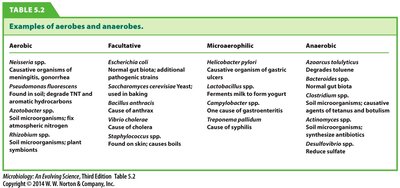
Microbes vary in their requirement and tolerance for oxygen, which is both a useful electron acceptor and a source of reactive species.
Strict aerobes: Require oxygen for respiration.
Strict anaerobes: Cannot tolerate oxygen.
Facultative anaerobes: Can grow with or without oxygen.
Aerotolerant anaerobes: Survive in oxygen but do not use it.
Microaerophiles: Require low oxygen concentrations.
pH and Osmotic Stress
Microbes are classified by their optimal pH and ability to withstand osmotic stress. Most maintain internal pH near neutrality, but some thrive in acidic or alkaline environments.
Acidophiles: Grow below pH 5.
Neutrophiles: Grow between pH 6-8.
Alkaliphiles: Grow above pH 8.
Halophiles: Require high salt concentrations.
Control of Microbial Growth
Antibiotic Sensitivity and Resistance
Microbial growth can be controlled by antibiotics, which target cell wall synthesis, metabolism, or protein synthesis. Resistance mechanisms include chemical inactivation and efflux pumps.
Minimal inhibitory concentration (MIC): Lowest concentration of antibiotic that prevents growth.
Sulfa drugs: Block folic acid synthesis.
Cell wall synthesis inhibitors: Prevent peptidoglycan formation.
Resistance: Microbes can inactivate antibiotics or alter targets.
Summary Table: Environmental Classification of Microorganisms
Environmental Parameter | Classification |
|---|---|
Temperature | Hyperthermophile (>80°C), Thermophile (50-80°C), Mesophile (15-45°C), Psychrophile (<15°C) |
pH | Alkaliphile (>pH 9), Neutrophile (pH 6-8), Acidophile ( |
Osmolarity | Halophile (>2-4 M NaCl) |
Oxygen | Aerobe (only O2), Facultative (with or without O2), Microaerophile (small O2), Anaerobe (no O2) |
Pressure | Barophile (>495 atm), Barotolerant (10-495 atm) |
Conclusion
Microbial nutrition, growth, and environmental stress are central concepts in microbiology. Understanding the requirements for growth, methods for quantification, and environmental adaptations is essential for studying microbial physiology and ecology.
