 Back
Microbial Nutrition, Media, and Cultivation: Essential Concepts for Microbiology
Study Guide - Smart Notes
 Tailored notes based on your materials, expanded with key definitions, examples, and context.
Nutrients, Media, and Cultivation
Microbial Nutrition: Overview
Microbial nutrition is fundamental to understanding how microorganisms grow, survive, and interact with their environment. Microbes require a variety of nutrients, which are supplied through their growth media, to support cellular processes and biosynthesis.
Macronutrients are required in large amounts and include carbon (C), nitrogen (N), oxygen (O), hydrogen (H), phosphorus (P), and sulfur (S).
Micronutrients (trace elements) are needed in smaller quantities and include metals such as iron (Fe), zinc (Zn), copper (Cu), and others.
Growth factors are organic compounds that some microbes cannot synthesize and must obtain from their environment (e.g., vitamins, amino acids).
Molecular and Elemental Composition of Microbial Cells
Microbial cells are composed of various macromolecules and elements, each playing a specific role in cellular structure and function.
Proteins constitute the largest fraction of cell dry weight, followed by RNA, lipids, polysaccharides, DNA, and lipopolysaccharides.
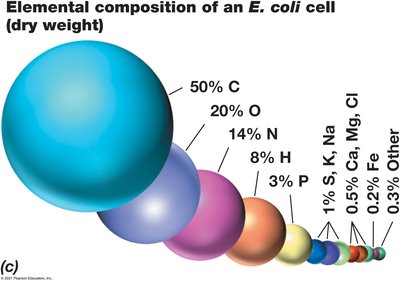
The elemental composition of a typical E. coli cell (dry weight) is approximately: 50% C, 20% O, 14% N, 8% H, 3% P, 1% S/K/Na, 0.5% Ca/Mg/Cl, 0.2% Fe, 0.3% other elements.
Macromolecular Composition Table
Macromolecule | Percent of Dry Weight |
|---|---|
Protein | 55.0 |
Lipid | 9.1 |
Polysaccharide | 5.0 |
Lipopolysaccharide | 3.4 |
DNA | 3.1 |
RNA | 20.5 |
Microbial Utilization of Elements
Microbes are capable of metabolizing a wide range of elements from the periodic table, with some being essential for all, others for most, and some only for special functions. 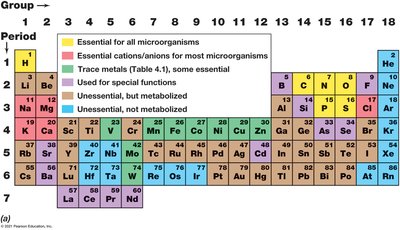
Essential elements include C, N, O, H, P, S, K, Mg, Ca, Na.
Trace metals such as Fe, Zn, Cu, Co, Se, and B are required for specific enzymatic and structural functions.
Macronutrients: Functions and Sources
Carbon (C): Most abundant element in cells; obtained from organic compounds or CO2 (inorganic).
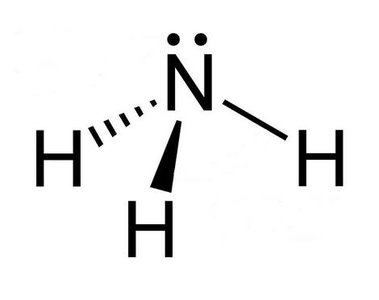
Nitrogen (N): Essential for amino acids, nucleic acids; sourced from NH3, NO3-, N2 (for N-fixers), and amino acids.
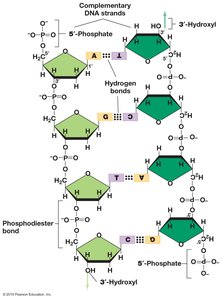
Phosphorus (P): Needed for nucleic acids and phospholipids; obtained from PO42-.
Sulfur (S): Required for certain amino acids (cysteine, methionine) and vitamins; sourced from SO42-.
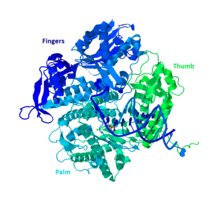
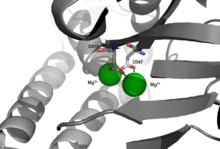
K, Mg, Ca, Na: Serve as enzyme cofactors, stabilize cellular structures, and are essential for some organisms.
Micronutrients and Trace Elements
Trace elements are required in minute amounts and are critical for enzyme function and structural stability.
Element | Function |
|---|---|
Boron (B) | Autoinducer for quorum sensing; polyketide antibiotics |
Cobalt (Co) | Vitamin B12; transcarboxylase |
Copper (Cu) | Respiration; cytochrome c oxidases |
Iron (Fe) | Cytochromes; catalases; peroxidases; nitrogenases |
Selenium (Se) | Selenocysteine amino acid |
Zinc (Zn) | DNA-binding proteins |
Growth Factors
Growth factors are organic compounds required by some microbes for growth, often because they cannot synthesize them.
Growth Factor | Function |
|---|---|
Folic acid | One-carbon metabolism |
B12 | One-carbon metabolism |
B6 | Amino acid transformations |
Nicotinic acid (Niacin) | Precursor of NAD+ |
Pantothenic acid | Precursor of coenzyme A |
Vitamin K | Electron transport |
Organic vs Inorganic Nutrients
Organic nutrients are carbon-containing compounds (excluding CO2), such as amino acids, fatty acids, sugars, and aromatic compounds.
In microbiology, "organic" typically refers to a carbon source like glucose.
Microbial Energy and Carbon Classes
Microbes are classified based on their carbon and energy sources:
Heterotrophs: Obtain carbon from organic molecules; chemoorganotrophs are a subset.
Autotrophs: Obtain carbon from CO2; include most chemolithotrophs and phototrophs (primary producers).
Comparison Table: E. coli vs L. mesenteroides
Characteristic | E. coli | L. mesenteroides |
|---|---|---|
Environment | Mammalian gut | Fruit surfaces |
Energy Class | Heterotroph | Heterotroph |
Genome size (Mb) | 5.17 | 2.04 |
# of unique proteins | 4934 | 1753 |
Types of Media: Defined vs Complex
Microbial media are used to cultivate and study microorganisms. They are classified as defined or complex based on their composition.
Defined media: Exact chemical composition is known; useful for identifying minimal growth requirements but time-consuming and expensive.
Complex media: Composition is not precisely known; good for routine studies, inexpensive, but variable over time.
Defined Media Recipes
Reagent | E. coli (Amt.) | L. mesenteroides (Amt.) |
|---|---|---|
K2HPO4 | 7 g | 0.6 g |
KH2PO4 | 2 g | 0.6 g |
(NH4)2SO4 | 1 g | - |
NH4Cl | - | 3 g |
MgSO4 | 0.1 g | 0.1 g |
CaCl2 | 0.02 g | - |
Glucose | 25 g | 4-10 g |
Sodium acetate | 25 g | - |
Trace elements | 2-10 μg each | 2-10 μg each |
Amino acids (× 20) | 100-200 μg each | - |
Purines and pyrimidines | - | 10 mg each |
Vitamins (× 10) | 0.01-1 mg each | - |
Distilled H2O | to 1L | to 1L |
Complex Media Recipe
Reagent | Amt. |
|---|---|
Glucose | 15 g |
Yeast extract | 5 g |
Peptone | 5 g |
K2HPO4 | 2 g |
Distilled H2O | to 1L |
Selective and Differential Media
Selective and differential media are used in diagnostic microbiology to isolate and identify specific microorganisms.
Selective media: Inhibits growth of some microbes while allowing others to grow.
Differential media: Contains indicators (usually dyes) that reveal specific metabolic reactions, differentiating microbes based on growth, color, or appearance.
Some media can be both selective and differential.
TCBS Agar: Example of Selective and Differential Media
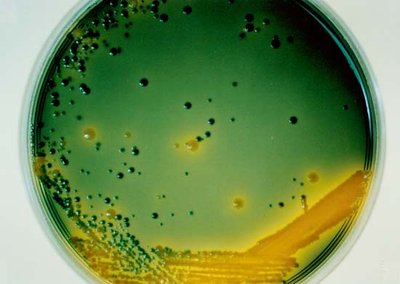
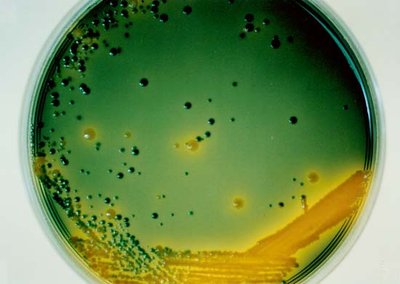
TCBS (Thiosulfate-citrate-bile salts-sucrose) agar is used to differentiate Vibrio species and control outbreaks of V. cholerae or identify food poisoning with V. parahaemolyticus.
Complex media with selective agents (sodium citrate, ox gall, sodium chloride) and differential indicators (bromothymol blue, thymol blue).
Alkaline pH promotes Vibrio growth and inhibits other bacteria.
Saccharose (sucrose) is a carbon source; only some Vibrio spp. can metabolize it, producing acid and changing colony color.
TCBS Agar Recipe Table
Reagent | Amt. |
|---|---|
Yeast extract | 5 g |
Peptone | 10 g |
Sodium Thiosulfate | 10 g |
Sodium Citrate | 10 g |
Ox gall | 5 g |
Saccharose | 20 g |
Sodium chloride | 10 g |
Ferric citrate | 1 g |
Bromothymol blue | 0.04 g |
Thymol blue | 0.04 g |
Agar | 15 g |
Distilled H2O | to 1L |
pH | 8.4-8.8 |
TCBS Agar: Selective and Differential Properties Table
Organism | Inoculum | Growth | Recovery (%) | Colony color |
|---|---|---|---|---|
E. faecalis | 103 | inhibited | 0 | - |
E. coli | 103 | inhibited | 0 | - |
S. flexneri | 103 | inhibited | 0 | - |
V. cholerae | 50-100 | good | ≥50 | yellow |
V. fluvialis | 50-100 | good | ≥50 | yellow |
V. parahaemolyticus | 50-100 | good | ≥50 | bluish green |
V. vulnificus | 50-100 | fair | ≥50 | greenish yellow |
Summary of Key Concepts
Microbial nutrition involves macronutrients, micronutrients, and growth factors, each essential for cellular function.
Defined and complex media are used to cultivate microbes, with selective and differential media aiding in identification and isolation.
TCBS agar is a prime example of media used to differentiate and select for Vibrio species.
