 Back
BackMicrobial Symbioses with Microbes, Plants, and Animals
Study Guide - Smart Notes
 Tailored notes based on your materials, expanded with key definitions, examples, and context.
Microbial Symbioses: Overview
Definition and Types of Symbiosis
Microbial symbioses are long-term interactions between microorganisms and other organisms, including plants, animals, and other microbes. These relationships can be mutualistic, commensal, or parasitic, but mutualisms—where both partners benefit—are especially significant in microbiology.
Mutualism: Both organisms benefit from the interaction.
Coevolution: Many mutualistic partners have evolved together over millions of years, adapting to each other's presence.
Symbioses Between Microorganisms
Lichens
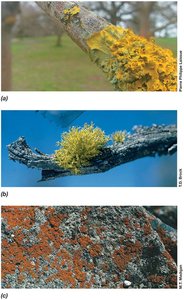
Lichens are complex, leafy or encrusting microbial symbioses found on rocks, tree trunks, roofs, and soils. They represent a mutualistic relationship between a fungus and a photosynthetic partner (alga or cyanobacterium).
Fungal Partner: Provides structure, protection, and access to dissolved inorganic nutrients.
Photosynthetic Partner: Produces organic matter via photosynthesis; many are also nitrogen-fixing.
Microbiota: Lichens also contain bacterial and archaeal communities, making them more complex than previously thought.
Plant-Microbe Symbioses
The Legume–Root Nodule Symbiosis
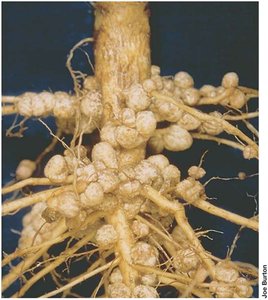
This is a classic example of mutualism between leguminous plants (e.g., soybeans, clover, alfalfa, beans, peas) and nitrogen-fixing bacteria known as Rhizobia (Alphaproteobacteria or Betaproteobacteria).
Root Nodule Formation: Infection by Rhizobia leads to the development of root nodules, specialized structures where atmospheric nitrogen (N2) is fixed into ammonia (NH3).
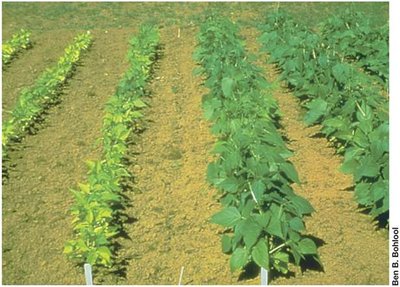
Ecological Importance: Nodulated legumes thrive in nitrogen-poor soils, enriching them with bioavailable nitrogen.
Mechanism of Nitrogen Fixation
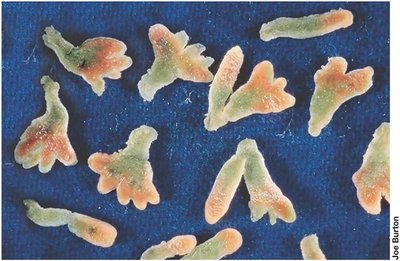
Oxygen Sensitivity: Nitrogenase enzymes are inactivated by O2. Leghemoglobin, an O2-binding protein, acts as an oxygen buffer in nodules, protecting nitrogenase.
Bacteroids: Differentiated forms of Rhizobia within nodules, dependent on plant-derived pyruvate for energy.
Symbiosome: A membrane-bound collection of bacteroids within plant cells.


Summary Table: Key Features of Legume–Rhizobia Symbiosis
Component | Function |
|---|---|
Legume Root | Provides carbohydrates and habitat |
Rhizobia | Fix atmospheric nitrogen |
Leghemoglobin | Buffers oxygen to protect nitrogenase |
Bacteroid | Specialized nitrogen-fixing form |
Mycorrhizae
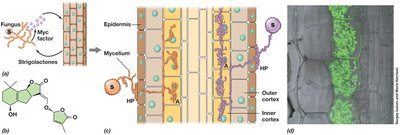
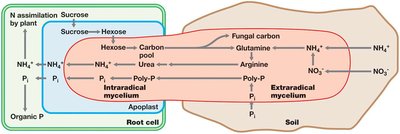
Mycorrhizae are mutualistic associations between plant roots and fungi, crucial for plant nutrient uptake and soil health.
Ectomycorrhizae: Fungal hyphae form a sheath around roots, with minimal penetration into root tissue. Common in forest trees.
Endomycorrhizae (Arbuscular Mycorrhizae): Fungal hyphae penetrate deep into root cells, forming arbuscules. Found in over 80% of terrestrial plants.
Benefits: Enhanced nutrient absorption (especially phosphorus and nitrogen), improved plant growth, and increased resistance to environmental stress.

Parasitic Plant-Microbe Interactions
Agrobacterium and Crown Gall Disease
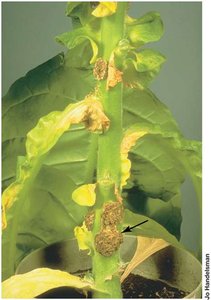
Agrobacterium tumefaciens forms a parasitic symbiosis with plants, causing crown gall disease (tumors). The bacterium carries a Ti (tumor-inducing) plasmid, which is central to its pathogenicity and is also a tool in plant genetic engineering.
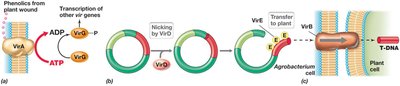
Ti Plasmid: Contains T-DNA (oncogenes and opine synthesis genes), virulence (vir) genes, and genes for opine catabolism and transmissibility.
Infection Process: Bacteria attach to plant wounds, synthesize cellulose microfibrils, and transfer T-DNA into plant cells via vir-encoded proteins, leading to tumor formation.

Animal-Microbe Symbioses
Insects as Microbial Habitats
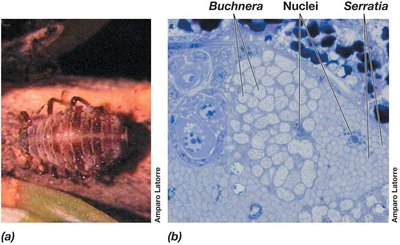
Many insects harbor microbial symbionts, which can be acquired from the environment (horizontal transmission) or inherited from parents (vertical transmission). These symbionts are often essential for host survival and reproduction.
Primary Symbionts: Required for host reproduction, reside in specialized cells called bacteriocytes.
Secondary Symbionts: Not essential for reproduction, may provide nutritional or protective benefits, and can manipulate host reproduction.
Defensive Symbioses
Some insects use microbial symbionts to produce toxic or antimicrobial chemicals for defense against predators and pathogens. For example, the Paederus beetle harbors Pseudomonas species that produce pederin, a cytotoxic compound.
Leafcutter Ants
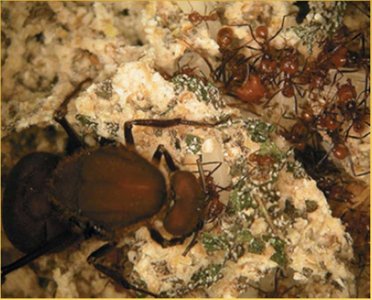
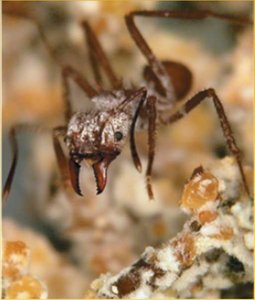
Leafcutter ants maintain a complex symbiosis with cultivated fungi and actinomycete bacteria (e.g., Pseudonocardia), which produce antibiotics to protect the fungal crop from parasites.
Termites
Termites decompose cellulose and hemicellulose with the help of gut microbes. Higher termites have diverse anaerobic bacteria, while lower termites also harbor cellulolytic protists. Microbial fermentation produces acetate and other organic acids, which are assimilated by the termite.
Bioluminescent Symbionts and the Squid Symbiosis
The Hawaiian bobtail squid (Euprymna scolopes) forms a highly specific mutualism with the bioluminescent bacterium Aliivibrio fischeri. The bacteria colonize a specialized light organ, providing camouflage for the squid via bioluminescence controlled by quorum sensing.
Transmission: Horizontal; juvenile squid acquire bacteria from the environment.
Benefits: Squid gains camouflage; bacteria receive nutrients and a protected habitat.
Marine Invertebrates at Hydrothermal Vents
Deep-sea hydrothermal vents support animal communities fueled by chemolithotrophic microbes. Tube worms, clams, and mussels form endosymbiotic relationships with sulfur-oxidizing bacteria, which utilize reduced inorganic compounds from vent emissions.
Coral Symbioses and Bleaching
Reef-building corals form mutualistic relationships with dinoflagellates (genus Symbiodinium). Environmental stress (e.g., high temperature, high light) can cause coral bleaching, the loss of symbionts, leading to coral death. Different Symbiodinium phylotypes confer varying stress tolerance to corals.
Alternative Mammalian Gut Systems
Ruminants and Foregut Fermentation
Herbivorous mammals such as cows, sheep, and goats possess a rumen, a specialized fermentation chamber preceding the small intestine. Cellulose and other plant polysaccharides are digested by a diverse community of microbes, producing volatile fatty acids (VFAs), methane, and CO2.
VFAs: Main energy source for the animal, absorbed through the rumen wall.
Microbial Protein: Rumen microbes themselves can be digested as a protein source.
Diet Changes: Abrupt dietary changes can cause rumen acidosis, affecting animal health.
Detoxification: Rumen microbes can detoxify plant metabolites, expanding the animal's dietary range.
Hindgut Fermentation
Other herbivores (e.g., horses, rabbits) rely on fermentation in the cecum and/or large intestine, with similar microbial contributions to digestion and nutrition.
Additional info: Where content was inferred or expanded for clarity, it is marked as such. This guide covers the main types of microbial symbioses with microbes, plants, and animals, as outlined in a college-level microbiology curriculum.
