 Back
BackMicrobial Taxonomy: Identification and Classification of Microorganisms
Study Guide - Smart Notes
 Tailored notes based on your materials, expanded with key definitions, examples, and context.
Identifying and Classifying Microorganisms
A Glimpse of History
The classification of microorganisms has evolved significantly over time, reflecting advances in scientific understanding and technology. Early systems relied on observable traits, while modern taxonomy incorporates molecular data.
1870s: Classification by shape (Cohn)
1908: Classification by physiology (Orla-Jensen)
1930s: Evolutionary relationships considered (Kluyver, van Niel)
1970: Physical traits and nucleotide sequences compared (Stanier)
Late 1970s: Ribosomal RNA sequences used to divide prokaryotes into Bacteria and Archaea (Woese), leading to the three-domain system: Bacteria, Archaea, Eukarya
Principles of Taxonomy
Taxonomy is the science of characterizing, naming, and arranging organisms into hierarchical groups called taxa. It encompasses three interrelated areas:
Identification: Characterizing organisms to group them
Classification: Arranging organisms into related groups
Nomenclature: Assigning names according to rules
Taxonomic Hierarchies
Microbial taxonomy uses a hierarchical structure, from species up to domain:
Species: Closely related strains or individuals
Genus: Collection of similar species
Family: Collection of similar genera (suffix: -aceae)
Order: Collection of similar families (suffix: -ales)
Class: Collection of similar orders
Phylum: Collection of similar classes
Kingdom: Collection of similar phyla
Domain: Collection of similar kingdoms, reflecting cell characteristics
Three-Domain System
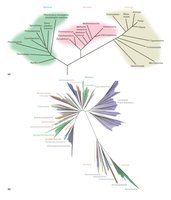
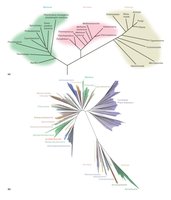
The current classification system is based on nucleotide sequences in ribosomal RNA, replacing the older five-kingdom system. This approach reveals evolutionary relationships among all life forms.
Strategies Used to Identify Microorganisms
Microorganisms are identified using a variety of methods, each providing different types of information:
Microscopic examination: Determines size, shape, and staining characteristics
Culture characteristics: Colony color, odor, and growth patterns
Biochemical tests: Metabolic capabilities and enzyme activities
Nucleic acid analysis: DNA/RNA sequence comparisons
Patient symptoms: Used for pathogen identification
Identification Methods Based on Phenotype
Microscopic Morphology
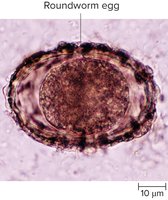
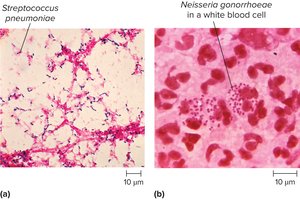
Microscopic examination is a crucial initial step in identifying microorganisms. It can quickly determine cell size, shape, and staining properties, which are sometimes sufficient for diagnosis.
Gram stain: Differentiates Gram-positive and Gram-negative bacteria
Special stains: Acid-fast stain for Mycobacterium tuberculosis
Culture Characteristics
Colony appearance, pigment production, and odor can provide clues to microbial identity. Differential media are used to distinguish species based on metabolic traits.
Serratia marcescens: Red colonies at 22°C
Pseudomonas aeruginosa: Green pigment, fruity odor
Streptococcus pyogenes: β-hemolytic colonies on blood agar
E. coli: Pink colonies on MacConkey agar due to lactose fermentation
Metabolic Capabilities
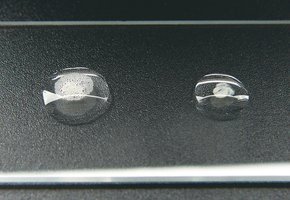
Biochemical tests reveal metabolic properties, such as enzyme activity and substrate utilization. These tests often use pH indicators to detect changes.
Catalase test: Positive if O2 bubbles form after H2O2 is added
Sugar fermentation: Lowers pH, may trap gas
Urease: Raises pH

Biochemical Tests and Dichotomous Keys
Biochemical tests are often organized in a dichotomous key, a series of alternative choices that guide identification. Simultaneous tests speed up the process and increase accuracy.

Commercial Kits
Commercial biochemical test kits allow rapid identification. Results are scored and analyzed by computer to identify the organism.
Serological Characteristics
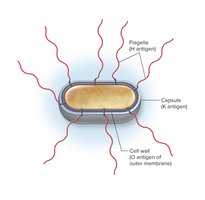
Serological testing uses antibodies to detect specific molecules, such as proteins and polysaccharides, which serve as identifying markers. Surface structures like cell wall, capsule, flagella, and pili are commonly targeted.
Protein Profile (MALDI-TOF)
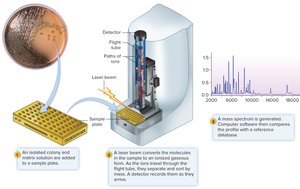
MALDI-TOF mass spectrometry rapidly determines an organism's protein profile, generating a "fingerprint" for identification. The mass spectrum is compared to a database for rapid results.
Identification Methods Based on Genotype
Detecting Specific Nucleotide Sequences
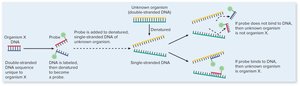
Genotypic methods identify unique DNA or RNA sequences using nucleic acid probes and amplification tests. These methods are highly specific but may require multiple probes for broad identification.
Nucleic Acid Probes
Nucleic acid probes locate sequences characteristic of a species or group. Fluorescence in situ hybridization (FISH) can target 16S rRNA without amplification.
Nucleic Acid Amplification Tests (NAATs)
NAATs, such as polymerase chain reaction (PCR), increase the number of copies of specific DNA sequences, allowing detection of small numbers of organisms, including those that cannot be cultured.
Sequencing Ribosomal RNA Genes
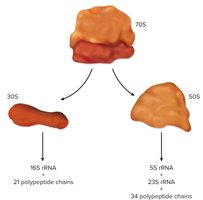
The nucleotide sequence of ribosomal RNA genes, especially 16S rRNA, is used to identify microbes. These sequences are stable and can be compared with extensive databases.
Characterizing Strain Differences
Biochemical Typing
Biochemical typing groups strains with characteristic metabolic patterns (biovar or biotype).
Serological Typing
Serological typing distinguishes strains by antigenic types of flagella, capsules, and lipopolysaccharides. For example, E. coli O157:H7 is identified by its O and H antigens.
Whole Genome Sequencing (WGS)
WGS compares patterns of DNA fragment sizes and provides detailed information for tracking outbreaks and characterizing strains. Networks like PulseNet and Genome Trakr use WGS data for surveillance.
Phage Typing
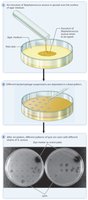
Phage typing relies on differences in susceptibility to bacteriophages. Clear areas on agar indicate lysis by specific phages.
Antibiograms
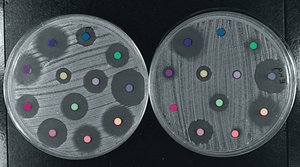
Antibiograms reveal differences in susceptibility to antimicrobial medications. Discs containing antimicrobials are placed on agar; clear areas indicate susceptibility.
Classifying Microorganisms
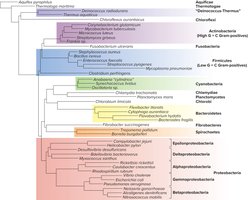
Classification was historically based on phenotypic traits, but molecular techniques now provide more accurate measures of evolutionary relationships. DNA sequencing allows construction of phylogenetic trees.
Sequence Analysis of Ribosomal Components
Ribosomal RNA and protein sequences are reliable indicators of evolutionary relationships. These genes are functionally constant and rarely horizontally transferred.
DNA-DNA Hybridization (DDH)
DDH measures the similarity of nucleotide sequences by hybridizing single strands of DNA. Strains with over 70% similarity are considered the same species.
Sequence Analysis of Genomes
Whole genome sequencing allows comparison of shared genes and calculation of average nucleotide identity (ANI) to assess relatedness.
G + C Content
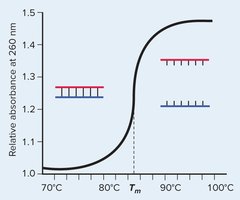
The percentage of guanine-cytosine (G-C) base pairs in DNA is used to assess relatedness. DNA with higher G + C content melts at higher temperatures due to three hydrogen bonds between bases.
Phenotypic Methods
Although largely replaced by genotypic methods, phenotypic methods remain important for microbial identification and provide foundational knowledge for taxonomy.
Additional info: Modern taxonomy integrates both phenotypic and genotypic data, with molecular methods offering greater accuracy for evolutionary studies and outbreak tracking.
