 Back
BackMicrobiology Chapter 1 Study Guidance and Key Concepts
Study Guide - Smart Notes
 Tailored notes based on your materials, expanded with key definitions, examples, and context.
Q1. What percentage of all cells in the human body are bacterial cells?
Background
Topic: Human Microbiome
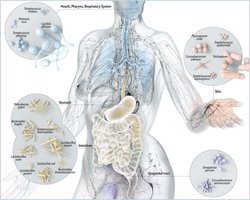
This question tests your understanding of the composition of the human body, specifically the ratio of human cells to bacterial cells. The human microbiome refers to the collection of all microorganisms living in association with the human body.
Key Terms:
Microbiome: The community of microorganisms (bacteria, fungi, viruses) that inhabit a particular environment, including the human body.
Bacterial cells: Single-celled microorganisms that are a major component of the human microbiome.
Step-by-Step Guidance
Recall that the human body is made up of both human cells and a large number of microbial cells, especially bacteria.
Think about where bacteria are most abundant in the body (e.g., gut, skin, mouth).
Consider recent scientific estimates about the ratio of bacterial cells to human cells. Historically, it was thought that bacterial cells outnumbered human cells by about 10:1, but more recent research suggests the ratio is closer to 1:1.
Try solving on your own before revealing the answer!
Q2. How was spontaneous generation disproved?
Background
Topic: History of Microbiology
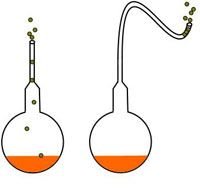
This question examines your knowledge of the experiments that disproved the theory of spontaneous generation, which stated that living organisms could arise from nonliving matter.
Key Terms and Concepts:
Spontaneous generation: The disproven idea that life can arise from nonliving matter.
Biogenesis: The principle that living organisms come only from other living organisms.
Step-by-Step Guidance
Recall the key experiments performed by scientists such as Louis Pasteur.
Think about the design of the swan-neck flask experiment and how it prevented contamination from airborne microbes.
Consider what happened to the broth in the flasks that were exposed to air versus those that were not.
Try solving on your own before revealing the answer!
Q3. What is the importance of Koch’s postulates?
Background
Topic: Microbial Pathogenesis
This question tests your understanding of the criteria used to establish a causative relationship between a microbe and a disease.
Key Terms and Concepts:
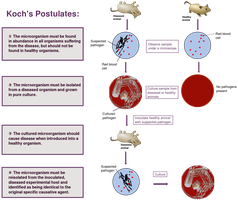
Koch’s postulates: A set of criteria used to prove that a specific microorganism causes a specific disease.
Step-by-Step Guidance
Recall the four main postulates developed by Robert Koch.
Think about how these postulates are used to link a particular microorganism to a specific disease.
Consider the limitations and exceptions to Koch’s postulates in modern microbiology.
Try solving on your own before revealing the answer!
Q4. What is the significance of Jenner’s discovery?
Background
Topic: Immunology and Vaccination
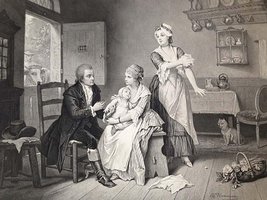
This question focuses on the historical development of vaccines and the impact of Edward Jenner’s work on public health.
Key Terms and Concepts:
Vaccination: The process of stimulating the immune system to develop protection against a disease.
Smallpox: A deadly viral disease eradicated through vaccination.
Step-by-Step Guidance
Recall what disease Jenner worked with and what method he used to prevent it.
Think about how Jenner’s discovery influenced the development of vaccines for other diseases.
Consider the broader impact of vaccination on global health.
Try solving on your own before revealing the answer!
Q5. Define biofilm. How does a biofilm’s protective barrier make it resistant to antibiotics?
Background
Topic: Microbial Communities and Antibiotic Resistance
This question tests your understanding of what a biofilm is and why biofilms are important in clinical microbiology, especially regarding antibiotic resistance.
Key Terms and Concepts:
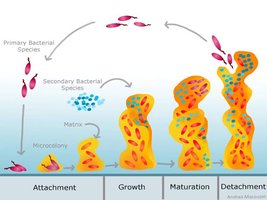
Biofilm: A complex community of microorganisms adhering to a surface and embedded in a self-produced extracellular matrix.
Antibiotic resistance: The ability of bacteria to withstand the effects of antibiotics.
Step-by-Step Guidance
Define what a biofilm is and describe its structure.
Explain how the extracellular matrix protects bacteria within the biofilm from antibiotics and the immune system.
Consider why infections involving biofilms are more difficult to treat than those caused by free-floating (planktonic) bacteria.
Try solving on your own before revealing the answer!
Q6a. What factors contribute to the (re)emergence of an infectious disease?
Background
Topic: Emerging Infectious Diseases
This question asks you to consider the various factors that can lead to the emergence or re-emergence of infectious diseases in populations.
Key Terms and Concepts:
Emerging infectious diseases: Diseases that are new or increasing in incidence.
Re-emerging diseases: Diseases that were previously under control but are now increasing in incidence.
Step-by-Step Guidance
List factors such as microbial evolution, changes in human behavior, environmental changes, and breakdowns in public health measures.
Think about examples of diseases that have emerged or re-emerged due to these factors.
Try solving on your own before revealing the answer!
Q6b. Which is not considered an emerging pathogen/disease?
Background
Topic: Emerging Pathogens
This question tests your ability to distinguish between emerging and non-emerging infectious diseases.
Key Terms:
Emerging pathogen: A microorganism that has recently appeared in a population or is rapidly increasing in incidence.
Step-by-Step Guidance
Review the list: HIV, Smallpox, West Nile virus, Escherichia coli O157:H7.
Recall which diseases have recently emerged or re-emerged and which have been eradicated or are not considered emerging.
Try solving on your own before revealing the answer!
Extra Q1. Does finding E. coli in a stool sample prove it caused GI symptoms? Explain why or why not.
Background
Topic: Disease Causation and Koch’s Postulates
This question tests your understanding of how to establish causation in infectious diseases and the limitations of laboratory findings.
Key Terms:
Normal flora: Microorganisms that normally inhabit the body without causing disease.
Pathogen: A microorganism capable of causing disease.
Step-by-Step Guidance
Recall that E. coli can be part of the normal gut flora but some strains are pathogenic.
Think about what additional evidence is needed to prove causation (e.g., fulfilling Koch’s postulates).
Consider why simply finding E. coli in a stool sample is not sufficient to prove it caused the symptoms.
Try solving on your own before revealing the answer!
Extra Q2. What would you say to a patient demanding antibiotics for a cough, fever, and chills?
Background
Topic: Antibiotic Stewardship
This question tests your understanding of when antibiotics are appropriate and the importance of preventing antibiotic resistance.
Key Terms:
Antibiotic stewardship: The effort to use antibiotics only when necessary to prevent resistance.
Viral vs. bacterial infections: Antibiotics are effective only against bacteria, not viruses.
Step-by-Step Guidance
Consider the symptoms and whether they are more likely caused by a viral or bacterial infection.
Think about how you would explain to the patient why antibiotics may not be appropriate.
Discuss the risks of unnecessary antibiotic use, such as resistance and side effects.
Try solving on your own before revealing the answer!
Extra Q3. What is a genome? How do viral and bacterial genomes differ?
Background
Topic: Microbial Genetics
This question tests your understanding of the genetic material of organisms and the differences between viruses and bacteria.
Key Terms:
Genome: The complete set of genetic material in an organism.
Viral genome: Can be DNA or RNA, single- or double-stranded.
Bacterial genome: Usually a single, circular DNA molecule.
Step-by-Step Guidance
Define what a genome is in general terms.
Describe the typical structure and composition of bacterial genomes.
Contrast this with the diversity of viral genomes (DNA vs. RNA, single- vs. double-stranded, linear vs. circular).
Try solving on your own before revealing the answer!
EOC Analysis Q3. Write the scientific name of Escherichia coli correctly and explain how scientific names are chosen.
Background
Topic: Scientific Nomenclature
This question tests your understanding of binomial nomenclature and the conventions for naming organisms.
Key Terms:
Genus: The first part of the scientific name, always capitalized.
Specific epithet: The second part, not capitalized.
Italicization: Scientific names are italicized or underlined.
Step-by-Step Guidance
Write the genus name with an initial capital letter and the specific epithet in lowercase.
Italicize or underline the entire name.
Explain that scientific names are often derived from Latin or Greek and may describe a characteristic, honor a scientist, or indicate the habitat.
Try solving on your own before revealing the answer!
EOC Analysis Q5. Why was the "war against infectious diseases" not won in the 1960s? Is it possible?
Background
Topic: Infectious Disease Epidemiology
This question asks you to consider why infectious diseases remain a challenge despite advances in medicine.
Key Terms:
Emerging diseases: New or increasing infectious diseases.
Antibiotic resistance: The ability of microbes to resist the effects of drugs.
Step-by-Step Guidance
List reasons why infectious diseases have not been eradicated (e.g., microbial evolution, resistance, global travel, environmental changes).
Discuss whether it is realistic to expect complete eradication of infectious diseases.
Try solving on your own before revealing the answer!
Clinical Application Q1. What led Steere to conclude Lyme arthritis was a new infectious disease? What is the disease? Why was it more prevalent in summer?
Background
Topic: Epidemiology and Disease Investigation
This question tests your ability to analyze epidemiological data and recognize patterns in disease emergence.
Key Terms:
Prevalence: The proportion of a population affected by a disease.
Infectious disease: A disease caused by a microorganism.
Step-by-Step Guidance
Identify the clues in the case (e.g., high prevalence, treatable with penicillin, associated with a rash).
Recall what disease is associated with these features and why it might be more common in summer (consider vectors like ticks).
Try solving on your own before revealing the answer!
Clinical Application Q3. Should antibacterial soaps and detergents be used in the home?
Background
Topic: Public Health and Antimicrobial Resistance
This question asks you to consider the benefits and risks of using antibacterial products in everyday life.
Key Terms:
Antibacterial agents: Chemicals that kill or inhibit bacteria.
Resistance: The ability of bacteria to survive exposure to antibacterial agents.
Step-by-Step Guidance
Consider the effectiveness of antibacterial soaps compared to regular soap and water.
Think about the potential for promoting antibiotic resistance with widespread use of antibacterial products.
Try solving on your own before revealing the answer!
