 Back
BackMicrobiology Chapter 1: The Microbial World – Structured Study Notes
Study Guide - Smart Notes
 Tailored notes based on your materials, expanded with key definitions, examples, and context.
Introduction to Microbiology
Definition and Scope
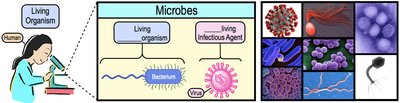
Microbiology is the scientific study of microbes, which includes both living organisms and infectious agents too small to be seen by the naked eye. The prefix 'micro-' means small, and biology is the study of life. The cell is the smallest, most basic unit of life, and microorganisms can be unicellular or multicellular. Microbes include both microorganisms and non-living infectious agents.
Microorganism: Living organism too small to see unaided.
Microbe: Includes microorganisms and acellular infectious agents (e.g., viruses).
Cell: Fundamental unit of life.
Discovering Microorganisms
Historical Figures
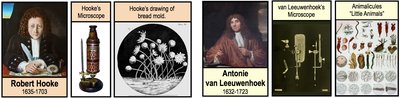
The existence of microorganisms was discovered between 1665 and 1674. Robert Hooke first visualized a microorganism (bread mold), and Antonie van Leeuwenhoek observed protozoa and bacteria, calling them 'animalicules.' Their microscopes were not powerful enough to observe viruses.
Robert Hooke: First to depict a microorganism.
Antonie van Leeuwenhoek: Observed bacteria and protozoa.
Taxonomy and Classification
Taxonomy: The Science of Classification
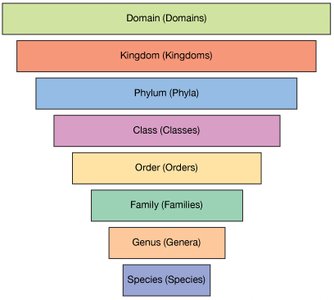
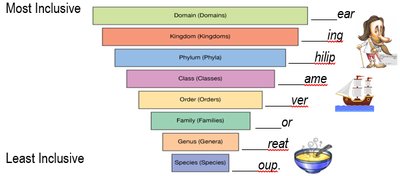
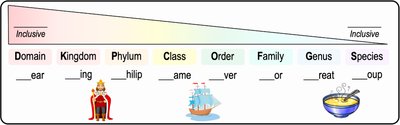
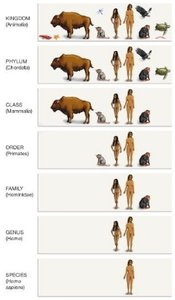
Taxonomy is the branch of science that classifies, identifies, and names organisms. Life is classified into hierarchical categories, from domain (most inclusive) to species (least inclusive).
Domain: Broadest category.
Species: Most specific category.


The Three Domains of Life
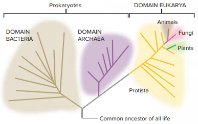
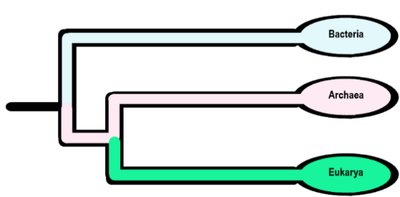
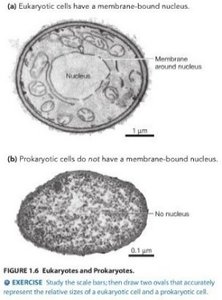
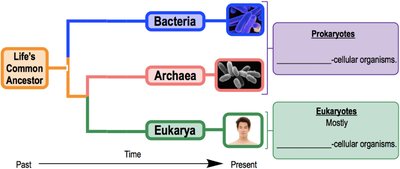
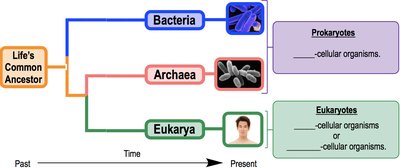
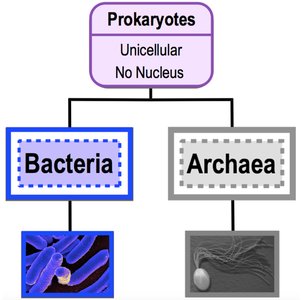
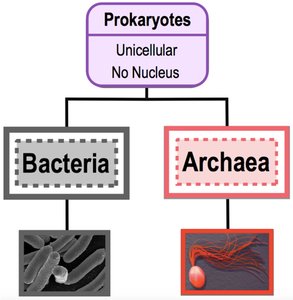
All life is classified into three domains: Bacteria, Archaea, and Eukarya. Bacteria and Archaea are prokaryotic (lack a nucleus), while Eukarya are eukaryotic (contain a nucleus).
Bacteria: Prokaryotic, unicellular.
Archaea: Prokaryotic, unicellular, often extremophiles.
Eukarya: Eukaryotic, unicellular or multicellular.
Kingdoms of Eukarya
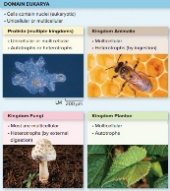
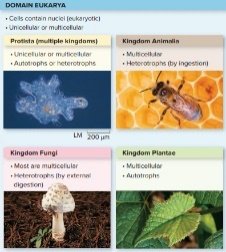
Domain Eukarya is subdivided into four kingdoms: Plantae, Animalia, Fungi, and Protista. Each kingdom has unique characteristics regarding cell structure and energy acquisition.
Plantae: Multicellular, autotrophic.
Animalia: Multicellular, heterotrophic.
Fungi: Mostly multicellular, heterotrophic by external digestion.
Protista: Unicellular or multicellular, autotrophic or heterotrophic.
Energy Acquisition in Life
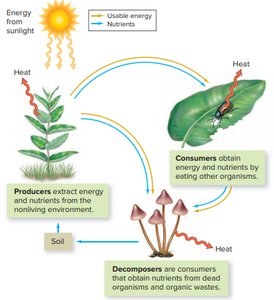
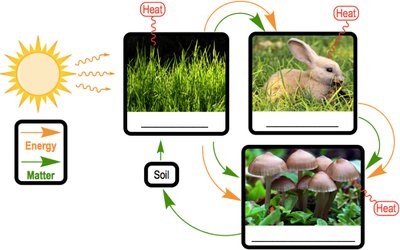
Organisms are categorized based on how they acquire energy: autotrophs (producers), heterotrophs (consumers), and decomposers. Most energy originates from the sun, and energy transfer results in some loss as heat.
Autotrophs: Make their own food (producers).
Heterotrophs: Eat other organisms (consumers).
Decomposers: Obtain energy from wastes and dead organisms.
Scientific Naming of Organisms
Binomial Nomenclature
Carl Linnaeus developed a two-part naming system for organisms: genus (capitalized) and species (not capitalized), both italicized or underlined. Strains are genetic variants within a species.
Genus: First part, capitalized.
Species: Second part, not capitalized.
Strain: Genetic variant within a species.
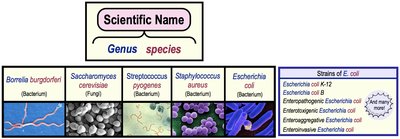
Members of the Microbial World
Diversity of Microbes
Microbes include both cellular organisms (prokaryotes and eukaryotes) and acellular infectious agents. Bacteria and Archaea are prokaryotic, while fungi, algae, protozoa, and helminths are eukaryotic. Viruses, viroids, and prions are acellular.
Prokaryotes: Bacteria and Archaea.
Eukaryotes: Fungi, algae, protozoa, helminths.
Acellular agents: Viruses, viroids, prions.
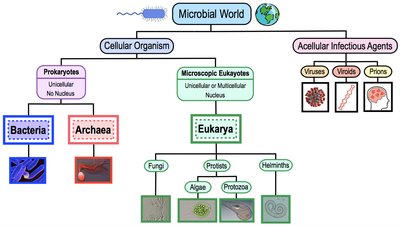
Introduction to Bacteria
Bacterial Characteristics
Bacteria are unicellular, prokaryotic organisms without a nucleus. They vary in shape and size, divide by binary fission, and most have cell walls made of peptidoglycan. Bacteria are major inhabitants of the human body and form the human microbiome.
Binary fission: Method of bacterial division.
Peptidoglycan: Major component of bacterial cell walls.
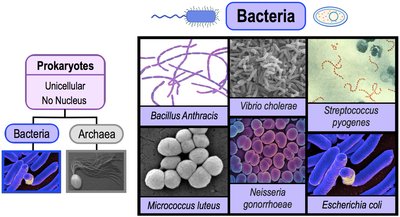
Introduction to Archaea
Archaeal Characteristics
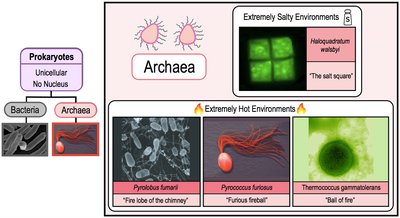
Archaea are unicellular, prokaryotic organisms with unique rRNA sequences and cell walls lacking peptidoglycan. Many are extremophiles, thriving in extreme environments, but some grow in moderate conditions.
Extremophiles: Organisms thriving in extreme environments.
Unique rRNA: Distinguishes Archaea from Bacteria.
Introduction to Eukarya
Eukaryotic Characteristics
Eukaryotes have membrane-bound nuclei and can be unicellular or multicellular. The four kingdoms include plants, animals, fungi, and protists. Microbiologists study microscopic eukaryotes such as fungi, algae, protozoa, and helminths.
Fungi: Diverse group, cell walls made of chitin, do not photosynthesize.
Algae: Photosynthetic, cell walls made of cellulose, unicellular or multicellular.
Protozoa: Unicellular, motile, ingest organic material, lack cell walls.
Helminths: Parasitic worms, eggs and larvae are microscopic.
Acellular Infectious Agents: Viruses, Viroids & Prions
Viruses
Viruses are obligate intracellular parasites made of DNA or RNA in a protein coat, sometimes with a lipid envelope. They infect all forms of life and can kill or remain dormant in host cells.
Obligate intracellular parasite: Requires host cell for replication.
Viroids
Viroids are small, circular, single-stranded RNA molecules that infect plants. They lack protein coats and are only known to cause plant diseases.
Prions
Prions are infectious proteins that cause misfolding of normal proteins, leading to neurodegenerative diseases such as 'mad cow disease.'
Importance of Microorganisms
Commercial, Environmental, and Research Benefits
Microorganisms are essential for life, with roles in food production, biotechnology, environmental maintenance, and as research tools. They are used in fermentation, antibiotic production, bioremediation, and genetic studies.
Fermentation: Bread, beer, yogurt production.
Bioremediation: Degradation of pollutants.
Model organisms: Used in research for insight into biological processes.
Microorganisms in Health & Disease
The human body hosts trillions of microorganisms (normal microbiota), which play roles in health by competing with pathogens. The Human Microbiome Project studies these populations. Some microorganisms are pathogens causing disease.
The Scientific Method
Process and Application
The scientific method is a systematic procedure for answering questions, testing ideas, and expanding scientific knowledge. It involves observation, hypothesis, prediction, experimentation, and theory development.
Hypothesis: Testable explanation for an observation.
Prediction: Expected outcome.
Theory: Supported hypothesis explaining many observations.
Experimental Design
Variables and Controls
Experiments test hypotheses using independent and dependent variables. Controls (positive and negative) help prevent false positives/negatives. Well-designed experiments differ only in the factor being tested.
Independent variable: Manipulated factor.
Dependent variable: Measured outcome.
Control group: Used for comparison.
Microscopy
Types of Microscopes
Microbes require microscopes for visualization. Light microscopes use visible light, while electron microscopes use electron beams for higher magnification and resolution.
Light microscope: Up to 1000X magnification.
Electron microscope: Up to 10,000,000X magnification.
Microscope Properties
Effective microscopy depends on magnification, resolution, and contrast. Resolution is the minimum distance to distinguish two objects, and contrast is the difference in light intensity between specimen and background.
Light Microscopy
Bright-field microscopes are most common, showing darker specimens on a bright background. Other types include dark-field, phase-contrast, and differential interference contrast (DIC) microscopes, which increase contrast for unstained cells. Fluorescence microscopes use UV light to visualize fluorescently tagged molecules.
Electron Microscopy
Transmission electron microscopes (TEM) provide 2D images of internal structures, while scanning electron microscopes (SEM) provide 3D images of surface structures.
Staining Techniques
Simple Staining
Simple staining uses one dye to increase contrast. Basic dyes (positively charged) stain cell interiors, while acidic dyes (negatively charged) stain backgrounds.
Differential Staining
Differential staining uses multiple dyes to distinguish groups of bacteria. Gram-staining differentiates based on cell wall structure, and acid-fast staining identifies bacteria with mycolic acid in their cell walls.
Special Staining
Special stains target specific cell structures, such as capsules, endospores, and flagella. Fluorescent dyes and immunofluorescence tag specific molecules for visualization.
Spontaneous Generation and Biogenesis
Historical Experiments
Spontaneous generation was the belief that life arose from non-living matter. Experiments by Redi, Needham, Spallanzani, and Pasteur disproved this, supporting biogenesis (life arises from pre-existing life). Pasteur's swan-neck flask experiment demonstrated that microbes in the air cause contamination.
Redi: Showed maggots arise from fly eggs.
Needham: Poor experimental setup supported spontaneous generation.
Spallanzani: Sealed and boiled flasks disproved spontaneous generation.
Pasteur: Swan-neck flask experiment confirmed biogenesis.
Endospores and Sterilization
John Tyndall showed that some broths contain heat-resistant microbes (endospores), explaining why Pasteur's results were not always replicable.
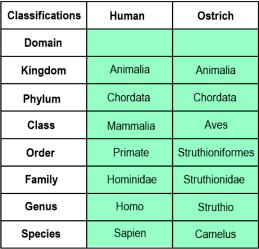
Summary Table: Classification Hierarchy
Classification | Human | Ostrich |
|---|---|---|
Domain | Animalia | Animalia |
Kingdom | Animalia | Animalia |
Phylum | Chordata | Chordata |
Class | Mammalia | Aves |
Order | Primate | Struthioniformes |
Family | Hominidae | Struthionidae |
Genus | Homo | Struthio |
Species | Sapien | Camelus |
Summary Table: Microbial World Classification
Type | Cellular Organism | Acellular Infectious Agent |
|---|---|---|
Prokaryotes | Bacteria, Archaea | - |
Eukaryotes | Fungi, Algae, Protozoa, Helminths | - |
Acellular | - | Viruses, Viroids, Prions |
