 Back
BackMicrobiology Exam 2 Study Guide: Structure and Function of Genetic Material
Study Guide - Smart Notes
 Tailored notes based on your materials, expanded with key definitions, examples, and context.
Q1. Define genetics, genome, chromosome, gene, genetic code, genotype, phenotype, and genomics.
Background
Topic: Fundamental Concepts in Genetics
This question tests your understanding of the basic vocabulary and relationships in genetics, which is foundational for all microbiology and molecular biology studies.
Key Terms:
Genetics: The study of heredity and variation in organisms.
Genome: The complete set of genetic material in an organism.
Chromosome: A structure composed of DNA and proteins that contains genes.
Gene: A segment of DNA that encodes a functional product, usually a protein.
Genetic code: The set of rules by which information encoded in genetic material is translated into proteins.
Genotype: The genetic makeup of an organism.
Phenotype: The observable characteristics of an organism.
Genomics: The study of genomes, including their structure, function, evolution, and mapping.
Step-by-Step Guidance
Start by writing a concise definition for each term, focusing on its role in molecular biology.
Think about how these terms are related: for example, how genes are located on chromosomes, and chromosomes make up the genome.
Consider the difference between genotype (the genetic information) and phenotype (the physical expression of that information).
Reflect on how the genetic code allows the information in DNA to be translated into proteins, which then influence phenotype.
Try solving on your own before revealing the answer!
Q2. What is the genome? What is a chromosome? What is a gene? How are these elements organized?
Background
Topic: Organization of Genetic Material
This question focuses on the hierarchical structure of genetic material in cells and how these components are nested within each other.
Key Concepts:
The genome contains all the genetic information of an organism.
Chromosomes are structures within cells that organize and package DNA.
Genes are specific sequences of DNA found on chromosomes.
Step-by-Step Guidance
Define each term (genome, chromosome, gene) in your own words.
Describe the relationship: genes are segments of DNA, chromosomes are long DNA molecules with many genes, and the genome is the sum total of all chromosomes.
Think about how this organization differs in prokaryotes (usually one circular chromosome) versus eukaryotes (multiple linear chromosomes).
Try solving on your own before revealing the answer!
Q3. What is the definition and the difference between genotype and phenotype?
Background
Topic: Expression of Genetic Information
This question tests your understanding of how genetic information is stored and expressed in living organisms.
Key Terms:
Genotype: The genetic constitution of an organism.
Phenotype: The observable traits or characteristics.
Step-by-Step Guidance
Write a definition for genotype and phenotype.
Explain how the genotype determines the phenotype, but environmental factors can also influence phenotype.
Give an example (e.g., a gene for pigment production and the resulting color).
Try solving on your own before revealing the answer!
Q4. How are gene, DNA, RNA, and protein connected to the relation between genotype and phenotype?
Background
Topic: Central Dogma of Molecular Biology
This question explores the flow of genetic information from DNA to RNA to protein, and how this flow determines phenotype.
Key Concepts and Formula:
Central Dogma:
Step-by-Step Guidance
Describe the process of transcription (DNA to RNA) and translation (RNA to protein).
Explain how the sequence of nucleotides in DNA (genotype) is ultimately responsible for the sequence of amino acids in proteins (which contribute to phenotype).
Consider how mutations in DNA can lead to changes in protein structure and function, affecting phenotype.
Try solving on your own before revealing the answer!
Q5. In prokaryotes, where is the genome located? In eukaryotes, where is the genome located?
Background
Topic: Cellular Organization of Genetic Material
This question tests your knowledge of cell structure and the differences between prokaryotic and eukaryotic cells.
Key Concepts:
Prokaryotes: No nucleus; genome is in the nucleoid region.
Eukaryotes: Genome is in the nucleus; also present in mitochondria and chloroplasts.
Step-by-Step Guidance
Recall the main structural differences between prokaryotic and eukaryotic cells.
Identify the cellular compartment where the genome is found in each cell type.
Consider the presence of additional genetic material in organelles (mitochondria, chloroplasts) in eukaryotes.
Try solving on your own before revealing the answer!
Q6. What is the main difference between chromosomes of prokaryotes and eukaryotes?
Background
Topic: Chromosome Structure
This question focuses on the structural differences in chromosomes between prokaryotic and eukaryotic organisms.
Key Concepts:
Prokaryotic chromosomes: Usually single, circular DNA molecules.
Eukaryotic chromosomes: Multiple, linear DNA molecules.
Step-by-Step Guidance
Describe the typical structure of prokaryotic chromosomes.
Describe the typical structure of eukaryotic chromosomes.
Think about how these differences affect replication and cell division.
Try solving on your own before revealing the answer!
Q7. How is the mitochondrial chromosome structurally different from nuclear chromosomes?
Background
Topic: Organelle Genomes
This question examines the unique features of mitochondrial DNA compared to nuclear DNA.
Key Concepts:
Mitochondrial DNA: Typically circular, small, and present in multiple copies per mitochondrion.
Nuclear DNA: Linear, large, and organized into chromosomes.
Step-by-Step Guidance
Describe the structure of mitochondrial DNA.
Compare it to the structure of nuclear chromosomes.
Consider the evolutionary origin of mitochondria (endosymbiotic theory).
Try solving on your own before revealing the answer!
Q8. What is the name of the extrachromosomal genetic element discussed in lecture, and what kind of genes can it carry?
Background
Topic: Plasmids and Their Role in Microbiology
This question focuses on extrachromosomal DNA elements, especially plasmids, and their significance in antibiotic resistance and public health.
Key Concepts:
Plasmids: Small, circular DNA molecules separate from chromosomal DNA.
Can carry genes for antibiotic resistance, virulence factors, and other traits.
Step-by-Step Guidance
Name the main extrachromosomal genetic element found in bacteria.
List the types of genes these elements can carry, especially those relevant to infectious disease and antibiotic resistance.
Think about why these genes are important in clinical microbiology.
Try solving on your own before revealing the answer!
Q9. Diagram of the Expanded/Extended Central Dogma: Connect DNA, RNA, proteins, and the processes and enzymes involved.
Background
Topic: Central Dogma and Information Flow
This question asks you to visually organize the flow of genetic information and the enzymes involved in each step.
Key Concepts and Enzymes:
DNA replication: DNA polymerase, dNTPs
Transcription: RNA polymerase, NTPs
Translation: Ribosome, tRNA, amino acids
Reverse transcription: Reverse transcriptase
RNA-dependent RNA polymerase (in viruses)
Step-by-Step Guidance
Draw arrows to show the flow of information: DNA → RNA → Protein.
Label the processes (replication, transcription, translation) and the enzymes involved in each.
Include special cases like reverse transcription and RNA-dependent RNA polymerase.
Try solving on your own before revealing the answer!
Q10. What is the difference between double-stranded DNA (dsDNA) and single-stranded DNA (ssDNA)?
Background
Topic: DNA Structure
This question tests your understanding of the physical and chemical differences between dsDNA and ssDNA.
Key Concepts:
dsDNA: Two complementary strands held together by hydrogen bonds.
ssDNA: Only one strand; not base-paired.
Step-by-Step Guidance
Describe the structure of dsDNA, including base pairing and antiparallel orientation.
Describe the structure of ssDNA and how it differs from dsDNA.
Consider the biological significance of each form (e.g., viral genomes, replication intermediates).
Try solving on your own before revealing the answer!
Q11. What makes a strand of DNA? What is the name of the covalent bond linking deoxyribonucleotides?
Background
Topic: DNA Chemistry
This question focuses on the chemical structure of DNA and the bonds that hold the backbone together.
Key Terms and Formula:
Deoxyribonucleotides: Building blocks of DNA.
Phosphodiester bond: Covalent bond linking nucleotides.
Step-by-Step Guidance
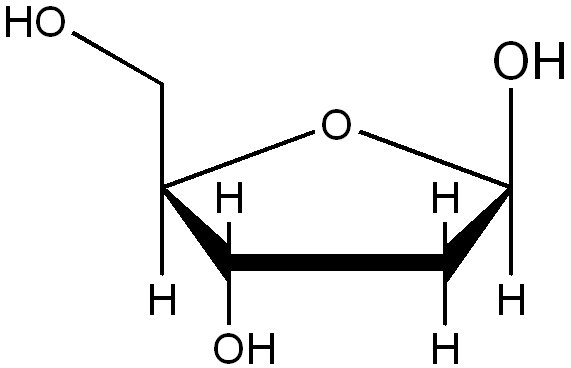
List the components of a deoxyribonucleotide (phosphate, deoxyribose sugar, nitrogenous base).
Describe how nucleotides are joined by phosphodiester bonds between the 3' hydroxyl and 5' phosphate groups.
Explain the directionality (5' to 3') of DNA strands.
Try solving on your own before revealing the answer!
Q12. What is supercoiling? What is the role of topoisomerases?
Background
Topic: DNA Topology
This question explores how DNA is compacted in cells and the enzymes that manage DNA supercoiling.
Key Concepts:
Supercoiling: The overwinding or underwinding of DNA.
Topoisomerases: Enzymes that relieve or introduce supercoils in DNA.
Step-by-Step Guidance
Define supercoiling and why it is important for DNA packaging.
Describe the function of topoisomerases in managing DNA supercoiling during replication and transcription.
Consider the consequences of defective topoisomerase activity.
Try solving on your own before revealing the answer!
Q13. What is an operon? Describe its structure and function.
Background
Topic: Regulation of Gene Expression in Prokaryotes
This question focuses on the operon model, which explains how groups of genes are regulated together in bacteria.
Key Terms:
Operon: A cluster of genes under the control of a single promoter and operator.
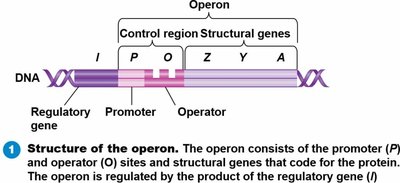
Promoter, operator, structural genes, regulatory gene.
Step-by-Step Guidance
Draw or describe the basic structure of an operon (regulatory gene, promoter, operator, structural genes).
Explain the function of each component in regulating gene expression.
Give an example, such as the lac operon.
Try solving on your own before revealing the answer!
Q14. What does diauxic growth mean? How does it relate to the lac operon?
Background
Topic: Bacterial Growth and Gene Regulation
This question examines how bacteria prioritize carbon sources and how gene regulation adapts to environmental changes.
Key Concepts:
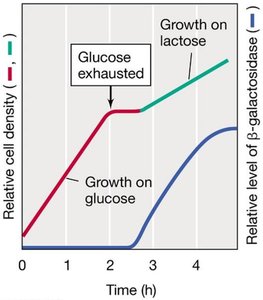
Diauxic growth: Two-phase growth pattern when two sugars are present.
Lac operon: Regulated by the presence or absence of glucose and lactose.
Step-by-Step Guidance
Define diauxic growth and describe the typical growth curve.
Explain how the lac operon is regulated by glucose and lactose availability.
Relate the molecular mechanisms (cAMP, CAP, repressor) to the observed growth pattern.
Try solving on your own before revealing the answer!
Q15. How do mutations affect open reading frames? What is a frameshift mutation?
Background
Topic: Mutations and Their Consequences
This question tests your understanding of how changes in DNA sequence can impact protein coding regions.
Key Concepts:
Open reading frame (ORF): Sequence of DNA that can be translated into protein.
Frameshift mutation: Insertion or deletion not in multiples of three, altering the reading frame.
Step-by-Step Guidance
Define what an open reading frame is and why its integrity is important for protein synthesis.
Describe what happens when nucleotides are inserted or deleted in multiples of three versus not in multiples of three.
Explain the consequences of a frameshift mutation on the resulting protein.
Try solving on your own before revealing the answer!
