 Back
BackMicrobiology: Foundations, Cell Structure, Growth, and Control
Study Guide - Smart Notes
 Tailored notes based on your materials, expanded with key definitions, examples, and context.
Microbiology: An Introduction
Defining Microbiology and Microorganisms
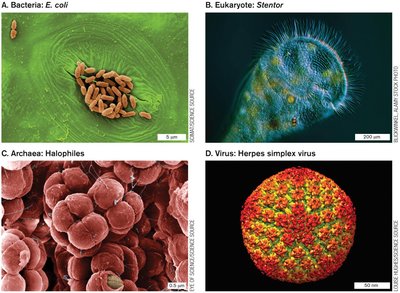
Microbiology is the study of microscopic organisms, including bacteria, archaea, microbial eukaryotes, and viruses. Microorganisms are living entities that require a microscope to be seen, and they play essential roles in ecosystems, human health, and biotechnology.
Microorganism Categories: Bacteria, Archaea, Fungi, Protozoa, Algae, Viruses (though not truly living), Prions (misfolded proteins).
Characteristics of Life: Nutrition, respiration, growth, excretion, reproduction, movement, response to stimuli.
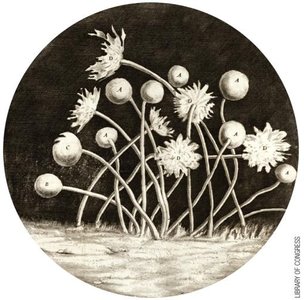
Microbial Communities: Populations interact to form communities, such as biofilms and fruiting bodies.
Human Microbiome: Over 10,000 bacterial species identified in humans; most are beneficial.
Importance of Microorganisms
Microorganisms are the smallest self-existing forms of life and constitute the largest mass of living material on Earth. They are crucial for nutrient cycling, disease, biotechnology, and understanding complex life forms.
Applications: Disease agents, environmental remediation, food webs, biotechnology.
History of Microbiology
Disproving Spontaneous Generation
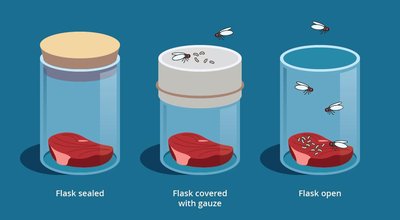
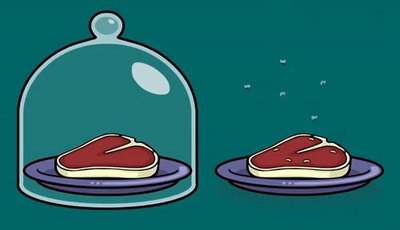
Early theories suggested life could arise spontaneously from non-living matter (spontaneous generation). Experiments by Redi and Pasteur disproved this, establishing biogenesis—the principle that life arises from pre-existing life.
Francesco Redi: Used sealed and open jars to show maggots only appeared when flies could access meat.
Louis Pasteur: Swan-necked flask experiments demonstrated that microbes in the air, not spontaneous generation, caused growth in nutrient broths.
Koch's Postulates and Pure Cultures
Robert Koch established criteria (Koch's postulates) to link specific microbes to diseases and developed methods for isolating pure cultures using solid media.
Koch's Postulates: Four steps to prove causation of disease by a microbe.
Pure Culture: Culture containing only one kind of microorganism; essential for studying microbial physiology and genetics.

Cell Structure: Prokaryotes vs. Eukaryotes
Elements of Microbial Structure
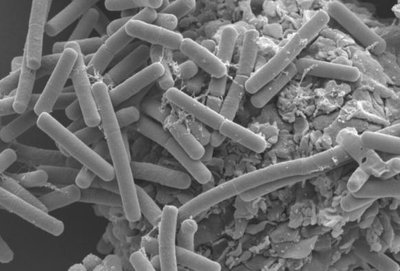
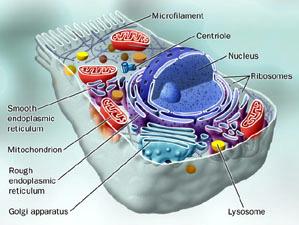
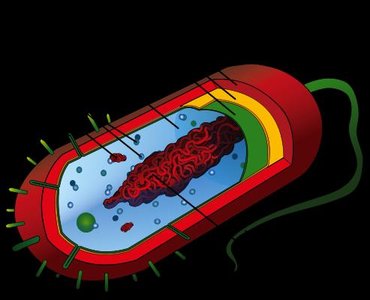
Microbial cells are classified as prokaryotic or eukaryotic based on internal structure and DNA arrangement.
Eukaryotes: DNA enclosed in a nucleus, contain organelles, generally larger and more complex.
Prokaryotes: No nucleus or membrane-bound organelles, generally smaller.
Cell Morphology and Arrangements
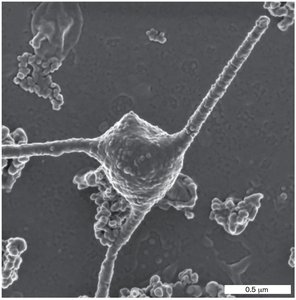
Microbial cell shapes include coccus (spherical), bacillus (rod-shaped), and spirillum (spiral). Cells may form unique arrangements and structures, such as spirochetes, appendaged, and filamentous bacteria.
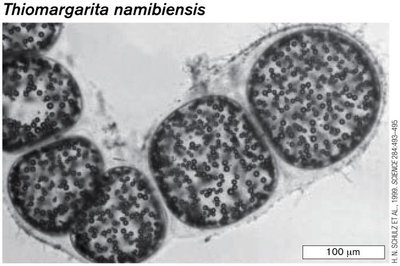
Cell Size: Prokaryotes range from 0.2 μm to >700 μm; eukaryotes from 10 μm to >200 μm.
Surface-to-Volume Ratio: Small cells have higher ratios, supporting faster nutrient exchange and growth.
Cell Envelope: Membrane and Wall
Cell Membrane Structure
The cell membrane is a selectively permeable barrier composed of phospholipids and proteins. It separates the cell from its environment and regulates nutrient uptake and waste excretion.
Phospholipid Bilayer: Hydrophobic tails face inward, hydrophilic heads face outward.
Membrane Proteins: Integral and peripheral proteins provide structural support, signal detection, transport, and communication.
Cell Wall Structure
The cell wall is a tough, flexible structure composed of peptidoglycan (PG) in bacteria. PG consists of repeating units of N-acetylglucosamine (NAG) and N-acetylmuramic acid (NAM) linked by short peptides.
Gram-Positive: Thick PG layer, teichoic acids, S-layer, capsule.
Gram-Negative: Thin PG layer, outer membrane with lipopolysaccharide (LPS), periplasm, S-layer/capsule.
Specialized Structures in Bacteria
Flagella, Pili, and Other Structures
Bacteria possess specialized structures for motility, adhesion, communication, and photosynthesis.
Flagella: Helical propellers for motility; arrangements include peritrichous, polar, lophotrichous.
Pili (Fimbriae): Straight filaments for adhesion and DNA transfer (sex-pili).
Stalks: Holdfast structures for surface attachment.
Nanotubes: Membranous bridges for sharing genetic material and metabolites.
Thylakoids and Carboxysomes: Specialized for photosynthesis and CO2 fixation.
Microbial Growth and Nutrition
Microbial Growth Cycle
Bacterial growth follows distinct phases: lag, log (exponential), stationary, and death. Growth rate and generation time are key parameters for quantifying population dynamics.
Exponential Growth: Cell numbers double at regular intervals.
Growth Rate Constant:
Generation Time:
Growth Calculation:
Nutrient Uptake and Culture Media
Microbes require essential nutrients, classified as macronutrients (C, N, P, H, O, S) and micronutrients (Mg, Fe, K, Co, Cu, Mn, Mo, Ni, Zn). Nutrient uptake occurs via facilitated diffusion and active transport (ABC transporters, group translocation, siderophores).
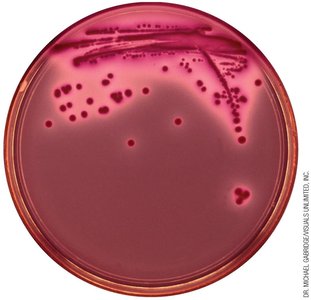
Culture Media: Complex, enriched, synthetic, minimal defined, selective, and differential media.
Unculturable Bacteria: Most microbes require specific growth factors and cannot be cultured in standard media.
Environmental Influences on Microbial Growth
Extremophiles and Adaptations
Microbes inhabit diverse environments, including extreme conditions of temperature, osmolarity, pH, oxygen, and pressure.
Temperature: Psychrophiles (cold), mesophiles (moderate), thermophiles (hot), hyperthermophiles (very hot).
Osmolarity: Halophiles (high salt), halotolerant, nonhalophiles.
pH: Acidophiles (acidic), neutralophiles (neutral), alkaliphiles (basic).
Oxygen: Aerobes, anaerobes, facultative anaerobes, aerotolerant, microaerophiles.
Pressure: Barophiles (high pressure), barotolerant, barosensitive.
Controlling Microbial Growth
Physical, Chemical, and Biological Agents
Microbial growth can be controlled using physical (heat, filtration, irradiation), chemical (disinfectants, antibiotics), and biological (probiotics, phage therapy) agents.
Physical Agents: Boiling, autoclaving, pasteurization, filtration, irradiation.
Chemical Agents: Disinfectants, antibiotics (bacteriostatic and bactericidal).
Biological Agents: Probiotics, phage therapy.
Summary Table: Cell Envelope Comparison
Feature | Gram-Positive | Gram-Negative |
|---|---|---|
Cell Membrane | Single | Inner and Outer |
Peptidoglycan | Thick (3-20 layers) | Thin (1 layer) |
Teichoic Acids | Present | Absent |
LPS | Absent | Present |
Periplasm | Absent | Present |
Capsule/S-Layer | Common | Variable |
Summary Table: Environmental Adaptations
Condition | Microbe Type | Adaptation |
|---|---|---|
Temperature | Psychrophile | Flexible proteins, unsaturated lipids |
Temperature | Thermophile | Stable proteins, saturated lipids |
Osmolarity | Halophile | Na+/K+ pumps, adapted enzymes |
pH | Acidophile | Proton extrusion, tetraether lipids |
pH | Alkaliphile | Na+/H+ antiporters, diether lipids |
Pressure | Barophile | Polyunsaturated fatty acids |
Conclusion
Microbiology is a foundational science for understanding life at the microscopic level, disease mechanisms, environmental processes, and biotechnological applications. Mastery of cell structure, growth, environmental adaptation, and control methods is essential for further study and research in the field.
