 Back
BackMicrobiology: Foundations, Cell Structure, Growth, and Environmental Adaptations
Study Guide - Smart Notes
 Tailored notes based on your materials, expanded with key definitions, examples, and context.
Chapter 1: The Microbial World and You
Introduction to Microbiology
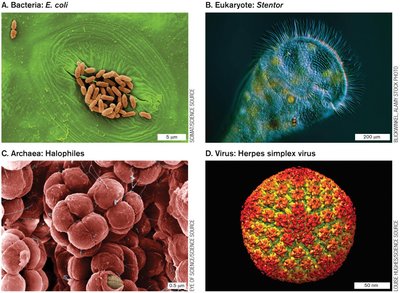
Microbiology is the study of microscopic organisms, including bacteria, archaea, viruses, fungi, protozoa, and algae. These organisms are essential to life on Earth, influencing health, ecology, and biotechnology.
Microorganism: A living organism too small to be seen with the naked eye, typically requiring a microscope for observation.
Major Groups: Bacteria, Archaea, Microbial Eukaryotes (fungi, protozoa, algae), Viruses, Prions.
Microbial Communities: Populations of microorganisms interacting within a habitat, forming complex ecosystems such as biofilms.
Characteristics of Life
Nutrition: Uptake of nutrients for energy and growth.
Respiration: Metabolic processes for energy generation.
Growth: Increase in cell size and number.
Excretion: Removal of metabolic waste.
Reproduction: Production of new cells or organisms.
Movement: Locomotion or taxis in response to stimuli.
Response to Stimuli: Adaptation to environmental changes.
Cell Types: Prokaryotic vs. Eukaryotic
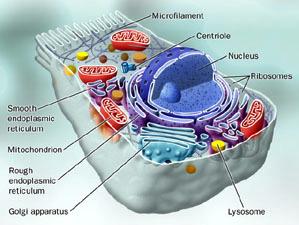
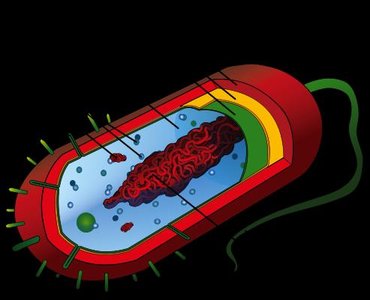
Cells are the fundamental units of life, classified as prokaryotic or eukaryotic based on structural differences.
Prokaryotic Cells: Lack a membrane-bound nucleus and organelles; DNA is typically circular and located in the nucleoid region.
Eukaryotic Cells: Possess a nucleus and membrane-bound organelles; DNA is linear and organized into chromosomes.
What is a Microorganism?
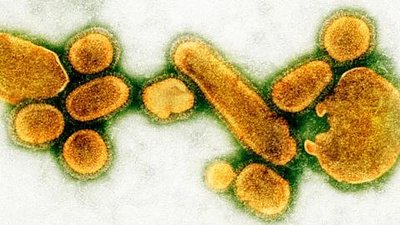
Includes bacteria, archaea, microbial eukaryotes, and viruses (though viruses lack some characteristics of life).
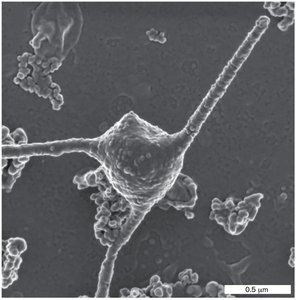
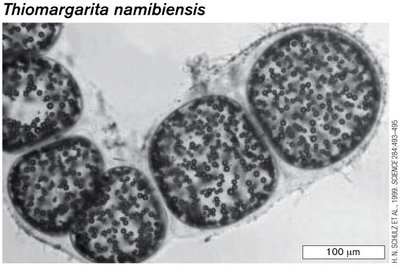
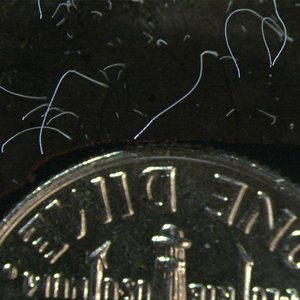
Some exceptions exist, such as super-sized microbial cells (Thiomargarita namibiensis), microbial communities (biofilms), and prions (infectious proteins).
Importance of Microorganisms
Constitute the largest mass of living material on Earth.
Major contributors to nutrient cycling, oxygen production, and food webs.
Essential for biotechnology and understanding complex life forms.
Some are pathogenic, but many are beneficial (e.g., human microbiome).
History of Microbiology
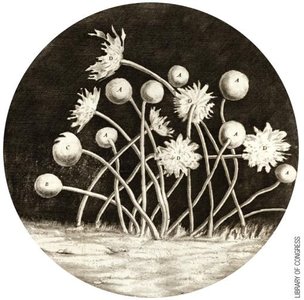
Robert Hooke: First to describe microorganisms (molds).
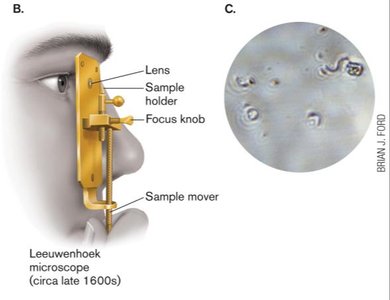
Antonie van Leeuwenhoek: First to observe bacteria using a simple microscope.
Ferdinand Cohn: Founder of bacteriology; discovered endospores.
Spontaneous Generation vs. Biogenesis
Spontaneous Generation: Hypothesis that life arises from non-living matter.
Biogenesis: Life arises from pre-existing life.
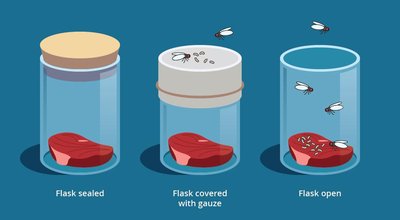
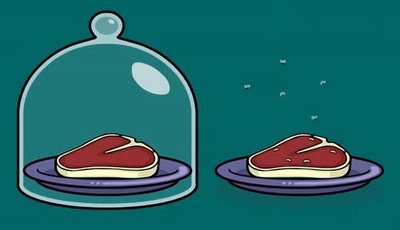
Francesco Redi: Demonstrated that maggots arise from eggs, not meat.
Louis Pasteur: Swan-necked flask experiment disproved spontaneous generation.
Koch’s Postulates and Infectious Disease
Robert Koch: Established the link between microbes and disease (anthrax, tuberculosis).
Koch’s Postulates: Criteria to prove a specific microbe causes a specific disease.
Development of pure culture techniques and solid media (agar).


Chapter 4: Functional Anatomy of Prokaryotic and Eukaryotic Cells
Elements of Microbial Structure
Eukaryotes: DNA in nucleus, organelles present, larger and more complex.
Prokaryotes: No nucleus, no membrane-bound organelles, generally smaller.
Arrangement of DNA
Prokaryotes: Single, circular chromosome in nucleoid; may have plasmids.
Eukaryotes: Linear chromosomes in nucleus; associated with histone proteins.
Cell Morphology and Arrangements
Coccus: Spherical
Bacillus: Rod-shaped
Spirillum: Spiral
Other forms: Spirochetes, appendaged, filamentous bacteria
Cell Size and Significance
Prokaryotes: 0.2–700 μm diameter; Eukaryotes: 10–200 μm diameter
Small cells have higher surface-to-volume ratios, supporting faster growth rates.
Cell Envelope Structure
Cell Membrane: Phospholipid bilayer with embedded proteins; selectively permeable.
Cell Wall: Peptidoglycan in bacteria; provides shape and protection.
Gram-Positive: Thick peptidoglycan, teichoic acids, single membrane.
Gram-Negative: Thin peptidoglycan, outer membrane with lipopolysaccharide (LPS), periplasmic space.
Specialized Structures
Flagella: Motility structures; arrangements include peritrichous, polar, lophotrichous.
Pili (Fimbriae): Attachment and DNA transfer (sex pili).
Stalks, Nanotubes: Surface attachment, intercellular communication.
Thylakoids, Carboxysomes, Gas Vesicles: Photosynthesis, CO2 fixation, buoyancy.
Cell Division
Bacteria divide by binary fission, not mitosis.
Replisome: Protein complex for DNA replication.
Divisome: Protein complex for septum formation and cell division (FtsZ ring).
Chapter 6: Microbial Growth
Microbial Nutrition
Macronutrients: Required in large amounts (C, N, P, H, O, S, Mg, Fe, K, Ca).
Micronutrients: Trace elements (Co, Cu, Mn, Mo, Ni, Zn).
Transport Mechanisms: Facilitated diffusion, active transport (ABC transporters, group translocation, siderophores).
Bacterial Culture and Media
Complex Media: Nutrient-rich, undefined composition.
Enriched Media: Complex media with additional nutrients.
Synthetic/Defined Media: Exact chemical composition known.
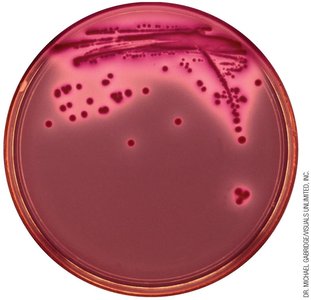
Selective Media: Favors growth of specific microbes.
Differential Media: Distinguishes microbes based on biochemical properties.
Quantifying Microbial Growth
Viable Counts: Counting colonies from serial dilutions (CFU).
Direct Counting: Microscopy, flow cytometry.
Optical Density: Turbidity measurement (does not distinguish live/dead cells).
Growth Cycle in Batch Culture
Lag Phase: Adaptation, no division.
Log (Exponential) Phase: Rapid, constant division.
Stationary Phase: Nutrient depletion, growth ceases.
Death Phase: Cell death exceeds division.
Key Equations:
Growth rate constant:
Generation time:
Population size:
Continuous Culture: The Chemostat
Open system with controlled nutrient input and waste removal.
Growth rate controlled by dilution rate; yield by limiting nutrient concentration.
Bacterial Differentiation in the Environment
Biofilms: Surface-attached communities with complex life cycles (initiation, maturation, maintenance, dissolution).
Endospores: Dormant, heat-resistant forms (e.g., Bacillus, Clostridium).
Heterocysts: Specialized nitrogen-fixing cells in cyanobacteria.
Mycelia: Filamentous growth forms, important for antibiotic production.
Chapter 7: The Control of Microbial Growth & Environmental Influences
Extremophiles and Environmental Adaptations
Temperature: Psychrophiles (cold), Mesophiles (moderate), Thermophiles/Hyperthermophiles (hot).
Osmolarity: Halophiles (high salt), Halotolerant, Nonhalophiles.
pH: Acidophiles (acidic), Neutralophiles (neutral), Alkaliphiles (basic).
Oxygen Requirements: Aerobes, Anaerobes, Facultative, Aerotolerant, Microaerophiles.
Pressure: Barophiles (high pressure), Barotolerant, Barosensitive.
Microbial Death and Control
Starvation Response: Programmed cell death, toxin-antitoxin systems.
Physical Agents: Heat (autoclave, pasteurization), cold, filtration, irradiation.
Chemical Agents: Disinfectants, antiseptics, antibiotics.
Biological Agents: Probiotics, phage therapy.
Summary Table: Environmental Preferences of Microbes
Factor | Type | Example |
|---|---|---|
Temperature | Psychrophile | Polaromonas vacuolata |
Temperature | Mesophile | Escherichia coli |
Temperature | Thermophile | Geobacillus stearothermophilus |
Osmolarity | Halophile | Tetragenococcus halophilus |
pH | Acidophile | Sulfolobus acidocaldarius |
pH | Neutralophile | E. coli |
pH | Alkaliphile | Spirulina |
Oxygen | Aerobe | Mycobacterium tuberculosis |
Oxygen | Anaerobe | Bacteroides |
Pressure | Barophile | Thermococcus piezophilus |
Additional info: This guide integrates foundational concepts, cell structure, microbial growth, environmental adaptations, and control methods, providing a comprehensive overview for exam preparation in introductory microbiology.
