 Back
Microbiology Foundations: Chapters 1–4 Study Guide
Study Guide - Smart Notes
 Tailored notes based on your materials, expanded with key definitions, examples, and context.
Microbes and Their Impact on Life
Ways Microbes Affect Our Lives
Microorganisms, or microbes, are essential to both human health and the environment. They play diverse roles, from supporting bodily functions to influencing ecosystems and industry.
Human Microbiome: The collection of microbes living in and on the human body helps maintain health by preventing disease and balancing bodily functions.
Biofilms: Microbes can form biofilms, which are communities that adhere to surfaces. These structures can protect against infections but also increase resistance to antimicrobial agents.
Food Production: Microbes are used in the production of foods such as wine, cheese, and yogurt, contributing to flavor, preservation, and nutritional value.
Pharmaceuticals: Many antibiotics and other drugs are derived from microbial metabolism.
Ecosystem Function: Microbes recycle nutrients, decompose organic matter, and transform habitats, making them vital for ecosystem health.
Destructive and Beneficial Actions of Microbes
Destructive: Some microbes are pathogenic, causing diseases in humans, animals, and plants. Others can damage environments, such as those involved in acid mine drainage.
Beneficial: Microbes in the digestive tract compete with pathogens, protecting against infection. Environmental microbes decompose dead organisms and recycle elements.
Classification and Nomenclature
Binomial Nomenclature
The scientific naming system for organisms uses two names: the genus and the specific epithet. This system, introduced by Carolus Linnaeus, ensures clarity and consistency in identifying species.
Genus: Written first, capitalized, and italicized (or underlined).
Specific epithet: Written second, lowercase, and italicized (or underlined).
Example: Enterococcus faecalis and Enterococcus faecium share the genus but differ in species.
Major Groups of Microorganisms
Bacteria: Single-celled prokaryotes with peptidoglycan cell walls; reproduce asexually.
Archaea: Single-celled prokaryotes without peptidoglycan; often live in extreme environments.
Fungi: Eukaryotes with chitin cell walls; can be unicellular (yeasts) or multicellular (molds).
Protozoa: Unicellular eukaryotes with complex structures; mostly asexual reproduction.
Algae: Plant-like eukaryotes; can be unicellular or multicellular with rigid cell walls.
Viruses: Acellular particles with DNA or RNA inside a protein coat; require host cells to replicate.
Small Multicellular Animals: Includes parasitic worms (helminths).
Taxonomic Ranks
Genus: A group containing one or more species.
Specific epithet: The second part of the species name, not used alone.
Prokaryotes vs. Eukaryotes
Prokaryotes: Bacteria and Archaea (no nucleus).
Eukaryotes: Fungi, Protozoa, Algae, Small multicellular animals (have a nucleus).
The Three Domains of Life
Bacteria: Prokaryotic, peptidoglycan cell walls, found everywhere.
Archaea: Prokaryotic, no peptidoglycan, often extremophiles.
Eukarya: Eukaryotic, includes plants, animals, fungi, and protists.
Foundations of Microbiology
Historical Observations
Hooke and van Leeuwenhoek: First to observe and describe microorganisms, leading to the concept of the microbial world.
Spontaneous Generation vs. Biogenesis
Spontaneous Generation: The disproven idea that life arises from nonliving matter.
Biogenesis: The principle that living organisms arise from pre-existing life.
Key Experiments and Theories
Needham: Supported spontaneous generation with broth experiments.
Spallanzani: Challenged Needham by showing that sealed, boiled broths did not develop life.
Virchow: Proposed biogenesis, stating all cells come from pre-existing cells.
Pasteur: Disproved spontaneous generation with swan-neck flask experiments, showing that microbes come from the environment, not from nonliving matter.
Tyndall: Demonstrated that some microbes form heat-resistant endospores.
Cell Theory
All living things are made of cells.
The cell is the basic unit of life.
All cells arise from pre-existing cells.
Chemistry of Microbiology
Structure of an Atom
Atoms are the basic units of matter, consisting of protons, neutrons, and electrons. The arrangement of these particles determines the element's properties.
Chemical Bonds and Reactions
Ionic Bond: Formed by the transfer of electrons between atoms.
Covalent Bond: Formed by the sharing of electrons between atoms.
Hydrogen Bond: A weak bond between a hydrogen atom and an electronegative atom.
Molecular Weight: The sum of the atomic weights of all atoms in a molecule.
Mole: The amount of substance containing Avogadro's number of particles (6.022 × 10²³).
Properties of Water
High heat capacity and solvent abilities.
Polarity allows for hydrogen bonding, making water essential for life.
Acids, Bases, Salts, and pH
Acid: Substance that donates protons (H+).
Base: Substance that accepts protons or releases OH-.
Salt: Compound formed from the neutralization of an acid and a base.
pH: Measure of hydrogen ion concentration;
Organic and Inorganic Compounds
Organic Compounds: Contain carbon-hydrogen bonds (e.g., carbohydrates, proteins, lipids, nucleic acids).
Inorganic Compounds: Do not contain carbon-hydrogen bonds (e.g., water, salts, acids, bases).
Functional Groups
Functional groups are specific groups of atoms within molecules that determine the chemical properties of those molecules.
Examples: Hydroxyl (-OH), carboxyl (-COOH), amino (-NH2), aldehyde (-CHO), ether (-O-).
The following image shows the ethyl group (C2H5), which can be modified by adding different functional groups to create various organic compounds:
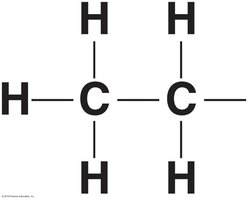
Ethanol: Add a hydroxyl group (-OH) to form C2H5OH.
Acetic Acid: Add a carboxyl group (-COOH) to form CH3COOH.
Acetaldehyde: Add an aldehyde group (-CHO) to form CH3CHO.
Ethanolamine: Add an amino group (-NH2) and a hydroxyl group.
Diethyl Ether: Link two ethyl groups with an oxygen atom (C2H5-O-C2H5).
Macromolecules in Microbiology
Carbohydrates
Building Blocks: Monosaccharides (simple sugars).
Examples: Glucose (monosaccharide), sucrose (disaccharide), starch (polysaccharide).
Lipids
Simple Lipids: Fats and oils composed of glycerol and fatty acids.
Complex Lipids: Contain additional elements such as phosphorus or nitrogen.
Steroids: Four fused carbon rings; important in cell membranes.
Proteins
Building Blocks: Amino acids, each containing an amino group (-NH2) and a carboxyl group (-COOH).
Nucleic Acids
Building Blocks: Nucleotides (sugar, phosphate, nitrogenous base).
DNA vs. RNA: DNA contains deoxyribose and is double-stranded; RNA contains ribose and is single-stranded.
ATP (Adenosine Triphosphate)
ATP is the main energy currency of the cell, providing energy for cellular activities.
ATP stores more energy than ADP due to its additional phosphate group.
Microscopy and Staining
Measuring Microorganisms
Units: Micrometers (µm) and nanometers (nm).
Microscope Structure and Function
Light passes through objective and ocular lenses in a compound microscope.
Total Magnification: Product of the magnifications of the objective and ocular lenses.
Resolution: The ability to distinguish two points as separate; a resolution of 0.2 nm means two points 0.2 nm apart can be distinguished.
Types of Microscopy
Brightfield: Standard illumination.
Darkfield: Enhances contrast in unstained samples.
Phase-Contrast: Visualizes transparent specimens.
Fluorescence: Uses fluorescent dyes to visualize structures.
Electron Microscopy: Uses electrons for higher resolution (TEM, SEM).
Staining Techniques
Simple Staining: Uses a single dye to highlight cells.
Gram Stain: Differentiates bacteria into Gram-positive (purple) and Gram-negative (pink) based on cell wall structure.
Acid-Fast Stain: Identifies Mycobacterium and Nocardia.
Special Stains: Capsule, endospore, and flagella stains highlight specific structures.
Cell Structure and Function
Prokaryotic vs. Eukaryotic Cells
Prokaryotes: Lack a nucleus and membrane-bound organelles; DNA is in the nucleoid.
Eukaryotes: Have a nucleus and membrane-bound organelles.
Bacterial Shapes and Arrangements
Shapes: Cocci (spherical), bacilli (rod-shaped), spirilla (spiral).
Arrangements: Streptococci (chains), staphylococci (clusters).
Cell Wall Differences
Gram-Positive: Thick peptidoglycan layer.
Gram-Negative: Thin peptidoglycan, outer membrane.
Acid-Fast: Waxy cell wall (mycolic acid).
Archaea: No peptidoglycan.
Mycoplasmas: No cell wall.
Cell Structures
Glycocalyx: Protective outer layer; can be a capsule or slime layer.
Flagella: Used for movement.
Pili and Fimbriae: Attachment and genetic exchange.
Endospores: Resistant structures formed under stress.
Transport Mechanisms
Simple Diffusion: Movement from high to low concentration.
Facilitated Diffusion: Uses transport proteins.
Osmosis: Diffusion of water.
Active Transport: Requires energy.
Group Translocation: Substance is chemically modified during transport.
Organelles in Eukaryotic Cells
Nucleus: Contains genetic material.
Endoplasmic Reticulum (ER): Protein and lipid synthesis.
Golgi Complex: Modifies and packages proteins.
Lysosomes: Digestion of macromolecules.
Vacuoles: Storage.
Mitochondria: ATP production.
Chloroplasts: Photosynthesis (plants and algae).
Peroxisomes: Breakdown of fatty acids and detoxification.
Centrosomes: Organize microtubules.
Endosymbiotic Theory
This theory proposes that mitochondria and chloroplasts originated from free-living prokaryotes engulfed by ancestral eukaryotic cells, supported by similarities in DNA and reproduction.
Additional info: Some explanations and examples have been expanded for clarity and completeness based on standard microbiology textbooks.
