 Back
BackMicrobiology: Foundations, Methods, and the Human Microbiome
Study Guide - Smart Notes
 Tailored notes based on your materials, expanded with key definitions, examples, and context.
Introduction to Microbiology
Definition and Scope of Microbiology
Microbiology is the scientific study of microbes, which includes both living organisms and infectious agents that are too small to be seen with the naked eye. The field encompasses a wide range of entities, from bacteria and fungi to viruses and prions.
Microorganisms: Living organisms too small to see unaided, including bacteria, fungi, protozoa, and algae.
Microbes: Includes microorganisms and non-living infectious agents (such as viruses).
Cell: The smallest, most basic unit of life.
Organism: Any individual form of life, which can be unicellular or multicellular.
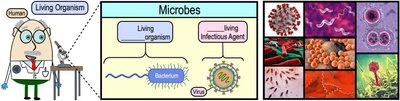
Microbiology: Microorganism vs. Microbe
Microorganisms are always living, while microbes include both living organisms and non-living infectious agents (such as viruses).
Example: Bacteria are microorganisms and microbes; viruses are microbes but not microorganisms.
Discovering Microorganisms
Historical Discoveries
The existence of microorganisms was first revealed between 1665 and 1674.
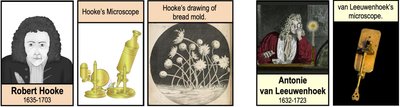
Robert Hooke (1665): First to visualize and depict a microorganism (bread mold Mucor), describing it as a "microscopical mushroom."
Antonie van Leeuwenhoek (1674): Used a microscope to observe protozoa and bacteria, calling them "animalicules."
Both Hooke and Leeuwenhoek are credited with revealing the microbial world.
Spontaneous Generation vs. Biogenesis
Theories of Life's Origin
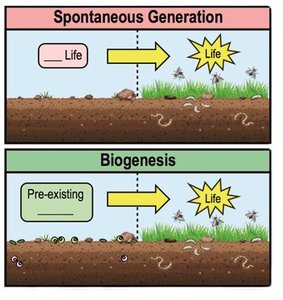
For centuries, it was believed that life could arise from non-living material (spontaneous generation). Modern science recognizes that life is produced only by pre-existing life (biogenesis).
Spontaneous Generation: The idea that life regularly arises from non-living matter (e.g., soil to worms).
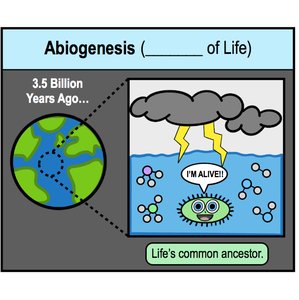
Abiogenesis: Theory of a one-time event where simple life originated from non-living matter.
Biogenesis: Theory that living organisms arise only from pre-existing life.
Experimental Evidence
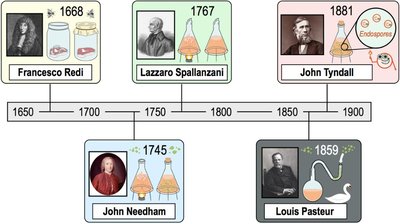
Between 1668 and 1881, many experiments were conducted to prove or disprove these theories.
Francesco Redi (1668): Challenged spontaneous generation.
John Needham (1745): Supported spontaneous generation.
Lazzaro Spallanzani (1767): Disproved spontaneous generation.
Louis Pasteur (1859): Definitively disproved spontaneous generation with swan-neck flask experiments.
John Tyndall (1881): Studied endospores and further disproved spontaneous generation.
Koch's Postulates
Establishing Disease Causation
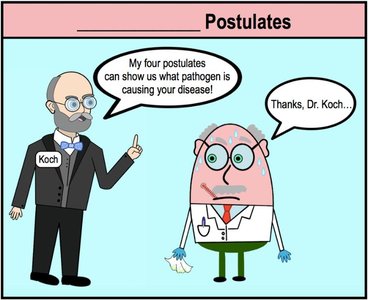
Robert Koch developed a set of postulates to identify microbes responsible for specific diseases.
Koch's Postulates: Criteria used to determine if a particular microbe causes a particular disease.
Example: Bacillus anthracis causes anthrax in cattle and humans.
The Four Koch's Postulates
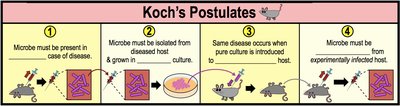
Koch's postulates are:
The microbe must be present in every case of the disease.
The microbe must be isolated from the diseased host and grown in pure culture.
The same disease must occur when the pure culture is introduced into a healthy, susceptible host.
The microbe must be re-isolated from the experimentally infected host.
Limitations of Koch's Postulates
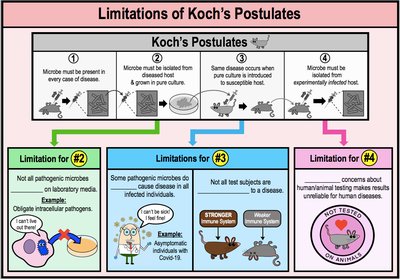
While Koch's postulates are foundational, there are important limitations:
Not all pathogens can be cultured on laboratory media (e.g., obligate intracellular pathogens).
Some diseases have asymptomatic carriers or long latency periods.
Ethical concerns prevent testing on humans for some diseases.
The Scientific Method
Process of Scientific Inquiry
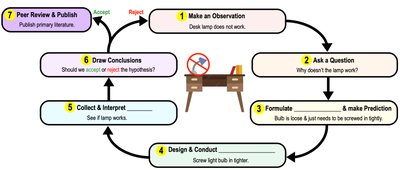
The scientific method is a systematic procedure used to answer questions, test ideas, and build scientific knowledge.
Starts with an observation and a question.
Formulate a hypothesis and make predictions.
Design and conduct experiments.
Collect and interpret data.
Draw conclusions and publish findings.
Predictions, Hypotheses, and Theories
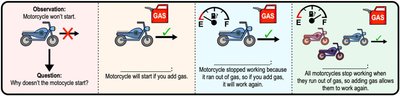
Prediction: Expected outcome of an event.
Hypothesis: Proposed, testable explanation for an observation.
Theory: Testable, broad hypothesis supported by extensive evidence.
Basic Theories of Biology
Three Fundamental Concepts
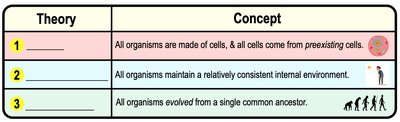
All organisms are made of cells, and all cells come from preexisting cells (Cell Theory).
All organisms maintain a relatively consistent internal environment (Homeostasis).
All organisms evolved from a single common ancestor (Evolution).
Introduction to Taxonomy
Classification of Life
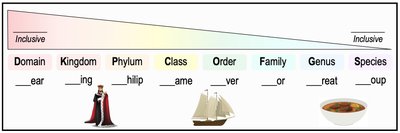
Taxonomy is the branch of science that classifies, identifies, and names organisms. Life is organized into hierarchical categories.
Categories: Domain, Kingdom, Phylum, Class, Order, Family, Genus, Species.
The Three Domains of Life
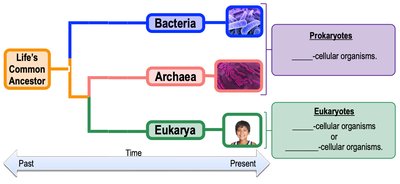
Bacteria: Prokaryotic, unicellular organisms.
Archaea: Prokaryotic, unicellular organisms.
Eukarya: Eukaryotic, unicellular or multicellular organisms.
Phylogenetic Relationships
The diagram shows the evolutionary relationships among Bacteria, Archaea, and Eukarya. 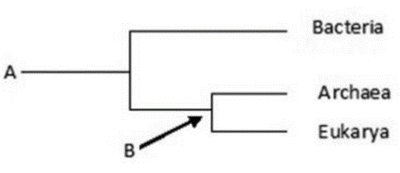
Kingdoms of the Eukarya Domain
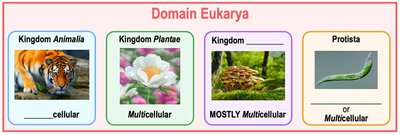
Domain Eukarya is subdivided into four kingdoms:
Animalia
Plantae
Fungi
Protista
Categorizing Life Based on Energy Acquisition
Energy Classes
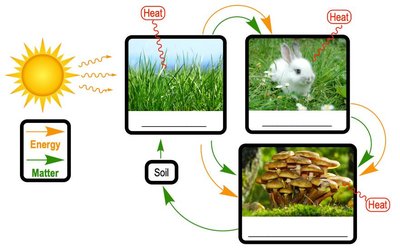
Organisms are categorized by how they acquire energy:
Autotrophs (Producers): Make their own food (e.g., plants).
Heterotrophs (Consumers): Eat other living organisms (e.g., animals).
Decomposers: Acquire energy from wastes and dead organisms (e.g., fungi).
Scientific Naming of Organisms
Binomial Nomenclature
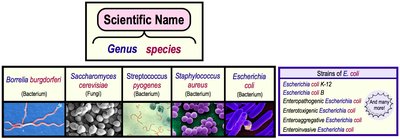
Carl Linnaeus developed a two-part naming system for organisms:
First part: Genus (capitalized)
Second part: Species (not capitalized)
Both parts are italicized or underlined
Strains: Genetic variants within a species
Symbiotic Relationships
Types of Symbiosis
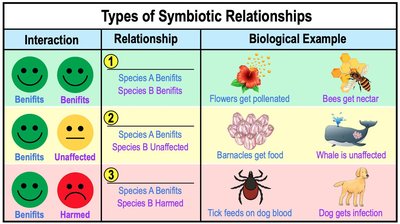
Symbiosis refers to biological interactions between two different organisms or species. There are three main types:
Mutualism: Both organisms benefit.
Commensalism: One benefits, the other is unaffected.
Parasitism: One benefits at the expense of the other.
The Human Microbiome
Resident vs. Transient Microbiota
The human microbiome consists of communities of microbes living in and on the human body.
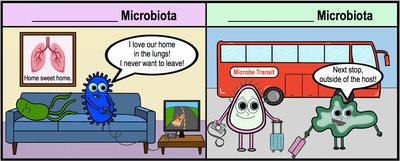
Resident Microbiota: Microbes that are almost always present for extended periods.
Transient Microbiota: Microbes that are only temporarily found in the body (often pathogens).
Factors Influencing the Microbiome
Many factors contribute to the composition of the human microbiome, including age, diet, medications, genetics, and environment. 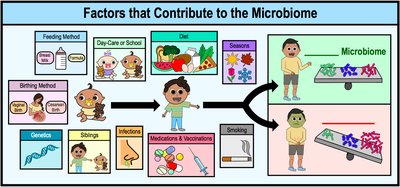
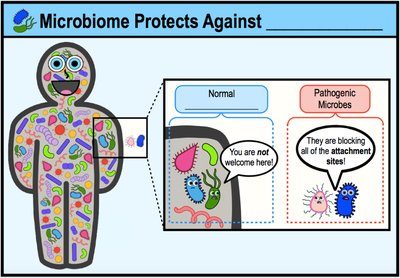
Microbiome Protection Against Infection
The microbiome is part of innate immunity, creating a competitive environment that prevents pathogen colonization.
Microbes block attachment sites for pathogens.
Microbes produce compounds harmful to pathogens.
Microbiome can prime the adaptive immune system.
Summary Table: Types of Symbiotic Relationships
Interaction | Relationship | Biological Example |
|---|---|---|
Benefits / Benefits | Mutualism | Flowers get pollinated / Bees get nectar |
Benefits / Unaffected | Commensalism | Barnacles get food / Whale is unaffected |
Benefits / Harmed | Parasitism | Tick feeds on dog blood / Dog gets infection |
