 Back
Microbiology Lab Safety and Hand Hygiene: Principles and Practices
Study Guide - Smart Notes
 Tailored notes based on your materials, expanded with key definitions, examples, and context.
Microbiology Laboratory Safety
Introduction to Laboratory Safety
Microbiology laboratories are designed to provide a safe environment for the study of microorganisms, provided that proper safety protocols are followed. Understanding and adhering to lab safety rules is essential to prevent contamination, infection, and accidents.
Immunosuppressed or Pregnant Individuals: Special considerations and consultations are necessary for those who may be at increased risk.
Primary Concerns: Student safety, effective learning, and academic success.
Biosafety Levels (BSL)
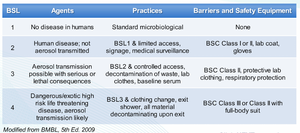
Biosafety levels classify laboratory practices and containment based on the organisms handled. Most teaching labs use BSL-1 or BSL-2 organisms, with BSL-2 requiring additional precautions.
BSL-1: Organisms not known to cause disease in healthy adults.
BSL-2: Organisms associated with human disease; requires gloves, lab coats, and restricted access.
Personal Protective Equipment (PPE) and Lab Attire
Proper PPE is mandatory, especially when handling BSL-2 organisms. This includes disposable lab coats and gloves. Lab coats must be stored in the lab and disposed of properly at the end of the semester.
No cloth lab coats allowed.
Proper dress code: closed-toed shoes, long pants/skirts, and secured long hair.
General Laboratory Rules
No food or drink in the lab.
Avoid touching your face, eyes, or mouth.
Never remove lab materials from the laboratory.
Minimize materials on the bench to reduce contamination risk.
Know the location of safety equipment (first-aid kit, fire extinguisher, emergency shower, eye wash station).
Remove all PPE before exiting the lab.
Turn off Bunsen burners when not in use.
Proper Disposal Procedures
Regular garbage: Non-contaminated items (e.g., paper towels, matches).
Plate cultures and non-sharp disposables: Red autoclave containers.
Contaminated glassware: Red rack labeled for disposal.
Used microscope slides: Autoclavable sharps container.
Uncontaminated broken glass: Broken glass container.
Student Safety Contract
All students must complete and return a safety contract before participating in lab activities. This ensures understanding and agreement to follow all safety protocols.
Hand Hygiene and Microbial Control
Importance of Hand Hygiene
Hand hygiene is a critical practice in microbiology and healthcare to prevent the spread of infectious agents. The skin harbors a diverse community of microorganisms, many of which can be transferred to surfaces and other individuals.
Handwashing with soap and water is the most effective way to reduce microbial load.
Hand hygiene should be performed upon entering and before leaving the lab.
Hand Hygiene Habits in the Population
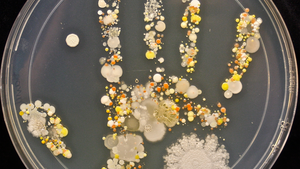
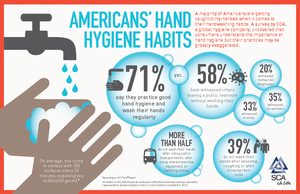
Despite the importance of hand hygiene, studies show that many individuals do not practice effective handwashing regularly.
71% of Americans claim to practice good hand hygiene, but actual practices may be lower.
Common lapses include not washing hands after public restroom use and improper technique.
Types of Hand-Cleansing Agents
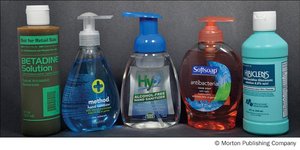
Various antiseptics and soaps are used to reduce microbial contamination on hands. Their effectiveness can vary based on active ingredients and usage technique.
Betadine: Contains 10% povidone iodine; broad-spectrum antimicrobial.
Hand Sanitizer (Ethanol): 65% ethanol; effective against many bacteria and viruses.
Hand Sanitizer (Benzalkonium Chloride): 0.13% benzalkonium chloride; a quaternary ammonium compound.
Antibacterial Soap: 0.15% triclosan; inhibits bacterial fatty acid synthesis.
Hibiclens: 4% chlorhexidine gluconate; disrupts microbial cell membranes.
Effectiveness of Hand Hygiene Agents
Not all antiseptics are equally effective at removing or killing microbes. Laboratory experiments can be used to compare their relative effectiveness.
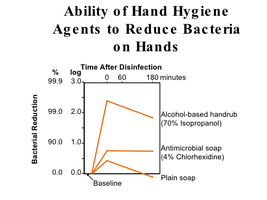
Alcohol-based hand rubs and antimicrobial soaps generally show higher bacterial reduction than plain soap.
Effectiveness can be measured by sampling hands before and after treatment and culturing on agar plates.
Hand Hygiene Laboratory Procedure
Students conduct experiments to test the effectiveness of different hand-cleansing agents using Tryptic Soy Agar (TSA) plates.
Label a sterile TSA plate with 'BEFORE' and 'AFTER' sections.
Sample a potentially contaminated surface with fingertips, then press each fingertip onto the 'BEFORE' section.
Wash hands, then apply a different antiseptic to each finger, following product instructions (rinse or air dry as needed).
Press each treated fingertip onto the 'AFTER' section.
Incubate plates at 25°C for 48 hours and observe microbial growth.
Interpreting Results
Comparing microbial growth on 'BEFORE' and 'AFTER' sections allows assessment of each agent's effectiveness. Fewer colonies indicate greater microbial reduction.
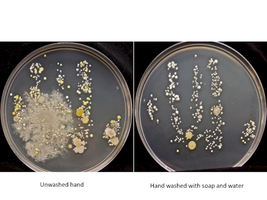
Unwashed hands typically show dense and diverse microbial colonies.
Washed hands, especially with effective antiseptics, show significantly reduced colony numbers.
Conclusion
Understanding and practicing proper lab safety and hand hygiene are foundational skills in microbiology. These practices protect both laboratory personnel and the integrity of scientific experiments.
